Treatment for Osteoporosis of Hip: How It Works, Results and What to Expect

Hip osteoporosis can remain silent until a fracture occurs, so assessment is important even without pain. The most suitable medicine depends on fracture risk, bone density, prior fractures, kidney function and other health factors.
Key Takeaways
- Hip osteoporosis can remain silent until a fracture occurs, so assessment is important even without pain.
- The most suitable medicine depends on fracture risk, bone density, prior fractures, kidney function and other health factors.
- Treatment reduces fracture risk but does not make falls harmless; fall prevention and strength training remain essential.
- Nutrition supports bone health, but calcium and vitamin D alone are usually not enough for people at high fracture risk.
- Most osteoporosis treatments require ongoing monitoring and should not be stopped or changed without medical advice.
Treatment for osteoporosis of hip aims to lower the risk of a hip fracture by strengthening bone, addressing reversible causes of bone loss, and preventing falls. A personalized plan may include prescription medicine, calcium and vitamin D when appropriate, weight-bearing activity, balance training, and regular follow-up.
Overview: how treatment for osteoporosis of hip works
Treatment for osteoporosis of hip is designed to reduce the chance of a future hip fracture. It works through two connected approaches: improving bone strength and reducing the likelihood of a fall. Because osteoporosis often causes no symptoms before a fracture, treatment is usually guided by bone-density testing, a person’s medical history, and an overall estimate of fracture risk.
The hip is a particularly important site because a fracture there can substantially affect mobility, independence and general health. A clinician may recommend lifestyle measures for mild or lower-risk bone loss, while people with osteoporosis, previous fragility fractures, or a high calculated fracture risk may need prescription medication in addition to these measures.
Care is not a single procedure. It is a planned process involving assessment, medicine selection when needed, safe exercise, nutrition review, fall-risk reduction, and repeat monitoring. Endocrinologists, geriatric specialists, orthopedists, physiotherapists and primary-care clinicians may all contribute depending on the person’s needs.
How serious is osteoporosis in the hip?
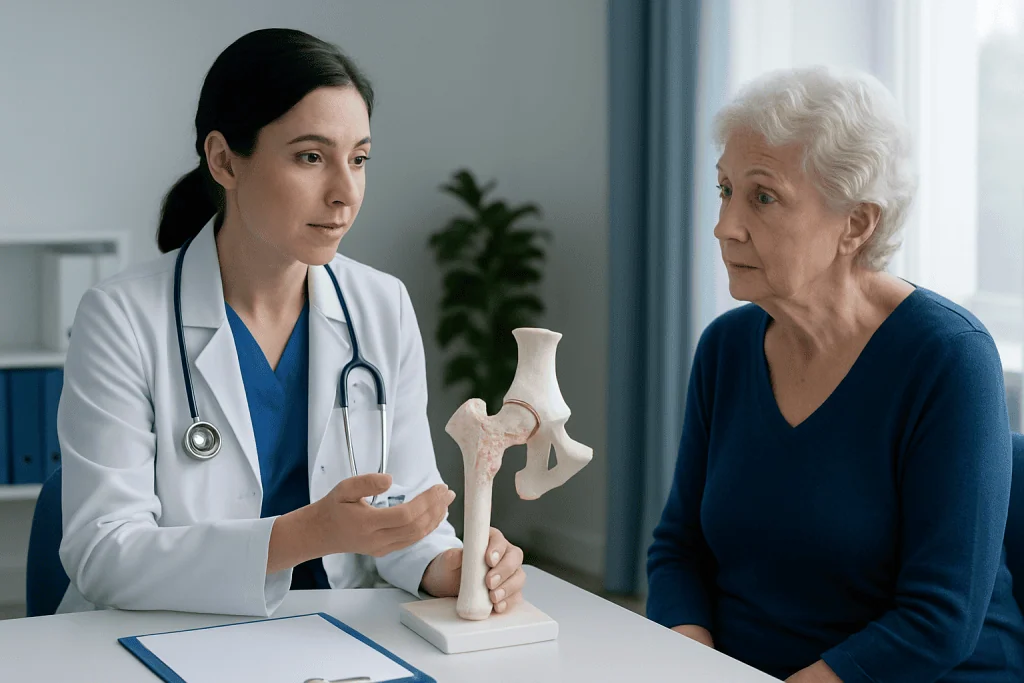
Osteoporosis in the hip is serious because weakened bone can fracture after a fall from standing height or, less commonly, after a minor impact. A hip fracture is typically treated urgently and may require surgery followed by rehabilitation. Recovery can take time, and some people need temporary or longer-term support with daily activities.
Risk is not determined by bone density alone. Age, previous fractures, low body weight, smoking, alcohol intake, reduced mobility, certain medications, long-term inflammatory illness, hormonal conditions and a family history of hip fracture can all influence a person’s likelihood of fracture. A clinician considers these factors together rather than relying on one result.
Hip pain is not a usual early symptom of osteoporosis. New hip or groin pain after a fall, sudden inability to stand or bear weight, or a leg that appears shortened or turned outward requires urgent medical assessment. Prompt care is important because not all fractures are immediately obvious.
Who may be a candidate for treatment?
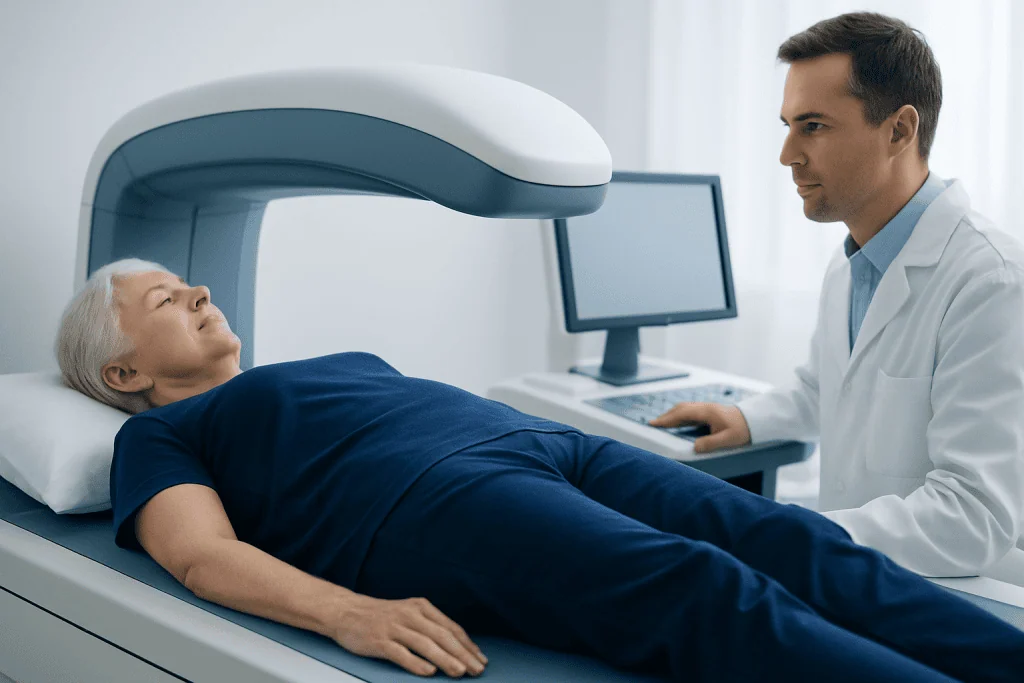
Adults may be considered for osteoporosis treatment when a scan confirms osteoporosis, when they have had a low-trauma hip or vertebral fracture, or when a fracture-risk assessment indicates a meaningful future risk. A dual-energy X-ray absorptiometry, commonly called a DXA or DEXA scan, measures bone mineral density at areas such as the hip and spine.
Clinicians also look for secondary causes of bone loss. These may include low vitamin D, thyroid or parathyroid disorders, low sex-hormone levels, malabsorption conditions, chronic kidney or liver disease, and use of medicines such as long-term corticosteroids. Identifying a contributing cause can change the treatment plan.
Before choosing medication, the care team reviews dental health, kidney function, calcium levels, pregnancy potential where relevant, ability to follow dosing instructions, and other medicines. This helps match the treatment to the individual and supports safe long-term use.
People who have already sustained a fragility fracture may need assessment without delay. A fracture liaison or multidisciplinary bone-health service can help coordinate investigation, treatment and prevention of another fracture.
What is the most effective treatment for osteoporosis in the hips?
There is no single most effective treatment for every person with hip osteoporosis. For many people at high fracture risk, prescription osteoporosis medication combined with fall prevention, adequate nutrition and exercise is more effective than lifestyle measures alone. The best choice depends on whether the priority is preventing a first fracture, preventing another fracture, or treating very high fracture risk.
Antiresorptive medicines slow the breakdown of bone and include bisphosphonates, denosumab and certain other options. They are commonly used because they can improve bone density and lower the risk of osteoporotic fractures in appropriately selected patients. Some are taken by mouth, while others are given by injection or infusion at intervals determined by the medication.
Bone-building, or anabolic, medicines may be considered for selected people with very high fracture risk, multiple fractures, or very low bone density. These medicines stimulate new bone formation and are generally used for a defined period before transitioning to a medicine that helps preserve the gained bone. Hormone-related treatment may be appropriate for some individuals, particularly when menopausal status and other risks support its use.
When medication is recommended, it should be viewed as part of a wider plan rather than a replacement for movement, nutrition and safety measures. Specialist evaluation for osteoporosis can clarify which approach best fits a person’s health profile and fracture risk.
The treatment pathway: step by step
Step 1: assessment. The clinician discusses fractures and falls, medicines, diet, activity, family history and health conditions. Testing may include a DXA scan, fracture-risk calculation and blood or urine tests to look for contributing medical conditions. Imaging may be used if a vertebral fracture is suspected.
Step 2: plan selection. The clinician explains whether medication is advisable, how it is given, expected benefits, possible side effects, and how long it may be used. Calcium intake and vitamin D status are reviewed. Supplements may be recommended when dietary intake or blood levels are insufficient, but should be tailored rather than taken in excessive amounts.
Step 3: start treatment safely. Oral medicines may have instructions about fasting, water intake and remaining upright after taking them. Injectable or intravenous options are administered according to the selected medicine’s schedule. People should tell their care team about new symptoms, planned dental procedures, kidney problems or changes in other medicines.
Step 4: monitoring and adjustment. Follow-up checks adherence, side effects, falls, new fractures and laboratory results when indicated. A repeat bone-density scan is often arranged after an interval appropriate to the person’s risk and treatment. Treatment should not be stopped independently, particularly certain injections, because some medicines require an organized transition plan to maintain protection.
Benefits, risks and recovery timeline
The main expected benefit of treatment is a lower risk of osteoporotic fracture over time. Bone-density improvements may be seen on later scans, but fracture prevention is the more meaningful goal. Benefits generally develop gradually, which is why regular use and follow-up matter even when a person feels well.
There is usually no recovery period from osteoporosis medication itself. Many people continue their regular routines, alongside a progressive exercise plan. Oral treatments can cause digestive irritation in some people. Injections or infusions can cause temporary reactions, such as flu-like symptoms or injection-site discomfort, depending on the medicine. The care team can discuss practical ways to manage common effects.
Rare but important risks vary by medication and may include low calcium levels, unusual thigh-bone fractures, or jawbone complications, especially in people with particular risk factors or prolonged exposure. These uncommon risks must be balanced against the potentially serious consequences of hip fracture. Medical and dental history should be shared before treatment begins.
If a hip fracture has already occurred, recovery follows a different pathway involving urgent orthopedic care, surgery when appropriate, pain management, prevention of complications, and rehabilitation. Bone-health treatment remains important after recovery to help prevent another fracture.
What not to do with hip osteoporosis
People with hip osteoporosis should not assume that avoiding all activity will protect their bones. Prolonged inactivity can reduce muscle strength, balance and bone health, increasing fall risk. Instead, activity should be chosen carefully with advice from a clinician or physiotherapist, especially after a recent fracture, during severe pain, or when balance is poor.
High-impact activities, abrupt twisting, deep bending under load, and exercises with a substantial risk of falling may be unsuitable for some people. The safest exercise plan is individualized. Weight-bearing activities such as walking, strength exercises, posture training and balance work are often helpful when medically appropriate.
It is also important not to smoke, to avoid excess alcohol, and not to rely on supplements as the only treatment when medication is indicated. People should not stop prescribed osteoporosis medicine because a scan improves without first discussing it with their clinician. Improvement often reflects that treatment is working.
- Do not ignore a fall, new back pain, loss of height or a new stooped posture.
- Do not take high-dose calcium or vitamin D without professional advice.
- Do not use unproven products in place of evidence-based treatment.
- Do not leave home fall hazards unaddressed, such as loose rugs, poor lighting or unsafe footwear.
Prevention, self-care and when to seek medical care
Daily habits can support treatment and help protect the hip. A balanced diet with enough protein, calcium-rich foods and vitamin D sources supports bone and muscle health. Regular safe movement, including resistance and balance exercises, can improve strength and confidence. Vision checks, medication review, supportive footwear and home-safety changes can all reduce fall risk.
Medical care should be arranged for adults with a low-trauma fracture, a significant loss of height, persistent new back pain, early menopause, long-term steroid treatment, or risk factors for osteoporosis. A doctor can advise whether bone-density testing or further assessment is appropriate. A recent fall with hip or groin pain, inability to bear weight, or visible leg deformity needs urgent assessment.
What is the success rate of osteoporosis treatment? Osteoporosis treatment success is measured mainly by reducing fractures, maintaining or improving bone density, and preventing further bone loss. It cannot guarantee that a fracture will never happen, because falls, age and other health factors still matter. Studies support that several approved medicines reduce fracture risk in appropriate groups, but the degree of benefit varies with the medicine, baseline risk and consistent use.
Acibadem International’s multidisciplinary specialists and JCI-accredited hospitals assess and treat osteoporosis for international patients, coordinating bone-health evaluation, rehabilitation and orthopedic care when needed. Ongoing follow-up with a qualified clinician remains central to safe, effective long-term management.
Frequently asked questions
Can osteoporosis in the hip be reversed?
Treatment can slow bone loss and often improve bone mineral density, particularly when medication is used consistently along with appropriate lifestyle measures. However, osteoporosis is usually managed as a long-term condition rather than considered permanently cured. The key goal is to reduce the risk of hip and other fragility fractures.
How is hip osteoporosis diagnosed?
Hip osteoporosis is commonly diagnosed with a DXA scan that measures bone density at the hip and spine. A clinician also reviews fracture history and risk factors, and may use a fracture-risk assessment tool. Blood tests may help identify treatable causes of bone loss.
Will I need medication if I have osteopenia in the hip?
Not everyone with osteopenia needs prescription medication. The decision depends on overall fracture risk, age, prior low-trauma fractures, medical conditions and medication use. Lifestyle measures and repeat monitoring may be enough for some people, while others benefit from medicine.
What exercises are safe for hip osteoporosis?
Walking, tailored resistance training, balance exercises and posture-focused activity are often useful for bone and muscle health. The safest plan depends on fracture history, mobility, pain and fall risk. A physiotherapist or clinician can adapt activities and advise against movements that are unsafe for an individual.
How long does osteoporosis treatment take to work?
Osteoporosis medicines begin affecting bone turnover after treatment starts, but meaningful fracture protection develops over time and requires regular use. Follow-up bone-density scans are usually performed after an interval chosen by the clinician, rather than immediately. Treatment duration varies by medicine and individual fracture risk.
Can calcium and vitamin D treat hip osteoporosis on their own?
Calcium and vitamin D are important for bone health when intake or levels are low, but they are usually not sufficient alone for people with established osteoporosis or high fracture risk. Prescription medication may be needed to reduce fracture risk more effectively. A clinician can advise on suitable food sources, testing and supplementation.
References
- International Osteoporosis Foundation
- National Institute of Arthritis and Musculoskeletal and Skin Diseases
- National Osteoporosis Foundation
- National Institute for Health and Care Excellence
- World Health Organization
This article is for general information only and is not a substitute for professional medical advice. Please consult a qualified doctor about your individual situation.
Joint and spine care in Turkey — expert assessment & treatment
JCI-accredited · board-certified surgeons · reply within 24h
Add us as a Preferred Source to see more of our trusted health content across Google Search, AI Overviews and Discover.

More from the Health Library



Related Specialists

Prof. Dr. Ufuk Demirkılıç
Cardiovascular Surgery
Prof. Dr. Elif Ilgaz Aydınlar
Neurology
Dr. İbrahim Kavak
General Surgery
Prof. Dr. Sema Aydoğdu
Pediatric Gastroenterology