CT Scan in Russian: Preparation, Procedure and Results
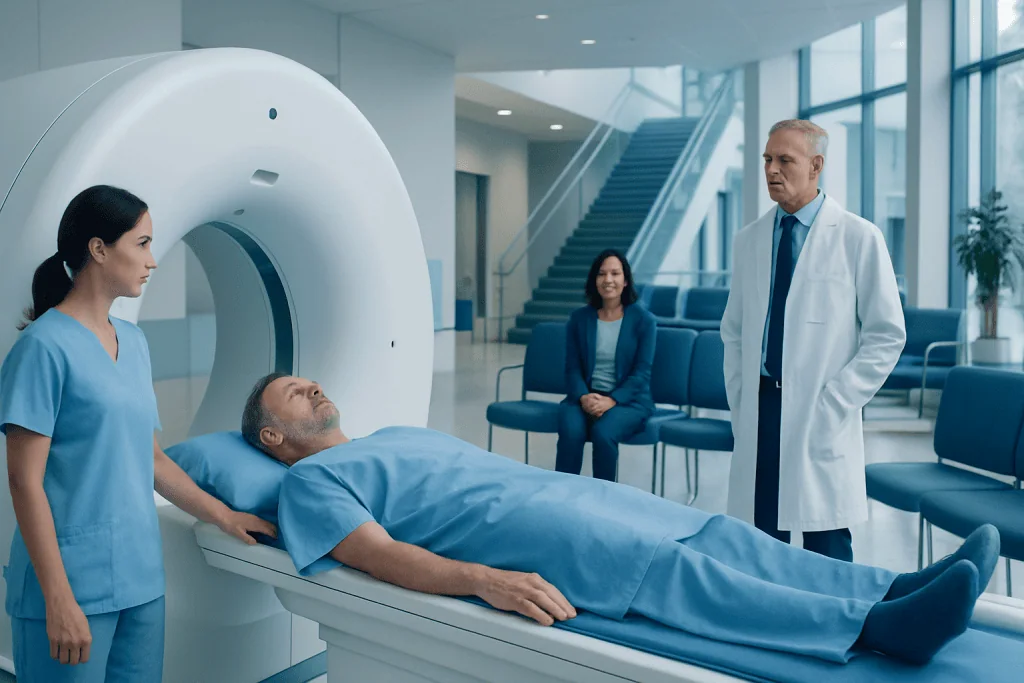
CT scanning produces detailed cross-sectional images of organs, blood vessels, bones and soft tissues. Preparation depends on the body area being scanned and whether contrast material is planned.
Key Takeaways
- CT scanning produces detailed cross-sectional images of organs, blood vessels, bones and soft tissues.
- Preparation depends on the body area being scanned and whether contrast material is planned.
- Most CT scans are painless and take only minutes, although the full appointment may take longer.
- Contrast material usually leaves the body through urine within about 24 hours in people with normal kidney function.
- Patients should tell the imaging team about pregnancy, kidney disease, allergies, diabetes medicines and previous contrast reactions.
- A radiologist interprets the images and sends a report to the clinician who ordered the scan.
A CT scan in Russian can help Russian-speaking patients understand why the examination is needed, how to prepare, what happens during scanning and how results are reported. Computed tomography is a fast imaging test that uses X-rays and computer processing to create detailed images of internal structures.
CT Scan in Russian: What It Means
A CT scan in Russian refers to computed tomography information, instructions and communication provided in the Russian language. This can help a Russian-speaking patient understand the purpose of the scan, preparation requirements, contrast consent and follow-up plan. A CT scan may also be called a CAT scan; in Russian translation, it is commonly described as компьютерная томография or КТ.
Computed tomography combines multiple X-ray images taken from different angles. A computer processes these images into detailed slices of the body and, when needed, three-dimensional views. CT can assess the brain, chest, abdomen, pelvis, bones, blood vessels and many other areas with more detail than a standard X-ray.
People searching for a CT scan in Russia or a CT scan in Russian language may be looking for clear communication rather than a different type of examination. The equipment and clinical principles are the same: the scan is chosen when a clinician needs detailed imaging to investigate symptoms, assess an injury, plan treatment or monitor a known condition.
How a CT Scan Works and Who May Need One
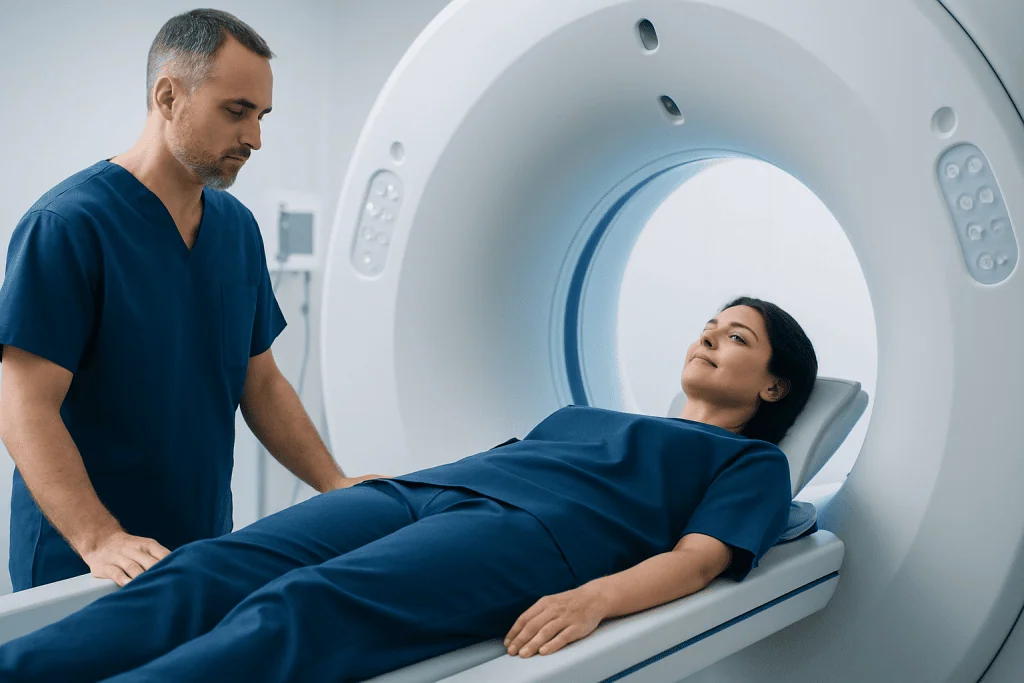
During a CT scan, the patient lies on a motorized table that moves slowly through a large doughnut-shaped scanner. An X-ray tube rotates around the body while detectors measure how much X-ray energy passes through different tissues. Dense structures such as bone appear differently from air, fat, fluid and organs, allowing the radiologist to identify patterns that may need further attention.
A clinician may recommend CT after an injury, for persistent or concerning symptoms, to look for inflammation or infection, to evaluate organs, or to guide certain procedures. It may also be used to assess conditions involving the lungs, kidneys, digestive system, blood vessels or brain. CT is one imaging option among several; ultrasound or MRI may be more suitable in some situations.
CT is not always appropriate for everyone. The referring clinician and radiology team consider the reason for imaging, previous scans, age, pregnancy possibility and radiation exposure. Although CT uses more radiation than a conventional X-ray, the examination is generally performed only when its expected diagnostic value outweighs this risk.
Contrast-enhanced CT can show blood vessels and some organs more clearly. The team may use an iodine-based contrast agent given through a vein, or oral contrast for certain abdominal and pelvic studies. Before contrast is used, they will review kidney function, allergies and relevant medical history.
Preparing for a CT Scan

Preparation instructions vary, so the patient should follow the directions from the imaging center or referring clinician rather than relying on general advice alone. Many CT examinations do not require fasting. However, scans involving intravenous contrast or the abdomen and pelvis may require no food for several hours beforehand, while clear liquids may still be permitted.
Before the appointment, patients should provide a complete medication and health history. Important information includes kidney disease, diabetes, thyroid conditions, asthma, past reactions to iodine-based contrast, pregnancy or a possible pregnancy, and breastfeeding. Some medicines may need special planning, but patients should not stop prescribed medication unless their healthcare professional tells them to do so.
It is helpful to bring previous imaging reports or image discs if requested, a list of medicines and any relevant referral documents. Comfortable clothing without metal fasteners may simplify the visit. Jewelry, glasses, removable dental appliances, hearing aids and other metal objects may need to be removed depending on the body area being scanned.
For patients who need language support, it is reasonable to ask in advance whether Russian-speaking staff or a qualified interpreter can be arranged. Clear communication is especially important when contrast, consent, allergy history or fasting instructions are involved.
What Should You Not Do Before a CT Scan?
Before a CT scan, patients should not ignore the specific preparation instructions provided for their examination. If fasting has been requested, they should not eat or drink restricted items during the stated time period. They should also avoid wearing metal items that could interfere with images, including jewelry, hairpins, belts or clothing with metal components.
Patients should not assume that a previous uneventful contrast scan means there is no need to report allergies or kidney problems. They should tell the team about any prior reaction to contrast material, current illness, dehydration, kidney disease and all medicines or supplements. This allows the radiology team to decide whether any additional precautions are needed.
It is also important not to stop medicines, including diabetes medication, blood pressure medication or anticoagulants, without individualized medical advice. Some CT protocols require temporary changes for specific patients, but the ordering clinician or radiology department should give those instructions directly.
Alcohol does not usually have a universal restriction before CT, but hydration and following the center’s preparation guidance are sensible. If a patient is uncertain about eating, drinking or taking a medicine, contacting the imaging center before the appointment is the safest approach.
CT Scan Procedure: Step by Step
At check-in, staff confirm the patient’s identity, the requested examination and relevant safety information. The patient may change into a gown, remove metal objects and answer questions about allergies, kidney health, pregnancy and prior imaging. If contrast is planned, a small intravenous cannula may be placed in the arm or hand.
The radiographer positions the patient on the table, sometimes using cushions or straps to support stillness. The person can communicate with staff through an intercom, and the team can see and hear the patient throughout the scan. For certain chest or abdominal images, the radiographer may ask the patient to hold their breath for a few seconds.
If intravenous contrast is used, a brief warm sensation, metallic taste or feeling of needing to urinate can occur. These sensations are usually temporary. The actual image acquisition often lasts only a few minutes, though positioning, safety checks and contrast administration mean the complete visit may take around 30 minutes or longer.
Most people can return home shortly afterward. The scan images are reviewed by a radiologist, who prepares a report for the requesting clinician. The report is interpreted in the context of symptoms, examination findings and other tests; a CT result alone does not always establish a diagnosis.
Do You Leave Your Clothes On for a CT Scan?
Whether a patient leaves clothes on for a CT scan depends on the area being examined and the clothing worn. Clothing without metal may sometimes be acceptable, particularly for scans of areas away from zippers, buttons, underwire, snaps or decorative metal. However, many imaging centers ask patients to change into a gown to prevent artifacts on the images.
Metal can create streaks or shadows that reduce image quality. Patients may be asked to remove jewelry, watches, piercings, eyeglasses, belts, bras with underwire, hearing aids or dentures. The radiographer will give specific instructions and will protect privacy during changing and positioning.
Patients should choose loose, comfortable clothing when possible and avoid bringing unnecessary valuables. If an item cannot be removed, such as a fixed medical device or certain piercings, the imaging team should be told before the scan so they can assess whether it will affect the examination.
Benefits, Risks and Recovery After CT
The main benefit of CT is that it provides rapid, detailed images that can help clinicians make timely decisions. It is particularly useful in emergencies and for evaluating complex anatomy. CT can sometimes reduce the need for exploratory procedures by giving clinicians more information about the area of concern.
The main limitations are radiation exposure and, when used, the possibility of contrast-related side effects. Modern imaging protocols aim to use the lowest radiation dose that can provide clinically useful images. Mild contrast effects, such as warmth or nausea, are generally short-lived. Serious allergic-like reactions are uncommon but can occur, which is why staff review medical history and monitor patients during the examination.
People with significantly reduced kidney function may require additional assessment before iodine-based contrast is given. They may be advised to drink fluids afterward if medically appropriate. Patients with fluid restrictions due to heart or kidney disease should ask their clinician how much fluid is suitable for them.
Recovery is usually immediate after a routine CT scan. A patient who received sedating medicine for anxiety or another reason may need someone to accompany them and should follow discharge instructions about driving and work. New or worsening symptoms after leaving the facility should be discussed with a healthcare professional.
How Long Does Contrast Stay in Your Body After a CT Scan?
For most people with normal kidney function, iodine-based CT contrast is filtered from the bloodstream by the kidneys and passed in urine largely within about 24 hours. The exact timing can vary with hydration, kidney function, the type and amount of contrast used, and individual health factors.
Patients are often advised to drink their usual appropriate amount of fluids after contrast, unless they have been told to limit fluids for a medical reason. This supports normal kidney function but does not require excessive drinking. The radiology team may give different advice if the patient has kidney disease, heart failure or another condition affecting fluid intake.
A delayed rash, itching, swelling, breathing difficulty, marked dizziness or significantly reduced urination should be assessed promptly. These symptoms are not expected and may need medical evaluation. Patients should also inform their clinician if they have a history of a previous contrast reaction before any future imaging study.
What Happens If You Eat 2 Hours Before a CT Scan?
Eating two hours before a CT scan may have no effect if the examination does not require fasting. Many non-contrast CT scans, and some contrast scans, allow normal food and drink. The correct answer depends on the planned body area, whether contrast is being used and the imaging center’s protocol.
If the patient was instructed to fast and ate two hours before the appointment, they should tell the radiology team rather than skip the visit without contacting them. The scan may still proceed, be delayed or be rescheduled depending on the reason for fasting and the clinical circumstances. Staff can make the safest decision with accurate information.
Fasting may be requested to improve images of the stomach or intestines, reduce nausea risk from contrast in some individuals, or meet requirements if sedation is planned. It is not a punishment or a sign that something is wrong. Asking for written preparation instructions in a preferred language can reduce uncertainty before the appointment.
When to Seek Medical Care
A CT scan is usually arranged by a clinician rather than requested as a first step for every symptom. Urgent medical assessment is appropriate for symptoms such as sudden weakness on one side, trouble speaking, severe new headache, chest pain, major breathing difficulty, serious injury, uncontrolled bleeding or severe abdominal pain. Emergency services should be contacted when symptoms are severe or rapidly worsening.
After a CT scan with contrast, urgent help is needed for difficulty breathing, swelling of the face or throat, widespread hives, fainting or other signs of a severe allergic reaction. Less urgent but important concerns, such as a new rash, persistent vomiting or changes in urination, should be discussed with the imaging center or treating clinician promptly.
Acibadem International’s multidisciplinary specialists and JCI-accredited hospitals can coordinate diagnostic imaging and follow-up care for international patients, including those who need Russian-language support. The most appropriate next step after CT depends on the scan findings and the patient’s overall clinical situation.
Frequently asked questions
Is a CT scan painful?
A CT scan itself is painless. The patient needs to lie still on a moving table, and some scans require short breath-holds. If contrast is injected, a temporary warm feeling or metallic taste may occur.
Can a person have a CT scan if they are pregnant?
A patient who is pregnant or may be pregnant should tell the referring clinician and radiology team before the scan. Imaging may still be necessary in some circumstances, but the team will consider alternatives and use appropriate precautions.
Can CT contrast cause an allergic reaction?
Iodine-based contrast can cause allergic-like reactions, although serious reactions are uncommon. Anyone with a previous contrast reaction, asthma or multiple severe allergies should report this before the examination so the team can plan safely.
How soon are CT scan results available?
Timing varies according to the urgency of the examination and the healthcare setting. A radiologist reviews the images and sends a report to the requesting clinician, who explains what the findings mean for the individual patient.
Can someone drive after a CT scan?
Most people can drive and resume usual activities after a routine CT scan. If sedating medicine was given, driving should be avoided until the effects have fully worn off and the discharge instructions allow it.
Why might a CT scan be repeated?
A repeat CT may be needed if symptoms change, if a scan needs to monitor a condition, or if the first images did not answer the clinical question. Clinicians aim to avoid unnecessary radiation and request repeat imaging only when it is likely to be useful.
References
- Radiological Society of North America
- American College of Radiology
- National Institute of Biomedical Imaging and Bioengineering
- U.S. Food and Drug Administration
- National Health Service
This article is for general information only and is not a substitute for professional medical advice. Please consult a qualified doctor about your individual situation.
Explore treatments in Turkey — costs, top hospitals & a free quote
JCI-accredited · board-certified surgeons · reply within 24h
Add us as a Preferred Source to see more of our trusted health content across Google Search, AI Overviews and Discover.