Surgery for Small Cell Lung Cancer: Procedure, Recovery and Results

Surgery is generally reserved for carefully selected people with very early-stage small cell lung cancer. A lobectomy, which removes one lobe of the lung, is often the preferred operation when surgery is appropriate.
Key Takeaways
- Surgery is generally reserved for carefully selected people with very early-stage small cell lung cancer.
- A lobectomy, which removes one lobe of the lung, is often the preferred operation when surgery is appropriate.
- Chemotherapy is commonly recommended before or after surgery because small cell lung cancer can spread early.
- Recovery varies by the type of operation, overall lung function, and whether open or minimally invasive techniques are used.
- A multidisciplinary cancer team helps determine whether surgery offers more benefit than risk for an individual patient.
Surgery for small cell lung cancer is not suitable for most patients, but it can be considered when the cancer appears confined to a small area of one lung and has not spread to lymph nodes or distant organs. When used, surgery is usually one part of combined treatment that also includes chemotherapy and, in some cases, radiation therapy.
Overview: when is surgery used for small cell lung cancer?
Surgery for small cell lung cancer may be an option for a small number of people whose cancer is detected at a very early stage, is limited to the lung, and shows no evidence of spread to lymph nodes or other parts of the body. It is usually followed by chemotherapy, and radiation therapy may also be advised in selected situations. For most people with small cell lung cancer, chemotherapy and radiation are the main treatments because this cancer often spreads before it is diagnosed.
Small cell lung cancer is an aggressive type of lung cancer that begins in the airways. Treatment planning therefore depends on accurate staging, the person’s general health, lung function, and personal goals. A team may include a thoracic surgeon, medical oncologist, radiation oncologist, pulmonologist, radiologist, pathologist, and specialist nurses.
The operation aims to remove the visible cancer with a margin of healthy tissue and to assess lymph nodes in the chest. Surgery alone is rarely considered enough treatment for small cell lung cancer. Additional systemic treatment is important because microscopic cancer cells may be present elsewhere in the body even when scans do not show spread.
Candidacy and assessment before surgery

Doctors may consider surgery when imaging suggests a small tumor confined to one lung, typically without involved mediastinal lymph nodes. This is often described as very early limited-stage disease. Before recommending an operation, the team must confirm that surgery can be performed safely and that it is likely to improve the overall treatment plan.
Assessment commonly includes chest imaging, positron emission tomography (PET) when appropriate, brain imaging, tissue biopsy, and tests of heart and lung function. Sampling lymph nodes in the center of the chest, often through bronchoscopy-based techniques or mediastinoscopy, is particularly important because lymph node involvement can change the recommended treatment.
Suitability also depends on factors such as breathing reserve, heart health, other medical conditions, smoking status, nutritional status, and ability to recover from anesthesia. Patients are encouraged to ask their team why surgery is or is not recommended and how it fits with chemotherapy, radiation, and follow-up care.
- Early, localized tumor with no confirmed spread is the main reason to consider surgery.
- Adequate lung and heart function are needed to tolerate removal of lung tissue.
- Pathology review and lymph node staging help avoid an operation that is unlikely to provide benefit.
How the procedure works: types and steps of lung surgery
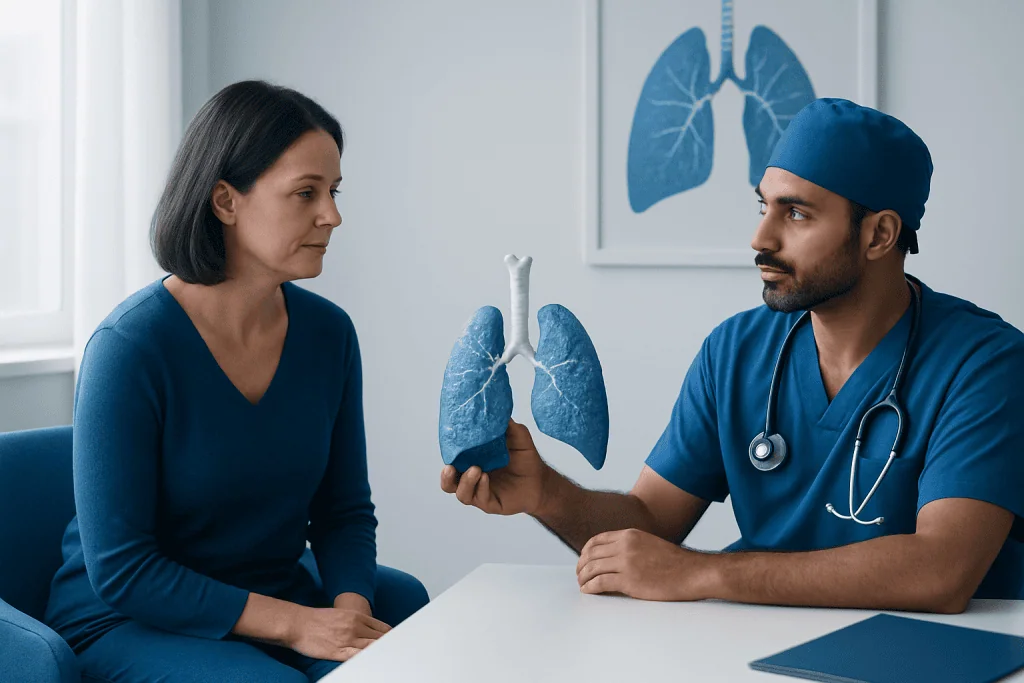
The most common operation for eligible patients is a lobectomy, in which a surgeon removes the lobe of the lung containing the tumor. The right lung has three lobes and the left lung has two. Removing a lobe generally offers better cancer control than removing only a small wedge of lung tissue when a person is fit enough for the procedure.
Depending on the tumor’s location and the patient’s lung reserve, a surgeon may recommend segmentectomy or wedge resection, which remove a smaller portion of the lung. Rarely, a pneumonectomy, or removal of an entire lung, is needed. For small cell lung cancer, the team carefully weighs the greater physical impact of larger operations against possible benefit.
The procedure is performed under general anesthesia. The surgeon may use an open thoracotomy, involving an incision between the ribs, or minimally invasive methods such as video-assisted thoracoscopic surgery (VATS) or robotic-assisted surgery. During the operation, lymph nodes are removed or sampled for examination. A chest tube is usually placed temporarily to drain air and fluid and help the remaining lung expand.
After surgery, laboratory specialists examine the removed tissue and lymph nodes. These findings confirm the stage and help the oncology team decide whether chemotherapy, radiation therapy, or both should follow. Surgical planning is closely connected to broader small cell lung cancer care when this resource is available.
Benefits, risks and expected results
For appropriately selected patients, surgery can remove the known tumor and provide detailed information about lymph node involvement. The strongest potential benefit is in people with truly localized disease who can also receive recommended additional treatment. However, the outcome depends on the cancer stage, pathology results, response to systemic therapy, general health, and whether cancer has spread microscopically.
Possible risks include bleeding, infection, blood clots, pneumonia, irregular heart rhythm, prolonged air leak, pain, and reduced breathing capacity. Complications are more likely in people with significant heart or lung disease, poor nutritional status, or ongoing tobacco use. The surgical team discusses individual risks before consent and provides strategies to reduce them.
Breathlessness may be noticeable early after surgery, particularly after removal of a larger amount of lung tissue. Many people gradually adapt as healing progresses, especially with regular walking, breathing exercises, and pulmonary rehabilitation when advised. Persistent or worsening symptoms should be assessed rather than managed alone.
Results are best understood as part of a complete treatment plan, not as a prediction based on surgery alone. Regular follow-up scans and oncology visits are essential because small cell lung cancer can recur, including outside the chest.
Recovery timeline and self-care after lung surgery
Most patients spend several days in hospital after lung surgery, although the length of stay varies with the operation and recovery. Pain control, early movement, coughing and deep-breathing exercises, and chest tube management are important during the first days. The care team encourages activity as soon as it is safe because this supports lung expansion and lowers the risk of blood clots and chest infection.
During the first few weeks at home, tiredness, incision discomfort, numbness around the wound, and some shortness of breath are common. Recovery from minimally invasive surgery may be faster than recovery from an open thoracotomy, but both require time. Many people resume light daily activities gradually, while heavier lifting, strenuous exercise, driving, and return to work should follow the surgeon’s specific advice.
A balanced diet, adequate fluids, prescribed pain relief, and avoiding smoking are practical parts of recovery. Pulmonary rehabilitation may help people regain endurance and confidence with activity. Chemotherapy may begin after surgical healing, depending on the treatment plan and pathology findings.
Patients should contact their clinical team promptly for fever, increasing redness or drainage from the wound, sudden or worsening breathlessness, chest pain, coughing up blood, calf swelling, or pain that is not controlled by the prescribed plan. These symptoms do not always indicate a serious problem, but timely assessment is important.
What should I do the night before surgery?
The night before surgery, patients should follow the hospital’s instructions exactly. These usually include guidance about when to stop eating and drinking, which regular medicines to take or pause, and whether to use any prescribed preoperative wash. Instructions can differ based on the anesthesia plan, diabetes medicines, blood thinners, and other health conditions, so personal advice from the surgical team takes priority over general information.
It can help to prepare identification, medication lists, relevant test results requested by the hospital, comfortable clothing, and a plan for transport and support after discharge. Smoking and alcohol should be avoided as instructed. Patients should not start, stop, or change medicines, supplements, or herbal products without discussing them with the care team.
Getting rest is useful, but feeling anxious before cancer surgery is understandable. Writing down questions, confirming arrival time, and using simple relaxation techniques may help. If a patient develops fever, a new cough, chest infection symptoms, or another illness before surgery, they should contact the surgical team promptly.
What is the most painful surgery to recover from?
There is no single operation that is universally the most painful to recover from. Pain experiences differ widely according to the surgical site, extent of the operation, technique used, pre-existing pain, emotional wellbeing, and the person’s response to medicines. Procedures involving the chest, upper abdomen, major joints, spine, or large incisions may cause substantial postoperative discomfort, but pain can usually be managed with an individualized plan.
Lung surgery can be uncomfortable because the chest wall moves with every breath, cough, and arm movement. Modern pain management may include regional anesthesia, non-opioid medicines, and carefully selected stronger pain medicines when needed. Good pain control is not only about comfort; it also helps patients breathe deeply, walk, and participate in recovery exercises.
Patients should tell their team if pain prevents sleep, deep breathing, walking, or normal movement. Pain that suddenly worsens or occurs with breathlessness, fever, or other new symptoms should be medically assessed.
What are the top five major surgeries? What are two types of surgery?
There is no official universal list of the “top five” major surgeries, because operations are classified in different ways. In general, major surgery usually involves general anesthesia, significant tissue removal or reconstruction, a longer recovery period, and potential effects on major organs. Common examples include heart bypass surgery, major lung resection, brain surgery, organ transplantation, and major abdominal surgery such as removal of part of the bowel or pancreas.
Two broad types of surgery are open surgery and minimally invasive surgery. Open surgery uses a larger incision to give direct access to the area being treated. Minimally invasive surgery uses smaller incisions and specialized instruments, often with camera guidance, such as VATS or robotic techniques used in some lung operations.
Neither approach is automatically best for every patient. The appropriate technique depends on tumor location and size, lymph node assessment, prior surgery, anatomy, surgeon expertise, and safety. The priority is complete and safe treatment of the cancer while preserving as much healthy lung function as possible.
When to seek medical care and where to find support
Anyone with symptoms that persist or worsen should arrange medical assessment. These may include a cough lasting several weeks, coughing up blood, unexplained shortness of breath, chest discomfort, repeated chest infections, unexplained weight loss, or marked fatigue. These symptoms can have many causes, but prompt evaluation is particularly important for people who smoke or have a significant smoking history.
After a diagnosis of small cell lung cancer, patients should seek care from a team experienced in lung cancer treatment. A second opinion can be reasonable when surgery is proposed, especially because surgery is appropriate only in selected early-stage cases. Decisions should be individualized after full staging and multidisciplinary discussion.
At Acibadem International, multidisciplinary specialists at JCI-accredited hospitals assess and treat lung cancer for international patients, including surgical and nonsurgical options. Patients may discuss lung cancer treatment options with their care team, alongside supportive care, rehabilitation, and follow-up planning.
Frequently asked questions
Can small cell lung cancer be treated with surgery?
Yes, but only in selected cases. Surgery may be considered when small cell lung cancer appears confined to a small area of the lung and testing shows no lymph node or distant spread. Chemotherapy is usually recommended as part of treatment even after complete surgical removal.
What operation is usually performed for small cell lung cancer?
When surgery is appropriate, a lobectomy is often preferred because it removes the lung lobe containing the tumor along with nearby lymph nodes. Smaller resections may be considered when lung function is limited or the tumor is in a suitable location. The final choice depends on staging, anatomy, and overall health.
How long does it take to recover from lung cancer surgery?
Early recovery takes days to weeks, while energy, breathing comfort, and return to usual routines may continue improving over several months. Recovery can be faster after minimally invasive surgery than after an open thoracotomy, but individual experiences vary. Follow-up appointments help the team monitor healing and plan any additional cancer treatment.
Will I need chemotherapy after surgery for small cell lung cancer?
Many patients do need chemotherapy after surgery because small cell lung cancer may have microscopic spread that scans cannot detect. The exact plan is based on surgical pathology, lymph node findings, overall fitness, and multidisciplinary recommendations. Some people may also be advised to have radiation therapy.
What should I do the night before lung surgery?
Follow the hospital’s fasting, medication, and arrival instructions closely. Prepare essential documents and a medication list, avoid smoking, and contact the team if you develop a fever, cold, cough, or other new illness. Do not alter blood thinners, diabetes medicines, or supplements unless instructed by a clinician.
Is lung surgery very painful?
Lung surgery can cause significant discomfort, especially with coughing and deep breathing, but pain management is a planned part of care. The team may use several approaches to keep pain controlled and support safe movement and breathing exercises. Patients should report pain that is not adequately relieved.
References
- National Cancer Institute
- American Cancer Society
- National Comprehensive Cancer Network
- European Society for Medical Oncology
- American Lung Association
This article is for general information only and is not a substitute for professional medical advice. Please consult a qualified doctor about your individual situation.
Lung Cancer in Turkey — costs, top hospitals & a free quote
JCI-accredited · board-certified surgeons · reply within 24h
Add us as a Preferred Source to see more of our trusted health content across Google Search, AI Overviews and Discover.

Medical Oncology Department
Medical treatment of cancer with chemotherapy, immunotherapy and targeted therapies under a multidisciplinary tumor board.
60 specialists in this unit