

Achromatopsia Treatment: How It Works, Results and What to Expect
Achromatopsia is an inherited retinal condition that affects color vision, central sharpness and tolerance of bright light. Tinted lenses, hats, environmental adaptations and low-vision support are the mainstays of current treatment.
Key Takeaways
- Achromatopsia is an inherited retinal condition that affects color vision, central sharpness and tolerance of bright light.
- Tinted lenses, hats, environmental adaptations and low-vision support are the mainstays of current treatment.
- Gene therapy is under clinical investigation for some genetic forms of achromatopsia but is not yet routine care.
- Genetic testing can help confirm the diagnosis, guide counseling and identify possible research opportunities.
- Driving eligibility depends on visual acuity, visual field and local licensing rules rather than diagnosis alone.
Achromatopsia treatment does not currently restore normal cone vision for most people, but it can reduce light sensitivity and support safer, more comfortable daily functioning. Care is individualized and may include tinted lenses, low-vision aids, educational support and follow-up with an inherited retinal disease specialist.
Achromatopsia treatment: what it can do now
Achromatopsia treatment currently focuses on reducing disabling light sensitivity, improving practical vision and helping a person function comfortably at school, work and home. There is no established treatment that reliably restores normal color vision or fully repairs the cone cells responsible for detailed central sight, although gene-based treatments are being researched for certain inherited forms.
Care is usually coordinated by an ophthalmologist with experience in inherited retinal disorders, often alongside low-vision specialists, optometrists, genetic counselors and rehabilitation professionals. The right plan depends on age, symptoms, visual needs and the genetic cause when it is known.
Achromatopsia is present from birth and is different from the more common mild color-vision differences that may be noticed later in life. In complete achromatopsia, cone cell function is severely reduced or absent; incomplete forms may allow some color discrimination and somewhat better vision.
What does a person with achromatopsia see?
A person with achromatopsia commonly sees the world with little or no color, often in shades of gray. Vision can also be less sharp than usual, particularly for fine detail, faces at a distance, reading small print or recognizing objects in bright conditions. The experience varies substantially between complete and incomplete forms of the condition.
Marked sensitivity to light, called photophobia, is a central feature. Bright sunlight, glare from water or pavement, indoor fluorescent lighting and headlights may feel uncomfortable or overwhelming and can make vision seem worse. Many people see relatively more comfortably in dimmer settings, although reduced visual acuity remains present.
Involuntary eye movements, known as nystagmus, may occur during infancy or childhood and can lessen over time. Some people may also have farsightedness or nearsightedness, which can be corrected with ordinary prescription lenses but does not address the underlying cone dysfunction.
How achromatopsia treatment works
Current management aims to make the visual environment easier for the retina to tolerate and to maximize usable sight. Deeply tinted or specially filtered lenses can reduce the wavelengths and intensity of light that trigger photophobia. A specialist can recommend the tint, filter type and lens design after assessing comfort, vision and the person’s daily activities.
Wraparound sunglasses, side shields, a wide-brimmed hat and adjustable window coverings may further reduce glare outdoors or in brightly lit rooms. These measures do not cure achromatopsia, but they can improve comfort, reduce squinting and help a person use their remaining vision more effectively.
Low-vision rehabilitation can provide practical tools such as magnifiers, telescopic devices, electronic video magnifiers, large-print materials, contrast adjustments and accessibility settings on phones or computers. Children may benefit from classroom seating, enlarged learning materials and an individualized educational plan where appropriate.
Regular eye examinations remain important. They help identify correctable refractive errors, assess changes in retinal structure and distinguish achromatopsia from other inherited retinal conditions, including retinitis pigmentosa, which has a different pattern of vision loss and management needs.
Who may benefit and what the care process involves
Anyone with confirmed or suspected achromatopsia may benefit from an individualized visual rehabilitation plan. Early assessment is particularly useful for children because support at home and school can promote visual development, confidence and participation. Adults may seek care when glare, reading demands, employment changes or driving questions create new challenges.
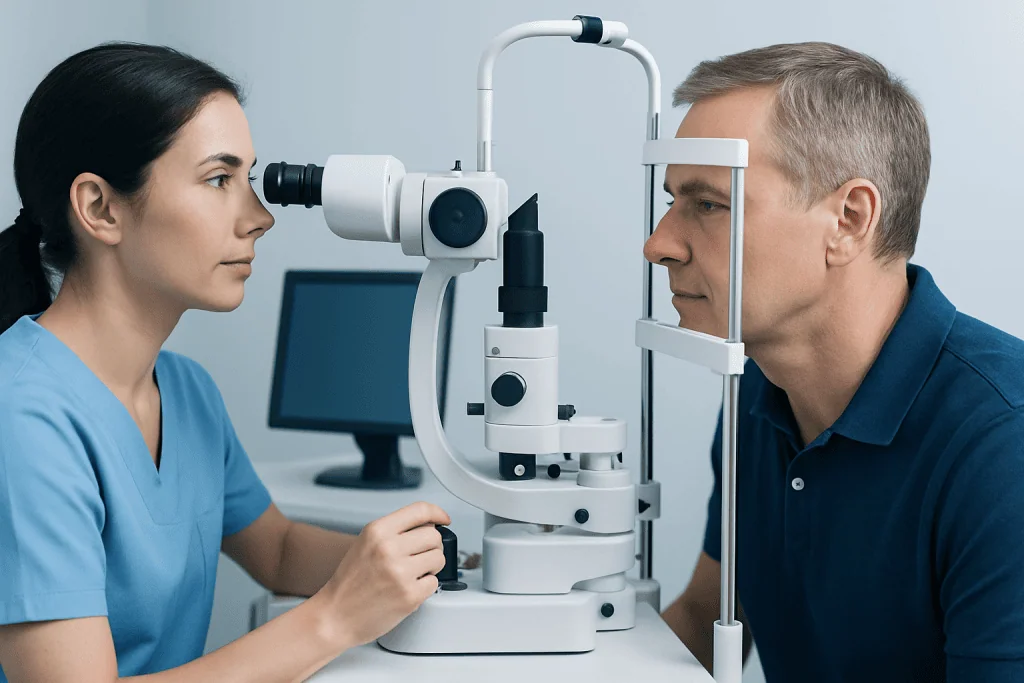
The process commonly begins with a detailed eye history and examination. Tests may include visual acuity measurement, color-vision testing, retinal imaging with optical coherence tomography, visual field assessment and electroretinography, which measures retinal responses to light. Genetic testing may be offered to identify changes in genes associated with achromatopsia and to support family counseling.
After assessment, the eye-care team may arrange a trial of filters or tinted lenses, update a glasses prescription and refer the person for low-vision evaluation. The low-vision team discusses the tasks that matter most, such as reading, using screens, navigating outdoors, studying or working, then recommends appropriate devices and strategies.
Follow-up is individualized. Visits may be more frequent when a child is developing, when visual aids are being adjusted or when research participation is being considered. Families should discuss whether referral to an inherited retinal disease center or clinical trial registry is appropriate; research eligibility is determined by specific clinical and genetic criteria.
Gene therapy research: can achromatopsia be cured?
Achromatopsia cannot currently be cured with standard clinical treatment. Supportive care can meaningfully improve comfort and daily functioning, but it does not replace missing or poorly functioning cone-cell activity. Because achromatopsia is genetic, researchers are investigating whether delivering a working copy of a relevant gene to retinal cells could improve cone function.
Early-stage clinical trials have studied gene therapies for selected forms of achromatopsia, including forms related to CNGA3 and CNGB3 gene variants. These studies are important, but they do not yet establish a routine, approved cure. Results can differ by age, gene, retinal structure, treatment method and the ability of the visual system to use new retinal signals.
For families interested in research, genetic confirmation is often an important first step. A retina specialist and genetic counselor can explain what a result means, whether clinical research is available and the difference between a regulated clinical trial and unproven commercial claims. Treatments offered outside well-designed research and regulatory pathways should be approached cautiously.
Potential future retinal therapies may involve procedures inside the eye, such as targeted delivery of a therapeutic product under the retina. If a person is being assessed for a retinal procedure, the ophthalmology team explains the purpose, alternatives, expected monitoring and possible risks in detail.
What is the newest treatment for retinitis pigmentosa?
The newest treatment for retinitis pigmentosa depends on the genetic subtype. For biallelic RPE65-associated inherited retinal dystrophy, an approved retinal gene therapy is available in some countries for eligible patients. This treatment is not a treatment for achromatopsia and is appropriate only when the specific diagnosis, gene findings and retinal features meet established criteria.
Many other retinitis pigmentosa treatments remain under investigation, including gene-specific therapies, RNA-based treatments, optogenetic approaches, cell-based strategies and retinal devices. A retina specialist can clarify whether a person has retinitis pigmentosa, achromatopsia or another inherited retinal disorder before discussing relevant options.
It is important not to assume that advances for one retinal condition will work for another. The affected retinal cells, genes, disease course and potential benefits can differ. Genetic testing and expert retinal assessment are therefore central to treatment planning.
Benefits, limits and possible risks of treatment
The expected benefits of current achromatopsia care are practical: less discomfort from glare, improved ability to use vision in bright settings, better access to reading or screen tasks and greater independence in daily activities. Benefits may be immediate with a well-selected filter or device, while adapting to low-vision tools can take time and practice.
Filters and tinted lenses may make some environments darker or alter color perception further, so they should be chosen carefully for specific tasks. Low-vision devices may not suit every activity, and some people need several options rather than one device. An occupational therapist or low-vision specialist can help match tools to real-life goals.
Any investigational retinal procedure has potential risks, which may include inflammation, infection, bleeding, retinal injury, changes in eye pressure or no meaningful improvement in vision. These risks are assessed individually and should be discussed with the clinical trial team or treating retinal surgeon before consent.
At Acibadem International, multidisciplinary ophthalmology specialists in JCI-accredited hospitals can assess inherited retinal conditions and coordinate diagnostic, low-vision and genetic-care pathways for international patients.
Can you drive if you have achromatopsia?
Whether a person with achromatopsia can drive depends on their measured visual acuity, visual field, ability to manage glare and the driving standards where they live. The diagnosis alone does not determine eligibility, but many people with achromatopsia may not meet the visual acuity requirements for an unrestricted license because central vision is reduced.
Night driving, driving toward low sun and driving in areas with strong reflections may be particularly difficult because of photophobia and glare. Dark tinted lenses can improve comfort in daylight but should not be used for night driving. A person should discuss driving with an ophthalmologist and follow the requirements of the local licensing authority.
When driving is not safe or permitted, mobility planning can preserve independence. Options may include public transport, ride services, support from family or friends, walking routes and workplace or school accommodations.
When to seek medical care
Medical assessment is appropriate when a child has persistent light sensitivity, involuntary eye movements, delayed visual attention, difficulty recognizing faces or suspected difficulty seeing colors. An eye examination can identify whether achromatopsia or another visual condition may be present and can guide early support.
People with an established diagnosis should arrange review if vision changes noticeably, new flashes or floaters occur, an eye becomes painful or red, or there is a sudden loss of vision. These symptoms are not typical of stable achromatopsia and need prompt assessment to exclude other eye problems.
A retinal specialist can also be helpful when genetic testing has not been performed, family planning questions arise, low-vision needs change or a person wants reliable information about clinical trials. Ongoing care can be adapted as visual demands change over childhood, education, employment and later life.
Frequently asked questions
Is achromatopsia the same as ordinary color blindness?
No. Ordinary color-vision deficiency often affects the ability to distinguish certain colors while visual sharpness and light tolerance remain relatively normal. Achromatopsia is a more extensive cone-cell disorder that commonly causes severely reduced color perception, light sensitivity and reduced central visual acuity.
Can glasses improve achromatopsia?
Prescription glasses can correct refractive errors such as nearsightedness or farsightedness. Tinted or filtered lenses may also reduce glare and photophobia. However, glasses cannot restore normal cone-cell function or normal color vision.
Is gene therapy available for achromatopsia?
Gene therapy for achromatopsia is being evaluated in clinical research for selected genetic forms of the condition. It is not currently an established standard treatment that cures achromatopsia. Eligibility for studies may depend on genetic findings, age, retinal structure and other health factors.
Does achromatopsia get worse over time?
Achromatopsia is often considered relatively stable, especially compared with many progressive retinal diseases. However, the degree of symptoms and retinal findings can vary between individuals and genetic forms. Regular eye reviews help monitor vision and address changing functional needs.
Can children with achromatopsia attend mainstream school?
Many children with achromatopsia attend mainstream school with appropriate support. Useful accommodations may include reduced glare, seating away from bright windows, enlarged materials, digital accessibility tools and extra time for visually demanding tasks. A low-vision specialist and school team can help tailor support.
Should family members have genetic testing?
Genetic counseling can help families understand inheritance, the value of testing and who may benefit from it. Testing may clarify the diagnosis and provide information relevant to relatives and future family planning. Decisions about testing are personal and should be discussed with a qualified clinician or genetic counselor.
References
- National Eye Institute
- American Academy of Ophthalmology
- National Organization for Rare Disorders
- MedlinePlus Genetics
- Orphanet
This article is for general information only and is not a substitute for professional medical advice. Please consult a qualified doctor about your individual situation.
Explore treatments in Turkey — costs, top hospitals & a free quote
JCI-accredited · board-certified surgeons · reply within 24h
Add us as a Preferred Source to see more of our trusted health content across Google Search, AI Overviews and Discover.

More from the Health Library

Related Specialists
Deniz Beyza Kılıç
Physical Medicine & Rehabilitation
Assoc. Prof. Dr. Şule Göncü Ayhan
Gynecology & Obstetrics
Dr. Ünsal Tank
Dermatology
Prof. Dr. Filiz Saçan
Interventional Radiology