

Walking and Gentle Movement After Surgery in Turkey

Walking and gentle movement after surgery in Turkey usually begin early, with a personalized plan to support circulation, breathing, bowel function, and a safe return to daily activity. At Acibadem, the surgical team guides when and how to start moving, adjusts activity to the procedure and recovery stage, and combines mobilization with pain control and rehabilitation support.
Gentle walking is often one of the first steps in recovery, but the right pace and support matter. This guide helps you understand how to move safely after surgery in Turkey, what to ask your care team, and how Acibadem International can support your aftercare logistics.
At a glance
- Best first step: Follow your surgeon and nurse instructions before increasing movement
- Typical goal: Short, frequent walks rather than long or tiring sessions
- Support available: Interpreter assistance, discharge planning, and aftercare coordination
- Travel focus: Plan walking breaks, hydration, comfort, and clot-prevention advice
- When to pause: New chest pain, severe breathlessness, fainting, heavy bleeding, or sudden swelling
Why gentle movement matters after surgery
After surgery, it is normal to feel cautious about moving. You may worry about pain, stitches, drains, dizziness, or doing too much too soon. In many recovery plans, however, gentle movement is encouraged because it can support circulation, breathing, bowel activity, balance, and confidence as you return to daily routines.
The key is not to treat walking as exercise at first. Early walking is usually a recovery activity: slow, supported, and guided by your medical team. Your first walks may be only to the bathroom, along a hospital corridor, or around your hotel room. That can still be meaningful progress.
At Acibadem International hospitals, your instructions are based on your surgery type, anesthesia, medical history, pain level, and mobility. Nurses, physicians, physiotherapists where needed, and international patient services can help you understand what is safe before you leave the hospital or continue recovery in your accommodation.
Start with your personal discharge instructions
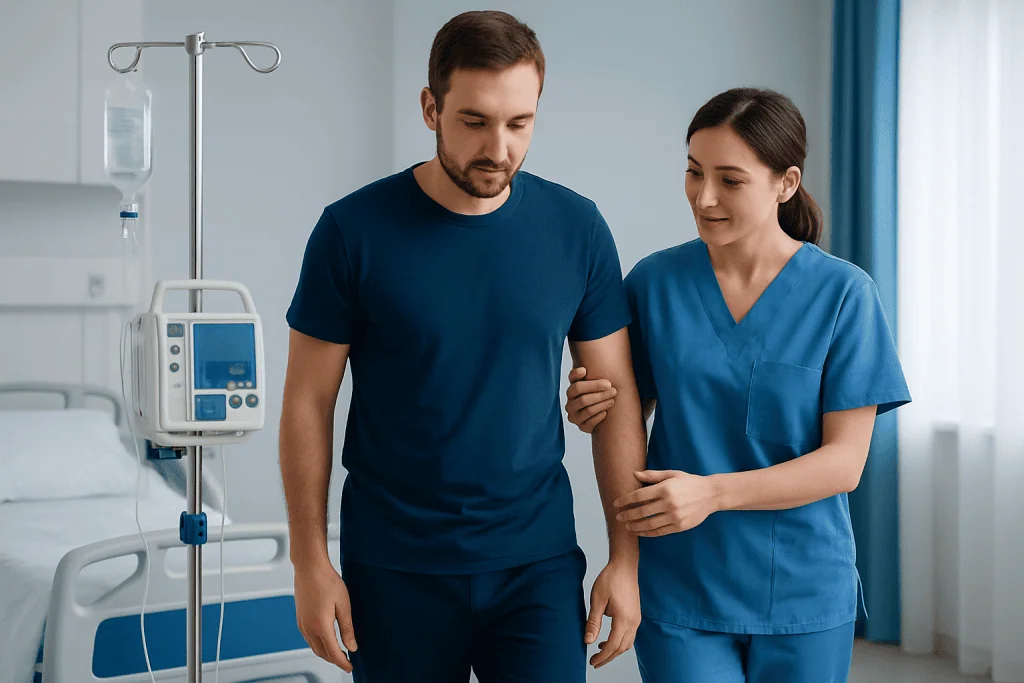
Your discharge plan is the most important reference for walking and gentle movement. It should tell you what activities are allowed, what to avoid, when to return for follow-up, how to manage pain medication, and which symptoms require urgent contact. If anything is unclear, ask before you leave the hospital.
Different procedures can have very different limits. A patient recovering from abdominal surgery may be told to avoid lifting and twisting. A patient after orthopedic surgery may have weight-bearing rules or need crutches. A patient after cardiac, vascular, or complex surgery may receive more specific walking targets and warning signs.
If English is not your first language, ask for an interpreter when movement instructions are explained. Acibadem International can help coordinate interpreter support so you and your companion understand practical details such as how often to walk, how to use stairs, how to shower safely, and when to call the care team.
What a gentle walking routine may look like
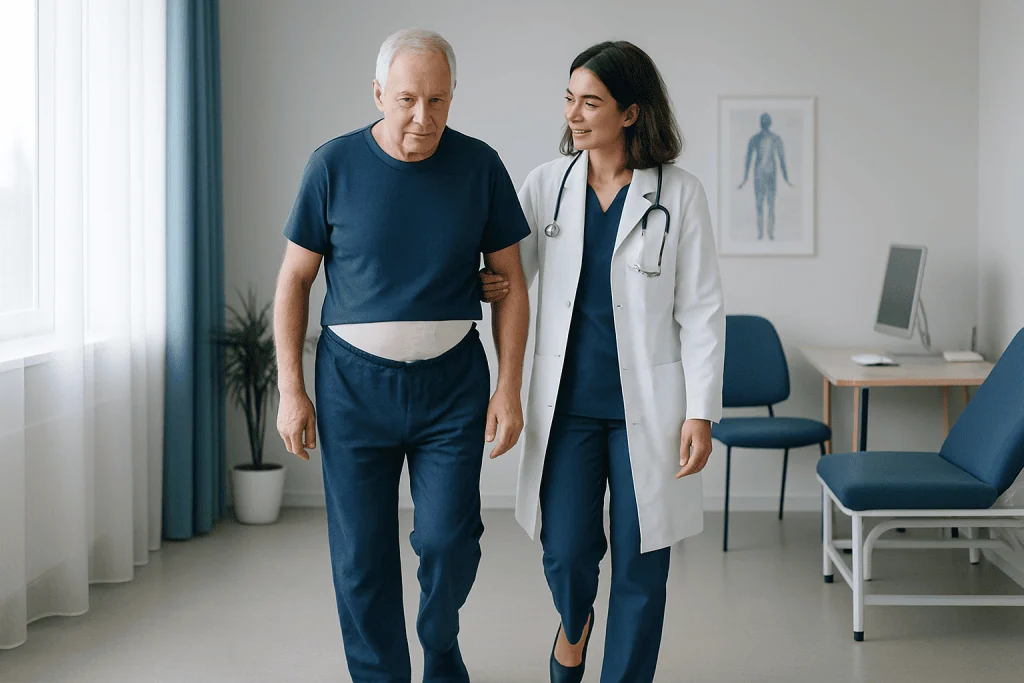
In the first days after discharge, many patients do better with several short walks instead of one long effort. You might walk for a few minutes, rest, drink water if allowed, and repeat later. The exact timing should come from your care team, especially if you had major surgery, blood-loss concerns, heart or lung conditions, or mobility restrictions.
A practical routine is to connect walking with daily moments. For example, you may walk after using the bathroom, before meals, or along a quiet corridor with your companion. Keep the pace easy enough that you can speak comfortably. If you feel lightheaded, sweaty, unusually breathless, or unsteady, stop and sit down.
Useful habits include wearing supportive non-slip footwear, keeping pathways clear, standing up slowly, and using handrails where available. If you have drains, dressings, a catheter, compression stockings, a brace, or crutches, ask a nurse to show you how to move with them before you try independently.
Gentle movement beyond walking
Gentle movement can include more than walking, but it should never replace your surgeon-specific instructions. Depending on your procedure, you may be encouraged to do ankle circles, deep breathing, posture changes, or simple bed-to-chair transfers. Some patients may also receive physiotherapy guidance, especially after orthopedic, neurological, cardiac, or long hospital stays.
Breathing exercises may help you take fuller breaths after anesthesia or when pain makes you breathe shallowly. Ankle and foot movements may support circulation during periods of rest. Changing position regularly can also reduce stiffness and pressure discomfort, as long as you protect the surgical area and follow any movement limits.
Avoid guessing with stretches, gym-style exercises, yoga poses, resistance bands, swimming, or abdominal exercises until your care team approves them. Gentle does not always mean safe for every operation. If you are unsure, send your question through your patient coordinator or ask at your follow-up appointment.
Managing pain, tiredness, and confidence
Some discomfort with movement can be expected, but severe or worsening pain is a reason to pause and ask for advice. Take prescribed pain medication as directed, because uncontrolled pain can make you breathe shallowly, move poorly, and feel anxious. Do not increase or combine medicines unless your doctor has told you it is safe.
Fatigue is also common after surgery, travel, anesthesia, sleep disruption, and emotional stress. Plan movement when you usually feel stronger, and rest before you become exhausted. Recovery is not a straight line; you may have a better day followed by a slower day, especially after follow-up visits or travel arrangements.
Confidence often improves when you know what to do. Ask your team to demonstrate how to get out of bed, climb stairs if needed, enter a car, or walk with assistance. If you are staying in Turkey before flying home, choose a recovery environment with easy access to a bathroom, elevator if needed, comfortable seating, and safe walking space.
Walking safely during your stay in Turkey
After surgery, your surroundings matter. Istanbul and other Turkish cities can include slopes, uneven pavements, busy crossings, and crowded public areas. In early recovery, it is usually safer to walk indoors, in hospital corridors, hotel hallways, or calm areas close to your accommodation rather than attempting sightseeing.
Keep your walks practical and close to help. Carry your phone, hospital contact details, and any important medical documents. If you are taking medications that may cause drowsiness or dizziness, avoid walking alone. A companion can help with doors, elevators, taxis, bags, and noticing if you look pale or unsteady.
Acibadem International patient services can assist with practical arrangements such as transfer coordination, accommodation guidance, interpreter support, and communication with your medical team. These services are especially helpful when you are trying to balance recovery instructions with travel plans, follow-up appointments, and your return flight.
Preparing for your flight home
Flying home after surgery should be planned with your surgeon, not only around your ticket date. Your team will consider your procedure, anesthesia, wound healing, mobility, pain control, clot risk, and whether you need another check before travel. Do not assume that feeling well for one day means you are ready to fly.
For many travelers, the journey home involves long periods of sitting. Your doctor may advise walking breaks, ankle movements, hydration, compression stockings, or medication depending on your risk profile. Follow your personalized instructions carefully, especially if you have a history of blood clots, heart or lung disease, cancer treatment, or a major operation.
Before departure, confirm whether you need a fit-to-fly letter, wound-care supplies, medication documentation, or airport assistance. Ask how often you should walk during layovers and what symptoms should make you seek urgent care. A clear plan can make the trip feel calmer and safer for you and your companion.
Step by step
- Confirm your movement limits before discharge. Ask your surgeon or nurse exactly what walking, stairs, bending, lifting, and sitting limits apply to you. Repeat the instructions back in your own words, with interpreter support if needed, so any confusion can be corrected.
- Take your first walks with support. Early walks should be short and supervised if you feel weak, dizzy, or uncertain. Use handrails, walking aids, or a companion until your balance and confidence improve.
- Choose frequency over distance. Short, frequent walks are usually easier on the body than pushing for a long walk. Stop before you are exhausted and increase only as your care team advises.
- Protect your wound and medical devices. Check how to move with dressings, drains, catheters, braces, or compression garments. Keep clothing loose and avoid movements that pull on the surgical area.
- Track symptoms, not just steps. Pay attention to pain, swelling, breathlessness, dizziness, bleeding, and how you feel after walking. Step counts can be misleading after surgery, so your medical instructions matter more than a fitness goal.
- Plan your accommodation routine. Keep essentials within easy reach and clear walking paths to the bathroom and bed. If stairs are unavoidable, ask your care team how to manage them safely before discharge.
- Coordinate your return travel. Discuss your flight date, airport mobility, and walking breaks with your doctor before leaving Turkey. Ask Acibadem International patient services for help coordinating documents, transfers, or follow-up communication when appropriate.
Your checklist
- Written discharge instructions for walking, stairs, lifting, and rest
- Emergency contact number and follow-up appointment details
- Comfortable non-slip shoes or slippers
- Prescribed medications and clear timing instructions
- Wound-care supplies approved by your care team
- Compression stockings or mobility aids if prescribed
- Companion support for early walks and transfers
- Accommodation with safe bathroom access and minimal stairs
- Travel documents, fit-to-fly note if needed, and medication paperwork
- Plan for walking breaks during airport time and long journeys
Key takeaways
- Walking after surgery in Turkey should follow your personalized discharge plan, not a generic timeline.
- Short, supported, frequent walks are often safer than long efforts in early recovery.
- Interpreter support can help you understand movement limits, wound care, medications, and warning signs.
- Your accommodation and travel plans should be arranged around recovery needs, not sightseeing goals.
- Before flying home, confirm mobility advice, clot-prevention steps, documents, and follow-up arrangements.
Frequently asked questions
How soon can I start walking after surgery?
This depends on your operation, anesthesia, general health, and your surgeon’s instructions. Some patients are encouraged to stand or walk with assistance on the same day, while others need a slower plan. Always wait for the hospital team to confirm what is safe for you.
How much walking is too much after surgery?
Too much walking may cause unusual fatigue, increasing pain, dizziness, swelling, bleeding, or a setback in how you feel later that day. In early recovery, short and frequent is usually better than long and intense. If symptoms increase, pause and contact your care team for guidance.
Can I go sightseeing in Turkey after my operation?
Sightseeing should not be your priority immediately after surgery. Crowds, uneven streets, long walks, heat, stairs, and transportation delays can make recovery harder. Ask your doctor when light outings are reasonable, and choose calm, short, accessible activities only if approved.
Do I need a physiotherapist after surgery?
Some patients benefit from physiotherapy, especially after orthopedic, neurological, cardiac, or complex procedures. Others may only need basic walking and breathing guidance from the hospital team. Your doctor will advise whether physiotherapy is needed and what type is appropriate.
What should my companion do during my walks?
Your companion can help you stand slowly, keep pathways clear, carry your phone or water if allowed, and watch for signs of dizziness or distress. They should not pull you up by the arms or encourage you to push beyond medical advice. If you feel unwell, they should help you sit and contact the care team.
Is it safe to climb stairs after surgery?
Stair advice varies greatly by surgery type and mobility status. Some patients can use stairs slowly with a handrail, while others should avoid them or use a specific technique. Ask your nurse, surgeon, or physiotherapist to demonstrate before you leave the hospital.
How can Acibadem International help with aftercare logistics?
Acibadem International can help international patients coordinate practical recovery needs such as interpreter support, appointment communication, transfer arrangements, and guidance around accommodation logistics. Your medical team remains the source for clinical instructions. Patient services can help make those instructions easier to follow during your stay in Turkey.
Add us as a Preferred Source to see more of our trusted health content across Google Search, AI Overviews and Discover.
More Patient Guides

When Can You Wear a Hat After a Hair Transplant?
You can usually wear a loose, clean hat after a hair transplant once your surgeon confirms grafts are protected—often around days 7–14.
8 min read
Flying After Knee or Hip Replacement Surgery
Flying after knee or hip replacement surgery is usually delayed until your surgeon confirms you can travel safely; plan mobility, clot prevention…
8 min read
Open vs Closed Rhinoplasty Recovery: Differences Explained
Open vs closed rhinoplasty recovery is usually similar overall, but open surgery may cause longer tip swelling. Learn timelines, travel and aftercare…
9 min read