70450 Procedure Code: An Evidence-Based Patient Guide

CPT code 70450 describes a CT scan of the head or brain without contrast material. It is a radiology diagnostic code, not a treatment or surgical procedure.
Key Takeaways
- CPT code 70450 describes a CT scan of the head or brain without contrast material.
- It is a radiology diagnostic code, not a treatment or surgical procedure.
- Common reasons for a 70450 scan include head injury, sudden neurological symptoms, severe headache, or concern about bleeding in the brain.
- The scan is usually quick, painless, and does not require recovery time or sedation for most adults.
- Whether insurance covers the scan depends on the patient’s diagnosis, clinical documentation, and individual health plan rules.
The 70450 procedure code refers to a computed tomography (CT) scan of the head or brain performed without contrast material. It is a diagnostic imaging examination that can help clinicians rapidly look for bleeding, fractures, stroke-related changes, swelling, or other brain and skull abnormalities.
Overview: What the 70450 Procedure Code Means
The 70450 procedure code is a Current Procedural Terminology (CPT) code used in the United States to identify a computed tomography, or CT, examination of the head or brain performed without contrast material. In simple terms, the 70450 medical procedure code describes an imaging test that uses X-rays and computer processing to create detailed cross-sectional pictures of the brain, skull, and nearby structures.
A CT head scan is commonly requested when a clinician needs timely information about possible bleeding, head injury, stroke-related changes, swelling, fractures, or other structural causes of neurological symptoms. The test itself does not treat a condition. Rather, it helps the medical team decide whether urgent treatment, further testing, observation, or specialist assessment is needed.
The 70450 proc code may appear on an imaging order, medical bill, explanation of benefits, referral, or prior authorization request. Although coding can seem technical, the main point for patients is that this code identifies a non-contrast head CT examination. The reason it was ordered should be explained by the clinician in the context of the person’s symptoms and medical history.
What Is Medical Procedure Code 70450?
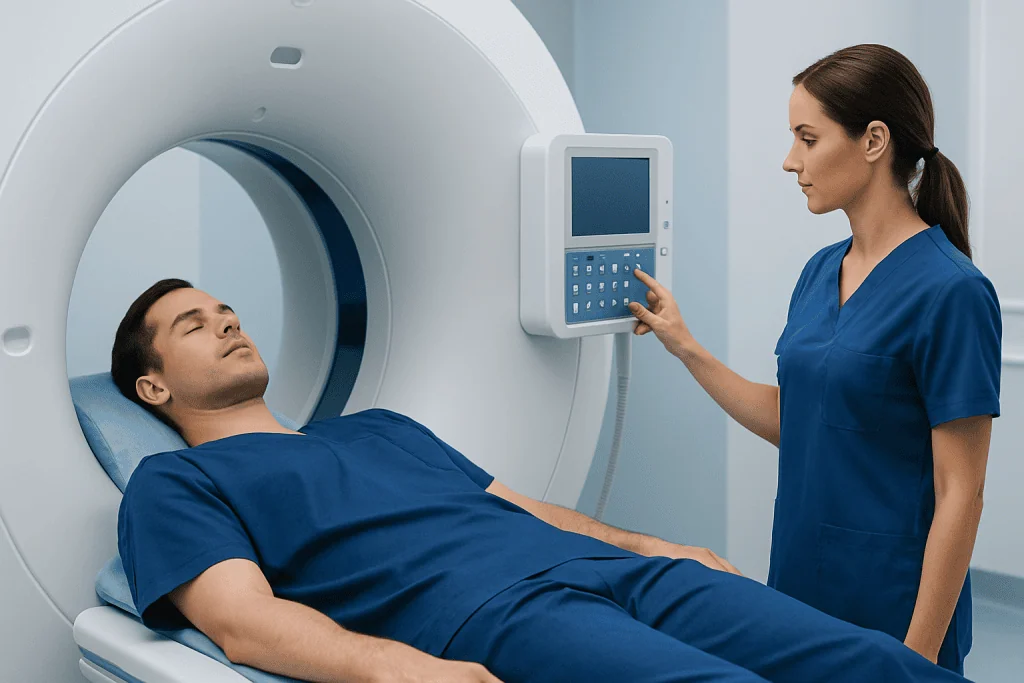
Medical procedure code 70450 is the CPT code for a CT scan of the head or brain without contrast. “Without contrast” means that no iodine-based dye is injected into a vein for the scan. Non-contrast CT is especially useful in many urgent settings because fresh bleeding in and around the brain can often be seen clearly without contrast material.
A CT scanner is a large, doughnut-shaped machine. During the examination, the patient lies on a narrow table that moves through the opening while the scanner collects images. The imaging team can view structures such as the skull, brain tissue, fluid spaces around the brain, sinuses, and parts of the eye sockets.
The wording “head or brain” does not necessarily mean the scan is being performed because a brain disease is expected. It is often used to rule out serious causes of symptoms. Depending on the clinical question, a clinician may instead request another imaging study, such as MRI, a CT scan with contrast, or a CT angiography examination of blood vessels.
Is CPT Code 70450 a Diagnostic or Radiology Code?

CPT code 70450 is both a diagnostic and radiology code. It belongs to the diagnostic radiology portion of the CPT coding system and represents an imaging service rather than an operation, office visit, laboratory test, or medication. The resulting images are interpreted by a radiologist, who prepares a report for the ordering clinician.
The report may describe normal findings, minor incidental changes, or findings that need follow-up. A CT scan result should always be interpreted alongside the patient’s symptoms, neurological examination, medications, and medical history. For example, a normal non-contrast CT may be reassuring after some types of injury, but it does not identify every possible cause of headache, dizziness, seizure, or weakness.
CT is often chosen because it is widely available and fast. MRI provides different and sometimes more detailed information about brain tissue, nerves, and certain small or early abnormalities, but it generally takes longer and may not be appropriate in every urgent situation. The care team selects imaging based on the question that needs answering.
What Is the Covered Diagnosis for CPT Code 70450?
There is no single diagnosis that is automatically covered for CPT code 70450. Coverage is determined by an insurer or health system using the patient’s documented symptoms, examination findings, medical history, the clinical reason for the scan, and the terms of the individual health plan. A scan is generally more likely to meet medical-necessity criteria when it is ordered to evaluate a specific and clinically supported concern.
Examples of reasons a clinician may document include recent head trauma, suspected skull fracture, sudden severe headache, new weakness or numbness, confusion, altered consciousness, seizure, suspected stroke, known or suspected bleeding in the brain, follow-up of some neurological conditions, or assessment after a fall in a person at increased bleeding risk. These examples do not guarantee coverage, and the appropriate diagnosis code varies from person to person.
For planned outpatient imaging, patients may wish to ask the ordering office whether prior authorization is required and whether the facility is in-network for their plan. The imaging provider can explain practical preparation steps, while the insurer can clarify benefit and authorization requirements. In an emergency, necessary testing should not be delayed while trying to resolve administrative questions.
How a Non-Contrast CT Head Scan Is Performed
Before the scan, the patient may be asked to remove eyeglasses, hearing aids, hairpins, dentures, jewelry, or other metal items around the head and neck. For a standard 70450 procedure, fasting is usually not required because contrast dye is not used. The imaging team will confirm the person’s identity, review the reason for the scan, and ask about pregnancy when relevant.
During the examination, the patient lies on their back with the head positioned carefully to reduce movement. A support or gentle strap may be used to help keep the head still. The table then moves through the CT scanner while images are collected. The patient can usually communicate with the technologist through an intercom.
The actual image acquisition is often completed within minutes, although check-in, positioning, and safety checks make the full appointment longer. The scan is painless. Some people find it helpful to know that the CT machine is relatively open compared with many MRI scanners. Afterward, the images are reviewed by a radiologist and sent to the ordering clinician, who discusses what the findings mean for the individual patient.
Who May Need a 70450 Procedure and What It Can Show
A clinician may request a non-contrast CT head scan when symptoms or circumstances raise concern for a structural problem affecting the brain or skull. Common situations include a significant blow to the head, a fall, sudden neurological changes, a severe or unusual headache, loss of consciousness, persistent vomiting after injury, or symptoms that could suggest stroke or bleeding.
The examination can identify many urgent findings, including certain types of bleeding, skull fractures, brain swelling, enlarged fluid spaces, some masses, and major changes related to stroke. It may also show sinus disease or incidental age-related changes. However, the scan has limitations: subtle injuries, early ischemic stroke, inflammation, nerve disorders, and many causes of chronic headache may require different tests or clinical follow-up.
People with symptoms such as recurrent headaches may benefit from assessment tailored to the pattern and associated features. A clinician may consider related conditions such as migraine or stroke when determining whether immediate imaging is appropriate. Imaging should be guided by clinical need, since unnecessary CT scans expose patients to radiation without adding useful information.
Does CPT 70450 Need a Modifier?
CPT 70450 may need a modifier in some billing situations, but not for every examination. A modifier is a two-character billing addition that gives extra information about how, where, or by whom a service was provided. The correct use of modifiers depends on the payer’s policies, the setting, and whether the technical and professional components of the examination are billed separately.
For example, an imaging facility and a radiologist may bill different components of one CT scan: the facility may provide the equipment and technical service, while the radiologist provides image interpretation. Certain modifiers can be used when these components are billed separately. Other modifiers may apply in special circumstances, such as reduced services or repeat examinations.
Patients should not need to determine modifiers themselves. If a bill, claim, or authorization includes a modifier that is unclear, the most useful next step is to contact the imaging center’s billing team, the ordering provider’s office, or the health insurer. They can explain how the particular claim was submitted and whether additional documentation is needed.
Benefits, Risks, Recovery, and When to Seek Medical Care
The key benefit of a 70450 procedure is rapid, detailed imaging that can help identify potentially urgent conditions and guide prompt decisions. The scan is noninvasive, does not involve injections or contrast dye, and usually allows people to return to normal activities immediately. There is generally no recovery period, special medication, or dietary restriction after a routine non-contrast CT head scan.
CT uses ionizing radiation. The dose is kept as low as reasonably achievable while still producing clinically useful images, and clinicians weigh this exposure against the expected benefit of the test. Patients should tell the care team if they are pregnant or might be pregnant, as imaging choices may need to be considered carefully. Remaining still is important because motion can reduce image quality and occasionally require repeat pictures.
When to seek medical care: urgent assessment is appropriate for sudden weakness, facial drooping, trouble speaking, new confusion, seizure, fainting, a sudden severe headache, worsening headache after injury, repeated vomiting, unusual drowsiness, or loss of balance after a head impact. These symptoms do not always indicate a serious condition, but they require timely medical evaluation. For ongoing, non-urgent neurological symptoms, a qualified clinician can decide whether a CT scan, neurology assessment, or another investigation is most appropriate.
Acibadem International’s multidisciplinary specialists and JCI-accredited hospitals assess neurological symptoms and arrange appropriate imaging and treatment for international patients. The most appropriate next step depends on the patient’s symptoms, examination, and overall health rather than on a billing code alone.
Frequently asked questions
What is the 70450 procedure code description?
The 70450 procedure code description is a computed tomography scan of the head or brain performed without contrast material. It is used for diagnostic imaging and may help evaluate the brain, skull, and surrounding structures.
How long does a 70450 CT scan take?
The image-taking part of a non-contrast CT head scan often takes only a few minutes. Allowing time for registration, safety questions, positioning, and instructions, the overall visit may take longer depending on the imaging facility and whether the scan is urgent.
Is contrast used with CPT code 70450?
No. CPT code 70450 specifically describes a CT scan of the head or brain without contrast material. If contrast is needed, the clinician will order a different type of CT examination based on the clinical question.
Can a CT head scan diagnose a stroke?
A non-contrast CT head scan is commonly used in the urgent evaluation of suspected stroke, particularly to look for bleeding in the brain. It may not show every early ischemic stroke, so clinicians may use additional imaging or repeat evaluation depending on symptoms and timing.
Do patients need to prepare for a 70450 procedure?
Most people need little preparation for a non-contrast CT head scan. They may be asked to remove metal objects from the head and neck area and should inform the imaging team about possible pregnancy, recent injuries, and any difficulty lying still.
Can I drive after a CT head scan without contrast?
Most adults can drive and return to usual activities after a routine non-contrast CT scan because it does not normally involve sedation or contrast dye. A person should follow any specific instructions from their care team, especially if they are being evaluated after an injury or have ongoing symptoms.
References
- American Medical Association
- American College of Radiology
- Radiological Society of North America
- National Institute of Neurological Disorders and Stroke
- U.S. Food and Drug Administration
This article is for general information only and is not a substitute for professional medical advice. Please consult a qualified doctor about your individual situation.
Joint and spine care in Turkey — expert assessment & treatment
JCI-accredited · board-certified surgeons · reply within 24h
Add us as a Preferred Source to see more of our trusted health content across Google Search, AI Overviews and Discover.