

Eating and Drinking During Recovery in Turkey

Eating and drinking during recovery in Turkey means following a doctor-guided nutrition and hydration plan that supports healing, energy, and comfort after treatment or surgery. At Acibadem, dietary recommendations are tailored to the type of procedure, recovery stage, and individual needs, with guidance on when to resume fluids, which foods are easier to tolerate, and how to avoid common digestive…
Food and drink can make your recovery in Turkey feel calmer, more comfortable and easier to manage day by day. This guide helps you plan meals, hydration, hotel arrangements and practical food safety habits while following your medical team’s instructions.
At a glance
- Best first step: Follow the eating and drinking instructions given by your doctor, nurse or dietitian.
- Hydration: Keep water nearby and ask your care team how much fluid is appropriate for you.
- Meal style: Choose simple, familiar, balanced meals and avoid experimenting too much during early recovery.
- Hotel planning: Request a fridge, kettle, room service options and nearby pharmacy or market information.
- Support available: Acibadem International can help coordinate interpreters, diet guidance, discharge instructions and practical aftercare questions.
Start with your personal recovery instructions
Eating and drinking during recovery in Turkey should begin with one simple rule: your medical team’s instructions come first. Your needs may differ depending on your procedure, medication, medical history, swallowing comfort, digestive tolerance and mobility. Before leaving the hospital, ask exactly when you may eat, what texture is safest, whether any foods or drinks should be avoided, and what to do if you feel nauseated or constipated.
At Acibadem International hospitals, discharge guidance is usually coordinated with the relevant specialist team and international patient services so you can understand the plan in your own language whenever possible. If a recommendation is unclear, ask for it to be written down. It is much easier to recover in a hotel or rented apartment when you know what is allowed, what is optional and what should prompt a call to the hospital.
Do not treat general internet advice as a substitute for your own plan. Some patients are encouraged to eat high-protein foods; others may need a temporary soft, low-fat, low-salt, diabetic, liquid or restricted diet. If you have allergies, religious dietary needs or strong preferences, share these early so the team can help you adapt the plan safely.
What to eat in the first days after discharge
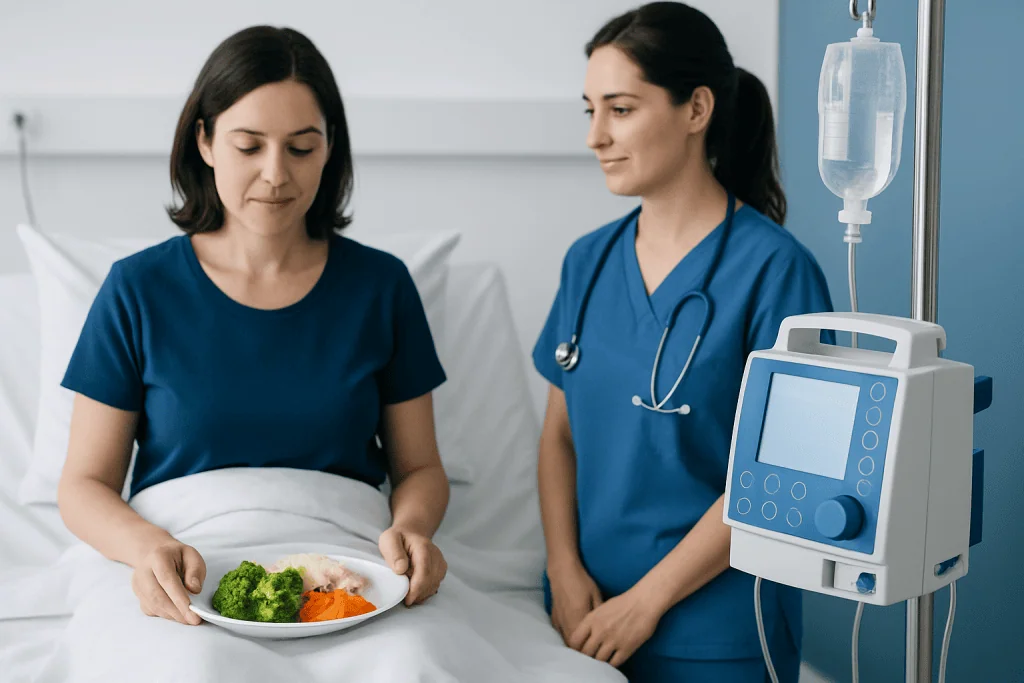
In the first few days, keep meals simple, gentle and predictable. Many patients do better with smaller portions more often rather than large meals that can feel heavy. If your doctor has not restricted your diet, you may choose familiar foods such as soup, yoghurt, eggs, soft cooked vegetables, rice, pasta, lean chicken, fish, fruit, oatmeal or toast.
Turkey is rich in fresh produce, soups, grilled foods and dairy-based dishes, which can be helpful during recovery when chosen carefully. Look for foods that are freshly prepared, not overly spicy, and easy for you to chew and digest. If you are staying near an Acibadem hospital, ask the international patient team or your hotel about reliable nearby restaurants, room service options and supermarkets.
Protein is often important for healing, but the right amount and type should match your medical situation. If you struggle with appetite, ask whether protein-rich snacks, smoothies, soups or supplements are appropriate for you. Avoid forcing yourself to eat large portions; steady intake and good tolerance are usually more realistic than perfect meals.
Hydration, tea, coffee and alcohol

Hydration is one of the most practical recovery habits you can control. Keep bottled water within reach in your room, especially if you are resting, taking medication or walking less than usual. Ask your doctor or nurse how much fluid you should aim for, because some heart, kidney or other conditions may require limits.
Turkey has a strong tea and coffee culture, and you may be offered Turkish tea, Turkish coffee or other warm drinks during your stay. In many cases, moderate caffeine may be acceptable, but it can worsen sleep, reflux, palpitations or dehydration for some people. If you are taking pain medicine, antibiotics, blood thinners or other prescriptions, check whether caffeine or herbal teas could interfere with your treatment.
Alcohol should be avoided unless your medical team specifically says it is safe. It can interact with medication, increase bleeding risk, worsen dehydration, disturb sleep and affect judgment. If you are unsure, choose water, ayran, fresh soup, diluted juice or caffeine-free warm drinks instead.
Food safety while you are healing
During recovery, your body may be more sensitive to digestive upset, and even a mild stomach problem can make travel harder. Choose restaurants and cafés that look clean, busy and well established. Eat food that is cooked thoroughly and served hot, and be cautious with dishes that have been sitting out for a long time.
Use bottled water if that is what your care team or hotel recommends, and make sure the seal is intact. Wash fruit well, avoid unfamiliar raw foods if your stomach is sensitive, and be careful with ice in places where you are unsure about water handling. If you are immunocompromised or have specific infection risks, ask your doctor whether you need stricter precautions.
Room service can be convenient, but leftovers need attention. If your room has a small fridge, store food promptly and reheat it thoroughly when appropriate. If you do not have refrigeration, order smaller portions and avoid keeping cooked food at room temperature for later.
Managing common recovery issues with food and drink
Constipation, nausea, reduced appetite and bloating are common recovery concerns, particularly after anaesthesia, reduced movement or pain medication. Do not be embarrassed to mention them; your care team hears these concerns every day. The right solution may include diet changes, extra fluids, gentle walking, medication adjustment or a prescribed stool softener.
If constipation is a concern and your doctor allows it, you may benefit from fluids, fruit, vegetables, whole grains, soups and gentle movement. Prunes, pears, lentil soup and oatmeal may be helpful for some people, but introduce fibre gradually if you are not used to it. Too much fibre without enough fluid can make discomfort worse.
For nausea, smaller meals, bland foods and slow sipping can help. Ginger tea, plain crackers, yoghurt, rice or soup may be easier to tolerate, but persistent vomiting, inability to keep fluids down, severe abdominal pain or signs of dehydration should be reported promptly. If you were given anti-nausea medication, use it only as directed.
Planning meals in your hotel or apartment
Your accommodation can make eating and drinking during recovery much easier. Before arrival, ask whether your room has a refrigerator, kettle, microwave, lift access, room service and space for a companion to prepare simple snacks. If you have mobility limits, being close to the hospital, pharmacy and a small market can reduce stress.
Many international patients prefer to keep a small recovery shelf in the room. Useful items may include bottled water, electrolyte drinks if approved, crackers, plain biscuits, bananas, yoghurt, soup, tea bags, disposable cutlery, wet wipes and any nutrition products recommended by the team. Keep medication separate from food and follow storage instructions carefully.
Acibadem International’s patient services can often guide you on practical arrangements such as accommodation areas, interpreter support and local logistics. They cannot replace your doctor’s medical instructions, but they can help you ask the right questions and coordinate with the hospital team if your diet plan needs clarification after discharge.
Cultural comfort and special diets in Turkey
Recovering abroad can feel unfamiliar, especially when your appetite is low or your usual foods are not available. It is perfectly acceptable to choose simple, familiar meals rather than trying every local dish. Comfort, predictability and safety are more important than culinary adventure during the early healing period.
If you follow a halal, vegetarian, vegan, kosher-style, gluten-free, lactose-free, diabetic, low-salt or allergy-specific diet, communicate this before admission and again before discharge. In Turkey, many restaurants can adapt meals, but language barriers may make details difficult. An interpreter or translated allergy card can help you explain ingredients clearly.
When in doubt, keep your requests simple: grilled chicken or fish without sauce, plain rice, soup without cream, yoghurt if tolerated, boiled eggs, cooked vegetables or fruit you can peel. If a food choice feels uncertain, choose the safer option and ask your medical team later. Recovery is not the time to test a serious allergy or ignore a known intolerance.
Step by step
- Ask for written diet instructions before discharge. Before you leave the hospital, ask what you may eat and drink, what to avoid, and when to call for help. Request the instructions in a language you understand, and keep a photo of them on your phone.
- Prepare your recovery room. Arrange bottled water, approved snacks, tissues, a trash bag and any prescribed nutrition items near your bed or chair. If possible, confirm that your hotel or apartment has a fridge, kettle and easy room service.
- Start with small, simple meals. Choose foods that are easy to digest and familiar to you. Eat slowly, stop if you feel unwell, and avoid heavy, greasy or very spicy meals in the early days unless your team says otherwise.
- Track fluids and symptoms. Keep a simple note of how much you drink, whether you urinate normally, and any nausea, constipation or diarrhoea. This information helps the care team advise you more accurately if you need support.
- Use interpreters for food restrictions. If you have allergies, diabetes, religious dietary needs or medication-related restrictions, ask for help explaining them clearly. Acibadem International can support communication between you, clinical staff and practical service teams.
- Choose safe food sources. Use reputable restaurants, hotel dining, trusted markets and freshly prepared meals. Avoid risky leftovers, uncertain street food or foods that may have been stored at unsafe temperatures.
- Check before taking supplements. Do not start herbal products, vitamins, protein powders or weight-loss products without medical approval. Some supplements can interfere with medication, bleeding risk or blood sugar control.
Your checklist
- Written eating and drinking instructions from your medical team
- List of foods, drinks, supplements or medications to avoid
- Bottled water and approved drinks in your room
- Simple snacks such as crackers, bananas or yoghurt if allowed
- Hotel fridge, kettle or microwave confirmed if needed
- Translated allergy or dietary restriction card
- Emergency contact number for the hospital or patient services team
- Plan for constipation, nausea or appetite changes
- Companion or room service plan for the first days after discharge
Key takeaways
- Your personal discharge plan is the safest guide for what to eat and drink after treatment.
- Small, simple meals and steady hydration are usually easier than large or unfamiliar meals.
- Food safety matters during recovery, especially when you are healing away from home.
- Hotel logistics such as a fridge, kettle, room service and nearby markets can make aftercare smoother.
- Ask for interpreter support if you need help explaining allergies, special diets or medication restrictions.
Frequently asked questions
Can I eat Turkish food while recovering?
Often yes, but choose simple and freshly prepared options that fit your medical instructions. Soups, grilled foods, rice, yoghurt and cooked vegetables may be easier than rich, fried or spicy dishes. If you have restrictions, ask an interpreter or your care team to help you order safely.
Is tap water safe to drink during recovery in Turkey?
Many visitors choose bottled water for convenience and consistency, especially during recovery. Ask your hospital or hotel what they recommend for your location. If you are medically fragile or prone to stomach upset, sealed bottled water is the simpler choice.
What should I do if I have no appetite?
A reduced appetite can happen after treatment, travel, stress or medication. Try small portions, soft foods, soups and fluids, but do not ignore ongoing inability to eat or drink. Contact your care team if appetite loss is severe, prolonged or combined with nausea, fever, pain or weakness.
Can I drink coffee or Turkish tea after treatment?
It depends on your procedure, medications and symptoms. Caffeine can affect sleep, reflux, heart rhythm and hydration for some patients. Ask your doctor or nurse whether moderate tea or coffee is acceptable for you before making it part of your routine.
Should I take vitamins or protein supplements to heal faster?
Do not start supplements without checking with your medical team. Some products can interact with prescriptions, affect blood sugar, increase bleeding risk or be unsuitable for certain conditions. If extra nutrition is needed, your team can recommend a safer option.
How can I manage constipation after surgery or treatment?
Constipation is common after anaesthesia, pain medication and reduced movement. If allowed, fluids, gentle walking and fibre-containing foods may help, but you should follow your discharge plan. Ask your doctor before using laxatives or stool softeners unless they were already prescribed.
What if I have food allergies or a special diet?
Tell your medical team, international patient coordinator and accommodation provider as early as possible. A translated allergy card can be very useful in restaurants and markets. For serious allergies, avoid uncertain foods and choose simple meals with clearly understood ingredients.
Add us as a Preferred Source to see more of our trusted health content across Google Search, AI Overviews and Discover.
More Patient Guides

When Can You Wear a Hat After a Hair Transplant?
You can usually wear a loose, clean hat after a hair transplant once your surgeon confirms grafts are protected—often around days 7–14.
8 min read
Flying After Knee or Hip Replacement Surgery
Flying after knee or hip replacement surgery is usually delayed until your surgeon confirms you can travel safely; plan mobility, clot prevention…
8 min read
Open vs Closed Rhinoplasty Recovery: Differences Explained
Open vs closed rhinoplasty recovery is usually similar overall, but open surgery may cause longer tip swelling. Learn timelines, travel and aftercare…
9 min read