

Stem Cell Pregnancy: An Evidence-Based Patient Guide

Stem cell therapies are not established treatments for infertility or for creating a pregnancy. Pregnancy can affect decisions about stem cell transplantation, particularly because conditioning medicines may harm a developing fetus.
Key Takeaways
- Stem cell therapies are not established treatments for infertility or for creating a pregnancy.
- Pregnancy can affect decisions about stem cell transplantation, particularly because conditioning medicines may harm a developing fetus.
- Bone marrow cannot replace sperm in human reproduction; sperm or a laboratory-created equivalent is still required for fertilization.
- Some stem cell treatments are proven for blood cancers and certain blood or immune disorders, but many advertised regenerative uses lack strong evidence.
- People who are pregnant, trying to conceive, or considering stem cell treatment should discuss plans with both a relevant specialist and an obstetrician or fertility clinician.
Stem cell pregnancy is a widely searched term, but it does not describe a proven treatment that can reliably create a pregnancy or replace eggs, sperm, or standard fertility care. Stem cells have important established roles in blood and immune-system disorders, while reproductive uses remain largely experimental and require careful medical oversight.
Overview: What Does Stem Cell Pregnancy Mean?
Stem cell pregnancy is not a standard medical diagnosis or a recognized fertility procedure. The phrase may refer to a person who becomes pregnant before, during, or after stem cell treatment; to research on using stem cells in reproductive medicine; or to unproven claims that stem cells can restore fertility. At present, stem cells cannot routinely create a pregnancy, replace sperm, or safely regenerate eggs for clinical use.
Stem cells are cells with the ability to self-renew and, in some settings, develop into specialized cell types. Hematopoietic stem cells, found in bone marrow, blood, and umbilical cord blood, can rebuild the blood-forming and immune systems after intensive treatment. This is why stem cell transplantation is established for selected blood cancers, bone marrow failure syndromes, and inherited blood disorders.
For a stem cell pregnant woman, care is individualized. The key questions are the underlying condition, the type of stem cell therapy being considered, the medicines involved, and the stage of pregnancy. Decisions should be made jointly with specialists in the relevant condition and high-risk obstetric care when needed.
How Stem Cell Treatment Works—and Its Limits in Fertility
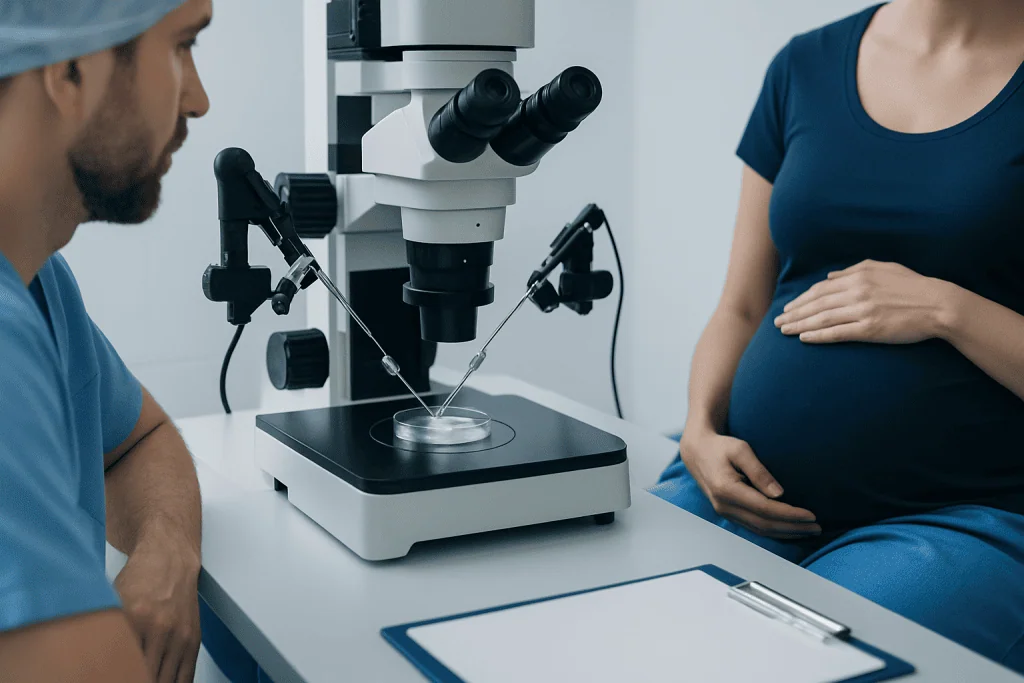
In a hematopoietic stem cell transplant, healthy blood-forming stem cells are infused through a vein, much like a blood transfusion. Before transplantation, a patient may need chemotherapy, radiation, immune-suppressing medicines, or a combination of these treatments to treat disease and make room for the new cells. The infused cells travel to the bone marrow and gradually begin producing new blood cells.
There are two main approaches. An autologous transplant uses the patient’s own previously collected cells, while an allogeneic transplant uses cells from a carefully matched donor. These procedures are highly specialized and are not fertility treatments. Learn more about bone marrow transplantation and the conditions for which it may be considered.
Research is exploring whether stem cells could one day help repair ovarian tissue, improve the uterine environment, or generate reproductive cells in the laboratory. These approaches are not established clinical care for infertility. Anyone offered an expensive or invasive “stem cell fertility” procedure should ask whether it is part of an ethically approved clinical trial and what evidence supports its safety and effectiveness.
Are Stem Cells in Pregnancy Safe?

Whether stem cells in pregnancy are safe depends entirely on the reason for treatment and the type of cells and medicines involved. A stem cell transplant is usually avoided during pregnancy whenever possible because the chemotherapy, radiation, and immune-suppressing treatment often used around transplantation may pose serious risks to fetal development and to the pregnant person.
In rare, urgent circumstances, a multidisciplinary team may need to consider treatment during pregnancy for a life-threatening maternal condition. This requires individualized assessment by hematology, maternal-fetal medicine, oncology when relevant, pharmacy, and neonatal specialists. There is no general rule that makes transplantation safe at a particular point in pregnancy.
It is also important to distinguish established transplantation from unregulated stem cell injections marketed for wellness, aging, pain, infertility, or pregnancy support. These products may not have proven benefits, may be contaminated or improperly prepared, and can cause infection, immune reactions, clotting, or other complications. Pregnant people should not start any stem cell product without advice from their obstetrician and an appropriately qualified specialist.
Candidacy, Fertility Planning, and the Procedure Journey
Eligibility for stem cell transplantation is based on the disease being treated, its severity, previous treatments, overall health, organ function, infection status, donor availability when needed, and the patient’s goals. Pregnancy status and plans for future pregnancy are central to this discussion because transplant-related treatment can affect the ovaries, uterus, sperm production, and hormone function.
Before treatment, clinicians may recommend fertility preservation when time and health allow. Depending on the person and clinical circumstances, this can include freezing eggs, embryos, sperm, or ovarian tissue. A fertility specialist can explain options, likely timing, and limitations. People facing cancer treatment may also benefit from information about cancer care and its potential effects on fertility.
The pathway usually includes a specialist assessment, blood tests and organ-function testing, fertility and pregnancy counseling, stem cell collection or donor matching, preparative treatment, infusion of stem cells, and close monitoring while blood counts recover. Hospital stay and follow-up needs vary widely. After transplantation, recovery may involve infection prevention, transfusions, medicines, rehabilitation, and frequent appointments.
Recovery is not a fixed timeline. Blood counts may begin recovering over weeks, but immune recovery and return to daily activities can take months or longer. A future pregnancy should be planned only after the treating team confirms that disease status, medications, organ health, and reproductive health make conception as safe as possible.
What Can Stem Cells Currently Fix or Cure in 2026?
In 2026, the best-established stem cell treatments are hematopoietic stem cell transplants for selected diseases of the blood, bone marrow, and immune system. Depending on the diagnosis and transplant type, transplantation may cure, control, or substantially improve conditions such as some leukemias, lymphomas, myeloma, aplastic anemia, inherited immune deficiencies, and certain inherited blood disorders.
Stem cell transplantation can also be an important option for some people with leukemia or other serious hematologic conditions. However, it is not appropriate for every patient, and outcomes differ according to disease characteristics, donor match, age, overall health, prior treatment, and transplant complications. A transplant team can explain realistic goals in an individual situation.
Beyond blood-forming stem cells, certain stem-cell-based tissue therapies are established in limited settings, such as skin grafting for severe burns and corneal surface reconstruction in selected eye conditions. Many other proposed uses—including treatments for arthritis, neurological conditions, heart disease, autism, erectile dysfunction, hair loss, and infertility—are still being researched or have insufficient evidence for routine use.
A responsible treatment discussion should clearly identify the cell product, source, manufacturing standards, proposed mechanism, expected benefit, alternatives, known risks, and regulatory status. The word “stem cell” alone does not indicate that a treatment is proven or suitable.
Can You Make a Baby With Bone Marrow Instead of Sperm?
No. Bone marrow cannot currently replace sperm to make a baby. Bone marrow contains blood-forming stem cells, not mature sperm cells, and it does not provide the genetic and biological functions of sperm required for normal human fertilization.
Scientists are studying how reproductive cells develop and whether stem cells might someday be used to make egg- or sperm-like cells in laboratory research. This work is scientifically complex and raises major safety, genetic, legal, and ethical questions. It is not an available reproductive treatment and should not be confused with in vitro fertilization.
For people who do not have usable sperm, established family-building options may include donor sperm, depending on local laws and personal circumstances, or fertility preservation before treatments that may impair sperm production. A reproductive endocrinologist or fertility clinic can provide individualized counseling.
Where Did Kim Kardashian Get Stem Cells?
Public reports and social-media discussions about celebrity stem cell procedures are not a reliable source of medical evidence. A person’s treatment location, product type, diagnosis, and clinical outcome may be private, incompletely described, or reported without enough detail to assess whether a treatment was regulated, appropriate, or effective.
Celebrity experiences should not guide decisions about stem cell treatment, pregnancy, or fertility. A procedure that is described as “stem cells” may involve very different products, including platelet-rich plasma, fat-derived cells, donor cells, laboratory-expanded cells, or products with unclear contents. These are not interchangeable therapies.
Before pursuing any intervention, patients should ask their physician whether it is approved or part of a properly supervised clinical trial, what credible research supports it, and what standard treatments are available. Decisions should be based on diagnosis-specific medical advice rather than endorsements or online trends.
When to Seek Medical Care
A person who is pregnant, trying to conceive, or may be pregnant should contact a doctor promptly before starting stem cell therapy, chemotherapy, radiation, immune-suppressing medication, or any injectable regenerative product. They should also inform their transplant or hematology team immediately if pregnancy occurs during evaluation or treatment planning.
Urgent medical assessment is needed for heavy vaginal bleeding, severe abdominal or pelvic pain, fainting, fever, shortness of breath, chest pain, severe headache, sudden swelling, or reduced fetal movement later in pregnancy. These symptoms can have many causes, but prompt assessment is important.
People who have had a transplant and develop fever, chills, new rash, persistent vomiting or diarrhea, unusual bruising or bleeding, worsening fatigue, or signs of infection should follow their transplant team’s urgent-care instructions. Acibadem International’s multidisciplinary specialists and JCI-accredited hospitals support international patients who need coordinated evaluation and treatment for complex blood and transplant-related conditions.
Frequently asked questions
Can stem cell therapy help someone get pregnant?
Stem cell therapy is not an established treatment for infertility or a reliable way to achieve pregnancy. Research into ovarian, uterine, and reproductive-cell applications is ongoing, but these approaches are not standard care. A fertility specialist can discuss evidence-based options based on the cause of infertility.
Can a woman become pregnant after a stem cell transplant?
Some people can become pregnant after a stem cell transplant, but fertility may be reduced by chemotherapy, radiation, conditioning treatment, or complications. Pregnancy planning should involve the transplant team and an obstetrician or fertility specialist. Fertility preservation before treatment may be considered when appropriate.
Is it safe to have a stem cell transplant while pregnant?
Stem cell transplantation during pregnancy is generally avoided because preparative treatments and related medicines can pose significant risks. In uncommon urgent situations, specialists may weigh maternal and fetal risks together. The safest plan depends on the condition being treated and the stage of pregnancy.
Do stem cells from cord blood belong to the baby or the mother?
Umbilical cord blood contains blood-forming stem cells that come from the baby’s circulation at birth. It can be collected after delivery and may be stored or donated under regulated programs. Its potential use depends on tissue matching, the condition being treated, and the quality and amount of stored cells.
Can stem cells create eggs or sperm for fertility treatment?
Laboratory research is investigating how stem cells may form reproductive-cell-like cells, but this is not a routine or approved fertility treatment for humans. Important questions remain about safety, genetic health, ethics, and long-term outcomes. Current fertility care still relies on established methods such as IVF, donor gametes, and fertility preservation where appropriate.
How can a patient identify an unproven stem cell clinic?
Warning signs include broad claims to treat many unrelated diseases, promises of cure, pressure to pay quickly, vague information about the cell product, and no discussion of risks or alternatives. A reputable clinician should explain the diagnosis, evidence, regulatory status, follow-up plan, and whether treatment is part of a registered, ethically supervised clinical trial.
References
- World Health Organization
- U.S. Food and Drug Administration
- American Society of Hematology
- American Society for Transplantation and Cellular Therapy
- European Society for Blood and Marrow Transplantation
This article is for general information only and is not a substitute for professional medical advice. Please consult a qualified doctor about your individual situation.
IVF & fertility treatment in Turkey — success rates and costs
JCI-accredited · board-certified surgeons · reply within 24h
Add us as a Preferred Source to see more of our trusted health content across Google Search, AI Overviews and Discover.

More from the Health Library



Related Specialists

Assoc. Prof. Dr. Tuna Bilecik
General Surgery
Dr. İzzet Mammedov
Otorhinolaryngology
Prof. Dr. Güralp Onur Ceyhan
General Surgery
Dr. Nihal Üstün
Aesthetic Plastic & Reconstructive Surgery