What Is Laser Refractive Surgery: Procedure, Recovery and Results
Laser refractive surgery includes LASIK, PRK and SMILE-type procedures, each using a different approach to reshape the cornea. A detailed eye assessment is essential because not everyone is a suitable candidate for laser vision correction.
Key Takeaways
- Laser refractive surgery includes LASIK, PRK and SMILE-type procedures, each using a different approach to reshape the cornea.
- A detailed eye assessment is essential because not everyone is a suitable candidate for laser vision correction.
- Many people notice clearer vision quickly, but complete visual stabilization and surface healing can take weeks to months.
- Laser eye surgery is usually not painful during treatment because numbing drops are used, though temporary discomfort is common during recovery.
- The procedure can reduce dependence on corrective lenses but cannot guarantee 20/20 vision or prevent age-related vision changes.
Laser refractive surgery is a group of vision-correction procedures that reshape the cornea, the clear front surface of the eye, so light focuses more accurately on the retina. For appropriately selected adults with stable prescriptions, it can reduce reliance on glasses or contact lenses, although results and recovery vary by procedure and individual eye health.
What Is Laser Refractive Surgery?
Laser refractive surgery is a type of eye surgery that corrects common refractive errors by changing the shape of the cornea. The cornea bends incoming light; when its shape does not match the length or focusing power of the eye, light may not land precisely on the retina. This can lead to short-sightedness (myopia), long-sightedness (hyperopia) or astigmatism.
During treatment, a highly precise laser removes microscopic amounts of corneal tissue to improve how the eye focuses. The goal is to reduce dependence on glasses or contact lenses, not to promise a particular visual acuity. Laser refractive surgery is elective, and the best procedure depends on the prescription, corneal thickness and shape, tear film, lifestyle, age and overall eye health.
The main approaches include LASIK, which creates a thin corneal flap; PRK, which treats the corneal surface after the outer cell layer is removed; and lenticule-based procedures such as SMILE, which remove a small piece of tissue through a tiny incision. An ophthalmologist can explain whether laser eye surgery is appropriate and which technique best fits an individual’s eyes.
How Laser Refractive Surgery Works
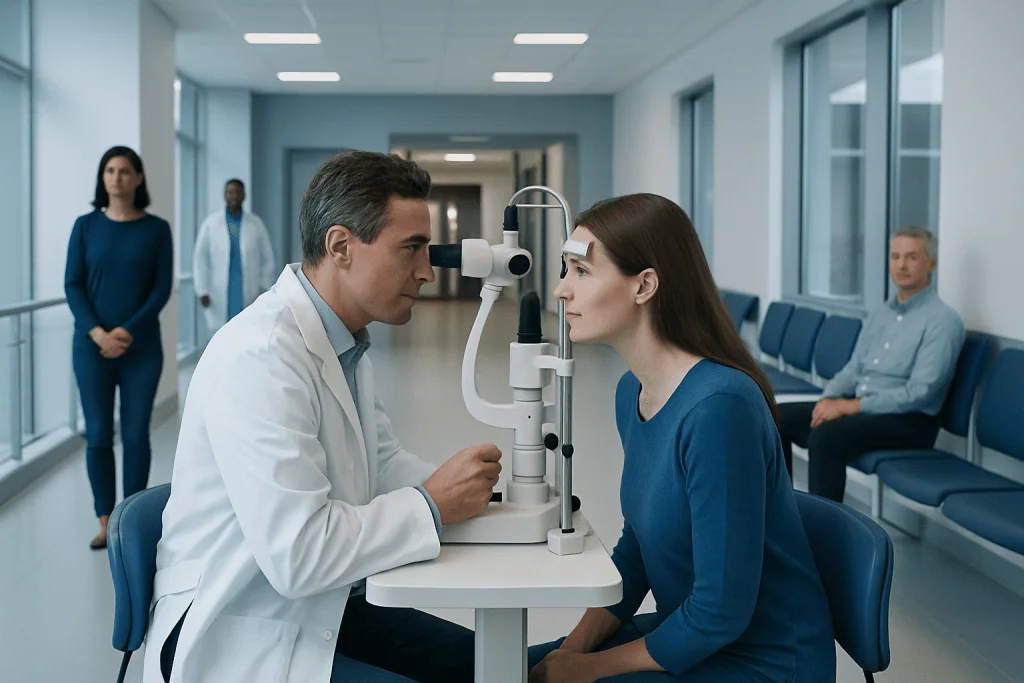
Before surgery, the eye is measured in detail. Tests assess the prescription, corneal curvature and thickness, pupil size, tear production and retinal health. Corneal mapping is particularly important because an irregular or excessively thin cornea may make laser treatment unsuitable or may point to another form of vision correction.
Most modern procedures use an excimer laser, which reshapes corneal tissue with ultraviolet light, and may use a femtosecond laser to create a LASIK flap or a small lenticule. Computer-guided tracking follows small eye movements during treatment. The actual laser application is usually brief, although the full visit includes preparation and checks before and after the procedure.
LASIK often provides rapid functional vision because the corneal surface layer remains largely intact beneath the flap. PRK may be preferred when the cornea is thinner or for some people with a higher risk of eye injury, but its surface healing period is longer. A surgeon should discuss the expected benefits and trade-offs rather than assuming one method is best for every person.
Who May Be a Candidate for Laser Eye Surgery?

Potential candidates are generally adults whose glasses or contact lens prescription has been stable for a period of time. They should have healthy corneas and realistic expectations about outcomes. A stable prescription matters because surgery reshapes the cornea based on current measurements; it does not stop the eye from changing in the future.
People may need to postpone or avoid surgery if they are pregnant or breastfeeding, have uncontrolled diabetes, significant dry eye disease, active eye infection or inflammation, certain autoimmune conditions, cataracts, glaucoma, corneal disease or unstable refraction. Some medicines and previous eye operations can also affect suitability. These factors do not always rule out treatment, but they require individual specialist assessment.
Laser correction treats focusing errors, not every cause of blurred vision. For example, clouding of the natural lens is assessed separately in cataracts, and retinal or optic nerve disorders need their own evaluation. Adults over about 40 may also still require reading glasses after distance correction because presbyopia is an age-related loss of near focusing ability.
- Bring current glasses and contact lens details to the consultation.
- Follow instructions about stopping contact lenses before corneal measurements, as lenses can temporarily alter corneal shape.
- Discuss driving, screen work, sports, occupation and near-vision needs to help guide procedure selection.
Step by Step: What Happens During the Procedure?
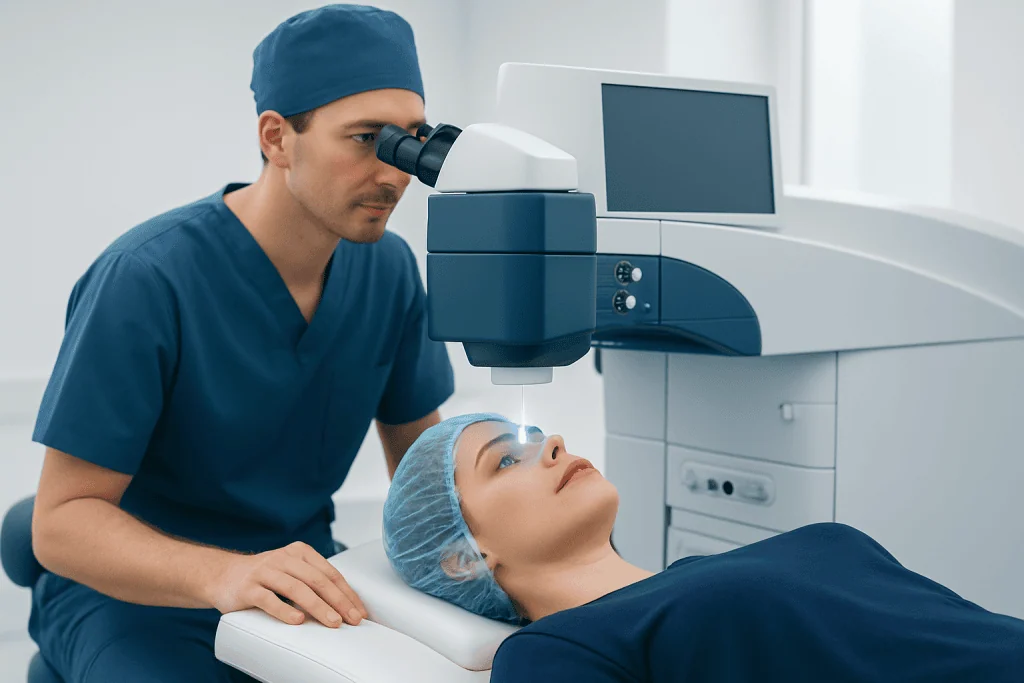
On the day of surgery, the eye area is cleaned and anesthetic eye drops are used. The person remains awake but comfortable, lying beneath the laser system. An eyelid holder helps prevent blinking, and the care team gives simple instructions about where to look. Sedation is not routinely necessary, though practice varies and anxiety should be discussed beforehand.
In LASIK, the surgeon creates a thin flap in the cornea, lifts it, applies the excimer laser to reshape the underlying tissue and then returns the flap to its original position. In PRK, the outer surface layer is gently removed before laser reshaping; a protective contact lens is usually placed while that layer regrows. In lenticule-based treatment, a femtosecond laser creates a small disc of tissue that is removed through a small incision.
Afterward, vision may initially be hazy and light sensitivity is common. The care team checks the eyes, reviews prescribed drops and gives written aftercare instructions. Someone else should drive the patient home. Follow-up visits are important because they allow the ophthalmologist to monitor healing, vision and eye pressure.
Recovery Timeline, Rest and Comfort
Recovery depends on the method used. After LASIK, many people can perform light daily activities and return to non-strenuous work within one or two days, although vision can fluctuate during early healing. After PRK, discomfort and blurred vision commonly last longer because the corneal surface needs time to regenerate; useful vision may take several days to develop and refinement can continue for weeks or months.
For the first day or two, patients are usually advised to rest their eyes, sleep if needed, avoid rubbing the eyes and use prescribed lubricating and medicated drops exactly as directed. Screens, reading and bright light may feel tiring initially, so short periods with breaks can be more comfortable. Protective shields may be recommended while sleeping, particularly after LASIK.
Swimming pools, hot tubs, eye makeup, dusty environments and contact sports are usually restricted for a period determined by the surgeon. Regular review appointments should not be missed, even if vision seems clear. New or worsening symptoms should be reported rather than managed with non-prescribed drops.
How many days should I rest after laser eye surgery?
Many LASIK patients rest for the remainder of the procedure day and resume light work within one to two days if their vision is comfortable and their clinician agrees. PRK generally needs more recovery time, often several days away from visually demanding work. The safest timeline is the one provided by the treating ophthalmologist because healing, job demands and procedure type differ.
How painful is laser eye surgery recovery?
The procedure itself is typically not painful because numbing drops are used, although pressure or awareness of the equipment may be felt. After LASIK, temporary burning, grittiness, watering and light sensitivity are common in the first hours. PRK recovery can be more uncomfortable for several days, but prescribed treatment and protective measures are used to support healing.
Benefits, Results and Possible Downsides
The main potential benefit is greater freedom from glasses or contact lenses for everyday distance tasks. Many suitable patients achieve vision that allows them to drive and function without corrective lenses, but individual results vary. Some still use glasses for certain activities, such as night driving, detailed work or reading, especially as they get older.
Do you get 20/20 vision after laser eye surgery?
Some people achieve 20/20 vision or better after laser eye surgery, but it cannot be guaranteed. The outcome depends on the starting prescription, corneal healing, eye health and the presence of conditions not corrected by corneal reshaping. A small residual prescription or later age-related visual change may mean glasses, contact lenses or, in selected cases, additional treatment is needed.
What’s the downside to laser eye surgery?
Possible downsides include dry eye symptoms, glare, halos or starbursts around lights, fluctuating vision and undercorrection or overcorrection. These effects are often temporary, but some can persist. Rare but serious complications include infection, inflammation, corneal healing problems, flap-related complications after LASIK and loss of best-corrected vision.
A thorough preoperative assessment reduces avoidable risk but cannot remove all uncertainty. People should also understand that laser surgery does not prevent presbyopia, cataracts or other future eye conditions. Choosing an experienced ophthalmic team, attending follow-ups and following aftercare instructions are important parts of safe treatment.
When to Seek Medical Care
Following laser eye surgery, mild irritation, tearing, light sensitivity and variable clarity can be expected early in recovery. However, patients should contact their eye surgeon promptly if pain becomes severe or increasing, vision suddenly worsens, redness increases, there is significant discharge, or one eye appears markedly different from the other. These symptoms need timely assessment to rule out complications such as infection or inflammation.
Urgent medical care is also appropriate for sudden vision loss, a curtain-like shadow, flashes of light with many new floaters, or significant eye injury. These symptoms may not be caused by refractive surgery, but they can indicate an eye emergency and should not wait for a routine appointment.
Acibadem International’s multidisciplinary specialists and JCI-accredited hospitals support international patients who need assessment and treatment for vision concerns. A consultation with a qualified ophthalmologist can help a person understand candidacy, procedure choices and the expected recovery plan before deciding on surgery.
Frequently asked questions
Is laser refractive surgery the same as LASIK?
LASIK is one type of laser refractive surgery, but the term includes other procedures such as PRK and lenticule-based surgery. Each method reshapes the cornea, but they differ in how the surgeon reaches the treatment area and how the eye heals.
How long do laser eye surgery results last?
The corneal reshaping is intended to be permanent, but the eyes can still change over time. Age-related near-vision loss, cataracts and changes in prescription can affect vision later, so some people may again need glasses or other treatment.
Can laser eye surgery correct astigmatism?
Laser refractive surgery can correct many types and degrees of astigmatism by reshaping the cornea more evenly. Whether it is suitable depends on the amount of astigmatism, corneal measurements and overall eye health.
Will I need reading glasses after laser eye surgery?
Many adults eventually need reading glasses because presbyopia develops with age, usually beginning in midlife. Laser surgery for distance vision does not prevent this natural change, although some people may discuss monovision options with their ophthalmologist.
Can dry eyes occur after laser eye surgery?
Yes. Temporary dry eye symptoms are common after laser procedures, particularly in the early recovery period, and are usually managed with lubricating drops and follow-up care. People with significant dry eye before surgery need careful assessment because symptoms may worsen after treatment.
When can I drive after laser eye surgery?
Driving should resume only when vision meets legal requirements, the person feels comfortable and the surgeon has approved it. Many LASIK patients may be able to drive after the first postoperative review, while PRK patients may need longer.
References
- American Academy of Ophthalmology
- U.S. Food and Drug Administration
- National Eye Institute
- Royal College of Ophthalmologists
- Mayo Clinic
This article is for general information only and is not a substitute for professional medical advice. Please consult a qualified doctor about your individual situation.
Explore treatments in Turkey — costs, top hospitals & a free quote
JCI-accredited · board-certified surgeons · reply within 24h
Add us as a Preferred Source to see more of our trusted health content across Google Search, AI Overviews and Discover.