Decipher Test after Prostatectomy: Procedure, Recovery and Results

The test uses stored tissue from the prostatectomy specimen, so no new biopsy, blood draw, or recovery period is usually needed. Decipher provides genomic risk information that complements PSA results, pathology findings, surgical margins, and lymph node status.
Key Takeaways
- The test uses stored tissue from the prostatectomy specimen, so no new biopsy, blood draw, or recovery period is usually needed.
- Decipher provides genomic risk information that complements PSA results, pathology findings, surgical margins, and lymph node status.
- A higher score does not mean cancer has definitely returned, and a lower score does not guarantee it will not return.
- Results can support individualized discussions about PSA monitoring and the possible timing of radiation therapy after surgery.
- Decisions should be made with a urologist, radiation oncologist, and, when needed, a medical oncologist.
The Decipher test after prostatectomy is a genomic test performed on prostate tissue already removed during surgery. It does not require another procedure or change recovery; its result helps the care team estimate the likelihood of prostate cancer returning or spreading and discuss whether monitoring, radiation, or other treatment may be appropriate.
Overview: What Is the Decipher Test After Prostatectomy?
The Decipher test after prostatectomy is a genomic classifier used after surgical removal of the prostate for prostate cancer. A laboratory examines genetic activity within tumor tissue that was removed during surgery and estimates the risk of cancer spreading to distant parts of the body over time. The test is intended to add another layer of information to the standard pathology report.
It is important to distinguish this test from genetic testing for inherited cancer risk. Decipher evaluates gene activity in the cancer itself, rather than looking for inherited variants that may run in a family. It may be considered when the surgical pathology shows features that could raise concern for recurrence, or when a patient and care team are deciding how closely to monitor PSA and whether radiation therapy after surgery could be useful.
The result is one part of a broader clinical picture. PSA trends, Gleason Grade Group, tumor stage, margin status, seminal vesicle involvement, lymph node findings, overall health, and personal preferences remain central to decision-making. For background on the underlying disease, see prostate cancer.
How the Test Works and What It Measures
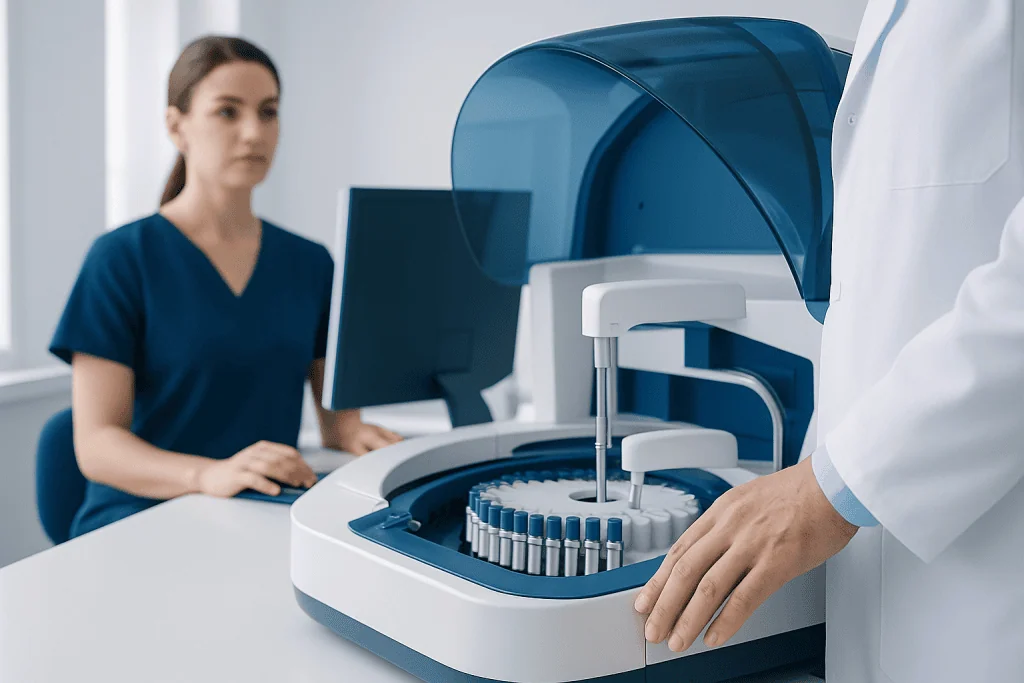
After prostatectomy, the removed prostate is examined by a pathologist. Tissue containing the cancer is preserved as part of the usual pathology process. If Decipher is ordered, an appropriate sample from this stored tissue is sent to a specialized laboratory. The test measures the activity of multiple genes linked with biological features of prostate cancer, such as cell growth, movement, immune interactions, and the potential to spread.
The laboratory converts this information into a score, generally reported on a scale from 0 to 1, with risk groups commonly described as low, intermediate, or high. The report estimates the likelihood of clinically important outcomes, such as metastatic recurrence, when interpreted in the context of available clinical evidence. The exact format and accompanying estimates may vary depending on the version of the report and the clinical setting.
A genomic score is not a diagnosis of recurrence and cannot predict an individual outcome with certainty. Rather, it helps identify whether the tumor’s biology appears more or less aggressive than standard pathology findings alone may suggest. This can be especially helpful when the best next step is not clear.
Who May Be a Candidate?

Not every person who has a prostatectomy needs a Decipher test. It may be most useful when the result could realistically influence follow-up care. Clinicians may discuss it after surgery when pathology findings suggest an increased possibility of recurrence, including a positive surgical margin, disease extending outside the prostate, seminal vesicle involvement, a higher Grade Group, or detectable or rising PSA after surgery.
The test can also be considered when standard risk features provide an incomplete or mixed picture. For example, a person may have an adverse pathology feature but an undetectable PSA, making the timing of additional treatment less straightforward. A genomic result may help structure a discussion about close surveillance versus early or salvage radiation.
People with insufficient tumor tissue, very small cancer volume, or a clear treatment plan that would not change regardless of the result may not benefit from testing. The urologist or oncology team can explain whether the tissue is available and whether the information is likely to be clinically meaningful for that individual.
- Potential candidates often have adverse pathology findings or concern about biochemical recurrence.
- The test is generally ordered after pathology has been reviewed.
- Its usefulness depends on whether the result would change monitoring or treatment discussions.
Procedure: Step by Step
Although it is often called a test after prostatectomy, Decipher is not a procedure performed on the patient. It is a laboratory analysis of tissue that has already been removed. In most cases, there is no appointment specifically for sample collection and no physical preparation is necessary.
First, the surgeon and pathology team complete the usual review of the prostatectomy specimen. The treating clinician then determines whether genomic testing may help with the next decision. If it is ordered, the pathology department identifies and releases an appropriate preserved tissue block or slides according to laboratory requirements.
The specialized laboratory analyzes the tumor sample and sends a report to the ordering clinician. Turnaround time can vary by laboratory, specimen handling, and local processes. At a follow-up visit, the care team reviews the score alongside PSA measurements and the surgical pathology report, then discusses an individualized plan.
For patients considering postoperative treatment because of PSA or pathology findings, the next step may include discussion of radiotherapy for prostate cancer. Radiation is not automatically required because a Decipher test was performed or because a score is high; the potential benefits and side effects must be weighed carefully.
Recovery Timeline, Risks, and Potential Benefits
Decipher testing itself does not add to recovery from prostatectomy. There is no incision, anesthesia, fasting, activity restriction, or additional wound care because the analysis uses existing tissue. Recovery after surgery continues according to the surgeon’s instructions and may involve gradual improvement in urinary control, physical stamina, and sexual function over weeks to months.
The test has no direct physical risks. Its practical limitations are different: it may not provide a definitive answer, may not be informative if tissue quality is inadequate, and can create uncertainty if the genomic result appears to differ from other clinical findings. Some people may also find waiting for results emotionally difficult.
The main potential benefit is more individualized risk assessment. A lower-risk result may support a plan of PSA surveillance in some situations, while a higher-risk result may strengthen the case for earlier consultation with a radiation oncologist or closer follow-up. It should not be used in isolation to start, delay, or avoid treatment.
Supportive care remains important after surgery regardless of the genomic result. Pelvic floor rehabilitation, management of urinary symptoms, and discussions about sexual health can be part of recovery. In selected situations, clinicians may also discuss prostate cancer surgery follow-up care and related survivorship planning.
Understanding Results and What Happens Next
A Decipher report should be reviewed with a clinician who can place it in context. A low genomic risk score may indicate that the cancer’s measured biology is associated with a lower likelihood of distant recurrence compared with higher scores. A high score may indicate higher biological risk, but it does not mean that recurrence or metastasis is certain.
After prostatectomy, PSA is usually expected to become very low or undetectable. Repeated PSA testing is therefore a key part of follow-up. If PSA stays undetectable, the team may recommend continued monitoring, even when certain pathology features are present. If PSA becomes detectable or rises, the timing and type of treatment may be reconsidered.
Possible next steps may include more frequent PSA monitoring, referral to radiation oncology, imaging when clinically appropriate, or discussion of systemic therapy in selected higher-risk circumstances. For some patients, the important decision is whether to consider adjuvant treatment soon after surgery or salvage treatment if PSA rises. The Decipher result can inform this conversation but does not replace shared decision-making.
Acibadem International’s multidisciplinary specialists and JCI-accredited hospitals support international patients with prostate cancer evaluation, postoperative follow-up, and treatment planning.
When to Seek Medical Care
Patients should contact their surgical or urology team promptly if they have symptoms that may signal a postoperative complication, such as fever, worsening pelvic or abdominal pain, heavy bleeding, inability to pass urine, persistent vomiting, shortness of breath, chest pain, or one-sided leg swelling. These symptoms are not caused by Decipher testing itself, but they require timely assessment after surgery.
A routine follow-up appointment should be arranged to review surgical pathology, PSA results, and any genomic test report. It is reasonable to ask how the result changes the estimated risk, whether it affects the PSA monitoring schedule, and whether consultation with a radiation oncologist would be useful.
Emotional concerns also deserve attention. Anxiety about recurrence is common after prostate cancer treatment. A care team can help patients access counseling, survivorship support, continence services, and sexual health care while decisions are being made.
Frequently asked questions
Is the Decipher test after prostatectomy painful?
No. The test is usually performed on preserved tissue from the prostate already removed during surgery. It does not require a new biopsy, needle procedure, or blood test, so it does not cause additional pain or physical recovery time.
What does a high Decipher score mean after prostatectomy?
A higher score indicates that the analyzed cancer tissue has genomic features associated with a higher risk of distant recurrence than tissue with a lower score. It does not mean that cancer has definitely returned or will definitely spread. The result must be considered alongside PSA, pathology findings, and overall health.
Can a low Decipher score rule out prostate cancer recurrence?
No. A low score suggests lower genomic risk, but no test can completely rule out recurrence. Regular PSA monitoring remains important after prostatectomy, even when the genomic score is low.
How long does it take to get Decipher results after prostatectomy?
Timing varies according to when the test is ordered, pathology processing, tissue transfer, and laboratory workflow. The ordering clinician can provide the most accurate local estimate and schedule a discussion once the report is available.
Does a Decipher result determine whether radiation is needed?
No. The result can help inform a discussion about radiation therapy, particularly when there are adverse pathology features or a rising PSA. It is one factor among several, and the decision should be individualized with urology and radiation oncology specialists.
Is Decipher the same as hereditary genetic testing for prostate cancer?
No. Decipher examines gene activity in the removed tumor tissue to assess cancer behavior. Hereditary genetic testing looks for inherited gene variants that may affect a person’s own cancer risk and the risk for biological relatives.
References
- National Cancer Institute
- American Urological Association
- American Society for Radiation Oncology
- National Comprehensive Cancer Network
- European Association of Urology
This article is for general information only and is not a substitute for professional medical advice. Please consult a qualified doctor about your individual situation.
Oncology care in Turkey — second opinion and treatment plan
JCI-accredited · board-certified surgeons · reply within 24h
Add us as a Preferred Source to see more of our trusted health content across Google Search, AI Overviews and Discover.

More from the Health Library



Related Specialists

Prof. Dr. Filiz Akyüz (m)
Gastroenterology
Dr. Sarp Özcan
Gynecology & Obstetrics
Cüneyt Karoğlu
Physical Medicine & Rehabilitation
Assoc. Prof. Dr. Talat Cem Ovalıoğlu
Neurosurgery