An Unlisted Procedure on the Diaphragm Is Reported with Code: An Evidence-Based Patient Guide

CPT code 39599 is the unlisted-procedure code used for surgery on the diaphragm when no specific CPT code applies. An unlisted code is a billing and documentation tool, not a diagnosis and not a measure of procedure complexity or outcome.
Key Takeaways
- CPT code 39599 is the unlisted-procedure code used for surgery on the diaphragm when no specific CPT code applies.
- An unlisted code is a billing and documentation tool, not a diagnosis and not a measure of procedure complexity or outcome.
- The reason for diaphragm surgery may include injury, weakness or paralysis, a hernia, a congenital problem, or another condition affecting breathing or nearby organs.
- The surgical approach, recovery, benefits, and risks depend on the underlying condition and whether surgery is open, laparoscopic, thoracoscopic, or robotic.
- Patients should ask their surgeon what procedure is planned, why an unlisted code is being considered, and what documentation may be needed for insurance review.
An unlisted procedure on the diaphragm is reported with code 39599 when a diaphragm operation does not have a dedicated, more specific Current Procedural Terminology (CPT) code. This administrative code does not identify one particular disease or operation; it signals that documentation is needed to explain the treatment performed and why it was medically necessary.
Overview: What Code 39599 Means
An unlisted procedure on the diaphragm is reported with code 39599 when the service provided does not match a more specific CPT code. CPT codes are standardized labels used in the United States to describe medical services for claims, records, and communication between healthcare professionals and insurers. Code 39599 is titled “Unlisted procedure, diaphragm.”
This code does not describe a single operation. Instead, it may be used for an uncommon, modified, combined, or technically distinct diaphragm procedure when existing codes do not accurately represent what the surgeon performed. The operative report should clearly describe the patient’s diagnosis, the surgical technique, the work involved, and the medical reason for treatment.
Using an unlisted code does not mean that care is experimental, inappropriate, or necessarily more serious than other surgery. It means that the procedure must be reviewed in context. A clinician and coding team select the most accurate code based on the actual treatment, applicable coding guidance, and payer requirements.
The Diaphragm and Conditions That May Need Surgery
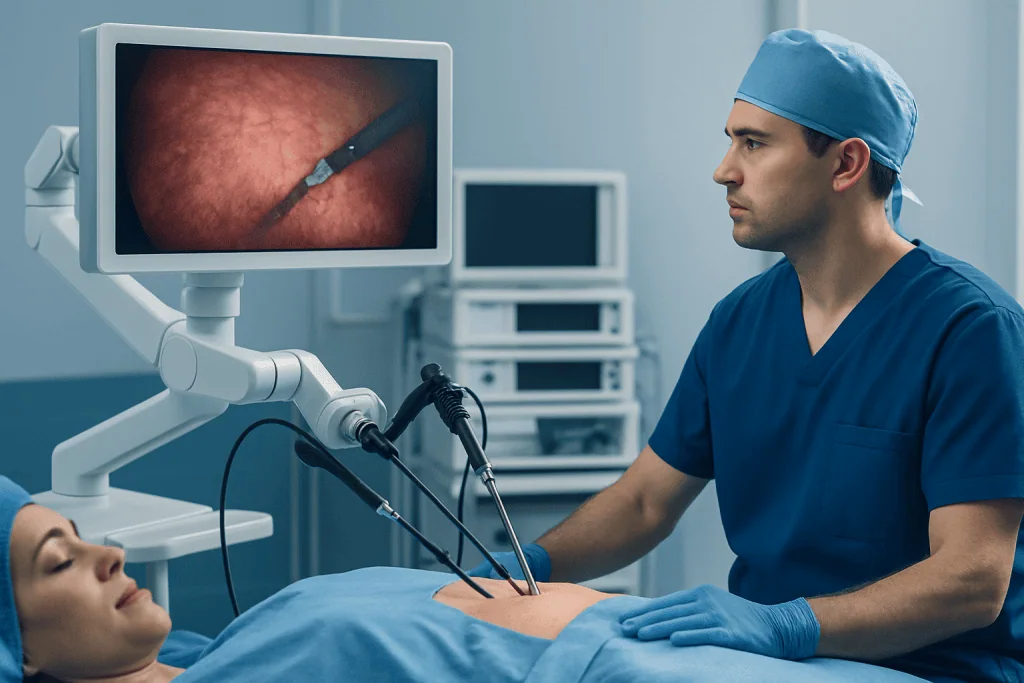
The diaphragm is a large, dome-shaped muscle beneath the lungs. It is the main muscle of breathing: when it contracts, it moves downward and helps draw air into the lungs. It also separates the chest from the abdomen and has openings that allow structures such as the esophagus and major blood vessels to pass through.
Diaphragm surgery may be considered when a structural or functional problem causes meaningful symptoms or creates a risk to health. Examples include traumatic tears, selected congenital abnormalities, eventration, persistent elevation due to diaphragm weakness or paralysis, recurrent or complex hernias, and problems discovered during surgery involving the chest or upper abdomen. Some diaphragm conditions can resemble or occur alongside diaphragmatic hernia, which may require specialist assessment.
Not every diaphragm finding requires an operation. Imaging can show an elevated diaphragm or a small defect in people who have few or no symptoms. Treatment decisions are individualized and consider breathing function, symptoms, imaging findings, the cause of the problem, other health conditions, and the likely benefits and risks of intervention.
How Diaphragm Procedures Work and Who May Be a Candidate

The goal of diaphragm surgery depends on the underlying issue. A surgeon may repair a tear or opening, return displaced organs to their normal position, reinforce a weakened area, remove abnormal tissue, or reshape and tighten a poorly functioning diaphragm. For diaphragm paralysis or severe eventration, a procedure called plication may flatten and stabilize the diaphragm so the lung has more room to expand.
Potential candidates often have symptoms such as shortness of breath during activity, reduced exercise tolerance, recurrent chest infections, chest or upper-abdominal discomfort, reflux-related symptoms in selected cases, or complications from organs moving through a diaphragm defect. In urgent trauma or a large hernia with trapped abdominal organs, surgery may be needed promptly. In other situations, observation, breathing assessment, rehabilitation, or treatment of the underlying cause may be appropriate first.
Before recommending surgery, the care team generally reviews medical history, medications, previous operations, heart and lung health, and imaging. Depending on the concern, testing may include chest X-ray, computed tomography, magnetic resonance imaging, ultrasound, pulmonary function tests, fluoroscopy, or evaluation of phrenic nerve function. Thoracic surgeons, general surgeons, pulmonologists, radiologists, anesthesiologists, and rehabilitation professionals may all contribute to planning.
- Symptoms that significantly affect daily activities or breathing
- Imaging evidence of a repairable defect, injury, or marked elevation
- Persistent problems despite appropriate non-surgical management
- A health status that allows anesthesia and recovery with acceptable risk
What Happens During the Procedure
The exact steps vary widely, which is one reason an unlisted code may sometimes be appropriate. Diaphragm operations are performed under general anesthesia. Depending on the location and reason for surgery, the surgeon may use an open incision, minimally invasive laparoscopy through the abdomen, thoracoscopy through the chest, or a robotic-assisted approach. The selected route is based on the anatomy, the need to inspect nearby organs, prior surgery, and the surgeon’s judgment.
For a diaphragm tear or hernia, the surgeon carefully evaluates the defect and any involved organs. If abdominal tissue has moved into the chest, it is returned to its appropriate position when possible. The diaphragm is then repaired with sutures; reinforcement material may be considered in selected repairs when clinically appropriate. If the goal is plication, excess or elevated diaphragm tissue is folded and secured to create a lower, firmer contour.
Surgeons may place a chest tube temporarily when the chest cavity has been entered or when there is a need to remove air or fluid around the lung. Tissue samples may be sent for laboratory examination if an abnormal growth or inflammation is suspected. A detailed operative report records the approach, findings, repair method, materials used, and any additional procedures, supporting accurate clinical follow-up and coding review.
Recovery Timeline, Expected Benefits, and Possible Risks
Recovery depends on the type of operation, whether surgery was planned or urgent, the surgical approach, and a person’s overall health. After surgery, the team monitors breathing, pain control, oxygen needs, incision sites, and the return of normal movement and eating. Patients are usually encouraged to use breathing exercises, cough safely as instructed, and walk early to reduce the risk of lung complications and blood clots.
After minimally invasive surgery, some people return home within a few days, while open surgery, trauma care, or complex repair may require a longer hospital stay. Tiredness and discomfort can continue for several weeks. Activity restrictions commonly include avoiding heavy lifting until the surgeon confirms that healing is adequate. Follow-up visits may include a wound check, review of symptoms, and imaging or lung-function testing when indicated.
Potential benefits include improved breathing mechanics, less breathlessness, protection of organs affected by a defect, reduced discomfort, and prevention of complications from an untreated injury or hernia. Risks can include bleeding, infection, blood clots, anesthesia reactions, pain, injury to nearby structures, air leak, fluid around the lungs, recurrence of a defect, and persistent symptoms. The treating surgeon can explain the risks that are most relevant to the individual procedure.
Documentation, Insurance Review, and Questions to Ask
Because CPT 39599 is an unlisted code, an insurer may request additional information before determining coverage or payment. The medical office may submit the operative note, imaging reports, clinical history, a letter of medical necessity, and a comparison with a similar listed procedure. Requirements differ among insurance plans, and prior authorization may be important for planned surgery.
Patients do not need to determine their own CPT code. However, it can be helpful to understand why an unlisted code appears on an estimate, authorization request, or explanation of benefits. It is reasonable to ask the surgeon’s office which condition is being treated, why no specific code fits, whether authorization is needed, and who can help communicate with the insurer.
Useful questions include: What is the exact diagnosis? What operation is planned? Will the procedure be performed through the chest or abdomen? Are alternatives available? What recovery restrictions should be expected? What documents will be submitted to support use of an unlisted code? Clear answers help patients make informed decisions while keeping clinical care separate from administrative coding.
When to Seek Medical Care
Urgent medical assessment is important for sudden or severe shortness of breath, chest pain, persistent vomiting, severe upper-abdominal pain, fainting, bluish lips or fingertips, fever with worsening breathing symptoms, or symptoms after significant chest or abdominal injury. These symptoms can have many causes, but they should not be assessed through coding information alone.
People with gradually worsening breathlessness, reduced ability to exercise, repeated respiratory infections, unexplained elevation of the diaphragm on imaging, or persistent symptoms after chest or abdominal surgery should arrange a medical evaluation. A clinician can determine whether the diaphragm is involved and whether referral to a thoracic, general, or other specialist is appropriate.
For patients considering treatment, Acibadem International’s multidisciplinary specialists and JCI-accredited hospitals can assess diaphragm-related conditions and coordinate care for international patients. The appropriate treatment plan should always be based on a specialist examination, imaging, and the person’s individual health needs.
Frequently asked questions
What code is used for an unlisted procedure on the diaphragm?
In the United States, CPT code 39599 is used for an unlisted procedure on the diaphragm. It is selected when no existing, more specific CPT code accurately describes the service performed. The final coding decision is made by qualified clinical and coding professionals based on the documentation.
Does CPT 39599 identify a specific diaphragm operation?
No. Code 39599 does not identify one specific procedure, diagnosis, or surgical approach. It is a general unlisted code that may cover different diaphragm operations when a listed code is not suitable.
Why would a surgeon use an unlisted CPT code?
A surgeon may use an unlisted code when the procedure is uncommon, substantially different from standard listed procedures, or combined in a way that no single code represents accurately. Detailed records are important because insurers may need to review the clinical facts before processing the claim.
Is an unlisted diaphragm procedure always major surgery?
Not necessarily. The code itself does not indicate the size, complexity, or risk level of the operation. The actual procedure, surgical approach, reason for treatment, and the patient’s health determine the expected recovery and risks.
How long does recovery from diaphragm surgery take?
Recovery varies by procedure and by whether the operation is minimally invasive or open. Hospital recovery may range from a short stay to longer care after complex or emergency surgery, while full return to usual activity can take several weeks or longer. The surgeon provides individualized guidance on activity, breathing exercises, and follow-up.
Can a diaphragm problem be treated without surgery?
Yes, some diaphragm findings can be monitored or managed by treating the underlying cause, supporting lung health, and addressing symptoms. Surgery is generally considered when there is an important defect, injury, organ displacement, substantial breathing limitation, or another clear clinical reason. A specialist can help weigh non-surgical and surgical options.
References
- American Medical Association
- Centers for Medicare & Medicaid Services
- American College of Surgeons
- National Heart, Lung, and Blood Institute
This article is for general information only and is not a substitute for professional medical advice. Please consult a qualified doctor about your individual situation.
Explore treatments in Turkey — costs, top hospitals & a free quote
JCI-accredited · board-certified surgeons · reply within 24h
Add us as a Preferred Source to see more of our trusted health content across Google Search, AI Overviews and Discover.