

Oxygen Needs During Medical Travel to Turkey

If you need oxygen during medical travel to Turkey, care is planned around your oxygen requirements before, during, and after the journey. At Acibadem International, this typically includes reviewing your medical documents, coordinating airport and in-hospital support, arranging suitable oxygen use during treatment, and planning a safe transfer and discharge process.
If you use oxygen at home or may need oxygen during travel, early planning can make your journey to Turkey safer and less stressful. This guide explains how to coordinate flight approval, airport support, transfers, hotel arrangements and hospital communication before you leave.
At a glance
- Best time to start: At least 3 to 6 weeks before travel, earlier if your route has multiple flights
- Key document: A recent medical report or fit-to-fly letter confirming oxygen flow needs
- Most accepted device: Airline-approved portable oxygen concentrator with sufficient batteries
- Plan beyond the flight: Arrange oxygen for airport transfers, hotel stay, appointments and recovery time
- Who can help: Your treating doctor, airline medical desk and Acibadem International Patient Services
Why oxygen planning needs special attention
Medical travel can be tiring even when everything goes smoothly. If you use supplemental oxygen, have reduced lung capacity, experience shortness of breath, or are recovering from illness or surgery, the logistics deserve careful attention before you book your trip. Flying, long airport walks, delays, changes in cabin pressure and unfamiliar accommodation can all affect how comfortable you feel.
Planning does not mean your journey is unsafe. It means you are reducing surprises. The aim is to know what oxygen support you need during each part of the journey: at home before departure, on the way to the airport, during the flight, after landing in Turkey, at your hotel, while attending hospital appointments and when returning home.
Acibadem International can help international patients think through these practical details, especially when your visit involves consultations, diagnostics, surgery, rehabilitation or follow-up appointments. The most helpful plan is usually built together: your local doctor confirms your medical oxygen needs, the airline approves in-flight arrangements, and the hospital team prepares for your arrival and care pathway in Turkey.
Start with a clear medical oxygen summary
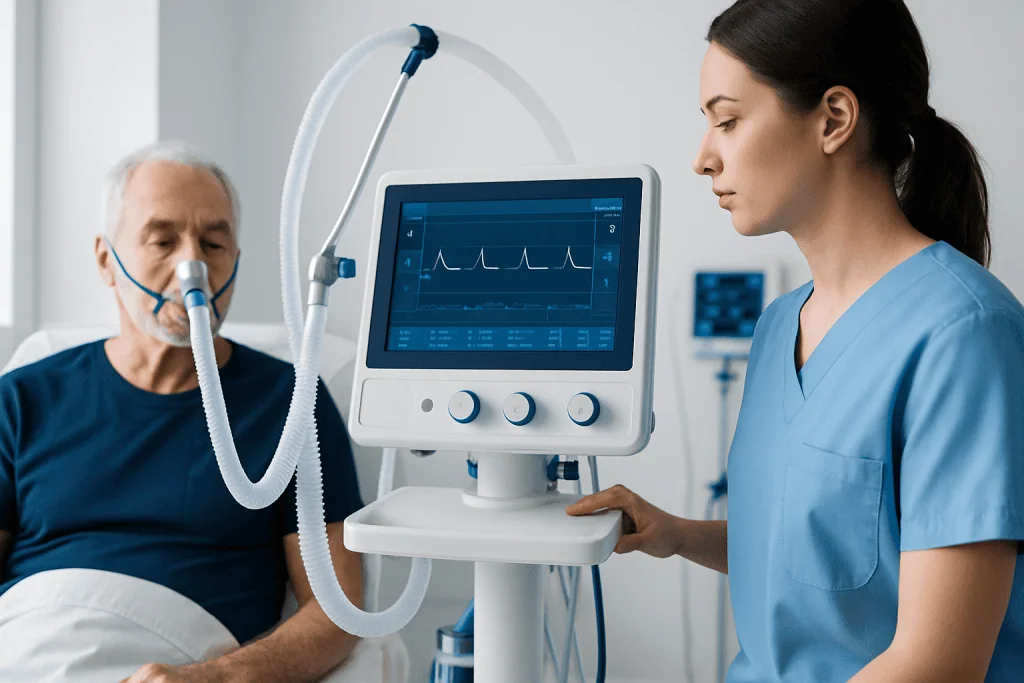
Before contacting airlines or arranging travel, ask your treating doctor for a current medical summary. This should explain your diagnosis or relevant condition in general terms, your usual oxygen flow rate, when you use oxygen, whether you need it continuously or only during exertion, and whether you are stable enough to travel. If your doctor can provide a fit-to-fly opinion, keep it with your travel papers.
Airlines and airport medical teams often need practical details rather than a long clinical history. They may ask whether you can sit upright, walk short distances, use stairs, manage without oxygen for brief security checks, or operate your own portable oxygen concentrator. If you are traveling after a hospital stay or recent change in symptoms, ask your doctor whether any additional assessment is needed before flying.
Your oxygen needs may differ between daily life and air travel. Some patients who do not use oxygen at home may still need assessment if they have significant heart or lung disease, severe anemia, recent chest surgery, a recent respiratory infection or unexplained breathlessness. If there is any uncertainty, it is safer to discuss travel well in advance rather than waiting until check-in.
Airline approval and portable oxygen concentrators
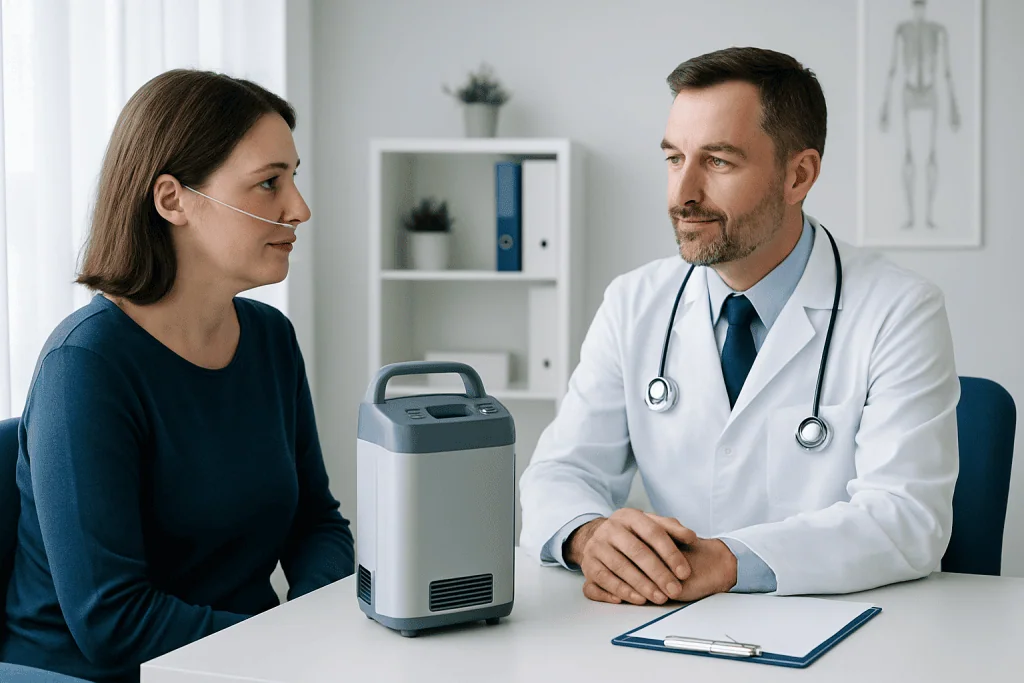
Most airlines do not allow passengers to bring compressed oxygen cylinders into the cabin, but many allow approved portable oxygen concentrators, often called POCs. Rules vary by airline, aircraft and route, so you should never assume approval based on a previous trip. Contact the airline medical desk before booking if possible, or immediately after booking if your travel date is already fixed.
Ask the airline which POC models are accepted, what medical forms are required, how many batteries you must carry and whether you need to reserve special assistance. Many airlines require batteries to cover the scheduled flight time plus extra time for delays, boarding and connection periods. Batteries usually need to be carried in hand luggage with terminals protected, and you may not be allowed to plug the device into the aircraft power supply.
If your route includes more than one airline, each carrier may have its own approval process. Codeshare flights can be especially confusing because the airline that sells the ticket may not operate the aircraft. Confirm the operating airline for every segment and keep written approvals, completed forms and device documentation with you.
- Confirm the accepted POC model and settings.
- Ask whether pulse-dose or continuous-flow use is permitted for your needs.
- Carry your prescription or medical letter in English if possible.
- Allow time for medical clearance forms to be reviewed before travel.
Planning oxygen from door to door
Your oxygen plan should cover the full journey, not only the flight. Think in segments: home to departure airport, check-in and security, waiting at the gate, boarding, flight time, arrival airport, baggage claim, transfer to hotel or hospital, and the first night in Turkey. Delays are common in international travel, so build in a buffer rather than calculating only the ideal travel time.
Airport special assistance can be very helpful if walking long distances increases breathlessness. You can request wheelchair assistance, priority movement through certain areas, help during connections and support reaching the boarding gate. This service should be requested through the airline in advance, even if the airport provides it locally.
For arrival in Turkey, consider whether a standard taxi is enough or whether you need a pre-arranged transfer with space for your device, companion, luggage and mobility equipment. If you are coming directly for hospital admission or if your condition is fragile, Acibadem International Patient Services can help coordinate arrival communication and advise on appropriate transfer planning based on your care schedule.
Hotels, accommodation and daily movement in Turkey
If you will stay in a hotel or serviced apartment, confirm practical oxygen details before arrival. Ask about reliable electrical outlets near the bed, elevator access, distance from the room to the lobby, smoking policy, room ventilation and whether staff can help with luggage. If you use a stationary concentrator, ask your oxygen supplier how it will be delivered, installed and serviced.
Do not rely on buying oxygen equipment after you arrive unless this has already been arranged by a trusted provider. Availability, device compatibility, language barriers and prescription requirements can create delays. If oxygen delivery to your hotel is needed, confirm the address, contact person, delivery time window and what happens if your flight is delayed.
Daily movement matters too. Istanbul and other Turkish cities can involve traffic, hills, large buildings and busy public areas. Plan appointments with enough time between transfers, meals and rest periods. When possible, share your mobility and oxygen needs with the international patient team before your itinerary is finalized, so appointment timing and on-site assistance can be considered.
Hospital visits and communication with your care team
When you attend a hospital appointment, bring your oxygen equipment, charger, spare battery, tubing or cannula, and medical documents. Tell the reception or international patient coordinator that you are using oxygen, even if it seems obvious. This helps staff guide you to the right waiting area, reduce unnecessary walking and alert the clinical team if you feel unwell.
At JCI-accredited Acibadem hospitals, international patients can be supported by interpreters and patient service teams who understand the added logistics of traveling for care. They can help communicate your accessibility needs, coordinate appointment flow and make sure your care team knows about your oxygen use. This is especially important if you will have imaging, pre-operative evaluation, rehabilitation or several consultations in one day.
Keep in mind that hospital oxygen, in-flight oxygen and hotel oxygen are separate arrangements. Oxygen used inside a clinical setting is managed by the hospital team, but you still need your own safe plan for travel between locations and for non-clinical time. If your oxygen requirement changes during your stay, ask the treating team what that means for your return flight before changing your ticket.
Return travel and unexpected changes
Your return journey should be planned as carefully as your arrival. After treatment, your stamina, oxygen requirement or mobility may be different from when you came to Turkey. Before flying home, ask your treating team whether you should update your fit-to-fly letter, change your oxygen plan, allow more recovery time or request additional airport assistance.
If your airline medical clearance was issued for a specific date, route or condition, it may not automatically apply if your return flight changes. Contact the airline if your oxygen flow rate changes, if you need a different device setting, if you have been hospitalized unexpectedly or if you require a stretcher or medical escort. These arrangements can take time and may not be available on every flight.
Keep emergency contacts accessible during your stay: your companion, hotel reception, transfer provider, airline assistance desk, travel insurer and hospital international patient contact. A calm plan for what to do if equipment fails, batteries run low or symptoms worsen can prevent panic. If you feel chest pain, severe breathlessness, confusion, blue lips or sudden deterioration, seek urgent medical help immediately.
Step by step
- Speak with your doctor before booking. Ask whether you are stable enough to travel and whether your oxygen needs may change during flight. Request a medical summary or fit-to-fly letter that clearly states your oxygen flow rate, device type and any mobility limitations.
- Choose flights with simpler logistics. When possible, choose direct flights or routes with generous connection times. Short connections can be difficult if you need wheelchair assistance, battery changes, medical desk checks or time to rest.
- Contact the airline medical desk. Confirm the airline's requirements for portable oxygen concentrators, medical forms and battery capacity. Keep written approval with your passport and carry a copy on your phone.
- Arrange oxygen for ground time. Plan how oxygen will be available before departure, after landing, during transfers and at your accommodation. Do not assume airport or hotel oxygen will be available without prior arrangement.
- Share your needs with Acibadem International. Before arrival, tell your patient coordinator if you use oxygen, need wheelchair support or tire easily. This helps the team plan appointment timing, interpreter support and hospital navigation more comfortably.
- Pack a protected oxygen travel kit. Carry your device, batteries, charger, plug adaptor, tubing, cannulas, prescription and medical letters in hand luggage. Add a simple written schedule of when you use oxygen and the settings prescribed for you.
- Reconfirm before returning home. If your treatment, symptoms or oxygen settings changed in Turkey, check with your doctor before flying. Update the airline and your travel insurer when required, especially after hospitalization or a change in mobility.
Your checklist
- Recent medical summary or fit-to-fly letter in English if possible
- Airline approval for your portable oxygen concentrator
- Enough charged batteries for flight time, delays and transfers
- Device manual or label showing the POC model and battery information
- Spare cannula, tubing, filters and any small accessories you normally use
- International plug adaptor and charger packed in hand luggage
- Wheelchair or special assistance request confirmed with the airline
- Hotel or accommodation oxygen arrangements confirmed in writing
- Acibadem International contact details and appointment schedule
- Travel insurance documents and emergency contacts
Key takeaways
- Start oxygen travel planning several weeks before your trip, especially if airline medical clearance is needed.
- A portable oxygen concentrator must be approved by the airline, and battery requirements are usually strict.
- Your plan should cover the whole door-to-door journey, not only the time spent on the aircraft.
- Share oxygen, mobility and accessibility needs with your hospital coordinator before arrival in Turkey.
- Recheck return flight fitness if your symptoms, treatment plan or oxygen settings change during your stay.
Frequently asked questions
Can I bring my own oxygen cylinder on a flight to Turkey?
Most airlines do not allow personal compressed oxygen cylinders in the cabin, although policies vary. Many airlines do allow approved portable oxygen concentrators if medical clearance is completed in advance. You should confirm directly with the operating airline for every flight segment.
What is a portable oxygen concentrator and why is it important for travel?
A portable oxygen concentrator is a battery-powered device that concentrates oxygen from the surrounding air. For many travelers, it is the most practical option for in-flight oxygen because airlines may approve certain models. Your doctor should confirm whether your prescribed oxygen flow and delivery mode are suitable for the device you plan to use.
Will the airline provide oxygen if I request it?
Some airlines may offer medical oxygen on selected routes, but many now require passengers to bring an approved portable oxygen concentrator instead. Availability, fees, forms and deadlines differ widely. Always contact the airline medical desk before travel and do not wait until airport check-in.
Can Acibadem International arrange my airline oxygen approval?
Airline approval must usually be completed between you, your doctor and the airline, because the airline controls in-flight medical rules. Acibadem International can help by understanding your appointment schedule, supporting communication around hospital access needs and guiding you on practical arrival planning. If medical documents from your Acibadem care team are needed after assessment, ask your coordinator what can be provided.
Do I need oxygen if I only get breathless when walking?
Not everyone with breathlessness needs oxygen, but travel can involve long walks, queues, stairs and stress. Speak with your doctor before flying, especially if symptoms are new, worsening or related to heart or lung disease. Airport wheelchair assistance may be helpful even if oxygen is not required.
How many batteries should I bring for my oxygen concentrator?
Airlines commonly require enough battery power for the full scheduled flight plus a safety margin for delays, boarding, taxi time and connections. The exact rule varies, so ask your airline for its written requirement. Carry batteries in hand luggage and protect them according to airline and airport security guidance.
What if my oxygen needs change after treatment in Turkey?
Tell your treating team and your international patient coordinator as soon as possible. You may need an updated fit-to-fly assessment, revised airline clearance, different transfer arrangements or extra recovery time before returning home. Do not assume your original return plan is still suitable if your condition has changed.
Add us as a Preferred Source to see more of our trusted health content across Google Search, AI Overviews and Discover.
More Patient Guides

Traveling to Turkey with a Stoma: Supplies, Airport Screening, and Recovery Planning
Traveling to Turkey with a stoma is manageable with the right supplies, airport screening plan, and recovery support in Istanbul or Turkey.
8 min read
Mobility Aids in Turkey: Renting a Wheelchair, Walker, or Crutches
Mobility aids in Turkey can be rented through medical suppliers, pharmacies, and hospital-linked services in Istanbul and other cities.
9 min read
How to Handle Food Allergies and Special Diets During Treatment in Turkey
Food allergies and special diets during treatment in Turkey can be managed safely by sharing your needs early and coordinating meals with…
9 min read