

Wheelchair-Accessible Transfers in Turkey for Medical Patients

Wheelchair-accessible transfers in Turkey for medical patients are planned transport services that help people travel safely and comfortably between the airport, hospital, hotel, and other care-related locations. At Acibadem, these transfers are coordinated as part of the patient journey, with vehicles and assistance arranged according to mobility needs and treatment schedules.
Arriving for medical care is easier when every transfer is planned around your mobility, comfort and appointment schedule. This guide explains how to arrange wheelchair-accessible transport in Turkey, what to confirm in advance and how Acibadem International can help coordinate a smoother journey.
At a glance
- Best for: Patients using a wheelchair, mobility aid, stretcher or needing extra transfer support
- Key routes: Airport to hotel, hotel to hospital, hospital to imaging or appointments, discharge transfers
- Plan ahead: Share wheelchair type, transfer needs, luggage details and companion numbers before arrival
- Support available: International patient coordination, interpreters, hospital arrival guidance and travel assistance
- Important note: Medical fitness to travel and transfer method should be confirmed with your care team
Why accessible transfers matter during medical travel
When you travel for treatment, the transfer is not just a ride from one place to another. It is part of your care journey. A well-planned wheelchair-accessible transfer can reduce fatigue, protect your privacy, help you arrive on time and make the first hours in Turkey feel calmer for you and your companion.
Medical patients may need different kinds of support depending on their condition, recent surgery, pain level, balance, oxygen needs, mobility aids or ability to sit upright. Some travelers can transfer from a wheelchair into a standard seat with assistance, while others need a vehicle with a ramp or lift so they can remain seated in their wheelchair. Some may require a stretcher-capable ambulance-style transfer arranged under medical guidance.
At Acibadem International, accessible transfer planning is usually handled as part of your overall arrival coordination. The aim is to understand your mobility needs before you travel, align transport with your appointment schedule and make sure you know who will meet you, where they will be waiting and how to contact support if your flight changes.
Types of wheelchair-accessible transfers you may need
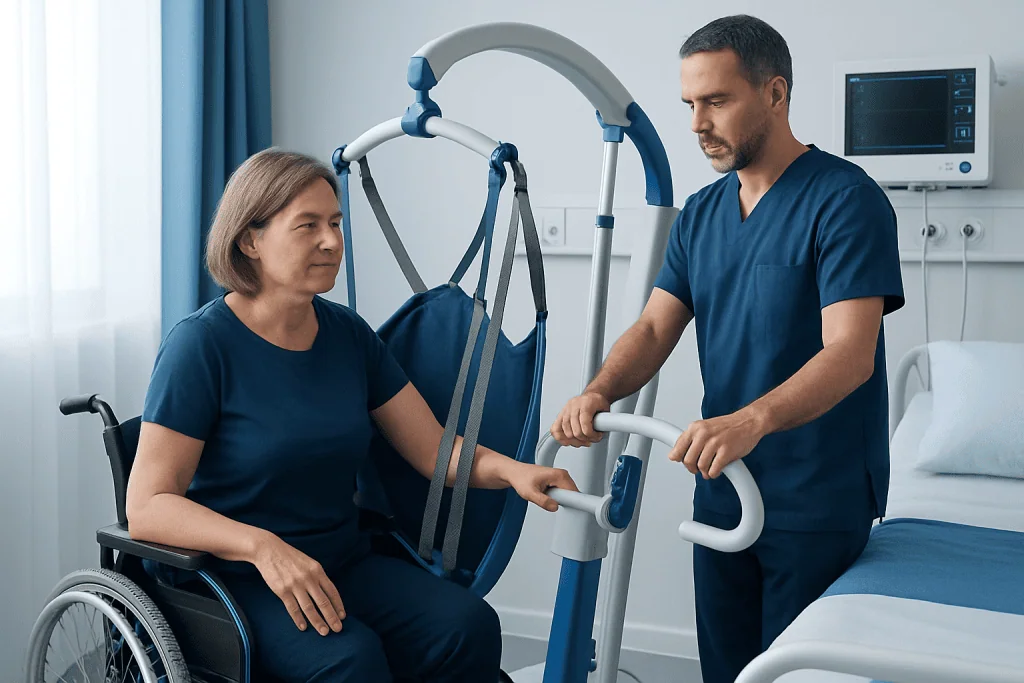
The most common route is from the airport to your hotel or directly to the hospital. Istanbul and other major Turkish cities have large international airports, so walking distances can be long and arrival areas can feel busy. If you use a wheelchair or tire easily, airport assistance and a pre-arranged accessible vehicle can make a meaningful difference.
You may also need repeated transfers between your hotel and hospital for consultations, imaging, laboratory tests, treatment sessions or follow-up checks. These should be scheduled with enough time for traffic, parking, check-in and any need to move at a slower pace. If your appointment involves sedation, a procedure or a long clinical day, your return transfer should be arranged with extra comfort in mind.
Depending on your situation, accessible transport may include:
- A vehicle with space for a foldable wheelchair and a patient who can sit in a regular seat.
- A ramp-equipped or lift-equipped vehicle for a wheelchair user who cannot easily transfer.
- A larger vehicle for a patient, companion, luggage and medical equipment.
- A medically supported vehicle or ambulance-style transfer when advised by the medical team.
The right option depends on your mobility, weight-bearing ability, wheelchair dimensions, medical condition and travel distance. It is best not to assume that every vehicle advertised as accessible will suit your needs; details should be confirmed in advance.
What to share before your trip

The more specific you are before arrival, the better your transfer can be matched to you. A simple note saying you need wheelchair assistance may not be enough. Your coordinator should know whether your wheelchair is manual or powered, whether it folds, whether you can stand briefly, and whether you need to remain in the chair during the ride.
It is also helpful to share your height and approximate weight if this affects lifting, seating or safety positioning. If you use a powered wheelchair or scooter, provide the dimensions and battery type, especially for airport and airline handling. If you travel with oxygen, a CPAP device, drainage equipment, braces, cushions or a walker, mention these as well so the vehicle has adequate space.
For Acibadem International patients, the international patient services team can help collect these practical details and communicate them to the relevant hospital and transport contacts. You may be asked to send your flight number, arrival time, hotel address, appointment schedule, number of companions and any special instructions from your doctor. This helps reduce last-minute confusion and supports safer planning.
Airport arrival: from plane to vehicle
Airport assistance should be requested from your airline before you travel, ideally at the time of booking or at least several days before departure. This service may include help from the aircraft door through passport control, baggage claim and customs. If you have a connecting flight, request assistance for each airport on your route, not only your final arrival in Turkey.
On arrival, keep your phone charged and switched on once permitted. Save your transfer contact, hospital coordinator and companion numbers in an easy-to-find place. If you do not speak Turkish, having written details in English and Turkish can help airport staff direct you to the correct meeting point.
If Acibadem International has coordinated your arrival, you will usually receive clear meeting instructions before you travel. These may include the airport, terminal, driver or greeter details, emergency contact information and whether the vehicle will come to a designated pick-up area. If your flight is delayed, inform your coordinator as soon as possible, although flight tracking may also be used by transfer teams.
Hospital, hotel and city transfers
Transfers within Turkish cities should be planned with traffic and accessibility in mind. Istanbul, in particular, can have variable travel times depending on the hour, weather, roadworks and bridge or tunnel routes. For hospital appointments, it is wise to leave earlier than you might in a smaller city, especially if you need extra time to enter the building, register or reach a department.
When choosing accommodation, ask about step-free entrances, elevator size, accessible bathrooms, bed height and distance from the hospital. A hotel that is close on the map may still be difficult if pavements, slopes or traffic crossings are challenging. International patient teams can often suggest practical points to consider when selecting a hotel or serviced apartment near your care location.
At JCI-accredited Acibadem hospitals, patient arrival processes are designed to support international visitors, including those with mobility needs. Still, each visit is easier when the hospital knows your expected arrival time and transfer type. If you require a wheelchair at the hospital entrance, interpreter support or direct guidance to a department, request this before the appointment day whenever possible.
Safety, comfort and dignity during the journey
A good accessible transfer should feel respectful as well as practical. You should not feel rushed, lifted without explanation or asked to manage steps that make you uncomfortable. If you need assistance moving from wheelchair to seat, the person helping should wait for your consent, understand your limits and avoid pulling on painful or vulnerable areas.
For your comfort, consider travel clothing that is easy to adjust, supportive footwear, a cushion if you use one regularly and a small bag with medications, water if permitted, tissues and documents. Keep essential items with you rather than in checked luggage or a vehicle trunk. If you are post-operative or in pain, ask your clinical team whether you need specific positioning advice for longer journeys.
Seatbelts, wheelchair restraints and safe loading are important. If you remain in your wheelchair inside the vehicle, confirm that the vehicle has suitable securing points and that your chair is appropriate for travel use. If you are unsure, ask your coordinator to clarify the safest transfer option with the transport provider and, when needed, your medical team.
How Acibadem International can help coordinate your transfer plan
Acibadem International supports patients before, during and after their stay in Turkey, including practical logistics around medical travel. This may include aligning your transfers with appointment times, helping you understand arrival instructions, arranging interpreter support and guiding you on what information is needed for mobility planning.
The team can also help you think through details that are easy to overlook: how many companions are traveling, whether luggage will fit with the wheelchair, whether you will go to the hospital or hotel first, and whether discharge day requires a different vehicle from arrival day. If your treatment plan changes, your transport schedule may need to change too.
While transport arrangements depend on availability, medical suitability and local provider capacity, early communication gives everyone more time to choose an appropriate option. You should always tell your coordinator if your mobility changes, if you have a new medical device, or if your doctor has advised restrictions on sitting, standing or walking.
Step by step
- Confirm your medical fitness to travel. Before booking flights and transfers, ask your treating doctor whether you are fit to travel and what kind of assistance you need. If you have had recent surgery, limited sitting tolerance, oxygen needs or a high fall risk, the transfer method should be discussed in advance.
- Share detailed mobility information. Tell your coordinator whether you use a manual wheelchair, powered wheelchair, scooter, walker or crutches. Include whether you can stand, pivot, climb one step or transfer into a vehicle seat with help.
- Request airline and airport assistance. Contact your airline before departure to request wheelchair or mobility assistance for every airport in your journey. Keep confirmation details with your travel documents and remind airline staff at check-in.
- Book the right vehicle type. Choose transport based on your real mobility needs, not only passenger numbers. Confirm ramp or lift access, wheelchair space, luggage capacity, companion seating and whether the driver will know you require additional time.
- Coordinate arrival timing and contacts. Share your flight number, terminal, arrival time and hotel or hospital destination. Save your driver, greeter and Acibadem International coordinator contact details so you can update them quickly if your flight or baggage is delayed.
- Plan each hospital visit transfer. Do not arrange only the airport transfer and forget appointment days. Build in time for traffic, hospital entrance assistance, registration, interpreter meeting and possible delays after tests or consultations.
- Review the discharge or return journey. Your mobility after treatment may be different from your mobility on arrival. Before discharge or return travel, ask whether you need a larger vehicle, reclined positioning, extra support, or a medical transfer rather than a standard accessible car.
Your checklist
- Flight number, arrival airport, terminal and estimated arrival time
- Hotel name, full address and contact number
- Hospital name, department, appointment time and coordinator contact
- Wheelchair type, dimensions, weight and whether it folds
- Whether you can transfer to a vehicle seat or must remain in your wheelchair
- Number of companions and amount of luggage
- Medical devices, oxygen needs, cushions, braces or walking aids
- Medication and important documents kept in your hand luggage
- Emergency contacts saved on your phone and printed on paper
- Any doctor instructions about sitting, walking, lifting or transfer assistance
Key takeaways
- Wheelchair-accessible transfers should be planned around your mobility, medical condition, luggage and appointment schedule.
- Airport assistance and ground transport are separate arrangements, so both should be requested before travel.
- The best vehicle depends on whether you can transfer to a seat or need to remain in your wheelchair.
- For hospital visits, allow extra time for traffic, check-in, interpreter support and moving through the building.
- Acibadem International can help coordinate practical logistics, but you should share detailed and updated mobility information early.
Frequently asked questions
Can I arrange a wheelchair-accessible airport transfer in Turkey before I arrive?
Yes, and it is strongly recommended to arrange it before you travel. You should provide your flight details, mobility needs, wheelchair type, companion numbers and luggage information. If you are coming to Acibadem for care, your international patient coordinator can guide you on what details are needed for transfer planning.
Is airline wheelchair assistance the same as an accessible vehicle transfer?
No. Airline or airport assistance usually helps you move through the airport, from the aircraft to immigration, baggage claim and the arrivals area. A wheelchair-accessible vehicle transfer is a separate ground transport arrangement that takes you from the airport to your hotel or hospital.
What if I use a powered wheelchair or mobility scooter?
Share the device dimensions, approximate weight and battery type before travel. Airlines may have specific rules for powered mobility devices, and the ground vehicle must have enough space and suitable access. Do not assume a standard van can carry a powered chair safely without confirmation.
Can I stay in my wheelchair during the vehicle ride?
This depends on the vehicle, your wheelchair and safety restraints. Some vehicles are equipped to secure a wheelchair during travel, while others require you to transfer to a regular seat. If you cannot transfer, say this clearly during planning so the correct vehicle can be requested.
Should I book my hotel near the hospital?
Staying near the hospital can reduce travel time and fatigue, especially if you have multiple appointments. However, distance is not the only factor; you should also check step-free access, elevator size, bathroom layout and entrance design. Your care coordinator may help you think through these practical considerations.
What happens if my flight is delayed?
Inform your transfer contact or patient coordinator as soon as you know about the delay. Many transfer teams monitor flight information, but direct communication is still helpful, especially if you miss a connection or your arrival airport changes. Keep your phone charged and carry contact details on paper as a backup.
Do I need a medical ambulance instead of an accessible vehicle?
Some patients need medically supported transport, but many wheelchair users do not. The decision depends on your medical condition, stability, ability to sit, need for monitoring and doctor recommendations. If there is any uncertainty, ask your medical team before confirming the transfer.
Can a companion travel with me in the accessible transfer?
Usually, yes, but companion seating and luggage space should be confirmed in advance. Accessible vehicles can fill quickly when a wheelchair, medical equipment and suitcases are included. Tell your coordinator exactly how many people are traveling with you so the vehicle can be planned appropriately.
Add us as a Preferred Source to see more of our trusted health content across Google Search, AI Overviews and Discover.
More Patient Guides

Traveling to Turkey with a Stoma: Supplies, Airport Screening, and Recovery Planning
Traveling to Turkey with a stoma is manageable with the right supplies, airport screening plan, and recovery support in Istanbul or Turkey.
8 min read
Mobility Aids in Turkey: Renting a Wheelchair, Walker, or Crutches
Mobility aids in Turkey can be rented through medical suppliers, pharmacies, and hospital-linked services in Istanbul and other cities.
9 min read
How to Handle Food Allergies and Special Diets During Treatment in Turkey
Food allergies and special diets during treatment in Turkey can be managed safely by sharing your needs early and coordinating meals with…
9 min read