

Requesting Priority Seating and Queue Support in Turkish Hospitals
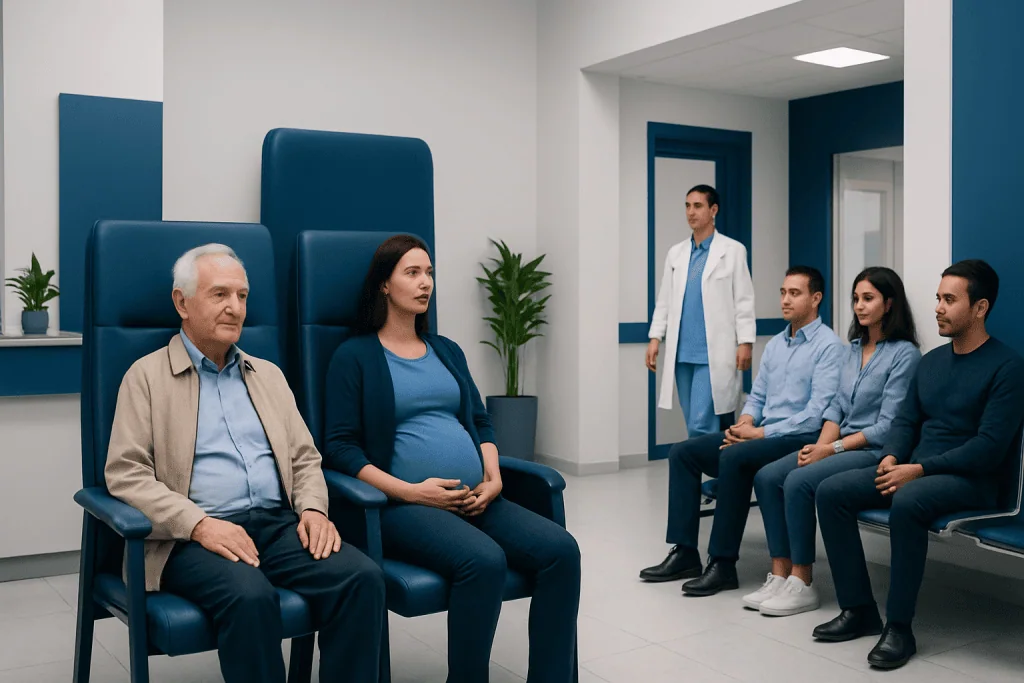
Priority seating and queue support in Turkish hospitals help patients who may have difficulty standing or waiting, such as older adults, pregnant patients, and people with disabilities or limited mobility. At Acibadem in Turkey, this support is typically arranged through reception, patient services, or on-site staff, who can guide eligible patients to appropriate waiting areas and assist with appointment flow.
If standing, waiting, or navigating busy hospital areas is difficult for you, you can ask for priority seating and queue support before or during your visit. This guide explains what to request, what documents may help, and how Acibadem International patient teams can support a smoother hospital experience in Turkey.
At a glance
- Best time to request support: Before your appointment, and again on arrival
- Who may need it: People with mobility limits, pain, fatigue, disability, pregnancy, older age, or temporary injury
- Helpful documents: Medical summary, disability card, mobility aid notes, medication list, and appointment details
- Where to ask: International patient desk, reception, patient relations, nursing desk, or security team
- Important note: Emergency care follows medical triage, not arrival order
What priority seating and queue support usually means
Priority seating and queue support are practical accommodations that help you move through a hospital visit with less strain. They may include a seated waiting area close to registration, help avoiding long standing queues, wheelchair access, a staff member guiding you between departments, or a calmer place to wait if noise and crowds are difficult for you.
In Turkish hospitals, support is often arranged through reception, patient relations, or the international patient office. In a large hospital, you may pass through several points on the same day: registration, consultation, imaging, laboratory, billing, pharmacy, and discharge. Asking for support early helps staff understand that you may not be able to stand, walk long distances, or wait in a crowded area without assistance.
Priority support does not mean that medical order, safety rules, or emergency triage will be bypassed. It means the hospital will try to make the waiting process more accessible and safer for your condition. At Acibadem International hospitals, international patient teams can help communicate your needs to the relevant desks and coordinate interpreters when language is a barrier.
Who should consider asking for assistance
You do not need to have a visible disability to ask for help. Many people need queue support because of pain, shortness of breath, dizziness, recent surgery, cancer treatment fatigue, neurological symptoms, pregnancy, advanced age, anxiety, autism spectrum needs, visual impairment, hearing impairment, or a temporary injury such as a fracture or sprain.
If your condition becomes worse when standing, walking, fasting, or being in a crowded space, it is reasonable to mention this when your appointment is booked. You can also ask if your tests can be grouped more efficiently, whether a wheelchair can be available on arrival, or whether your companion can complete registration steps while you remain seated.
Children, older adults, and patients traveling after a long flight may also need additional time and seating. If you are visiting from abroad, do not wait until you feel exhausted to speak up. Tell your coordinator or the hospital desk as soon as possible so support can be arranged before the visit becomes difficult.
How to request support before your appointment
The simplest way is to share your needs when confirming your appointment. Explain what you can and cannot do in practical terms: how far you can walk, whether stairs are difficult, whether you need a wheelchair, whether you can stand in line, and whether you need a companion or interpreter with you.
If you are being assisted by Acibadem International, send your patient coordinator a short note before your hospital visit. Include your appointment date, department, mobility limits, language needs, and any medical risk that may affect waiting, such as fainting, severe pain, oxygen use, or immune suppression. The team can guide you on where to arrive and whom to approach first.
You may write your request in simple language, such as: I have difficulty standing for more than five minutes and need seated waiting and queue assistance. Please advise where I should go on arrival. If you are unsure how to describe your needs, focus on the problem rather than the diagnosis. Staff can respond more quickly when they understand the exact barrier you face.
What to bring with you
Documentation can make requests easier, especially if your need is not visible. You do not always need formal proof to ask for a seat, but a short medical summary, disability card, hospital letter, medication list, or recent discharge note can help staff understand why standing or waiting is unsafe for you.
Keep your documents in a small folder or on your phone, and make sure your companion can access them if you become tired. If you use a wheelchair, walker, cane, hearing aid, oxygen equipment, or other assistive device, bring any essential accessories and chargers. If you need regular medication during the visit, carry it with you rather than packing it in checked luggage or leaving it at the hotel.
For international patients, it is also useful to have your passport, appointment confirmation, insurance or payment documents, and the contact details of your hospital coordinator. If your medical documents are not in English or Turkish, ask in advance whether translation is needed for clinical review or administrative processing.
What to expect when you arrive at the hospital
On arrival, go to the international patient desk, main reception, or the desk named in your appointment instructions. Tell staff clearly that you requested priority seating or queue support. If you are dropped off by car or taxi, ask whether a wheelchair or staff assistance can be brought to the entrance before you walk inside.
Hospitals can be busy, and different departments may have different layouts. You may need to repeat your request at more than one point, especially if you move from consultation to imaging or laboratory services. This is normal and does not mean your request was ignored; it often means each department needs to know how to support you safely.
If there is a delay, ask whether you can wait seated nearby and be called when it is your turn. You can also ask whether your companion may hold your place in line, complete paperwork, or listen for your name while you rest. If you feel unwell, dizzy, breathless, or in severe pain, tell staff immediately rather than waiting quietly.
Language, companions, and cultural expectations
In Turkey, hospital staff are generally used to helping older adults, pregnant patients, and people with mobility needs, but the exact process may vary between hospitals and departments. A polite, direct request is appropriate. You do not need to apologize for needing support, and you do not need to overexplain personal details in a public area.
If you do not speak Turkish, ask for an interpreter or international patient representative. Acibadem International can support communication for many international patients through dedicated patient services and interpreter coordination. This is especially important when explaining symptoms, consent, accessibility needs, medication timing, or instructions for the next step of your visit.
A companion can be very helpful, but hospital rules may limit how many people can enter certain clinical areas. Ask in advance if your companion is needed for mobility, communication, or personal care. When staff understand that your companion is part of your accessibility support, they can advise where accompaniment is possible and where alternative help may be arranged.
When priority support is not the same as emergency care
Priority seating and queue support are designed to reduce physical and communication barriers during planned or non-emergency hospital visits. They are not a substitute for emergency assessment. If you have chest pain, signs of stroke, severe breathing difficulty, heavy bleeding, loss of consciousness, or a sudden serious change in condition, you should seek emergency care immediately.
Emergency departments use triage, which means patients are assessed according to medical urgency. A person who arrives later may be seen first if their condition is more critical. This can feel confusing when you are tired or anxious, but triage is a safety process rather than a standard queue.
If your accessibility need affects your emergency visit, still tell the triage nurse or desk staff. For example, explain if you cannot stand, cannot hear announcements, cannot communicate without an interpreter, or cannot sit upright for long. These details can help the team support you while clinical priority is being assessed.
Step by step
- Describe your need before you travel. Tell your hospital contact if you cannot stand in queues, walk long distances, climb stairs, hear announcements, or manage crowded waiting areas. Practical details help the team plan support more effectively than a diagnosis alone.
- Ask where to arrive and whom to approach. Request the correct entrance, desk name, and contact number for the day of your appointment. If you are an international patient, confirm whether you should first visit the international patient desk or a department reception.
- Prepare a small document folder. Bring your passport, appointment confirmation, relevant medical notes, medication list, and any disability or mobility documentation. Keep these accessible so you do not need to search through luggage at the desk.
- Request seating as soon as you arrive. Do not wait until you are exhausted or in pain. Tell reception, security, or patient relations that you need seated waiting and queue support, and show your appointment details if needed.
- Use your companion strategically. Your companion may be able to complete forms, hold a place in line, listen for your name, or collect instructions while you remain seated. Ask staff what is allowed in each department, as rules can differ.
- Repeat the request in each new area. When you move to imaging, laboratory, pharmacy, or billing, briefly explain your need again. A simple sentence such as I cannot stand for long and need to wait seated can prevent confusion.
- Speak up if your condition changes. If you become dizzy, breathless, faint, confused, or develop severe pain, inform staff immediately. Accessibility support is helpful, but new or worsening symptoms may require clinical attention.
Your checklist
- Appointment confirmation with date, time, department, and doctor or clinic name
- Passport or official ID and any insurance or payment documents
- Short medical summary or relevant reports explaining mobility, fatigue, pain, or disability needs
- Medication list, regular medicines, and any timing instructions
- Mobility aids such as cane, walker, wheelchair, braces, hearing aids, glasses, or chargers
- Hospital coordinator or international patient contact number saved on your phone
- Comfort items such as water if permitted, snacks if not fasting, mask, tissues, and warm layer
- A short written sentence in English or Turkish describing your support need
- Companion details and plan for who will handle paperwork or communication if you need to rest
Key takeaways
- Ask for priority seating and queue support before your visit whenever possible, then repeat the request on arrival.
- You do not need a visible disability to request help; explain the practical barrier you face.
- Documents, appointment details, and a clear contact person make support easier to coordinate.
- International patient desks, interpreters, and companions can reduce stress during multi-step hospital visits.
- Emergency departments follow medical triage, so urgent symptoms should be reported immediately.
Frequently asked questions
Can I request priority seating if my disability is not visible?
Yes. Many conditions that make standing or waiting difficult are not visible, including pain, fatigue, dizziness, neurological symptoms, heart or lung conditions, and anxiety-related needs. Explain what happens when you stand or wait too long, and ask for a seated waiting option.
Do I need an official disability card in Turkey to receive queue support?
An official card can be helpful, but it is not the only way to request assistance. A medical summary, recent hospital letter, medication list, or clear explanation may also help staff understand your needs. Policies can vary, so ask the hospital team what documentation is useful for your specific visit.
Will priority support mean I see the doctor before everyone else?
Not necessarily. Priority support usually focuses on making the waiting process safer and more accessible, such as allowing you to sit, reducing unnecessary standing, or helping you move between desks. Clinical order, appointment timing, and emergency triage still depend on hospital processes and medical urgency.
Can Acibadem International arrange wheelchair support?
If you tell the team in advance, they can advise how to request wheelchair assistance and where to arrive. Availability and exact arrangements may depend on the hospital, entrance, department, and timing. It is best to mention wheelchair needs when booking and again before your appointment day.
What if I do not speak Turkish?
Ask for interpreter support or assistance from the international patient services team. Clear communication is important for accessibility requests, consent, symptoms, and follow-up instructions. If you are visiting Acibadem International, your patient coordinator can guide you on language support options for your appointment.
Can my companion stand in line for me?
Often, a companion may help with paperwork, registration, or listening for your name while you remain seated, but each department may have its own rules. Ask staff what is permitted and explain that your companion is helping because of a mobility, communication, or health need. In some clinical areas, staff may offer an alternative if companions cannot enter.
What should I do if I start feeling worse while waiting?
Tell staff immediately, especially if you feel faint, breathless, confused, or in severe pain. Do not assume you must wait silently because you already requested queue support. A change in symptoms may require a nurse or doctor to reassess you.
Add us as a Preferred Source to see more of our trusted health content across Google Search, AI Overviews and Discover.
More Patient Guides

Traveling to Turkey with a Stoma: Supplies, Airport Screening, and Recovery Planning
Traveling to Turkey with a stoma is manageable with the right supplies, airport screening plan, and recovery support in Istanbul or Turkey.
8 min read
Mobility Aids in Turkey: Renting a Wheelchair, Walker, or Crutches
Mobility aids in Turkey can be rented through medical suppliers, pharmacies, and hospital-linked services in Istanbul and other cities.
9 min read
How to Handle Food Allergies and Special Diets During Treatment in Turkey
Food allergies and special diets during treatment in Turkey can be managed safely by sharing your needs early and coordinating meals with…
9 min read