

Quick answer
Robotic orthopedic surgery combines computer-assisted planning with robotic guidance to support surgeons during selected joint and bone procedures. At Acibadem in Turkey, orthopedic specialists use this technology to plan and perform procedures with tailored guidance, following an individual evaluation of the patient’s condition and treatment needs.
Robotic Orthopedic Surgery
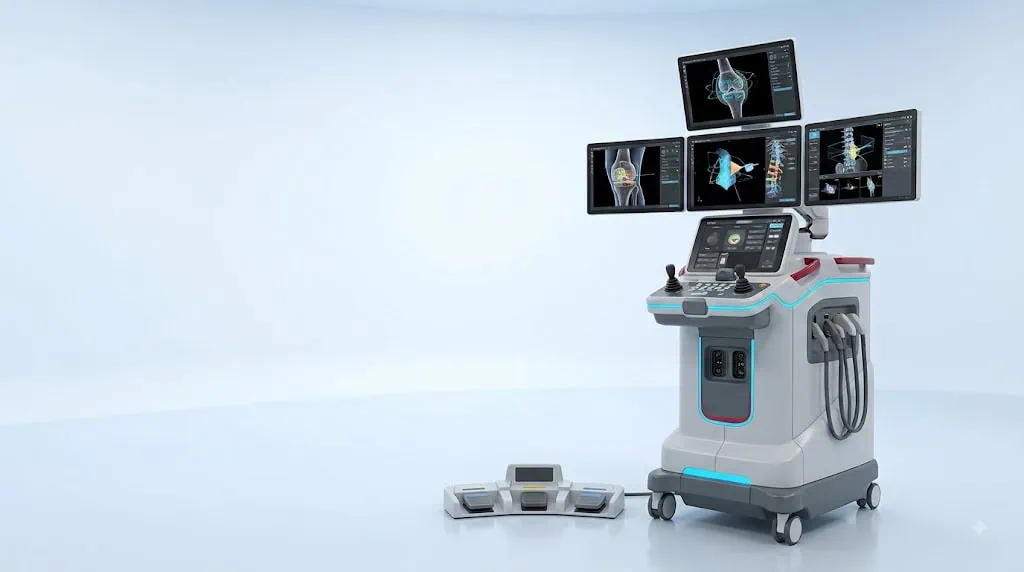
Robotic orthopedic surgery is an advanced form of computer-assisted surgery used to support highly precise joint and bone procedures. It combines detailed imaging, digital planning and robotic guidance to help the orthopedic surgeon carry out each stage of surgery according to an individualized treatment plan.
At Acibadem International, robotic orthopedic technology is used by experienced Orthopedics and Traumatology teams when it is clinically appropriate. The robot does not replace the surgeon. Instead, it acts as a sophisticated planning and guidance tool, helping the surgeon make carefully controlled decisions throughout selected procedures.
This technology may be considered for patients requiring joint replacement, correction of bone alignment, treatment of certain traumatic injuries or other complex orthopedic interventions. The potential benefits can include greater accuracy, more consistent implant positioning and a surgical approach tailored to the patient’s anatomy.
For international patients, robotic orthopedic surgery can also offer an organized and coordinated treatment experience. Our teams can review your medical reports before travel, explain whether robotic assistance may be suitable, help arrange consultations and support you throughout your care journey in Türkiye.
What Is Robotic Orthopedic Surgery?
Robotic orthopedic surgery uses specialized software and robotic instruments to assist surgeons during selected orthopedic procedures. Before surgery, the team creates a detailed plan using imaging studies and clinical examinations. This plan helps the surgeon understand the shape, alignment and condition of the affected joint or bone.
During the operation, the robotic system provides real-time guidance. Depending on the procedure and technology used, it can help the surgeon prepare bone surfaces, guide the placement of an implant or support precise alignment during reconstruction. The surgeon remains fully in control of the procedure at every stage.
Robotic assistance is most commonly associated with joint replacement surgery, particularly knee and hip procedures. It may also support other carefully selected bone and joint operations where accuracy in alignment, bone preparation or implant positioning is important.
Not every orthopedic patient needs robotic surgery. The most appropriate treatment depends on your diagnosis, symptoms, imaging results, anatomy, overall health, previous operations and personal goals. Your orthopedic specialist will discuss whether robotic technology is appropriate for your individual case.
How Robotic Planning and Guidance Work
Robotic orthopedic surgery begins well before the operation itself. The process is based on careful preparation, detailed measurements and a treatment plan designed around the patient’s anatomy.
Individualized preoperative planning
Your orthopedic specialist reviews imaging studies, such as X-rays, CT scans or other tests when needed. These images help the team assess joint wear, bone structure, limb alignment and areas that may require correction or reconstruction.
Using this information, the surgical team develops a digital plan. For joint replacement, this may include selecting the appropriate implant size and planning its intended position. For bone procedures, it may involve planning the correction of an angular deformity or restoration of healthy alignment.
Guidance during surgery
During the procedure, the robotic system helps the surgeon compare the surgical plan with the patient’s actual anatomy. The technology can provide visual feedback and measurement support, enabling careful adjustments when necessary.
Some systems create a defined working area based on the plan. This can help the surgeon perform bone preparation with a high level of control while protecting surrounding structures. The exact process varies according to the procedure, the patient’s condition and the robotic platform used.
Surgeon-led decision-making
Robotic technology is an extension of the surgical team’s expertise. It does not operate independently or make treatment decisions. Your surgeon directs the operation, assesses findings in real time and makes clinical decisions based on professional judgment and your individual needs.
Clinical Applications
Robotic orthopedic surgery may be used in selected procedures involving major joints and bones. The following examples show where robotic planning and guidance can support orthopedic care. Your eligibility will be confirmed only after a specialist assessment.
| Clinical application | Conditions that may be involved | How robotic technology may support surgery |
|---|---|---|
| Robotic knee replacement | Advanced knee osteoarthritis, joint damage, pain and reduced mobility | Supports detailed planning of bone preparation, alignment and implant positioning for partial or total knee replacement. |
| Robotic hip replacement | Hip osteoarthritis, joint degeneration, certain forms of hip damage or deformity | May help the surgical team plan and guide cup placement, leg length considerations and joint reconstruction. |
| Partial knee replacement | Osteoarthritis limited to a specific compartment of the knee | Helps the surgeon assess the affected area and perform precise preparation while preserving healthy bone where appropriate. |
| Complex joint revision surgery | Selected cases involving a previous joint replacement, implant concerns or altered anatomy | May contribute to planning in suitable cases where anatomy, implant position or bone quality requires careful evaluation. |
| Bone alignment and reconstruction procedures | Selected deformities, malalignment or post-traumatic bone problems | Can support measurement, planning and controlled execution of alignment correction when clinically indicated. |
| Orthopedic trauma and reconstruction | Selected fractures or injuries affecting joint function and bone alignment | May assist in complex planning for carefully selected reconstructive procedures, depending on the injury and surgical approach. |
Conditions Robotic Orthopedic Surgery May Help Address
Robotic guidance may be considered as part of treatment for a range of orthopedic conditions. In many cases, the goal is to reduce pain, improve stability, restore movement and help patients return to everyday activities with greater confidence.
- Knee osteoarthritis causing persistent pain, stiffness and reduced walking tolerance
- Hip osteoarthritis or degenerative joint disease affecting mobility and quality of life
- Joint damage caused by injury, previous surgery or certain inflammatory conditions
- Localized knee arthritis that may be suitable for partial knee replacement
- Bone or joint malalignment that requires specialist evaluation
- Selected complex orthopedic reconstruction cases
- Some cases requiring revision or correction after a previous orthopedic procedure
A robotic approach is not automatically the best choice for every patient or every operation. Some patients may benefit more from conventional surgery, non-surgical management, physiotherapy, injections, medication or another type of orthopedic procedure. Your specialist will explain all suitable options clearly.
Benefits and Advantages for Patients
The primary purpose of robotic orthopedic surgery is to support a high level of precision and consistency during selected procedures. It can help surgeons work from a detailed plan that reflects the patient’s individual anatomy.
Potential advantages may include more accurate alignment, careful bone preparation and precise implant positioning. For joint replacement patients, these factors may contribute to improved joint balance and movement when combined with appropriate rehabilitation. However, individual outcomes vary and cannot be guaranteed.
Depending on the procedure, surgical approach and your health condition, robotic guidance may be associated with smaller incisions or less disruption to surrounding tissues. This may support a more comfortable early recovery for some patients. Recovery is influenced by many factors, including age, muscle strength, bone health, medical conditions, the extent of surgery and commitment to rehabilitation.
| Patient benefit | What it may mean for your treatment journey |
|---|---|
| Personalized surgical planning | Your procedure can be planned around your anatomy, imaging findings and clinical needs. |
| Enhanced surgical accuracy | Robotic guidance can support precise measurements, alignment and implant positioning during suitable procedures. |
| Surgeon-controlled technology | Your operation remains fully directed by a trained orthopedic surgeon, with robotic support used as a guidance tool. |
| Potentially tissue-conscious approach | For selected patients and procedures, precise planning may help support careful handling of surrounding tissues. |
| Structured recovery planning | Your care team can coordinate pain management, mobility support and physiotherapy according to your operation and progress. |
| Coordinated international care | International patient services can help organize report review, appointments, language support, travel planning and follow-up communication. |
What to Expect Before, During and After the Procedure
Before you travel
International patients can begin by sharing available medical reports, imaging studies and previous treatment information through a consultation request. Our team coordinates an initial review with the relevant orthopedic specialist and advises whether further information may be needed.
You may be asked to provide recent X-rays, MRI or CT images, laboratory results, medication details and information about previous operations. A medical assessment is necessary before treatment recommendations can be confirmed.
Our international patient team can help you understand the planned care pathway, coordinate appointments and arrange language support. If robotic orthopedic surgery is considered suitable, the specialist will explain why it is being recommended, what alternatives exist and what recovery may involve.
At your preoperative consultation
When you arrive, your orthopedic surgeon will examine you, review your medical history and confirm the diagnosis. Additional imaging or preoperative testing may be requested to ensure that the procedure is planned safely and accurately.
You will also meet members of the multidisciplinary care team as appropriate. This may include anesthesiology, physiotherapy, nursing and other specialists involved in your treatment. You will have the opportunity to discuss pain management, mobility after surgery, recovery expectations and your planned stay in Türkiye.
During robotic orthopedic surgery
The operation is performed in an operating room by an orthopedic surgical team. The type of anesthesia depends on the procedure and your individual medical assessment. Your anesthesiologist will explain the recommended approach and answer your questions before surgery.
During the procedure, the surgeon uses the robotic system to help follow the personalized surgical plan. The technology provides guidance and feedback, while the surgeon remains responsible for every operative step.
The duration of surgery varies according to the type of procedure, the complexity of the condition and whether additional treatment is needed. Your team will provide individualized guidance rather than relying on a standard timeline.
After surgery and rehabilitation
After the operation, you will be monitored by the clinical team. Pain control, wound care, blood clot prevention and early movement are important elements of orthopedic recovery. Your team will guide you on standing, walking and using mobility aids where needed.
Physiotherapy is a central part of recovery after many joint and bone procedures. Your program may include exercises to improve movement, muscle strength, balance and confidence during walking. The rehabilitation plan is tailored to your operation, health condition and recovery progress.
Before you return home, the team will explain medications, wound care, activity restrictions, physiotherapy requirements and warning signs that need medical attention. Follow-up planning is particularly important for international patients, and our coordinators can assist with communication between you and your care team after travel.
Safety, Clinical Standards and Accreditation
Robotic orthopedic surgery is performed only after a detailed medical assessment and careful surgical planning. Like all surgical procedures, it involves potential risks. These may include infection, bleeding, blood clots, anesthesia-related concerns, pain, delayed healing, stiffness, implant-related complications or the possible need for further treatment. The specific risks depend on the procedure and your health profile.
Your orthopedic surgeon will explain the benefits, limitations and possible risks relevant to your case. It is important to tell your medical team about any medications, allergies, chronic conditions, previous surgery and concerns about anesthesia or recovery.
Acibadem International supports care in JCI-accredited hospitals, where clinical processes are guided by internationally recognized quality and patient-safety standards. Robotic systems are used by trained specialists within multidisciplinary surgical teams, with protocols designed to support safe preparation, operation and postoperative care.
Technology is only one part of a successful orthopedic outcome. Specialist experience, appropriate patient selection, careful anesthesia, infection prevention, rehabilitation and follow-up all play essential roles in treatment quality.
Why Robotic Orthopedic Surgery Matters for International Patients
Planning orthopedic surgery abroad requires clear communication and reliable coordination. International patients may need to organize medical records, travel, accommodation, postoperative support and follow-up care across different countries. A coordinated care pathway can make this experience more manageable.
At Acibadem International, the international patient team helps connect you with the appropriate Orthopedics and Traumatology specialists and confirms the most suitable hospital for your planned treatment. Support may include appointment coordination, interpretation services, assistance with medical documentation and guidance throughout your hospital journey.
Before travel, patients can receive information about the recommended evaluation process and the documents required for medical review. After surgery, the team helps ensure that discharge information, treatment summaries and follow-up recommendations are clearly communicated for continuity of care at home.
If you are considering robotic orthopedic surgery, sharing your reports is the first step. A specialist can review your case and advise whether robotic planning and guidance may be appropriate as part of your individualized orthopedic treatment plan.
Frequently Asked Questions
Is robotic orthopedic surgery safe?
Robotic orthopedic systems are used by trained surgical teams as part of carefully planned procedures. They are designed to support accuracy and intraoperative guidance, while the surgeon remains in control. As with any operation, there are risks, and your specialist will explain the considerations specific to your diagnosis, procedure and health status.
Does the robot perform the surgery by itself?
No. Robotic technology does not replace the orthopedic surgeon. The surgeon plans, directs and performs the operation. The system provides computer-assisted information and guidance to support precise execution during appropriate stages of surgery.
Will robotic surgery mean a faster recovery?
Some patients may experience benefits associated with precise planning and a tissue-conscious surgical approach. However, recovery differs from person to person. Your recovery will depend on the type of operation, your condition, overall health, rehabilitation program and how your body heals.
Can I have robotic surgery for any joint problem?
Not all joint or bone conditions require robotic assistance. This technology is mainly used for selected orthopedic procedures, especially certain joint replacement and reconstructive operations. Your specialist will recommend the most suitable approach after reviewing your case.
Will my insurance cover robotic orthopedic surgery?
Insurance coverage depends on your policy, insurer requirements and the recommended treatment plan. You can share your insurance details with our international patient team, who can help clarify the available options and explain the treatment process in advance.
How can I get started?
You can submit a consultation request with your medical reports and imaging studies. After specialist review, you will receive guidance on whether robotic orthopedic surgery may be suitable and what the next steps may involve.
Related Treatments
Speak with our medical team
Find out how this technology could support your diagnosis or treatment.