Hyperopia
Hyperopia is farsightedness that makes near vision blurry. Learn about symptoms, causes, diagnosis and treatment options.
Quick answer
Hyperopia, or farsightedness, is a refractive error in which light focuses behind the retina, making near vision blurry and sometimes affecting distance vision as well. Management depends on its degree and the patient’s age and eye health, and at Acibadem in Turkey it is evaluated with a detailed eye examination and treated with options such as glasses, contact lenses, or…
Hyperopia, also called farsightedness or hypermetropia, is a common refractive error in which nearby objects may appear blurry because light focuses behind the retina instead of directly on it. It can affect children and adults and is usually managed effectively with glasses, contact lenses or, in suitable adults, refractive surgery.
Overview
Hyperopia is a common vision condition in which the eye has difficulty focusing light sharply on the retina for near tasks. The retina is the light-sensitive layer at the back of the eye. In hyperopia, light tends to focus behind the retina, which can make reading, writing, phone use and other close-up activities appear blurred or tiring.
Hyperopia is often known as farsightedness because distance vision may be clearer than near vision, especially in younger people. However, the experience varies. Some people with mild hyperopia see well at both near and far distances because their eye muscles compensate, while others develop eye strain or blurred vision.
The condition is usually related to the shape of the eye, the curvature of the cornea or the focusing power of the lens inside the eye. It is not caused by using screens, reading in dim light or wearing glasses, although these activities may make symptoms more noticeable. With appropriate assessment and correction, most people with hyperopia can achieve comfortable, clear vision.
Symptoms
Hyperopia symptoms depend on the degree of farsightedness, age and the eye’s ability to accommodate, which means changing focus for near vision. Children and young adults may compensate for mild hyperopia for a long time. As the eyes tire or as focusing flexibility decreases with age, symptoms may become more apparent.
Typical symptoms include blurred near vision, difficulty reading small print, eye strain, aching around the eyes, headaches after close work and tired eyes during study or screen use. Some people notice that they hold books or phones farther away to see more clearly. Others may have intermittent blur that improves after resting the eyes.
In children, signs can be subtle. A child may avoid reading, lose their place on the page, rub the eyes, complain of headaches, squint or show reduced attention during close-up schoolwork. Significant uncorrected hyperopia in childhood can sometimes be associated with crossed eyes or reduced vision development, so pediatric eye checks are important even when a child does not report a problem.
Causes & Risk Factors
Hyperopia occurs when the focusing system of the eye is not strong enough for the length or shape of the eye. The eye may be shorter than average from front to back, the cornea may be flatter than usual, or the lens may not bend light enough. As a result, images are not focused precisely on the retina without extra effort from the eye’s focusing muscles.
Genetics play an important role. Hyperopia often runs in families, and many children are naturally born with some degree of farsightedness. In many cases, the eye grows and the refractive error decreases during childhood, but some people continue to have hyperopia into adolescence and adulthood.
Risk factors and related considerations include family history of farsightedness, childhood eye alignment problems, certain developmental eye differences and age-related changes in focusing ability. Presbyopia, which usually begins in middle age, is different from hyperopia but can make near vision problems more noticeable in people who are already farsighted.
- Mild hyperopia: may cause few symptoms, especially in younger people.
- Moderate to high hyperopia: is more likely to cause near blur, eye strain or headaches.
- Childhood hyperopia: may require monitoring to support normal visual development.
Diagnosis
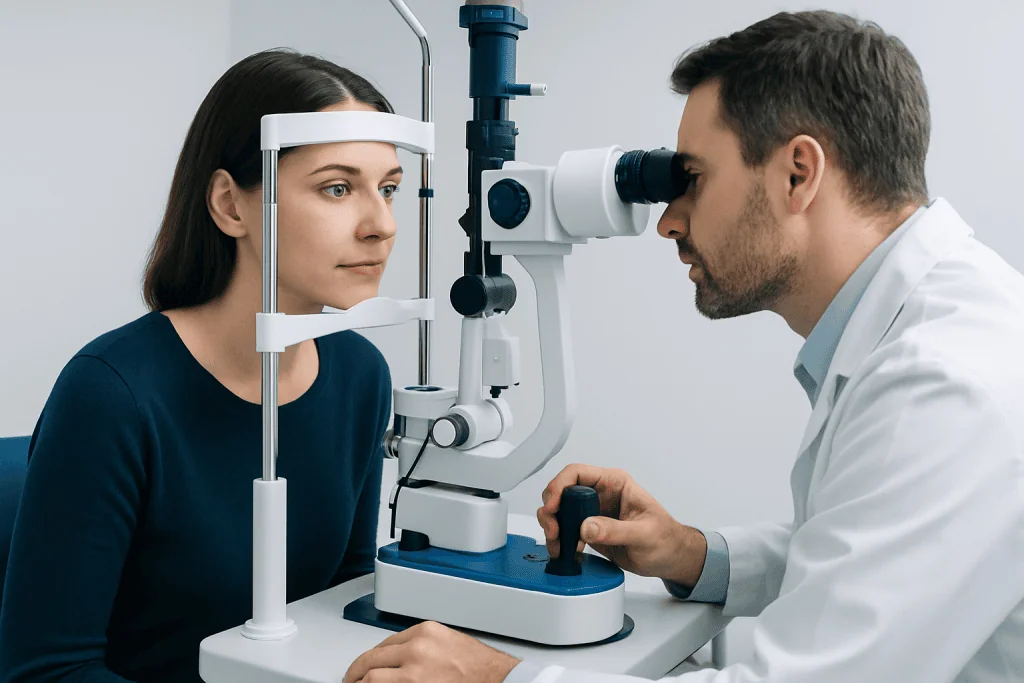
Hyperopia is diagnosed during a comprehensive eye examination by an ophthalmologist or optometrist. The examination usually includes a discussion of symptoms, medical history, family history and visual needs such as reading, schoolwork, computer use or driving. The clinician then measures visual acuity and evaluates how well each eye focuses.
Refraction testing is the key measurement used to determine the lens power needed to focus light correctly on the retina. The patient may look through different lenses while reading letters or symbols. In children and some adults, dilating drops may be used to temporarily relax the focusing muscles, allowing a more accurate measurement of hidden hyperopia.
A complete assessment also checks eye alignment, eye movements, depth perception and general eye health. The front of the eye, the lens and the retina may be examined to rule out other causes of blurred vision. This is important because symptoms such as headaches or blurry vision can have several eye-related and non-eye-related causes.
Treatment Options
Hyperopia treatment aims to focus light accurately on the retina and reduce visual effort. The right approach depends on the degree of hyperopia, the person’s age, symptoms, eye alignment, eye health and daily visual needs. A specialist should decide the most appropriate option after a full assessment rather than relying on over-the-counter lenses or self-testing.
Prescription glasses are the most common and straightforward treatment. They can be worn full time or for near work, depending on the prescription and symptoms. In children, glasses may be recommended not only for clear vision but also to support eye alignment and normal visual development when needed.
Contact lenses are another option for many adolescents and adults. They sit directly on the eye and can provide a wider field of view than glasses. Safe contact lens use requires correct fitting, hygiene, replacement schedules and follow-up checks to reduce the risk of irritation or infection.
For suitable adults, refractive surgery may be considered after a detailed corneal and eye health evaluation. These procedures reshape or alter the eye’s focusing system to reduce dependence on glasses or contact lenses. Not everyone is a candidate, and suitability depends on factors such as prescription stability, corneal thickness, dry eye status, age and expectations.
Living With / Prognosis
Most people with hyperopia live normal, active lives with appropriate correction. Glasses or contact lenses often provide clear and comfortable vision, and regular eye examinations help ensure that the prescription remains suitable over time. Children may need more frequent monitoring because their eyes and visual system are still developing.
Healthy visual habits can reduce discomfort during near tasks, although they do not cure hyperopia. Taking short breaks during reading or screen work, maintaining good lighting, adjusting screen distance and using the correct prescription can help reduce eye strain. People should avoid using another person’s glasses or choosing lenses without an eye examination, as the wrong correction can worsen discomfort.
The outlook is generally good. Hyperopia may change with growth in childhood and can become more noticeable in adulthood as the eye’s focusing flexibility decreases. With timely diagnosis and appropriate management, complications such as persistent eye strain or childhood vision development problems can often be minimized.
When to See a Doctor
A person should arrange an eye examination if they notice blurred near vision, frequent headaches with reading, eye strain, squinting, difficulty focusing or tired eyes during close work. Sudden changes in vision, eye pain, double vision or new neurological symptoms should be assessed promptly, as these may indicate conditions other than simple hyperopia.
Children should have vision screening and eye examinations according to local pediatric and school health recommendations. Parents should seek assessment if a child avoids reading, sits very close to screens, rubs the eyes frequently, has one eye turning inward or outward, or shows learning difficulties that may be related to vision.
Adults who already wear glasses or contact lenses should have periodic eye checks to update prescriptions and monitor eye health. Acibadem International’s multidisciplinary ophthalmology teams and JCI-accredited hospitals assess and treat refractive errors, including hyperopia, for international patients as part of comprehensive eye care.
Frequently asked questions
What is hyperopia?
Hyperopia is a refractive error in which the eye focuses light behind the retina instead of directly on it. It is commonly called farsightedness because near objects may appear blurry, while distance vision may be clearer. The condition is usually corrected with prescription lenses or other specialist-approved options.
Is hyperopia the same as presbyopia?
No. Hyperopia is usually related to the shape or focusing power of the eye and may be present from childhood. Presbyopia is an age-related loss of near focusing ability that typically develops in middle age. A person can have both conditions at the same time.
Can children outgrow hyperopia?
Some children have mild hyperopia that decreases as the eye grows. However, moderate or high hyperopia may persist and may need glasses, especially if it affects vision, comfort or eye alignment. Regular pediatric eye examinations help determine whether treatment or monitoring is needed.
Does screen use cause hyperopia?
Screen use does not cause hyperopia. Hyperopia is mainly related to eye shape and focusing power. However, long periods of screen use can make symptoms such as eye strain, headaches and intermittent blur more noticeable.
How is hyperopia treated?
Treatment may include prescription glasses, contact lenses or, in suitable adults, refractive surgery. The best option depends on age, prescription strength, symptoms, eye health and lifestyle. An eye care specialist should assess the eyes before recommending a treatment approach.
When should someone get an eye exam for suspected hyperopia?
An eye exam is recommended when near vision is blurry, headaches occur during reading, the eyes feel strained, or a child avoids close-up tasks. Children should also follow routine vision screening schedules even if they do not complain of symptoms. Prompt assessment is important if vision changes suddenly or is accompanied by pain or double vision.
References
- American Academy of Ophthalmology
- American Optometric Association
- National Eye Institute
- Royal College of Ophthalmologists
- World Health Organization
This article is for general information only and is not a substitute for professional medical advice. Please consult a qualified doctor about your individual situation.
Doctors Who Treat This Condition

Prof. Dr. Altan Göktaş
Ophthalmology
Prof. Dr. Ayşe Öner
Ophthalmology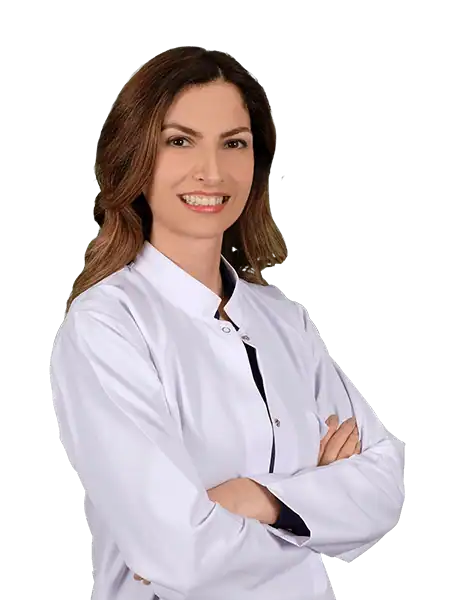
Prof. Dr. Banu Coşar
Ophthalmology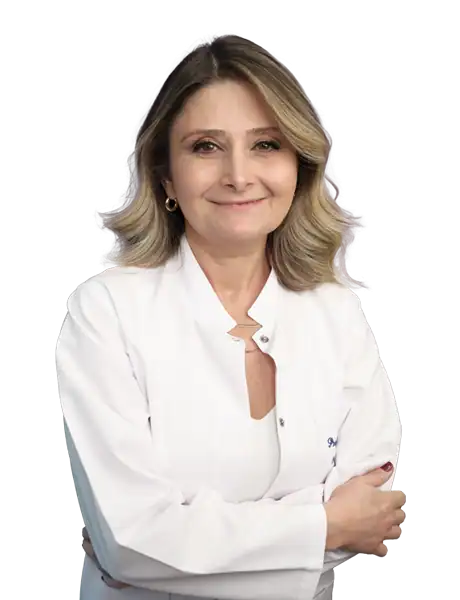
Prof. Dr. Berna Özkan
Ophthalmology
Prof. Dr. Dilaver Erşanlı
Ophthalmology
Prof. Dr. Dilek Güven
Ophthalmology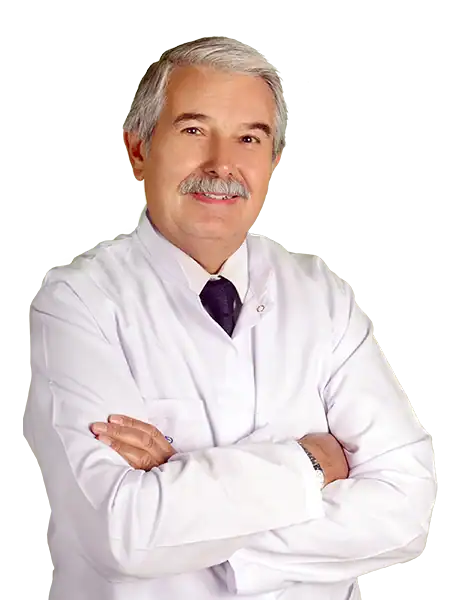
Prof. Dr. G. Ertuğrul Mirza
Ophthalmology
Prof. Dr. Gökhan Pekel
Ophthalmology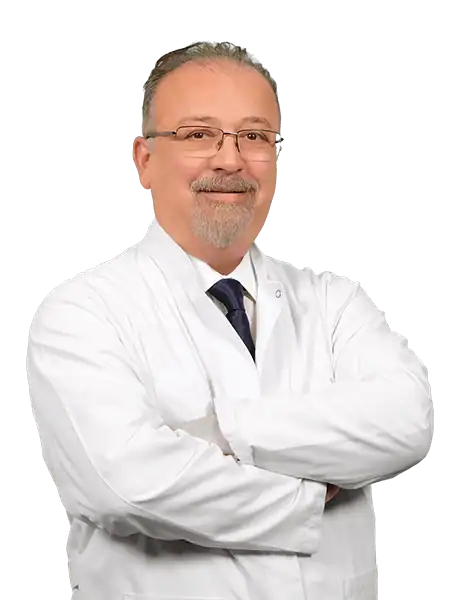
Prof. Dr. Haluk Esgin
Ophthalmology
Dr. Safiye Küçükgül
Ophthalmology
Dr. Sevda Arık Tekin
Ophthalmology