

Breast Augmentation Turkey: Implants, Techniques and Cost

Breast augmentation in Turkey has become one of the procedures UK patients research most often when they weigh private surgery at home against treatment abroad. The operation itself is well established: a plastic surgeon places implants to enhance breast size and shape, tailoring the choice of implant, incision and placement to the patient’s anatomy and goals. What differs between providers is the setting, the planning behind the operation and what happens afterwards.
This guide sets out how breast augmentation is performed in Acıbadem’s hospitals, who it suits and who it does not, what the recovery involves, and how the pathway compares with private surgery in the UK or the US. It also covers the practical side of travelling to Istanbul, the questions worth asking any provider, and what to arrange with your own doctor before and after you go. Cost is addressed by the verified price band below rather than by claims in the text.
What breast augmentation in Turkey involves and who it suits
Breast augmentation is a surgical procedure that enhances breast size and shape using implants. It is performed by plastic surgeons after detailed planning and medical evaluation, and the result is tailored to body proportions and the patient’s aesthetic goals rather than to a standard size. Whether it is carried out in Manchester or Istanbul, the operation follows the same clinical logic: assess the anatomy, plan the implant and its position, operate under general anaesthesia and follow the patient through healing.
Is a boob job in Turkey the same procedure?
Yes. The informal term describes the same operation. What matters is not the name but the setting in which it is performed and the quality of the assessment that precedes it.
Who is usually a suitable candidate
- Adults in good general health with fully developed breasts who want more volume, better symmetry or a restored shape after weight change or pregnancy.
- People with realistic expectations who understand that implants alter size and shape but do not correct significant sagging on their own; a lift may be discussed alongside or instead.
- Non-smokers, or those willing to stop smoking for the period the surgeon advises, because smoking impairs wound healing.
Who should think again
- Anyone with an active infection, uncontrolled medical conditions or a bleeding disorder that has not been assessed.
- Women who are pregnant or breastfeeding, or planning a pregnancy in the near future.
- Anyone with a personal or family history of breast disease that has not been reviewed with a clinician, or with imaging findings that need investigation first.
- People seeking surgery mainly under pressure from others or during a period of emotional difficulty.
Fat transfer breast augmentation, which uses the patient’s own fat instead of implants, is a separate technique with different indications. Whether it is appropriate depends on how much volume change is wanted and on the availability of donor fat, and it is assessed individually by the surgeon.
Why UK and US patients travel to Türkiye for breast surgery
Patients from the UK and the US choose breast surgery in Turkey for a combination of reasons, and cost is only one of them. The pattern that emerges from international patient enquiries is fairly consistent.
Hospital medicine rather than a clinic
Acıbadem performs breast augmentation in full hospitals, not in stand-alone cosmetic clinics. Within the group, 7 hospitals hold Joint Commission International accreditation, out of a network of more than 20 hospitals staffed by more than 3,300 physicians. JCI accreditation is an external audit of patient safety systems, infection control, medication management and staff credentialing. It does not make any individual operation risk-free, but it does mean the environment has been independently assessed against international standards.
One network with everything on site
Because the procedure is carried out under general anaesthesia, the presence of consultant anaesthetists, an intensive care unit, laboratory and imaging on the same site is not a luxury. If a patient has an unexpected reaction or bleeding, the response is immediate and does not involve an ambulance transfer to another institution.
Experience with international patients
Hospitals such as Acibadem Maslak Hospital in Istanbul receive patients from many countries and have international patient departments that handle translation, scheduling and coordination as routine work rather than as an exception.
No waiting list
Cosmetic breast surgery is not provided by the NHS except in limited reconstructive circumstances, so UK patients are already self-funding. In Türkiye, once the medical review is complete, the operation can usually be scheduled within weeks rather than months, and the date can be aligned with leave from work.
The verified price band beneath these sections shows how UK, US and Türkiye figures compare, and a personal quote follows a free medical review.
How breast augmentation with Acıbadem works, step by step
The pathway is designed so that most of the thinking happens before you travel and nothing is decided in a hurry on the day of surgery.
- Remote medical review. You submit your medical history, current medications, any previous breast imaging and photographs through a secure channel. A plastic surgeon reviews the material and confirms whether you appear to be a suitable candidate, or whether further assessment is needed first.
- Personal plan. You receive a written plan setting out the proposed approach, the anaesthesia, the expected hospital stay and how long you should remain in Istanbul. This is the stage at which a personal quote is issued.
- Arrival and coordinator. On arrival you are met by an international patient coordinator who acts as your single point of contact for appointments, transfers between hotel and hospital, and interpretation.
- Consultation and pre-operative tests. The surgeon examines you in person, evaluating breast anatomy, skin quality, body proportions and expectations. Implant type, size, incision location and placement are planned individually. Blood tests are carried out, imaging is arranged if indicated, and you receive instructions about smoking and any medications to stop or adjust. The anaesthetist also assesses you.
- The operation. Surgery takes place under general anaesthesia and lasts one to two hours. You are discharged the same day or after one night, depending on the surgeon’s judgement.
- Recovery in Istanbul. You stay in the city for the early recovery period, attend a post-operative check, and are seen again before you are cleared to fly.
- Follow-up after returning home. Remote follow-up continues by video or secure messaging, and your records are provided so that your GP or own doctor is fully informed.
At each stage you can pause or withdraw. Consent is confirmed in person after the consultation, not in advance by email.
The procedure: techniques, anaesthesia, duration and hospital stay
The clinical details below reflect how breast augmentation is performed in Acıbadem’s hospitals. They are general; your own plan may differ once the surgeon has examined you.
Planning the technique
Before surgery the surgeon evaluates breast anatomy, skin quality, body proportions and expectations. Four decisions are planned individually and explained to you:
- Implant type – the surgeon recommends an implant suited to your tissue and goals and explains the alternatives.
- Implant size – chosen in relation to chest width, existing breast tissue and body proportions rather than to a cup size alone.
- Incision location – the site through which the implant is introduced, selected with scar visibility and access in mind.
- Placement – the position of the implant relative to the chest muscle, which affects appearance, feel and recovery.
Anaesthesia
The operation is performed under general anaesthesia. A consultant anaesthetist assesses you beforehand, remains with you throughout, and manages your recovery from anaesthesia in a dedicated area of the hospital.
Duration
Surgery usually takes one to two hours. Additional time in the hospital covers preparation, anaesthesia and initial recovery, so you should expect to spend a good part of the day there even if you are discharged the same evening.
Hospital stay
Discharge is either the same day or after one night. The decision rests with the surgeon and anaesthetist and depends on how you recover from the anaesthesia, your pain control and whether anyone is with you at your accommodation.
Fat transfer augmentation follows a different surgical process and is discussed separately with patients for whom it is appropriate; the timings above relate to implant-based augmentation.
Recovery and aftercare timeline
Recovery is gradual and follows a broadly predictable pattern, although the pace varies between individuals. The timings below are those given on Acıbadem’s clinical page for the procedure.
The first days
You will wear a supportive surgical bra from the outset. Mild swelling, bruising and a feeling of tightness across the chest are expected and improve gradually. Pain is managed with prescribed medication. You are asked to avoid heavy lifting, reaching overhead and anything strenuous. Someone should be with you during this period, particularly if you were discharged the same day.
One to two weeks
Most patients return to daily activities, including light work, within one to two weeks. Follow-up visits during this time let the surgeon monitor healing, check implant position and advise on scar care. The post-operative check before you fly home falls in this window.
Four to six weeks
Full recovery, including a return to exercise and lifting, is typically reached at four to six weeks. The surgical bra is usually worn for several weeks as directed, and strenuous activity is reintroduced only when the surgeon confirms it is appropriate.
Longer term
Scars continue to mature for many months. Implants are medical devices that may need attention or replacement at some point in life, and routine breast awareness and any screening appropriate for your age continue as before. You should tell any radiographer that you have implants so that imaging can be adjusted.
- Attend every scheduled follow-up, including remote ones.
- Keep the written aftercare instructions and your implant card in a safe place.
- Contact the team promptly about anything that worries you, however minor it seems.
What it costs: UK, US and Türkiye
Typical self-pay ranges from the Turkey Medical Price Index. Türkiye figures are guide ranges for hospital treatment; your personal quote follows a free medical review.
Source: Turkey Medical Price Index (quarterly edition). Ranges depend on the extent of treatment, materials and hospital stay; they are not a quote.
Safety and risks
Breast augmentation is a common operation, but it is still surgery under general anaesthesia and carries genuine risks. An honest account of them is part of informed consent.
Who is not suitable
The surgeon may decline to operate, or ask you to wait, if you smoke and are unwilling to stop, if you have uncontrolled diabetes, high blood pressure or a bleeding tendency, if you are pregnant or breastfeeding, if imaging has raised a question that needs answering first, or if your expectations do not match what the operation can achieve. A refusal at the review stage is a sign the process is working.
Complications that can occur
- Bleeding or a collection of blood or fluid around the implant, which may need drainage or a return to theatre.
- Infection, ranging from a superficial wound infection to one involving the implant.
- Capsular contracture, where scar tissue around the implant tightens and alters shape or feel.
- Changes in nipple or breast sensation, which are often temporary but can persist.
- Asymmetry, implant malposition or rotation, rippling, or implant rupture over time.
- Poor scarring, and the general risks of anaesthesia such as nausea or, rarely, more serious reactions.
- Rare implant-associated conditions that your surgeon will describe to you.
What cases that have gone wrong abroad tend to share
When cosmetic surgery abroad ends badly, the stories usually have common features: the decision was rushed, with implant size chosen by message before anyone examined the patient; the operation took place in a facility without an intensive care unit or emergency backup; and there was no structured follow-up once the patient flew home, leaving early complications unrecognised until they became serious.
How a hospital setting changes the picture
A hospital does not eliminate risk, but it changes how risk is handled. Anaesthetists, intensive care, imaging and laboratory services are on site. Surgeons operate within a credentialing and audit system. Pre-operative tests are actually done, not assumed. And follow-up is organised, with clear instructions on when and whom to contact if something feels wrong after you return home.
UK and US vs Türkiye: how the pathway differs
Comparing breast augmentation in Turkey with the UK or US is more useful when it is done like for like. The clinical operation is essentially the same; the surrounding pathway is not.
Access and waiting
In the UK, cosmetic breast augmentation is a self-pay procedure in the private sector, and appointments depend on the surgeon’s availability. In the US it is likewise self-pay, and prices vary widely by city and by surgeon. In Türkiye there is no NHS-style queue to consider, and scheduling is driven by the medical review and your own calendar.
Aftercare and travel
Surgery at home means the surgeon who operated on you is usually within reach for years afterwards. Surgery abroad means an initial period of follow-up in Istanbul, then remote follow-up, with your GP or own doctor as the first contact for any acute problem. This is workable, but it requires planning and honest communication with your own doctor before you travel.
What the lower cost does and does not mean
The price band below reflects real differences between the three markets. The main drivers are lower salaries, lower property and running costs and a different regulatory cost base in Türkiye. It does not mean cheaper implants or inferior equipment: Acıbadem uses implants from the same international manufacturers that supply UK and US surgeons, and its operating theatres are subject to JCI audit. Equally, a lower price does not mean the operation is simpler or the risks smaller.
What to compare like for like
- Hospital versus clinic, and whether intensive care is on the same site.
- The surgeon’s specialty training and how you can verify it.
- The implant brand and whether you receive an implant card.
- What the fee covers: anaesthetist, hospital stay, tests, follow-up, revision policy.
- How complications after you return home would be handled and by whom.
Read alongside the price band, this comparison gives a fairer picture than the headline number alone.
Planning the trip to Istanbul
Good planning makes the medical part easier. The practical points below apply to most patients travelling from the UK, Ireland, the US, Canada and Australia.
Documents and entry
- A passport valid for the period of travel; check the validity requirement before you book.
- UK, Irish, US, Canadian and Australian passport holders enter Türkiye visa-free for stays of up to 90 days. Rules can change, so confirm current requirements before you travel.
- Your medical file, a list of current medications and any previous breast imaging reports.
Flights and how long to stay
Istanbul is roughly a four-hour flight from London and about ten hours from New York. Your written plan states how long you should remain in the city; it needs to cover the consultation and tests, the operation, the early recovery period and the post-operative check before you are cleared to fly. Book flexible return travel where possible, because the surgeon’s clearance, not a fixed date, determines when you leave.
Companion
Travelling with a companion is strongly encouraged. After general anaesthesia you should not be alone for the first night, you will not be able to lift luggage, and having someone to manage practicalities lets you concentrate on resting.
Travel insurance
Ordinary travel insurance excludes planned medical treatment and, often, complications arising from it. Look for a specialist policy that explicitly covers elective treatment abroad, including medical repatriation, and read the exclusions carefully.
What to bring
- Loose, front-opening tops and comfortable clothing for the flight home.
- Any regular medications in their original packaging.
- A UK-to-European plug adaptor and a means of contacting home.
- Your coordinator’s contact details saved in more than one place.
Back home: follow-up, records and your own doctor
Recovery continues for several weeks after you land, so the arrangements for this period matter as much as the operation itself.
Follow-up with your GP or own doctor
Tell your GP or own doctor before you travel that you are having breast augmentation abroad, and see them after you return. Acıbadem provides a discharge summary, operation note, implant details and aftercare instructions in English so that they know exactly what was done. Remote follow-up with the surgical team continues in parallel.
When to seek help
Contact your surgical team and your own doctor promptly, or attend an urgent care service, if you notice:
- Increasing pain, swelling or firmness in one breast rather than gradual improvement.
- Redness, warmth, discharge from a wound or a fever.
- Sudden change in breast shape or position of an implant.
- Chest pain, breathlessness or a painful swollen calf, which need immediate emergency care.
Insurance, NHS and your own doctor
Private medical insurance in the UK rarely covers elective cosmetic surgery, whether at home or abroad, and policies differ on complications. The NHS treats complications from surgery abroad as it would any other patient presenting with a medical need, but it does not carry out cosmetic revisions; check the position with your own provider before you travel. For US readers, whether Health Savings Account or Flexible Spending Account funds can be used for cosmetic surgery is restricted, and travel-medical policies vary widely in what they cover, so read the terms or ask your plan administrator directly.
None of this replaces the relationship with your own doctor. The most reassuring outcomes are those in which the surgical team abroad and the doctor at home are both informed and in contact.
Questions to ask before deciding on breast augmentation in Turkey
Whichever provider you consider, in Türkiye or at home, these questions help separate a carefully organised pathway from one that relies on marketing. Write the answers down and compare them.
About the surgeon and the setting
- Is the surgeon a specialist plastic surgeon, and how can I verify their qualifications?
- Will the operation take place in a hospital with an intensive care unit and imaging on site?
- Is the facility independently accredited, and by whom?
- Who will administer the anaesthesia, and will I meet them beforehand?
About the plan
- Will I be examined in person before any final decision on implant size or technique?
- What tests will be done before surgery, and what would lead you to postpone or decline?
- Which implant brand will be used, and will I receive an implant card?
- Is fat transfer an option for me, and if not, why not?
About what is included
- What does an all-inclusive package actually contain: consultation, tests, anaesthetist, hospital stay, transfers, accommodation, follow-up?
- What is the policy if a complication or revision is needed, both in Istanbul and after I return home?
- How many days must I stay, and who decides when I can fly?
About aftercare
- How is follow-up conducted once I am home, and how quickly can I reach the team?
- What records will I be given for my GP or own doctor?
Take time over the answers, involve your own doctor and anyone who will support you during recovery, and do not commit until you are satisfied. Whether breast augmentation is right for you is ultimately determined by a physician’s evaluation of your health, anatomy and expectations.
Is a boob job in Turkey the same as breast augmentation?
Yes. The informal term refers to the same surgical procedure, in which a plastic surgeon places implants to enhance breast size and shape. The difference between providers lies in the setting, the quality of pre-operative assessment and the follow-up, not in the name used.
How much does breast augmentation in Turkey cost?
The verified price band beneath this article shows how UK, US and Türkiye figures compare for this procedure. A personal quote is issued only after a free remote medical review, because the plan depends on your anatomy, the implant chosen and the length of stay. Always check exactly what a quoted figure includes before comparing it with another.
What does an all-inclusive breast augmentation package in Turkey usually cover?
It varies by provider, which is why the term needs unpacking. At Acıbadem the plan sets out in writing whether consultation, pre-operative tests, the anaesthetist, the hospital stay, transfers, accommodation and follow-up are included. Ask specifically about the policy on complications and revisions, both during your stay and after you return home.
What anaesthesia is used and how long does the operation take?
Breast augmentation is performed under general anaesthesia, with a consultant anaesthetist assessing you beforehand and present throughout. The operation itself usually takes one to two hours. You are discharged the same day or after one night in hospital, depending on how you recover.
How long should I stay in Istanbul after breast surgery?
Your written plan states the recommended stay, which must cover the consultation and tests, the operation, the early recovery period and a post-operative check before you are cleared to fly. Most patients return to daily activities within one to two weeks, so the stay falls within that window. Book flexible return travel, since the surgeon's clearance determines your departure.
Is fat transfer breast augmentation available in Turkey?
Fat transfer uses your own fat, harvested from another part of the body, instead of an implant. It is a distinct technique with different indications and is suitable only for some patients, depending on the volume change wanted and the fat available. Whether it is an option for you is assessed by the surgeon during the medical review and consultation.
How does breast augmentation in Turkey compare with the UK?
The operation is essentially the same; the pathway differs. In the UK it is self-pay private surgery with the surgeon nearby for long-term follow-up. In Türkiye it is scheduled quickly after a medical review, performed in a hospital setting at Acıbadem, and followed by remote aftercare with your GP as the first local contact. The price band below shows how costs compare across the three markets.
What happens if I have a complication after returning to the UK?
Contact the surgical team through your coordinator and see your GP or attend urgent care promptly; for chest pain, breathlessness or a swollen calf, seek emergency care immediately. The NHS treats complications as it would for any patient with a medical need, though it does not carry out cosmetic revisions. Acıbadem provides full records so your doctor at home knows exactly what was done.
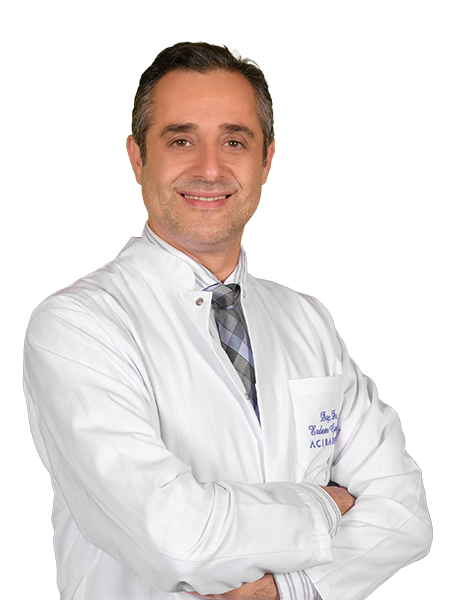
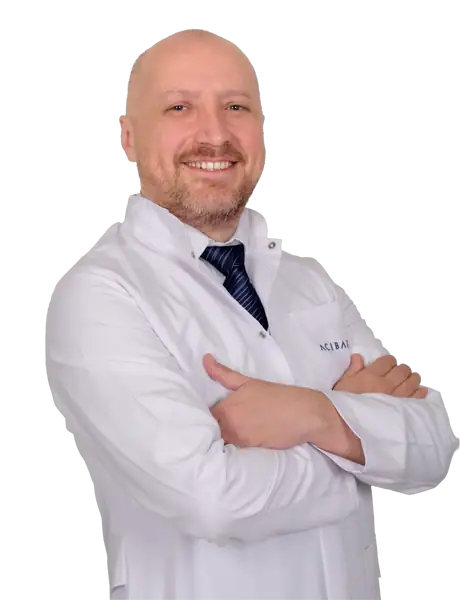
Your care team
Physicians of the Acıbadem network who perform this treatment in Istanbul.
 Where it is performed Acibadem Maslak Hospital İstanbul · JCI-accredited hospitals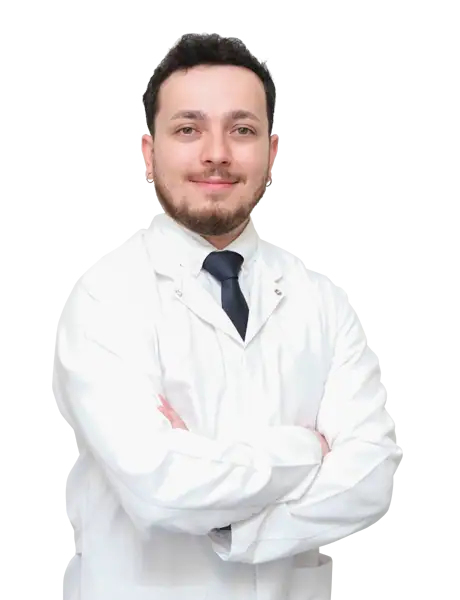
Clinical guide & data
The evidence-based pages behind this guide.