Finger Toe
Finger toe explained in plain language: what the term usually means, common symptoms, causes, how doctors diagnose it, and treatment options from footwear to surgery.
Quick answer
Finger toe is a plain-language term, not a formal diagnosis, describing a toe that looks or behaves like a finger. It usually refers to a long second toe (Morton's toe), a normal inherited variation, or rarely to macrodactyly, a congenital overgrowth. Most cases need only comfortable footwear; surgery is reserved for persistent pain or deformity.
What is finger toe?
“Finger toe” is not a formal medical diagnosis. It is a plain-language description that people use when one of their toes looks or behaves more like a finger than a typical toe. In practice, the phrase usually points to one of a small number of recognized foot conditions. Understanding what is actually going on in the foot is the first step toward knowing whether anything needs to be done about it.
When patients search for “what is finger toe,” they most often mean one of the following:
- A long second toe, sometimes called Morton’s toe. Here the second toe reaches further forward than the big toe, often because the first metatarsal (the long bone behind the big toe) is relatively short. This is a normal variation in foot shape and is very common.
- Macrodactyly, a rare condition present from birth in which one or more toes are abnormally large, long or thick because the bone, fat and soft tissue have overgrown. The affected toe may look out of proportion with the rest of the foot.
- An unusually slender or elongated toe without other problems, which is simply part of a person’s natural foot shape.
- A toe that has been surgically used or reshaped, for example after a toe-to-hand transfer, a reconstructive operation in which a toe is moved to replace a lost finger. In that situation the toe genuinely becomes a finger, and questions about the donor foot are common.
This page uses “finger toe” as an umbrella term for these situations, while making clear where they differ. Foot-shape variations such as a long second toe affect people of every age and background and are frequently noticed in childhood or adolescence. Macrodactyly is uncommon and is usually identified at birth or in early infancy. Because the term covers several different things, a foot specialist, usually an orthopedic surgeon or podiatrist, is the right person to say which one applies to a particular foot.
Finger toe symptoms
Many people who describe having a finger toe have no symptoms at all beyond the appearance of the toe. When symptoms do occur, they tend to come from pressure, friction or altered weight-bearing rather than from the toe itself. Common finger toe symptoms include:
- A toe that is noticeably longer, wider or thicker than its neighbors
- Rubbing or pressure at the tip of the toe inside shoes
- Calluses (thickened skin) or corns on the tip or top of the toe, or under the ball of the foot
- A toe that begins to curl or bend at the middle joint because it is pushed against the front of the shoe (this bent position is sometimes called a hammertoe)
- Pain under the ball of the foot, especially after long periods of standing or walking
- Difficulty finding shoes that fit comfortably
- Nail changes such as thickening or ingrowing where the nail is repeatedly pressed
- In macrodactyly, a toe that clearly grows faster than the others and may become stiff at its joints
How these symptoms show up depends on the underlying cause. With a long second toe, the main issues are usually shoe fit and transfer of pressure to the second metatarsal head, the bony bump under the ball of the foot behind the second toe. Over time this can lead to a painful area of thickened skin and, in some people, inflammation of the joint at the base of the toe. With macrodactyly, the appearance is usually the first concern, and functional problems such as stiffness, difficulty walking and shoe fitting tend to develop as the child grows. In a foot that has donated a toe for hand reconstruction, symptoms are generally related to healing and adapting to a slightly different foot shape.
Symptoms often change over time. A toe that causes no trouble in youth may start to rub or callus as footwear habits change, as the fat pad under the foot thins with age, or as the toe gradually bends. This is why the same foot can be symptom-free for decades and then become bothersome.
Causes and risk factors
Finger toe causes vary with the condition behind the description.
- Inherited foot shape. The relative lengths of the toes and the bones behind them are largely determined by genetics. A long second toe tends to run in families and is considered a normal anatomical variant rather than a disease.
- Congenital overgrowth (macrodactyly). This is present at birth and is thought to result from abnormal growth signals in the tissue of the affected toe during development. It is not caused by anything a parent did during pregnancy. In some people it is associated with other overgrowth conditions, and a doctor may look for these.
- Nerve or blood-vessel changes. Rarely, overgrowth of a toe is linked to enlargement of the nerve or blood vessels supplying it, which increases the bulk of the toe.
- Reconstructive surgery. In toe-to-hand transfer, a toe is deliberately moved to the hand. The remaining foot shape is a direct result of that operation.
- Secondary changes from footwear. A long toe that is repeatedly pressed against the end of a shoe may gradually bend at its middle joint, changing how it looks and functions.
Risk factors that make symptoms more likely in someone who has a long or prominent toe include tight, narrow or short footwear, high heels that push the foot forward, long hours standing or walking on hard surfaces, high-impact sports, and conditions that thin the protective fat under the ball of the foot, such as advancing age. People with diabetes or reduced sensation in the feet are at greater risk of skin breakdown from unnoticed rubbing, so a prominent toe deserves closer attention in these groups.
Finger toe diagnosis
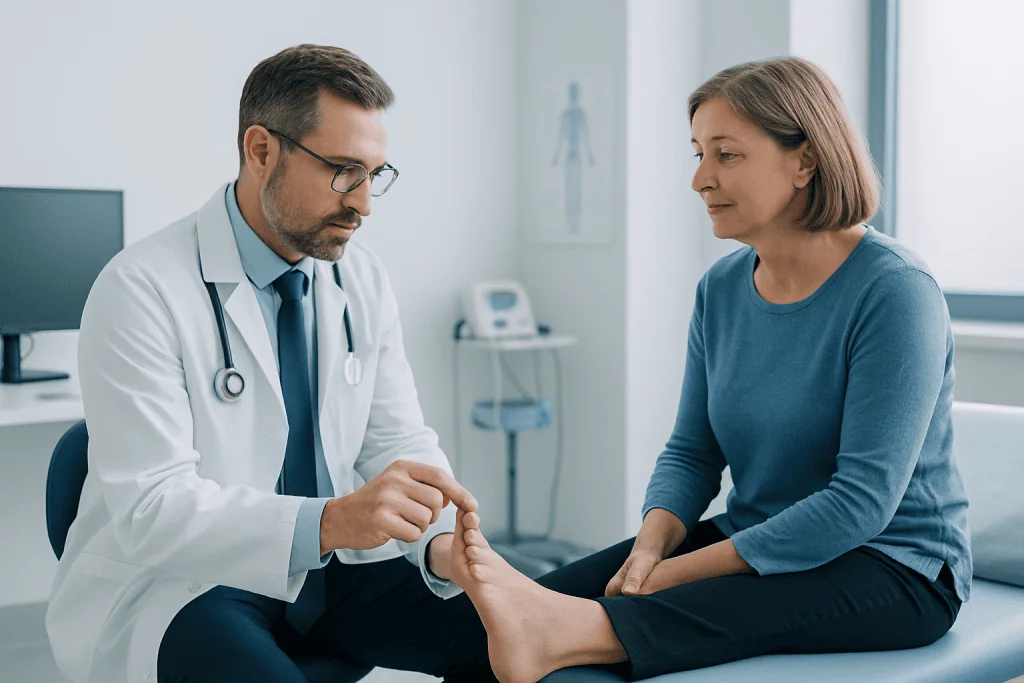
Finger toe diagnosis is mainly clinical, meaning it is based on what the doctor sees and feels rather than on laboratory tests. During an examination the doctor will typically:
- Look at the shape and proportions of the foot while you are standing and sitting
- Measure or compare the length and girth of the toe with the other toes and with the opposite foot
- Check the movement of each toe joint and whether the toe can be straightened
- Look for calluses, corns, redness or nail changes that show where pressure is occurring
- Watch how you walk and how weight is distributed across the ball of the foot
- Ask about pain, shoe problems, family history and, in children, how the toe has changed over time
Plain X-rays are the most common imaging test. They show the lengths of the metatarsal bones and toe bones, whether the bones themselves are enlarged (as in macrodactyly) or simply arranged so that the toe appears long (as in a long second toe), and whether there are signs of joint wear. In children with suspected macrodactyly, X-rays may be repeated over time to track growth. Occasionally an MRI scan (magnetic resonance imaging, which uses magnets rather than radiation to picture soft tissue) is requested to look at fat, nerves and blood vessels inside an enlarged toe. Blood tests are not usually needed unless the doctor suspects a wider overgrowth condition, in which case referral to a geneticist may be considered.
The goal of diagnosis is not only to name the condition but also to identify why symptoms are happening. For example, pain under the ball of the foot could be from the long toe transferring pressure, or from a separate problem such as a stress fracture or a nerve irritation between the toes. Distinguishing these guides treatment. At Acibadem, foot conditions of this type are assessed within the Orthopedics & Joint Center.
Finger toe treatment options
Finger toe treatment options range from doing nothing to surgery, and the right choice depends on the cause, the symptoms and the person’s age. For most people with a long or slender toe that is not causing pain, no treatment is needed.
Observation. A toe that is simply a normal variation and causes no symptoms does not require treatment. In children with macrodactyly, doctors often monitor growth over time before deciding whether and when to operate, because the pattern of growth influences the surgical plan.
Footwear changes. This is usually the first and most effective step for symptoms. Shoes with a deep, wide toe box, adequate length for the longest toe rather than the big toe, low heels and a cushioned sole reduce rubbing and pressure. Many people find that simply choosing shoes by the second toe rather than the first resolves most problems.
Padding and insoles. Soft toe sleeves, gel pads and off-the-shelf or custom insoles can shift pressure away from a painful area under the ball of the foot. A metatarsal pad placed just behind the painful bony bump often helps to spread load.
Skin care. Calluses and corns can be gently reduced by a podiatrist. Self-treatment with sharp instruments or acid-based corn plasters is generally discouraged, particularly for people with diabetes or poor circulation.
Medication. Over-the-counter pain relievers or anti-inflammatory medicines may be used for short periods to ease pain and swelling at an irritated joint. They do not change the shape of the toe. Your doctor or pharmacist can advise on what is safe for you.
Physical therapy and exercises. Stretching and strengthening the small muscles of the foot and the calf can improve toe position and walking pattern in some people, especially where a long toe has begun to bend.
Procedures and surgery. Surgery is considered when symptoms persist despite conservative care, when a toe has become fixed in a bent position, or when macrodactyly is causing functional problems or severe shoe-fitting difficulty. Options may include shortening the toe bones, straightening a bent toe, reducing bulk of soft tissue, procedures to slow the growth of a toe in a child, or in some cases removal of an affected toe. Each of these has benefits and risks, including stiffness, numbness, altered appearance and the possibility of further surgery. Your surgeon will explain what is realistic for your foot.
Rehabilitation. After foot surgery, a period of protected walking in a special shoe or boot is usual, followed by gradual return to normal footwear and activity. Swelling can persist for months, and recovery time varies with the operation performed.
Living with finger toe and outlook
For most people, a finger toe in the sense of a long or unusually shaped toe is a lifelong feature of their body rather than an illness. It does not shorten life or lead to serious disease. The outlook is generally good, particularly when footwear is chosen carefully and early signs of rubbing are dealt with before they become painful. Many people never need medical treatment.
Where the toe has led to a bent position or persistent pain under the ball of the foot, conservative measures help many people, but some eventually choose surgery. Surgical results are often satisfactory in terms of pain and shoe fit, though the toe will not look identical to the others and some stiffness is common. Honest expectations matter: the aim of treatment is a comfortable, functional foot, not a perfectly matched set of toes.
For children with macrodactyly, the course depends on how the toe grows. Some affected toes grow in proportion with the child and others grow faster, and the treatment plan is adjusted accordingly. Several operations over the years are sometimes needed. Families are usually followed by a pediatric orthopedic team so that decisions can be made at the right time.
People who have donated a toe for hand reconstruction generally walk and run normally once healed, although the foot may look and feel slightly different, and some notice minor changes in balance or shoe fit. Practical tips that help many people living with any form of finger toe include checking the feet regularly for red or thickened areas, keeping the skin moisturized to prevent cracking, trimming nails straight across, and replacing worn shoes before the cushioning fails.
Frequently asked questions
What is finger toe, and is it a real medical condition?
“Finger toe” is a descriptive term rather than a diagnosis found in medical textbooks. It usually refers to a toe that is unusually long, thin or large, most often a long second toe (Morton’s toe) or, more rarely, congenital overgrowth known as macrodactyly. A foot specialist can tell you which, if any, of these applies to you.
What are the most common finger toe symptoms?
Many people have no symptoms other than the toe’s appearance. When problems occur they are usually calluses or corns from shoe pressure, pain under the ball of the foot after activity, a toe that gradually bends at its middle joint, and difficulty finding comfortable shoes. Symptoms often appear or worsen with tight footwear.
What causes finger toe?
The most common finger toe causes are inherited foot shape, in which the bone behind the big toe is relatively short so the second toe appears long, and, much less often, a congenital overgrowth of a toe. Footwear does not create a long toe, but it can cause the toe to bend or become painful over time.
How is finger toe diagnosis made?
Doctors usually diagnose the condition by examining the foot, comparing toe lengths, checking joint movement and looking for pressure marks. X-rays are commonly used to see the bone structure and to tell whether the bones themselves are enlarged. Further scans or tests are only needed in selected cases.
What finger toe treatment options are available without surgery?
Most people are managed without surgery. Choosing shoes with a wide, deep toe box and enough length for the longest toe, using cushioned insoles or metatarsal pads, having calluses professionally reduced, short courses of pain relief and simple foot exercises are the usual approaches. Surgery is reserved for persistent symptoms or fixed deformity.
Can a long or oversized toe be shortened or made smaller?
Surgical shortening or bulk-reducing procedures exist and are sometimes used for pain, fixed bending or macrodactyly. They carry risks such as stiffness, numbness and changes in appearance, and results vary. Surgery purely for cosmetic reasons is generally approached with caution, and your surgeon can discuss whether it is appropriate in your situation.
Will a finger toe get worse as I get older?
The length of the toe itself does not change in adults, but the protective fat under the ball of the foot thins with age and toes can slowly bend if they are repeatedly pushed against shoes. This means symptoms can appear later in life even if the toe never bothered you before. Sensible footwear reduces this risk in many cases.
When to see a doctor
A long or unusual toe that is not painful and does not interfere with footwear generally does not need medical attention. Consider arranging a routine appointment with a foot specialist if you have persistent pain under the ball of the foot, a toe that is becoming bent or stiff, recurring calluses or corns despite good footwear, or if a child’s toe is clearly growing faster or larger than the others.
Seek prompt medical care if you notice any of the following red flags:
- Sudden severe pain, swelling or bruising of the toe or forefoot after an injury, which may indicate a fracture
- Skin that has broken down, an open sore, or a wound that is not healing, especially if you have diabetes or poor circulation
- Redness, warmth, spreading discoloration, pus or fever, which can be signs of infection
- A toe that becomes pale, blue, cold or numb, suggesting a problem with blood supply or nerves
- Rapid change in the size or shape of a toe over weeks, particularly in a child
- New inability to bear weight on the foot
These signs are not specific to finger toe but can occur in any foot and should be assessed by a healthcare professional without delay.
Medically reviewed by the Acıbadem International Medical Board — September 9, 2026
See our medical review board →
Update history
- PublishedSeptember 9, 2026
- Medical review approvedSeptember 9, 2026
- Last content updateSeptember 9, 2026
References2
Treatments for This Condition
Care at Acibadem
Doctors Who Treat This Condition

Prof. Ahmet Alanay, MD
Orthopedic Surgery & Traumatology
Prof. Alper Kaya, MD
Orthopedic Surgery & Traumatology
Prof. Arel Gereli, MD
Orthopedic Surgery & Traumatology
Prof. Ata Can Atalar, MD
Orthopedic Surgery & Traumatology
Prof. Aziz Kaya Alturfan, MD
Orthopedic Surgery & Traumatology
Prof. Barış Kocaoğlu, MD
Orthopedic Surgery & Traumatology
Prof. Burak Akan, MD
Orthopedic Surgery & Traumatology
Prof. Cihangir Tetik, MD
Orthopedic Surgery & Traumatology
Prof. Emre Toğrul, MD
Orthopedic Surgery & Traumatology
Prof. Erhan Serin, MD
Orthopedic Surgery & Traumatology
Prof. Fatih Dikici, MD
Orthopedic Surgery & Traumatology