Finger Toe Treatment
Finger and toe surgery corrects injuries, deformities, tendon problems, nail conditions, or joint issues affecting hand and foot digits to improve function, alignment, and appearance.
Quick answer
Finger and toe surgery covers procedures that repair injuries, correct deformities, release trapped tendons, treat nail disorders and stabilise fractures in the digits of the hands and feet. Depending on the diagnosis, it ranges from brief operations under local anaesthetic to complex reconstruction. Most patients go home the same day and then follow a structured recovery plan involving splints, protective footwear or hand therapy.
What Is Finger and Toe Surgery?
Finger and toe surgery is a group of procedures used to treat injuries, deformities, tendon and ligament problems, nail disorders, joint disease, infections and soft tissue abnormalities affecting the digits of the hands and feet. It ranges from brief operations performed under local anaesthetic, releasing a locked tendon, removing the edge of an ingrown toenail, to complex reconstruction after trauma. Surgery is considered when a finger or one of the toes causes persistent pain, restricts movement, heals in a poor position or does not respond to non-surgical care.
A painful, stiff, crooked or infected digit can seem minor next to other medical concerns, yet it touches almost everything you do. Your fingers carry writing, typing, dressing, cooking, driving, working and caring for other people. Your toes carry balance, walking, running, shoe comfort and posture, and when one of them stops working normally, the rest of the foot has to compensate. A digit that no longer moves properly, that hurts inside shoes, or that has developed a visible deformity affects people physically and, often, emotionally as well.
Many patients arrive at this point after an accident, a sports injury, work-related trauma, a chronic nail problem, a tendon injury, arthritis, a congenital difference, or a deformity that has slowly worsened over years. Others have already tried splints, medication, wound care, physiotherapy or injections and now want to know whether an operation is the sensible next step. It is normal to worry about pain, scarring, recovery time, appearance, return to work, and whether movement will come back.
This is a specialised area of surgery because the structures involved are small, tightly packed and functionally important. Bones, joints, tendons, ligaments, nerves, blood vessels, skin and nails have to be evaluated together, not separately. A good result is not only about correcting what is visible. It is about restoring useful function, reducing pain, improving alignment, protecting sensation and circulation, and getting you back to normal activity with a recovery plan you actually understand.
At Acibadem, finger and toe conditions are assessed through specialist pathways that may involve orthopaedics and traumatology, hand surgery, plastic and reconstructive surgery, dermatology, radiology, physiotherapy, infectious disease specialists and rehabilitation teams. The aim is straightforward: understand the cause of the problem, select the least invasive option that will actually work, and plan treatment around your anatomy, lifestyle, occupation and expectations.
What are toes and what do they do?
Toes are the five digits at the front of each foot: the great toe (the hallux) and four lesser toes. The word “toe” refers to a single digit; “toes” is simply the plural, so if you are describing more than one digit the plural form is correct. Each toe is built from small bones called phalanges, connected by joints and moved by tendons that run from muscles in the leg and foot.
Functionally, the toes do far more than most people realise. They provide the final push-off in every step, spread body weight across the forefoot, grip the ground for balance when you stand on uneven surfaces, and adjust constantly as you walk, climb stairs or change direction. The great toe carries a particularly large share of load during walking, which is why problems affecting it, arthritis, deformity, injury, tend to be felt with every step. When toes are painful, stiff or crooked, people often change their gait without noticing, and that altered gait can create secondary problems elsewhere in the foot, ankle or knee.
How many phalanges are in each finger and toe?
Most fingers and toes contain three phalanges, a proximal, middle and distal bone, while the thumb and the great toe contain only two. That gives each hand and each foot fourteen phalanges in total. The joints between these small bones are what allow a finger to curl around a pen or a toe to flex during push-off. Because the bones are short and the joints sit so close together, even a small fracture, dislocation or arthritic change can have a disproportionate effect on movement. This compact anatomy is also why surgical precision matters: a few millimetres of malalignment in a phalanx can change how the whole digit works.
What are finger toes?
“Finger toe” is not a medical diagnosis; it is an informal term people use in two different ways. Some use it to describe toes that are unusually long or flexible and look finger-like: a normal anatomical variation that only needs attention if it causes rubbing, deformity or pain in shoes. Others use it to describe footwear with individual toe pockets, discussed later on this page. Medically, fingers and toes are both simply called digits, and they share the same basic architecture of phalanges, tendons, nerves and nail structures, which is why the surgical principles for treating them overlap so much.
Who May Need Finger or Toe Surgery
Surgery becomes a serious option when symptoms interfere with comfort, function, hygiene, walking, work, sport or daily activities, and when non-surgical care is unlikely to correct the underlying problem. It may also be needed urgently: an open injury, a ruptured tendon, nerve damage, compromised circulation, severe infection, an unstable fracture, a dislocation or tissue loss are all situations surgeons treat promptly rather than electively.
The symptoms that most often bring patients to evaluation include pain, swelling, stiffness, deformity, locking, clicking, reduced range of motion, weakness, numbness, instability, recurrent redness or drainage, difficulty wearing shoes, difficulty gripping objects, nail deformity, or a wound that will not heal. Some patients describe a finger that gets stuck in a bent position. Others cannot straighten a fingertip after an injury. Patients with toe problems typically describe pain with each step, pressure sores, repeated nail infections, or a toe that has started crossing over or tucking under its neighbour.
Diagnosis starts with a focused history and physical examination. The physician asks how the problem began, what makes it worse, whether there was trauma, and how it affects hand use, walking, footwear or sport. The examination assesses alignment, skin and nail quality, joint movement, tendon function, stability, sensation, blood flow, strength, gait and pressure points, not just the digit itself, but how it works within the whole hand or foot.
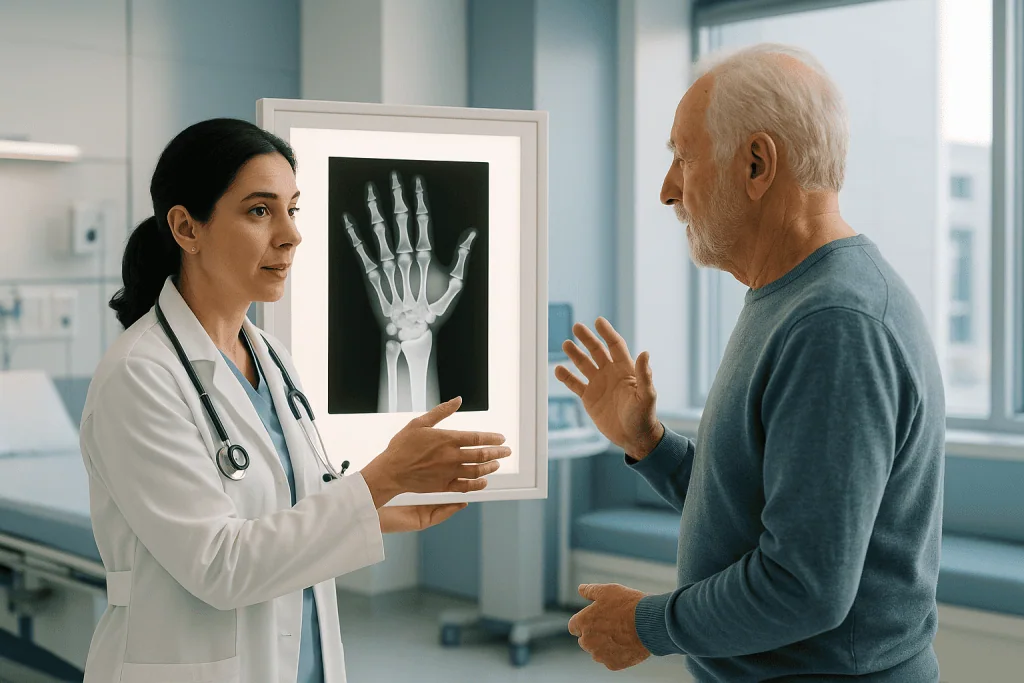
Imaging often matters. X-rays show fractures, joint alignment, arthritis, bone deformity and healing status. Ultrasound helps evaluate tendons, soft tissue masses, foreign bodies or fluid collections. MRI is useful for complex ligament, tendon, cartilage, bone marrow or soft tissue problems. CT comes in when detailed bone anatomy is needed, such as complex fracture patterns or deformity planning. Laboratory tests may be requested where infection, inflammatory arthritis, diabetes-related complications or other systemic conditions are suspected.
Not every finger or toe problem needs an operation, and a good surgeon will say so plainly. Splinting, activity modification, wound care, orthotic support, footwear changes, physiotherapy, medication or structured nail care may be the right first step. Surgery is considered when these measures are insufficient, when the condition is progressive, or when delay would make the eventual result worse.
Why does my toe or finger twitch?
Occasional twitching in a toe or finger, a brief, involuntary flicker of muscle, is common and usually harmless. Typical triggers include muscle fatigue, caffeine, dehydration, electrolyte shifts, stress, tight footwear or minor nerve irritation. Twitching on its own is rarely a surgical problem: finger and toe surgery addresses structural issues such as tendon damage, deformity, fracture or nerve compression, not isolated muscle flickers. Twitching that persists for weeks, or that appears together with weakness, numbness or visible muscle wasting, is usually assessed by a doctor so nerve function can be checked: that assessment sits with neurology or general medicine rather than surgery in most cases.
Conditions and Indications Treated
In the fingers, surgery may address a broad range of problems, from acute trauma to slowly developing disease. Common indications include:
- Fractures, dislocations and ligament injuries
- Tendon lacerations, trigger finger, mallet finger and boutonnière deformity
- Nail bed injuries and fingertip trauma
- Nerve injuries and post-traumatic deformity
- Joint stiffness and arthritis-related joint damage
- Ganglion cysts, benign soft tissue tumours and congenital differences
- Crush injuries, animal bites, burns and wounds with tissue loss
In the toes, surgery is most often recommended for:
- Hammer toe, claw toe, mallet toe, crossover toe and overlapping toe
- Painful rigid deformities and bunion-associated second toe problems
- Recurrent ingrown toenails and nail bed deformities
- Fractures, dislocations and tendon imbalance
- Arthritis of the toe joints
- Chronic corns or pressure lesions caused by bony prominence
- Selected diabetic foot problems where infection or pressure threatens tissue health
Some indications are urgent by nature. A deep cut that stops a finger moving may signal tendon injury. Numbness after trauma may mean nerve damage. A pale, blue or cold digit points to compromised circulation. Rapidly worsening redness, swelling, drainage, fever or severe pain can indicate infection spreading along a tendon sheath. Open fractures, contaminated wounds and bites over joints are treated quickly because infection and stiffness develop fast in these small, enclosed spaces.
Other conditions are planned electively. A hammer toe that makes normal shoes intolerable, a trigger finger that repeatedly locks, or an arthritic finger joint that no longer supports daily function can be scheduled after a careful discussion of goals, alternatives, recovery time and expected benefit. Elective timing has real advantages: it allows general health to be optimised, medications to be reviewed by the treating team, and rehabilitation to be organised in advance.
Can you get trigger finger in your toes?
Yes: a comparable condition called trigger toe exists, although it is far less common than trigger finger. In trigger finger, a flexor tendon catches on a tight pulley in the palm, making the finger lock in a bent position. In the foot, a similar catching can affect the flexor hallucis longus tendon, which bends the great toe; the tendon snags where it passes behind the ankle or beneath the toe, producing clicking, catching or locking. It is seen most often in dancers and athletes who spend long periods on the balls of their feet. Treatment usually begins with activity modification and physiotherapy; when catching persists, surgical release of the constricted segment can allow the tendon to glide freely again.
How Finger and Toe Surgery Is Performed
Preoperative evaluation and planning
The process begins with a detailed consultation. The surgeon reviews your symptoms, prior treatments, medical conditions, medications, allergies, occupation, sports, footwear and daily functional needs. Existing medical records, photographs, X-rays, MRI scans, ultrasound reports, laboratory results and previous operative notes are reviewed alongside the current examination, because earlier treatment often shapes what is anatomically possible now.
During the examination, the physician looks at the whole hand or foot, not just the visible problem. A bent toe may be driven by tendon imbalance or a neighbouring bunion. A stiff finger may involve tendon adhesions, joint contracture, bone malalignment or arthritis, sometimes several at once. Identifying the primary cause is what prevents incomplete treatment and disappointing revision surgery later.
Preoperative planning may include new imaging, blood tests, infection assessment, vascular evaluation, anaesthesia review and consultation with other specialists where needed. Patients with diabetes, circulation problems, immune suppression, inflammatory arthritis or a history of wound-healing difficulty may need additional preparation. If you take blood thinners or other medications that affect surgery, the surgical and anaesthesia teams decide whether any adjustment is required: that decision always belongs to the treating doctors, not to general guidance.
Anaesthesia and surgical setting
Many finger and toe procedures are performed under local or regional anaesthesia, sometimes with sedation, which numbs the digit or limb while you stay awake or lightly relaxed. More complex reconstruction, procedures on multiple digits, paediatric cases or operations covering larger areas may require general anaesthesia. The choice depends on the procedure, your health, the expected duration and your comfort.
Operations take place in an operating theatre or an appropriate minor-procedure setting with full sterile technique. Because the structures are so small, surgeons may use magnification, delicate instruments, fine sutures and imaging guidance. The working principle is accuracy with minimal unnecessary tissue trauma, every extra millimetre of dissection in a digit is potential scar tissue later.
What happens during the operation?
The details vary widely by diagnosis, but most procedures follow a structured sequence:
- 1. Anaesthesia and positioning. The digit is numbed or you are sedated or asleep, and the hand or foot is positioned for clear access.
- 2. Preparation. The surgical area is cleaned and draped. A tourniquet may be applied for a limited period to reduce bleeding and improve visibility.
- 3. Incision. The cut is planned along skin lines, taking account of scar position, access needs and the protection of nerves and blood vessels.
- 4. Correction or repair. The surgeon carries out the specific work the diagnosis requires, realignment, release, repair, removal or reconstruction.
- 5. Stabilisation. Where needed, pins, screws, plates or sutures hold the correction while it heals.
- 6. Closure and protection. The wound is closed with fine sutures and the digit is protected with a dressing, splint, cast or surgical shoe.
For fractures and dislocations, the surgeon realigns the bone or joint and stabilises it with fixation chosen for your anatomy and injury pattern. Some fractures can be treated with closed reduction under imaging guidance, without an open incision; others need open surgery to restore alignment properly.
For tendon injuries, the damaged tendon ends are identified and repaired with fine suturing techniques. Tendon surgery is inseparable from its rehabilitation: the repair must be protected while movement is gradually reintroduced, and the timing of that balance is set by the surgeon and therapist together. For trigger finger, the tight pulley trapping the tendon is released so it glides freely. For mallet finger and other extensor tendon problems, treatment may involve splinting, pinning, repair or reconstruction depending on severity and how much time has passed since the injury.
For toe deformities such as hammer toe or claw toe, the operation may involve releasing tight soft tissues, lengthening or rebalancing tendons, removing a small portion of bone, realigning a joint, or stabilising the toe temporarily with a pin or permanently with fusion. The goal is a toe that sits straight, stops rubbing, and fits comfortably in ordinary footwear. For recurrent ingrown toenails, part of the nail edge is removed and the nail root in that segment treated to reduce the chance of regrowth into the skin; if infection is present, drainage and targeted wound care come first.
For arthritis, options include cleaning out the joint, removing painful bone spurs, fusing a painful small joint, or implant-based reconstruction in selected joints. Fusion sounds drastic, but in certain small joints it relieves pain and provides stability while preserving useful overall hand or foot function: a trade many patients find worthwhile once it is explained honestly.
For nail bed injuries, the nail may be carefully lifted or removed and the nail bed repaired with very fine sutures, because the quality of that repair shapes how the new nail grows. For soft tissue defects, the surgeon may close the wound directly or use local tissue rearrangement, grafting or reconstructive techniques. In complex trauma, staged procedures are sometimes necessary: managing contamination and tissue viability first, then addressing bone stability and function later.
Technology used in diagnosis and treatment
Modern finger and toe surgery depends on accurate visualisation and planning. Digital X-ray, ultrasound, MRI, CT, intraoperative imaging, magnification, microsurgical instruments, fine fixation systems and structured rehabilitation protocols all play their roles. These tools help the team define the anatomy, plan the incision, repair delicate structures and confirm that a fracture or joint correction sits where it should.
Technology only earns its place alongside clinical judgement. A scan can show a deformity, but the treatment plan has to weigh pain, motion, skin condition, footwear, hand dominance, work demands, circulation, nerve function and your own goals. At Acibadem, decisions follow evidence-based pathways, and complex cases are discussed among the relevant specialists before a plan is fixed.
How long does the operation take, and when do you go home?
Procedure time varies with complexity. A minor nail procedure or trigger finger release is relatively brief; complex fracture repair, tendon reconstruction, correction of multiple toes or revision surgery takes longer. Most patients go home the same day, although some need observation or a short hospital stay depending on the anaesthesia used, their general health, infection risk, pain control or the extent of surgery.
Afterwards, the digit is protected with a dressing, splint, surgical shoe, cast or bandage. Elevation matters in the first days to control swelling and pain. You receive specific instructions covering wound care, medication, activity limits, bathing, warning signs and follow-up appointments. After hand surgery, therapy may begin early in selected cases to prevent stiffness; after toe surgery, walking may be allowed straight away in a protective shoe, or weight-bearing may be restricted, depending entirely on what was done.
Recovery is a partnership. The surgeon corrects the structure, but swelling control, protection, therapy, footwear choices and how closely you follow the plan strongly influence the final result.
Why Acting Early Matters
Some finger and toe conditions become genuinely harder to treat with delay. Tendons retract, scar and lose their glide. Joints stiffen. Fractures heal in poor alignment. Nerves have a narrower window for optimal repair. Infections spread to tendon sheaths, joints or bone. A neglected toe deformity creates chronic pressure, skin breakdown and gait changes that then affect other parts of the foot.
Early evaluation does not automatically mean early surgery. Often it allows the physician to choose appropriate non-surgical care and monitor progress with confidence. What timely diagnosis really buys is the ability to identify the problems that should not wait: a finger that cannot bend or straighten after a cut, a worsening toe infection, an unstable fracture, and to treat them while the tissue is still in its best condition.
Early evaluation is also when the practical groundwork happens: documenting how and when the symptoms began, gathering existing imaging, photographing a changing deformity or a wound over time, and completing baseline tests. That record makes it far easier to judge whether a condition is stable, slowly progressing or actively deteriorating, and that judgement, more than anything else, determines how quickly treatment should move.
Benefits of Finger and Toe Surgery
When surgery is recommended for the right condition at the right time, it can offer practical benefits for daily function and comfort.
| Benefit | What It Means for You |
|---|---|
| Pain reduction | Correcting the source of pressure, instability, tendon irritation, infection or arthritis-related pain can make daily activities more comfortable. |
| Improved alignment | A straighter finger or toe may function better, fit more comfortably in gloves or shoes, and reduce abnormal stress on nearby joints and skin. |
| Better movement or stability | Repairing tendons, ligaments, fractures or joint problems can help restore useful motion, or provide a stable digit for gripping, walking and balance. |
| Protection of tissue health | Treating infection, nail disease, deformity-related pressure or non-healing wounds reduces the risk of deeper tissue complications. |
| Improved appearance | For selected deformities, injuries and nail problems, surgery can improve the visible shape of the digit while keeping function and safety first. |
| Return to activities | With appropriate healing and rehabilitation, many patients gradually return to work, walking, sport, hobbies and self-care. |
Recovery Timeline After Finger or Toe Surgery
Recovery depends on the procedure, but the following timeline gives a realistic sense of what many patients experience. Your surgeon’s instructions always override a general schedule.
| Time Period | What Patients Can Expect |
|---|---|
| Day 1 | The digit is protected with a dressing, splint, bandage or surgical shoe. Elevation, prescribed pain medication and keeping the dressing clean and dry are emphasised. |
| First week | Swelling and bruising are common. A wound check or early follow-up may take place. Some patients begin gentle exercises or therapy; others must keep the digit fully immobilised. |
| First month | Stitches are removed when appropriate, swelling gradually settles, and activity is advanced according to healing. Hand therapy, toe splinting, protective footwear or limited weight-bearing may continue. |
| Six to twelve weeks | Many fractures, tendon repairs and toe corrections show meaningful healing during this period. Strength, flexibility, shoe comfort and function keep improving, although swelling may persist. |
| Longer term | Scar maturation, nerve recovery, easing stiffness and final contour can take several months. Complex injuries, arthritis, revision surgery and multiple-digit procedures usually need a longer rehabilitation plan. |
Can you wear toe shoes such as Vibram Five Fingers after surgery?
Toe shoes, minimalist designs such as Vibram Five Fingers, which give each toe its own separate pocket, are a late-stage question, not an early one. Immediately after toe surgery, most patients wear a rigid-soled surgical shoe, followed by wide, deep, soft-fronted footwear as swelling settles. Vibram shoes and other minimalist designs demand something conventional footwear does not: full independent toe movement, good push-off strength and toes that tolerate individual compartments without rubbing. After procedures such as fusion, pinning or deformity correction, a corrected toe may sit or move differently than before, so whether this style of footwear is appropriate, and when, is a decision to make with your surgeon based on what was actually done. The same applies to returning to barefoot-style running or dance: gradually, and only once healing supports it.
Risks and Possible Complications
Like all surgery, finger and toe procedures carry risks, and understanding them is part of making a good decision. The more common issues are temporary: swelling that lingers longer than expected, bruising, wound tenderness, scar sensitivity and stiffness that needs therapy to resolve. Less common but recognised complications include infection, delayed wound healing, numbness from nerve irritation or injury, irritation from pins or other hardware, recurrence of a deformity over time, and, after fracture or fusion surgery, bone that heals slowly or incompletely. In rare cases, a digit can develop persistent pain sensitivity that needs dedicated pain management and rehabilitation.
Some risks are shaped by the patient as much as the procedure. Smoking, poorly controlled diabetes, vascular disease and certain medications all impair the small blood vessels that finger and toe healing depends on, which is why preparation before an elective operation is taken seriously. Surgical teams reduce risk through sterile technique, careful handling of tissue, appropriately timed antibiotics where indicated, staged surgery for contaminated wounds, and structured follow-up so that a problem such as early infection or a slipping correction is caught while it is still simple to address.
What you can control matters too: keeping dressings clean and dry, elevating the limb in the first days, respecting weight-bearing and activity limits, attending therapy, and reporting warning signs promptly rather than waiting for a scheduled visit. Most complications, when they occur, are manageable, and they are far more manageable when they are recognised early.
How Multidisciplinary Care Supports the Result
Finger and toe problems sit at the meeting point of several specialties, and the best plans reflect that. Depending on the diagnosis, care at Acibadem may involve orthopaedics and traumatology, hand surgery-focused teams, plastic and reconstructive surgery, dermatology, radiology, physiotherapy and rehabilitation, infectious disease specialists, endocrinology for diabetes-related concerns, or vascular specialists where circulation is a factor. Complex cases are reviewed in multidisciplinary discussions so the surgical plan reflects the full medical picture rather than a single viewpoint.
The diagnostic pathway uses modern imaging and laboratory resources to clarify the problem before any incision is planned: digital radiography, cross-sectional imaging, ultrasound evaluation, intraoperative imaging, magnification and microsurgical technique where clinically appropriate. The emphasis is not on technology for its own sake but on precise diagnosis, safe planning and careful execution.
Clear communication is treated as part of medical quality, because aftercare for finger and toe surgery is detailed. Dressings, splints, exercises, weight-bearing limits, warning signs and therapy schedules all have to be understood correctly to protect the result. Before discharge, the practical questions are settled explicitly: how to manage the dressing at home, when stitches come out, when driving, work and sport become realistic, and how follow-up appointments and therapy will run.
Planning is individual because priorities differ. A pianist, a chef, an office worker, an athlete, a parent, or an older adult worried about balance will each weigh function, appearance and downtime differently. The same hammer toe operation means something different to a hiker than to someone whose main goal is comfortable everyday shoes, and a trigger finger release carries different stakes for a surgeon’s hand than for a retiree’s. A good plan takes those differences seriously instead of treating every digit the same.
Deciding Whether Surgery Is the Right Step
If a finger or toe problem is causing pain, limiting movement, affecting walking or hand use, or changing the appearance of a digit, a specialist evaluation clarifies what is actually happening and which treatments fit. Some conditions are managed well without surgery. Others benefit from timely repair or correction before stiffness, infection, deformity or poor healing make treatment harder and the eventual result more limited.
The useful questions to weigh with a specialist are practical ones: what is the precise diagnosis, what happens if nothing is done, which non-surgical options remain untried, what the operation involves, how long recovery genuinely takes for your specific procedure, and what limitations might remain afterwards. Honest answers to those questions, rather than reassurance, are what make a decision about surgery a confident one.
Finger and toe surgery is highly personal because the smallest structures often have the largest effect on independence, comfort and confidence. With a careful diagnosis, a precisely chosen technique and attentive follow-up, many patients move toward noticeably better function and less pain in the digits they rely on every day.
Preparation
- A specialist evaluates the affected finger or toe with a physical exam and, when needed, X-rays or other imaging. Patients may be asked to stop blood-thinning medicines before surgery and arrange help for daily activities. Fasting instructions depend on the planned anesthesia.
Aftercare
- The treated digit is usually protected with a dressing, splint, or special shoe, and elevation helps reduce swelling. Pain medication, wound care, and follow-up visits are important for safe healing. Hand or foot exercises or rehabilitation may be recommended to restore movement and strength.
Frequently Asked Questions
What affects the cost of finger or toe surgery?
The final cost depends on the diagnosis, procedure complexity, imaging needs, anaesthesia type, implants or splints, hospital setting, surgeon expertise, and the amount of rehabilitation or follow-up care required.
How can I get a personalised quote?
You can request a free consultation by sharing your medical history, photos of the affected finger or toe if relevant, previous reports, and imaging. A specialist review helps the team prepare a personalised treatment plan and quote.
Is finger or toe surgery usually included in an international patient package?
Packages may include specialist evaluation, preoperative tests, the procedure, hospital services, medication planning, translation support, and follow-up guidance. Inclusions vary by case, so it is important to review what is covered before travel.
Will I need physiotherapy or hand therapy after surgery?
Some procedures require rehabilitation to restore movement, strength, and function, especially tendon, joint, fracture, or reconstructive surgery. The specialist will explain whether therapy is needed and how it may affect recovery planning.
Can the exact cost be confirmed before I travel?
A preliminary quote can often be prepared after reviewing medical information and images. The final plan may change after in-person examination or updated diagnostics, especially if the condition is more complex than expected.
Medically reviewed by the Acıbadem International Medical Board September 1, 2026
See our medical review board →
Update history
- PublishedJune 8, 2026
- Medical review approvedSeptember 1, 2026
- Last content updateSeptember 8, 2026
References2
- Finger Injuries and Disorders medlineplus.gov
- Trigger finger nhs.uk
Trusted care for international patients
From the Acibadem Blog

When Does Trigger Finger Need Surgery? Splints, Injections and the Point of Release
Trigger finger usually needs surgery only when a finger locks and cannot be straightened, when night splinting and one or two corticosteroid injections have…
How Ingrown Toenail Surgery Is Done: Numbing, Nail Edge Removal and the First Days After
Ingrown toenail surgery is a short outpatient procedure done under local anesthetic injected at the base of the toe, so the toe is numb…

Hammer Toe Surgery Recovery: Pins, Surgical Shoes and Getting Back Into Regular Footwear
Hammer toe surgery recovery usually means walking in a stiff-soled surgical shoe from the first days, keeping the foot elevated and dry, and, if…