PEG Placement
PEG placement, or percutaneous endoscopic gastrostomy, is a procedure that places a feeding tube through the skin of the abdomen into the stomach with the help of an endoscope. It is used…

Quick answer
PEG placement is a procedure in which a flexible feeding tube is inserted through the abdominal skin into the stomach, guided by an endoscope passed through the mouth. It provides nutrition, fluids, and medicines for people who cannot swallow safely, typically takes 20-45 minutes under sedation, and often allows feeding within a day.
What is PEG placement?
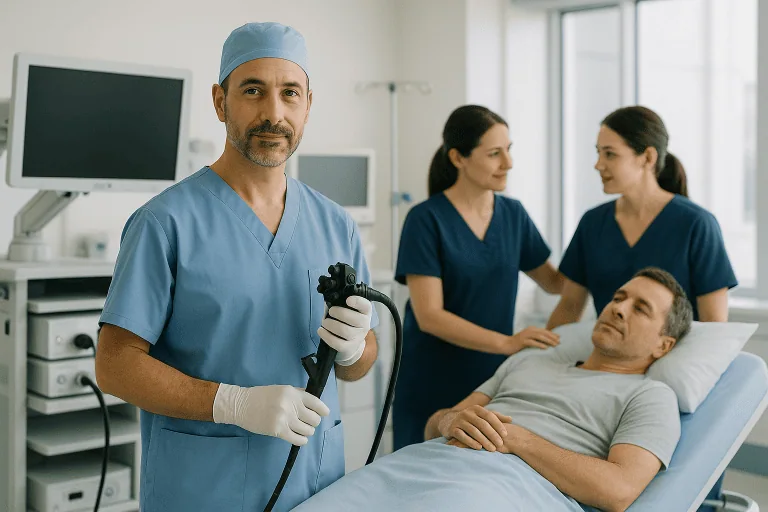
PEG placement is a procedure in which a thin, flexible feeding tube is passed through the skin of the abdomen directly into the stomach. PEG stands for percutaneous endoscopic gastrostomy. In plain terms, percutaneous means through the skin, endoscopic means guided by an endoscope (a slim, lighted camera tube passed through the mouth), and gastrostomy means an opening into the stomach. The tube allows liquid nutrition, fluids, and medicines to be given straight into the stomach when a person cannot eat or drink enough by mouth.
PEG placement is not a treatment for the underlying illness. It is a supportive procedure that helps a person receive nutrition safely over weeks, months, or longer. It is commonly used for people who have difficulty swallowing (a problem doctors call dysphagia), often after a stroke, with certain neurological conditions such as motor neuron disease or advanced Parkinson’s disease, with head and neck cancers that block or make swallowing painful, or with severe injuries that affect the ability to eat. In many hospitals, PEG placement is carried out by a gastroenterologist, a doctor who specializes in the digestive system. At Acibadem, the procedure is usually managed within the Gastroenterology department, working alongside dietitians and the patient’s other treating teams.
Who is a candidate for PEG placement?
Deciding who needs PEG placement is an individual medical judgment. In general, a PEG tube may be considered when a person is expected to need tube feeding for more than a few weeks, has a stomach and gut that still work normally, and cannot safely take enough food or fluid by mouth. Common indications include:
- Swallowing problems after a stroke or brain injury that are not expected to resolve quickly.
- Progressive neurological conditions that weaken the muscles used for swallowing.
- Cancers of the mouth, throat, or esophagus (the food pipe), or treatment such as radiotherapy that makes swallowing difficult or painful.
- Situations where a short-term tube passed through the nose (a nasogastric tube) has been used but a longer-term solution is needed.
- Some children and adults with conditions that make it hard to take in enough calories to grow or maintain weight.
PEG placement is not suitable for everyone. Your doctor may advise against it when:
- The stomach or intestines are not working well enough to absorb feeds, for example because of a blockage.
- There is a serious bleeding problem that cannot be corrected.
- Fluid has built up in the abdomen (a condition called ascites), or there is an active infection in the abdominal wall.
- The endoscope cannot be passed safely through the mouth and throat, for example because of severe narrowing.
- The person is in the final days or weeks of a terminal illness, when the evidence generally suggests tube feeding may not improve comfort or length of life.
Because PEG placement involves the whole care plan, not just a technical procedure, the decision often involves the patient, family members, the treating doctors, a dietitian, and sometimes a speech and swallowing therapist.
How the PEG placement procedure works
The PEG placement procedure is usually done in an endoscopy unit or operating room and typically takes between 20 and 45 minutes. Understanding each stage can make the experience less worrying.
Before the procedure. You will be asked to fast, usually for several hours, so the stomach is empty. A small plastic tube (an intravenous line, or IV) is placed in a vein in the arm or hand. Through this line, the team gives medicine to make you relaxed and sleepy (called sedation) and often a single dose of antibiotic to lower the risk of infection at the skin site. Most people do not need a full general anesthetic, although your doctor may recommend one in certain situations, such as when there is a high risk of breathing problems.
During the procedure. The doctor passes the endoscope through the mouth, down the throat, and into the stomach. The stomach is gently inflated with air so that its wall lies close against the inside of the abdominal wall. The room lights may be dimmed so the team can see the endoscope’s light shining through the skin, which helps them choose the safest spot. That area of skin is cleaned and numbed with a local anesthetic. A small cut is made, a needle and then a guide wire are passed into the stomach, and the endoscope is used to catch the wire. The feeding tube is then pulled or pushed into position so that one end sits inside the stomach, held by a soft internal bumper or balloon, and the other end comes out through the skin, where an external fixing plate holds it in place.
After the procedure. You are monitored in a recovery area while the sedation wears off. The skin site may feel sore for a few days. The tube is usually not used immediately; in many centers, feeding begins a few hours later or the next day, depending on local practice and how you are feeling. A nurse or dietitian will show you or your caregivers how to use the tube and care for the site before you go home.
Preparation for PEG placement
Careful preparation helps the procedure go smoothly and reduces risks. Your care team will give you specific instructions, which typically include the following:
- Fasting: You will usually be asked not to eat for about 6 to 8 hours and not to drink for a shorter period beforehand. If you already receive tube feeds through a nasal tube, these are paused as instructed.
- Medicines: Tell your doctor about all medicines you take, including blood thinners, aspirin, diabetes medicines, and herbal supplements. Some medicines may need to be stopped or adjusted for a short time, but only under medical advice.
- Blood tests: Tests to check blood clotting and blood counts are often done beforehand.
- Allergies and past reactions: Let the team know about any allergy to medicines, latex, or previous problems with sedation or anesthesia.
- Consent and questions: You will be asked to sign a consent form. This is a good time to ask about the type of tube, who will manage it afterward, and what supplies you will need at home.
- Transport and support: Because sedation affects judgment and coordination, you should not drive for at least 24 hours afterward and should arrange for someone to be with you.
Recovery and aftercare after PEG placement
PEG placement recovery time is often shorter than many people expect, but the healing of the tract between the skin and the stomach continues for some weeks. In many cases, patients who are otherwise well can go home the same day or after one night in the hospital. People who are already admitted for another illness usually stay for as long as that illness requires.
Typically, the skin around the tube is tender for a few days, and simple pain relief recommended by your doctor is usually enough. A small amount of clear or slightly pink fluid on the dressing in the first day or two is common. Many patients notice that soreness settles within a week, and the site itself typically forms a stable tract over about two to four weeks.
Daily aftercare usually includes:
- Cleaning the skin around the tube once a day with mild soap and water and drying it gently.
- Checking the site for redness, swelling, unusual discharge, or leakage.
- Flushing the tube with water before and after each feed or medicine to keep it from blocking.
- Rotating the tube gently and checking the position of the external fixing plate as instructed, so the tube is neither too tight nor too loose against the skin.
- Waiting for your doctor’s advice before bathing or swimming; showering is often allowed once the site has started to heal.
Your dietitian will set the type, amount, and schedule of feeds. If you can still swallow some food safely, your team may encourage you to continue eating by mouth for pleasure alongside tube feeding. Follow-up visits are usually arranged to check the site and the tube, and most PEG tubes are eventually replaced after many months of use, typically as a simpler procedure than the first placement.
Risks and side effects
Weighing PEG placement risks and benefits is a central part of the decision. Most procedures go smoothly, but as with any procedure that involves sedation and an opening in the skin and stomach, complications are possible.
Common, usually minor problems include:
- Soreness, bruising, or mild bleeding at the skin site in the first days.
- Redness or mild infection around the tube, which often responds to local care or antibiotics.
- Leakage of stomach contents around the tube, which can irritate the skin.
- Blockage of the tube, most often from medicines or feeds that have not been flushed properly.
- Overgrowth of tissue around the site (sometimes called granulation tissue) that may bleed easily.
- Bloating, nausea, diarrhea, or constipation as the body adjusts to tube feeds; adjusting the feeding rate or formula often helps.
Less common but more serious complications include:
- Significant bleeding from the stomach or abdominal wall.
- Injury to nearby organs such as the bowel or liver.
- Leakage of stomach contents into the abdominal cavity, causing inflammation (peritonitis), especially if the tube is dislodged before the tract has healed.
- Aspiration, where stomach contents or saliva enter the lungs, which can cause pneumonia. A PEG tube does not remove this risk, and people with severe swallowing problems remain vulnerable.
- The internal bumper becoming buried in the stomach wall over time if the tube is held too tightly (buried bumper syndrome).
- Reactions to the sedation, including breathing difficulties, which are more likely in people who are frail or have heart or lung disease.
Your doctor will discuss which of these risks apply most to your situation, since factors such as age, overall health, and the underlying illness influence the likelihood of complications.
Results and outlook
For people who need long-term nutrition support and have a functioning stomach and gut, PEG placement is generally an effective and well-established way to deliver feeds, fluids, and medicines. The evidence broadly shows that it is more comfortable and more secure than a nasal feeding tube for longer-term use, and it frees the face and nose from tubing, which many patients and families value. It can help maintain or restore weight and hydration and can make giving medicines simpler.
The outlook after PEG placement depends far more on the underlying condition than on the tube itself. For someone recovering from a stroke, the tube may be temporary and can be removed once swallowing improves. For someone with a progressive neurological illness, the tube may be a long-term part of care. For people near the end of life, studies generally have not shown that tube feeding prolongs life or improves comfort, which is why doctors often approach this decision cautiously. The procedure is generally reversible: if the tube is no longer needed, it can be removed and the opening usually closes on its own within days.
Cost considerations
The cost of PEG placement varies widely between health systems and hospitals, and this page does not provide prices. Several factors typically influence the overall cost:
- Setting: whether the procedure is done as a day case or during an existing hospital admission, and the length of any hospital stay.
- Anesthesia: sedation given by the endoscopy team is usually less costly than a general anesthetic given by an anesthesiologist.
- Devices: the type of tube used (standard PEG, low-profile button, or balloon-type tube) and later replacement tubes.
- Feeding supplies: ongoing costs of formula, syringes, feeding pumps, and dressings, which may be the largest expense over time.
- Follow-up: dietitian reviews, nursing visits, and clinic appointments, as well as any treatment for complications.
- Insurance and coverage: what is covered varies by insurer and country, so patients often check in advance what documentation is required.
Frequently asked questions
Who needs PEG placement?
PEG placement is usually considered for people who cannot eat or drink enough safely by mouth for more than a few weeks, but whose stomach and intestines still work normally. This includes some people after a stroke, those with neurological conditions affecting swallowing, and people with head and neck cancers. The decision is individual and made with the treating team.
Is the PEG placement procedure painful?
The procedure itself is done under sedation with local anesthetic at the skin, so most people feel little or nothing during it. Afterward, the site is often sore for several days, similar to a small wound. Pain relief recommended by your doctor is usually sufficient, and persistent or worsening pain should be reported.
How long is PEG placement recovery time?
Many patients go home the same day or the next day if they are otherwise well. Soreness at the site typically improves within about a week, and the tract between skin and stomach usually becomes stable over two to four weeks. Feeding through the tube often begins within a day of the procedure, following your team’s instructions.
What are the main PEG placement risks and benefits?
The main benefits are a secure, comfortable route for nutrition, fluids, and medicines when swallowing is unsafe or impossible. The main risks include infection or leakage at the site, tube blockage, and less commonly bleeding, injury to nearby organs, or aspiration pneumonia. Your doctor will explain how these apply to your circumstances.
Can I still eat by mouth after PEG placement?
In many cases, yes. If a swallowing assessment shows that some foods or drinks can be taken safely, your team may encourage eating by mouth for enjoyment alongside tube feeding. If swallowing is unsafe, eating by mouth may be limited to protect the lungs. This is decided individually.
How long can a PEG tube stay in?
A PEG tube can stay in for as long as it is needed and is working well. Tubes are typically replaced after many months of use, or sooner if they become damaged or blocked. If the tube is no longer needed, it can be removed, and the opening usually closes on its own within a few days.
Can a PEG tube be removed if swallowing improves?
Yes. When a person’s swallowing recovers enough to maintain nutrition and hydration by mouth, the tube can usually be removed in a simple outpatient procedure. Your doctor may wait several weeks after placement before removal to allow the tract to heal, and a dietitian typically confirms that oral intake is adequate first.
When to see a doctor
You should be assessed by a specialist, usually a gastroenterologist or your treating team, if you or a family member has ongoing difficulty swallowing, unexplained weight loss, frequent coughing or choking while eating, or repeated chest infections that may be related to food or drink entering the lungs. These situations do not automatically mean PEG placement is needed, but they warrant a proper evaluation.
After PEG placement, seek urgent medical attention if you notice any of the following:
- Severe or worsening abdominal pain, especially if the abdomen feels hard or swollen.
- Fever, chills, or spreading redness, warmth, or pus around the tube site.
- Bleeding from the site that does not stop with gentle pressure, or blood in feeds drawn back from the tube.
- The tube falls out or is pulled out, particularly in the first weeks after placement; the opening can start to close within hours.
- Vomiting, coughing, or breathlessness during or after feeds, which may suggest aspiration.
- A tube that cannot be unblocked with the flushing method you were taught.
- Feeds or fluid leaking heavily around the tube, or skin that is breaking down.
Less urgent concerns, such as mild redness, small amounts of discharge, or minor discomfort, should still be mentioned at your next follow-up or to your community nursing team, as early adjustments often prevent bigger problems.
Preparation
- Fast for about 6 to 8 hours before the procedure as instructed, and pause any existing tube feeds when told to. Tell your doctor about all medicines, especially blood thinners and diabetes medicines, and about any allergies or past reactions to sedation. Blood tests are often done beforehand, and you should arrange for someone to accompany you home because you cannot drive after sedation.
Aftercare
- Clean the skin around the tube daily with mild soap and water, dry it gently, and check for redness, swelling, or leakage. Flush the tube with water before and after each feed or medicine to prevent blockage, and follow your dietitian's feeding plan. Report fever, worsening pain, heavy leakage, or a dislodged tube promptly, and attend follow-up visits to check the site and the tube.
Medically reviewed by the Acıbadem International Medical Board — September 14, 2026
See our medical review board →
Update history
- PublishedSeptember 13, 2026
- Medical review approvedSeptember 14, 2026
- Last content updateSeptember 14, 2026