Amputee Rehabilitation: Prosthetic Training and Mobility Goals
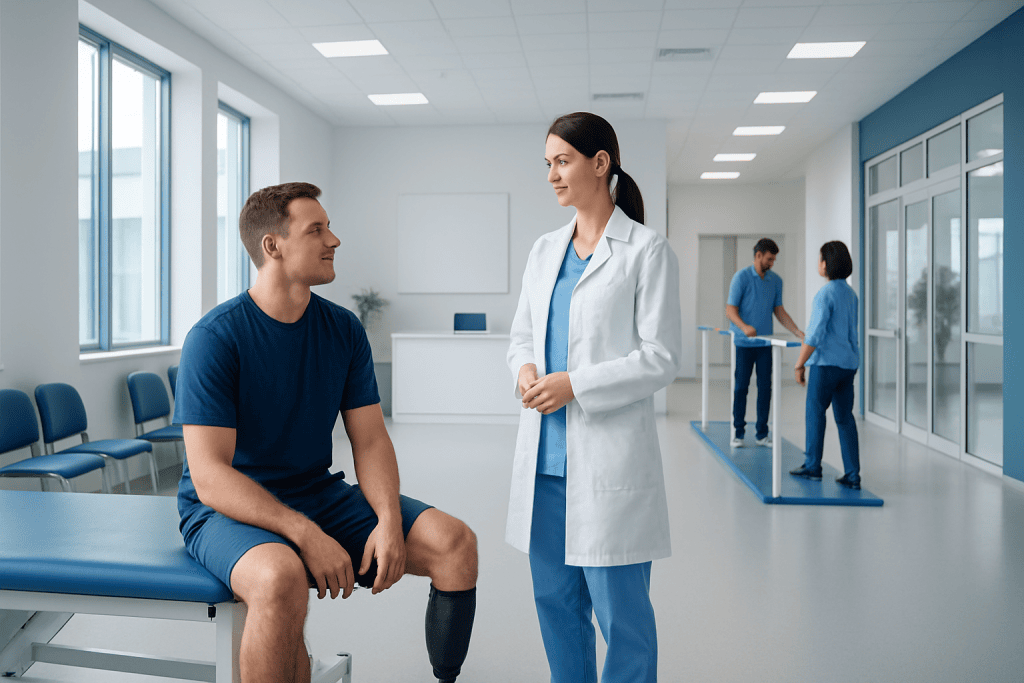
Rehabilitation begins soon after amputation and continues through healing, prosthetic fitting, training, and long-term follow-up. Goals are individualized according to the level of amputation, overall health, home environment, work or school needs, and personal priorities.
Key Takeaways
- Rehabilitation begins soon after amputation and continues through healing, prosthetic fitting, training, and long-term follow-up.
- Goals are individualized according to the level of amputation, overall health, home environment, work or school needs, and personal priorities.
- Prosthetic training includes balance, strength, walking or functional use, skin checks, and safe management of the device.
- Pain, swelling, skin irritation, and emotional adjustment are common concerns that can often be managed with professional support.
- A coordinated team approach helps reduce complications and supports safe return to daily activities.
Amputee rehabilitation is a structured recovery process that helps people regain mobility, independence, and confidence after limb loss. With the support of a multidisciplinary team, patients learn how to care for the residual limb, use a prosthesis when appropriate, and work toward meaningful daily-life goals.
Overview
Amputee rehabilitation is the medical and therapeutic process that supports recovery after the loss of part or all of a limb. It may follow surgery for vascular disease, diabetes complications, trauma, infection, cancer, or congenital limb difference. The purpose is not only to help a person walk or move again, but also to restore as much comfort, independence, participation, and quality of life as possible.
Rehabilitation is usually delivered by a team that may include a physical medicine and rehabilitation physician, surgeon, prosthetist, physiotherapist, occupational therapist, nurse, psychologist, pain specialist, dietitian, and social worker. Together, the team helps the patient heal, protect the residual limb, build strength, prevent complications, and learn new movement strategies. Family members or caregivers may also be included, especially when home safety, transportation, or daily care support is needed.
Not every person with limb loss uses a prosthesis, and not every prosthesis has the same purpose. Some devices are designed for basic household mobility, while others support community walking, work activities, sports, or upper-limb tasks such as grasping and lifting. A good rehabilitation plan respects the patient’s medical condition, energy level, balance, skin health, and personal goals.
Rehabilitation Phases After Amputation
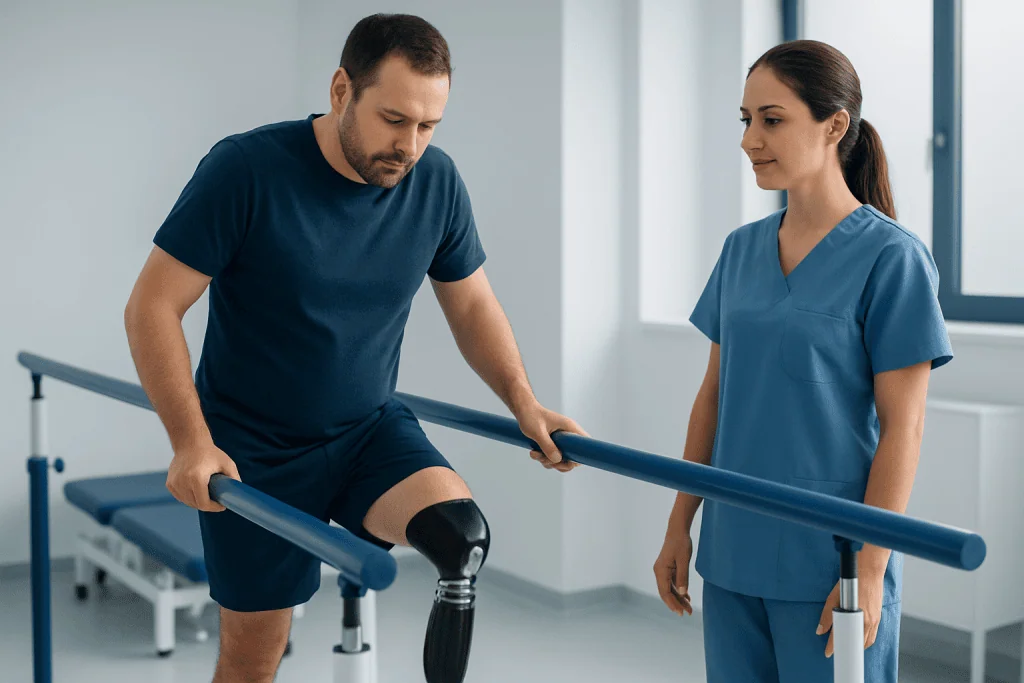
Rehabilitation often begins before surgery when an amputation is planned. In the preoperative phase, the care team explains what to expect, evaluates strength and mobility, discusses pain control, and begins planning for equipment and discharge needs. Early education can reduce uncertainty and helps the patient and family understand the steps ahead.
After surgery, the early postoperative phase focuses on wound healing, swelling control, safe positioning, pain management, and gentle movement. Patients are taught how to protect the residual limb, prevent joint stiffness, and transfer safely between bed, chair, toilet, and wheelchair. For lower-limb amputees, maintaining strength in the hips, knees, trunk, and remaining limb is important for later standing and walking.
Once the surgical area has healed enough and swelling is controlled, the pre-prosthetic and prosthetic phases begin. The prosthetist evaluates the residual limb and recommends a socket and components suited to the person’s needs. Training then progresses from putting on and removing the prosthesis to standing, balance, walking, stairs, slopes, uneven surfaces, or upper-limb functional use. Rehabilitation continues as the residual limb changes shape and the prosthesis requires adjustment.
Prosthetic Training: What Patients Learn
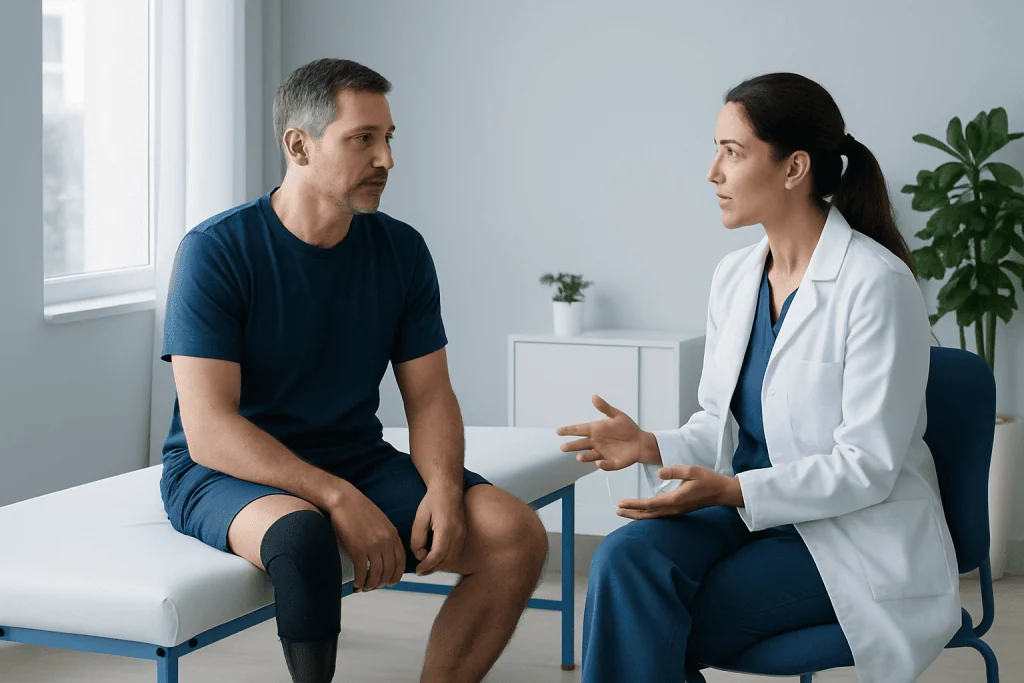
Prosthetic training teaches a person how to use the device safely and efficiently. For lower-limb prostheses, therapy may begin with standing balance between parallel bars and weight shifting onto the prosthetic side. As confidence improves, the patient learns stepping patterns, turning, stopping, sitting down, and walking with or without walking aids.
Training is also practical. Patients learn how to put on liners, socks, suspension systems, and shoes correctly; how to check the skin after wearing the prosthesis; and how to recognize signs that the socket fit needs review. Small changes in swelling, body weight, or activity level can affect fit and comfort, so ongoing communication with the prosthetist is essential.
For upper-limb amputees, rehabilitation may involve learning how to control a body-powered, myoelectric, or passive prosthesis. Training can include reaching, grasping, releasing, lifting, bilateral tasks, dressing, meal preparation, computer use, and work-related activities. Occupational therapy often focuses on combining prosthetic skills with adaptive techniques so that daily tasks become more manageable.
- Common training goals include safe transfers, improved balance, skin protection, energy-efficient movement, and confidence using the prosthesis in real environments.
- Patients may also practice fall prevention, getting up from the floor if appropriate, stair climbing, ramps, public transport, and community mobility.
- Education on residual limb care and prosthetic maintenance is a core part of long-term success.
Setting Realistic Mobility Goals
Mobility goals are most effective when they are realistic, measurable, and meaningful to the patient. A goal may be as simple as transferring independently from bed to wheelchair, or as advanced as returning to work, driving, sports, or long-distance community walking. The right goal depends on the level of amputation, overall health, balance, strength, vision, sensation, cognition, pain level, and endurance.
For lower-limb amputees, the team may use functional mobility classifications to help choose the most appropriate prosthetic components. A person who mainly walks indoors may need different support than someone who regularly navigates stairs, uneven ground, or active employment. Matching technology to realistic activity needs improves safety and comfort.
Goal setting should also consider energy use. Walking with a prosthesis can require more effort than walking before amputation, especially with higher-level amputations or other medical conditions. Therapy therefore includes pacing, cardiovascular conditioning when medically suitable, and strategies to reduce fatigue. Progress may occur in steps, with periods of adjustment as the residual limb changes and the patient becomes stronger.
Pain, Skin Care, and Residual Limb Health
Pain management is an important part of amputee rehabilitation. Some people experience surgical pain, residual limb pain, phantom limb sensations, or phantom limb pain. These experiences are real and should be discussed with the medical team. Treatment may include medication, desensitization techniques, graded movement, mirror therapy for some patients, psychological support, and prosthetic fit adjustments when needed.
Skin care is equally important because the residual limb carries pressure, friction, heat, and moisture inside a prosthetic socket. Patients are usually taught to inspect the skin every day, especially after removing the prosthesis. Redness that fades quickly may be expected during adaptation, but persistent redness, blisters, open areas, unusual swelling, drainage, or increasing pain should be assessed by a healthcare professional.
Good residual limb care includes washing and drying the skin as advised, keeping liners clean, avoiding unapproved creams inside the socket, and managing sweating or irritation with professional guidance. People with diabetes, circulation problems, or reduced sensation need extra attention because skin injuries may be harder to notice. Regular follow-up helps identify socket fit problems early before they limit mobility.
Emotional Adjustment and Daily Life
Adjusting to limb loss is both a physical and emotional process. It is common for patients to experience grief, frustration, anxiety, changes in body image, or concerns about independence and relationships. These feelings do not mean that recovery is failing; they are part of adapting to a major life change. Psychological support, peer support, and open communication with the rehabilitation team can be very helpful.
Occupational therapy can support daily living skills such as bathing, dressing, cooking, household tasks, childcare, work preparation, and use of adaptive equipment. For some people, home modifications may improve safety, such as grab bars, ramps, rearranged furniture, shower seating, or improved lighting. The goal is to make the home environment supportive while the patient builds independence.
Return to work, school, driving, travel, intimacy, and recreation should be discussed when the patient is ready. These topics are part of comprehensive rehabilitation and can be addressed step by step. The care team may provide guidance on safe driving assessments, workplace adaptations, sports prostheses, or community resources, depending on local regulations and individual needs.
Prevention of Complications and Self-Care
Long-term success after amputation depends on consistent self-care and regular medical follow-up. Patients should monitor the residual limb, maintain strength and flexibility, manage chronic conditions, and attend prosthetic reviews. A prosthesis that once fit well may need adjustment because limb volume, activity level, or body weight can change over time.
People with diabetes, peripheral artery disease, or reduced sensation should take particular care of the remaining limb. Foot care, appropriate footwear, blood sugar management when relevant, smoking cessation, and vascular follow-up can help reduce the risk of further complications. Nutrition, hydration, and sleep also support wound healing, energy, and participation in therapy.
Self-care strategies may include a daily routine for skin inspection, cleaning liners, stretching tight muscles, strengthening the core and hips or shoulders, and gradually increasing activity as recommended. Patients should avoid pushing through unusual pain, skin breakdown, or a poorly fitting socket. Early attention to small problems often prevents longer interruptions in rehabilitation.
When to See a Doctor
Patients should contact a doctor, rehabilitation specialist, or prosthetist if they develop persistent skin redness, blisters, open wounds, swelling, increasing pain, fever, drainage from the surgical site, or sudden difficulty wearing the prosthesis. A change in walking pattern, repeated falls, new back or joint pain, or a feeling that the prosthesis is unstable should also be assessed.
Medical review is also important when phantom limb pain becomes distressing, sleep is affected, mood symptoms persist, or daily activities become harder. These concerns are common and can often be managed with a combination of medical care, therapy, prosthetic adjustment, and emotional support. Patients do not need to wait until a problem is severe before asking for help.
Acibadem International’s multidisciplinary rehabilitation, orthopedic, vascular, pain management, and prosthetic care teams support diagnosis, treatment planning, and rehabilitation for international patients in JCI-accredited hospitals. As with any rehabilitation journey, the most appropriate plan should be based on an individual assessment by qualified healthcare professionals.
Frequently asked questions
When does amputee rehabilitation usually start?
Rehabilitation can begin before surgery if the amputation is planned, with education, strengthening, and discharge planning. After surgery, therapy often starts as soon as the medical team confirms it is safe, focusing first on healing, positioning, transfers, and gentle movement.
How long does it take to learn to use a prosthesis?
The timeline varies widely depending on the level of amputation, healing, overall health, strength, balance, and the type of prosthesis. Many patients learn basic skills gradually over weeks to months, while advanced community mobility or complex upper-limb use may take longer and require ongoing practice.
Is every amputee a candidate for a prosthesis?
Not everyone benefits from or chooses to use a prosthesis. Candidacy depends on wound healing, residual limb condition, strength, balance, medical conditions, personal goals, and the ability to use the device safely. Some people achieve excellent independence with wheelchairs, adaptive equipment, or other mobility strategies.
What should a patient do if the prosthesis causes pain or skin irritation?
Pain, pressure, blisters, or redness that does not fade should be reported to the rehabilitation team or prosthetist. The prosthesis may need adjustment, the wearing schedule may need to change, or the skin may need medical care. Patients should not ignore skin problems or continue wearing a device that is causing injury.
Can phantom limb pain be treated?
Yes, phantom limb pain can often be reduced with a tailored treatment plan. Options may include medication, physical therapy techniques, mirror therapy for selected patients, relaxation strategies, desensitization, prosthetic fit review, and psychological support. A doctor can help identify the safest approach for the individual.
What are the main goals of prosthetic training?
The main goals are safe use of the prosthesis, improved mobility or function, protection of the residual limb, and confidence in daily activities. Training may include putting on and removing the device, balance, walking, stairs, fall prevention, skin checks, and task-specific practice for home, work, or school.
References
- World Health Organization
- International Society for Prosthetics and Orthotics
- American Academy of Orthopaedic Surgeons
- Amputee Coalition
- National Institute for Health and Care Excellence
This article is for general information only and is not a substitute for professional medical advice. Please consult a qualified doctor about your individual situation.
Oncology care in Turkey — second opinion and treatment plan
JCI-accredited · board-certified surgeons · reply within 24h
Add us as a Preferred Source to see more of our trusted health content across Google Search, AI Overviews and Discover.