

Medical Photography Before and After Treatment in Turkey
Medical Photography Before and After Treatment in Turkey helps you prepare secure, consistent images for planning, consent, progress tracking and follow-up.
Medical photography can support your treatment planning, documentation and follow-up when you travel to Turkey for care. This guide explains how photos are usually taken, how consent and privacy work, and how you can prepare comfortably and confidently.
At a glance
- Main purpose: To document your starting point, support planning, compare progress and assist follow-up
- When photos may be taken: Before treatment, during key stages, after treatment and at follow-up appointments
- Your role: Give informed consent, follow preparation instructions and ask how images will be stored or used
- Privacy: Medical photographs are part of sensitive health information and should be handled securely
- Support available: International patient teams can help with interpreters, scheduling and practical questions
Why medical photography may be part of your treatment journey
When you travel for care, clear visual documentation can help your medical team understand your starting point and monitor changes over time. Medical photography is commonly used in many specialties where appearance, symmetry, skin condition, wound healing, posture, alignment or visible treatment progress may matter. It is not about taking casual pictures; it is a structured part of your medical record when your doctor considers it useful.
Before and after photographs can help your team compare the same area at different stages of care. For international patients, this can be especially helpful because some discussions may happen before you arrive in Turkey and after you return home. Good photographs may support remote assessment, treatment planning, multidisciplinary discussion and follow-up communication.
At Acibadem International, medical photography is approached as part of coordinated patient care rather than a separate service. Depending on your treatment plan, your images may be reviewed by relevant specialists, nurses or care coordinators under hospital privacy procedures. You can always ask why photographs are needed, who will review them and whether they are required for your specific case.
What medical before and after photos are used for
Medical photographs may be used for several practical reasons. They can document your condition before treatment, help the doctor explain realistic treatment goals, provide a reference for marking or planning, and support comparisons after a procedure or therapy. They can also reduce misunderstandings, especially when you speak with your team through an interpreter or from another country.
In some cases, images are taken to record clinical progress rather than appearance alone. For example, a doctor may want consistent photos of a scar, swelling, skin area, dental alignment, wound, limb position or surgical site. The timing and type of photographs depend on your individual plan and the medical team responsible for your care.
Medical photographs are different from marketing images. Their first purpose is your care and documentation. If a hospital or clinic ever wants to use your images for education, publication or promotional purposes, that should require a separate and clear consent process, and you should be able to ask for details before deciding.
Consent, privacy and your rights
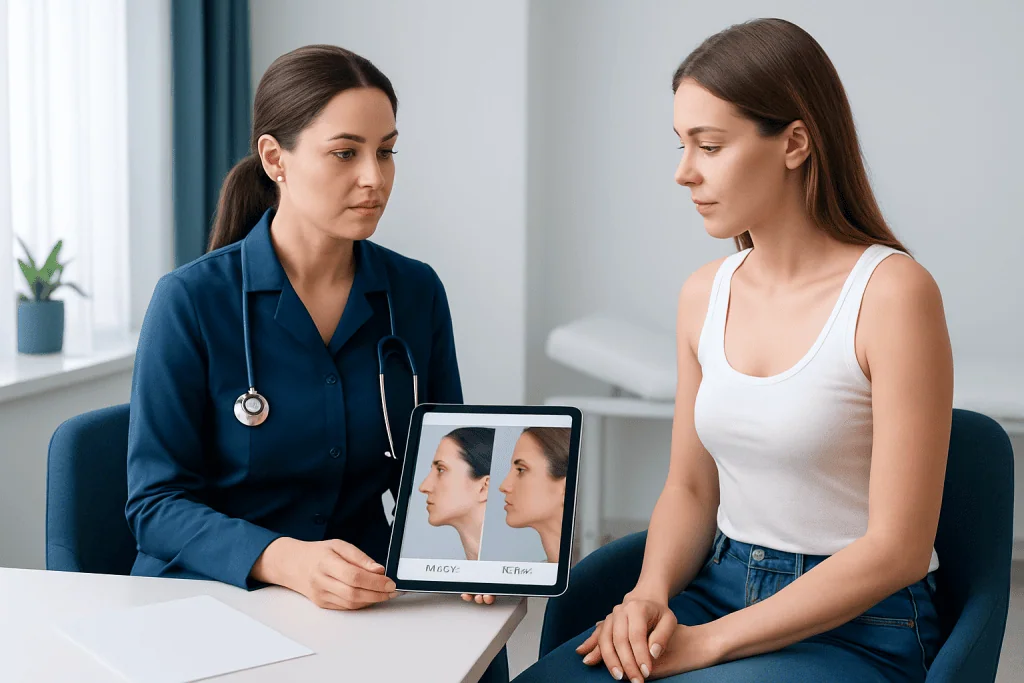
You should be informed before medical photographs are taken. The team should explain the purpose of the images, what body area will be photographed, whether your face or identifying features will be visible, and how the photographs will be stored. If you are unsure, it is appropriate to pause and ask for clarification before the photos are taken.
Your consent matters. In many situations, photographs that are necessary for your medical record may be handled differently from images requested for teaching, conferences, publications or public before-and-after examples. You can ask whether consent is for medical documentation only or for any additional use. If you do not want your images used outside your care, say this clearly and request that it is recorded.
Because medical photographs are sensitive personal health information, they should be protected like other medical records. Practical questions you may want to ask include:
- Who will have access to my photos?
- Will my face or identifying tattoos, jewelry or birthmarks be visible?
- Are the images stored in my hospital record?
- Can I receive copies for my own follow-up?
- What happens if I later withdraw permission for non-care use?
How to prepare before photos are taken
Your preparation depends on the body area and purpose of the photos. In general, the goal is to make the images clear, consistent and medically useful. You may be asked to remove makeup, jewelry, nail polish, compression garments, bandages or clothing that covers the treatment area. If you are uncomfortable, ask whether a gown, drape or same-gender staff member can be arranged.
Try to arrive with enough time so you are not rushed. Bring any previous medical images, reports or photographs that were requested during your pre-arrival assessment. If you have been corresponding with Acibadem International before traveling, your patient coordinator may tell you whether the doctor needs recent photos before your first appointment or whether professional images will be taken after you arrive.
For your comfort and safety, do not apply creams, oils, self-tanner or heavy makeup to the relevant area unless your medical team says it is fine. If you have cultural, religious or modesty concerns, tell the international patient services team in advance. Hospitals that regularly care for international patients are used to helping with privacy, interpreters and respectful room arrangements.
What to expect during the photography session
A medical photography session is usually brief and structured. You may be positioned in front of a plain background, under consistent lighting, and asked to stand, sit or turn in specific directions. The team may take images from the front, side, back or close-up angles depending on the treatment area. The aim is repeatability, so later photos can be compared fairly with the first set.
You may be asked to remove items that interfere with the view of the treatment area. Staff should explain what is needed and give you privacy to change. If a sensitive area is involved, you can ask who will be present in the room, whether a chaperone is available, and whether only essential staff can remain. Your dignity should be protected throughout the process.
Some images may be taken by trained clinical staff using secure hospital devices, while others may be taken in a dedicated medical photography area, depending on the department. Avoid sending personal photos through unsecured messaging apps unless your care coordinator has specifically instructed you to use an approved channel. If you are asked to send photos before arrival, request clear guidance on lighting, distance, angles and file transfer method.
Using photos for follow-up after you return home
After treatment, photographs may help your doctor check healing, swelling, scarring, alignment or other visible changes. For international patients, this can make follow-up more practical once you return home. Your team may ask you to send updated images at certain time points or before a virtual follow-up consultation.
Consistency is important. Try to take follow-up photos in similar lighting, from the same distance, and with the same body position as instructed by your care team. Use a plain background, avoid filters, and do not edit the images. If you notice a new concern such as increasing redness, discharge, sudden swelling, fever, severe pain or any symptom your doctor warned you about, contact your medical team promptly rather than waiting for a scheduled photo update.
Acibadem International patient services can help you understand how to share follow-up information securely and how to coordinate communication with the relevant department. Photos can support follow-up, but they do not replace medical advice, examination or urgent care when symptoms require immediate attention.
How to stay comfortable, informed and in control
It is normal to feel a little self-conscious when medical photographs are taken, especially if the area is personal or if you are already anxious about treatment. You can ask for an interpreter, request a brief explanation before each step, and tell the team if you need a moment. A good photography process should feel respectful, organized and focused on your care.
Before giving consent, make sure you understand the difference between photos for your medical record and photos for wider use. You do not need to agree to educational or public use in order to receive care unless a very specific legal or clinical requirement is explained to you. If anything feels unclear, ask your coordinator to help you put the question to the clinical team in your preferred language.
Keep your own records organized as well. Save appointment dates, discharge documents, photo instructions and follow-up contact details in one folder. When traveling to Turkey, having one clear point of contact through the international patient team can make the process easier, from arrival logistics to interpreter support and post-treatment communication.
Step by step
- Ask why photos are recommended. Before treatment, ask your doctor or coordinator what the photographs will be used for. Understanding the purpose helps you feel more comfortable and ensures you know whether the images are for planning, documentation, comparison or follow-up.
- Clarify consent and image use. Confirm whether your consent covers medical record documentation only or any additional use such as teaching or publication. If you only agree to clinical use, say so clearly and ask that this preference is recorded.
- Prepare the treatment area. Follow the instructions you receive about makeup, creams, clothing, jewelry or dressings. If you have modesty, cultural or religious needs, inform the team before the appointment so privacy arrangements can be made.
- Bring previous images if requested. If you have earlier medical photos, scans or reports, bring them or upload them through the approved channel. Previous documentation can help your specialist understand changes over time.
- Use secure communication channels. Do not send sensitive medical photos through informal channels unless your hospital has instructed you to use a specific secure method. Ask your Acibadem International coordinator how to share images safely before or after travel.
- Follow positioning instructions. During the session, staff may ask you to stand still, turn, sit or repeat a position. These details help create consistent before and after comparisons, which can be more useful for your medical team.
- Keep follow-up photos consistent. After returning home, take any requested photos in similar lighting and positions. Avoid filters, retouching or unusual angles, and contact your team promptly if symptoms change or become concerning.
Your checklist
- Ask what the photographs are needed for and whether they are essential for your care
- Confirm who will take the photos and who will have access to them
- Clarify whether your consent includes only medical documentation or any wider use
- Remove jewelry, makeup, creams or clothing from the area if instructed
- Request an interpreter if any part of the consent or process is unclear
- Tell the team in advance about modesty, religious or cultural privacy needs
- Use only approved channels to send photos before arrival or after returning home
- Keep copies of written photo instructions, follow-up dates and contact details
- Avoid editing, filtering or cropping medical photos unless instructed
- Report urgent symptoms directly rather than relying only on photo updates
Key takeaways
- Medical photography can support treatment planning, comparison, documentation and international follow-up.
- You have the right to understand why photos are taken, how they are stored and whether they may be used beyond your care.
- Consistent lighting, angles and positioning make before and after photographs more useful medically.
- For sensitive areas, you can ask for privacy measures, a chaperone, an interpreter or limited staff presence.
- Secure sharing is important; avoid sending medical photos through informal or unapproved channels.
- Photos are helpful tools, but they do not replace medical examination or urgent care when symptoms require attention.
Frequently asked questions
Are before and after photos required for every treatment in Turkey?
No. Medical photography depends on your treatment type, the body area involved and your doctor’s clinical judgment. Some treatments benefit from visual documentation, while others rely more on scans, laboratory tests or written records.
Can I refuse medical photographs?
You can ask why the photos are needed and discuss your concerns before agreeing. In some cases, photos may be important for safe planning or documentation, while in other cases they may be optional. If you are uncomfortable, ask the team to explain alternatives or privacy adjustments.
Will my photos be used on a website or social media?
Medical record photos should not automatically be used for public purposes. Any use for marketing, education, publication or social media should involve separate consent and a clear explanation. If you do not agree to public use, state this clearly.
How should I send photos before I arrive in Turkey?
Use the method recommended by your hospital or international patient coordinator. Ask for instructions about lighting, distance, angles and file format. Avoid sending sensitive images through unsecured or unofficial channels.
Can I ask for an interpreter during the photography consent process?
Yes. If English is not your preferred language or if you want extra clarity, request an interpreter before giving consent. Acibadem International regularly supports international patients with language assistance and care coordination.
What if I feel embarrassed during the photo session?
It is completely understandable to feel self-conscious. You can ask who will be present, request a gown or drape, and ask for a chaperone or same-gender staff member when available. The session should be handled respectfully and only the necessary area should be photographed.
Do follow-up photos replace an in-person check-up?
No. Follow-up photos can help your team review visible changes, especially after you return home, but they do not replace examination when symptoms are concerning. Seek medical advice promptly if you develop urgent symptoms such as fever, worsening pain, sudden swelling, bleeding or discharge.
Add us as a Preferred Source to see more of our trusted health content across Google Search, AI Overviews and Discover.
More Patient Guides
How to Prepare for a Biopsy in Turkey: Questions, Timing, and Recovery Basics
Biopsy in Turkey preparation starts with the right questions, timing, travel plans, and recovery basics before and after your test in Istanbul…
9 min read
Questions to Ask Before Booking Surgery in Turkey
Questions to ask before booking surgery in Turkey: check surgeon, hospital accreditation, costs, aftercare, travel timing, and support in Istanbul.
9 min read
How to Pack for Surgery in Turkey: A Practical Patient Checklist
How to pack for surgery in Turkey: bring documents, medicines, comfort items, and recovery basics for a smoother stay in Istanbul or…
8 min read