

Preparing for Contrast Dye Imaging in Turkey

Contrast dye imaging in Turkey is safer when you share kidney, allergy and medication details, fast as instructed and plan interpreter support.
If your doctor has recommended a CT, MRI, angiography or other scan with contrast dye in Turkey, careful preparation helps your appointment run smoothly and safely. This guide explains what to share before you travel, what to bring on scan day, and how Acibadem International can support your imaging journey with interpreters, coordination and practical logistics.
At a glance
- Best for: International patients having CT, MRI or other imaging that may use contrast dye
- Key preparation: Share allergies, kidney history, diabetes medicines, pregnancy status and previous scan reports
- Before the scan: Follow fasting, hydration and medication instructions exactly as provided by your care team
- On the day: Bring your passport, medical records, lab results, medication list and any implant cards
- Support in Turkey: Interpreter, scheduling, hospital navigation and travel coordination may be arranged in advance
Understanding contrast dye imaging before you travel
Contrast dye imaging means a special contrast agent may be given before or during a scan so certain organs, blood vessels or tissues can be seen more clearly. It is commonly used with CT scans, MRI scans and some interventional or vascular imaging tests. Your doctor may request contrast to help clarify a diagnosis, plan treatment or compare changes over time.
The type of contrast depends on the scan. CT contrast is often iodine-based, while MRI contrast is commonly gadolinium-based. These are different substances, so a previous reaction to one does not automatically mean you cannot receive the other, but it is still important to tell the radiology team about any previous reaction, allergy or medical concern.
At Acibadem International, imaging preparation for international patients is handled as a coordination process, not just a scan booking. Your team may ask for previous reports, blood tests and medication details before your appointment so the radiologist and referring specialist can decide what is appropriate for you. This helps reduce avoidable delays once you arrive in Turkey.
Medical information to share before your appointment
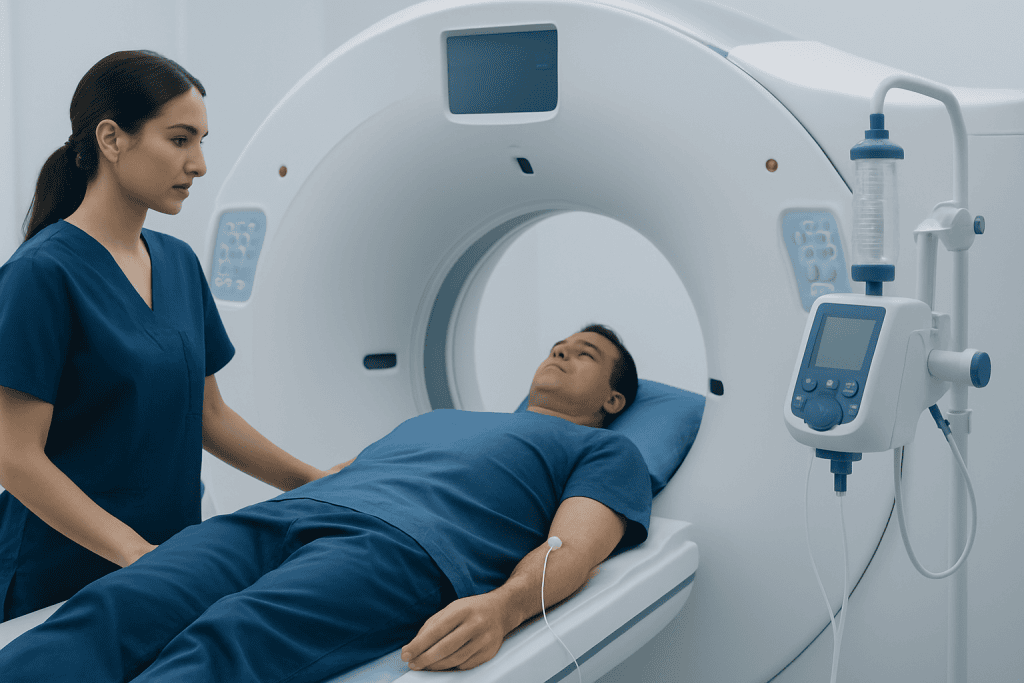
Before contrast dye imaging in Turkey, the most useful thing you can do is provide a clear medical summary. Include why the scan has been requested, your main diagnosis or symptoms, previous surgeries, known chronic conditions and any recent hospital stays. If you already have imaging reports, bring both the written report and the scan images on CD, USB or a secure digital link if available.
Your care team will particularly want to know about kidney disease, reduced kidney function, dialysis, diabetes, thyroid disease, asthma, severe allergies, previous contrast reactions and pregnancy or breastfeeding. These details do not always prevent imaging, but they may change the type of contrast, timing, blood tests or aftercare advice.
Please prepare a medication list with the exact names, doses and schedule. This is especially important if you take diabetes medicines, blood thinners, diuretics, heart medicines, kidney-related medicines or long-term steroids. Do not stop prescribed medication on your own; wait for instructions from your doctor or the radiology team.
Blood tests, fasting and hydration: what to expect

Many patients need recent kidney function blood tests before contrast imaging, especially before iodine-based CT contrast or if they have diabetes, kidney disease, advanced age or complex medical history. The required tests may include creatinine and estimated glomerular filtration rate, often called eGFR. Your coordinator will tell you whether existing results are recent enough or whether testing should be repeated in Turkey.
Fasting instructions vary by scan type, contrast type and your personal health situation. Some patients are asked not to eat for several hours before the scan, while others may be allowed light food. Clear fluids may be encouraged in many cases, but you should follow the exact instructions you receive because some examinations have special preparation rules.
Hydration is often helpful before and after contrast, unless your doctor has restricted fluids because of heart, kidney or other medical conditions. If you are flying to Istanbul or another city in Turkey shortly before your scan, remember that travel can make you dehydrated. Drink water during travel when medically appropriate, avoid excess alcohol, and tell your team if you have had vomiting, diarrhea or poor fluid intake.
Allergies and previous contrast reactions
If you have ever had itching, rash, swelling, breathing difficulty, dizziness, fainting or emergency treatment after a previous contrast scan, tell your team as early as possible. Try to provide the name of the contrast agent if you know it, the type of scan, what happened, how quickly it happened and what treatment you received. A written hospital note from the previous event is especially useful.
Do not describe a reaction only as an allergy if you are unsure what happened. For example, warmth, a metallic taste or the feeling of needing to urinate can be expected temporary sensations with some CT contrast injections. The radiology team will separate expected sensations from possible allergic-type reactions and decide whether extra precautions are needed.
Some patients may need a different imaging plan, pre-medication, longer observation or imaging without contrast, depending on the medical question and risk profile. These decisions should be made by qualified clinicians after reviewing your history. Your role is to provide complete information early, so the team has time to plan safely rather than changing the scan at the last minute.
Arriving for your scan in Turkey
Plan to arrive at the hospital earlier than the scan time given to you. International patients may need time for registration, identity checks, consent forms, translation support, payment or insurance confirmation, nursing assessment and possibly blood tests. If you are staying in a hotel, allow extra time for Istanbul traffic, especially during morning and evening peak hours.
Wear comfortable clothing without metal details if possible, and avoid jewelry or accessories you may need to remove. For MRI, you must inform staff about pacemakers, cochlear implants, aneurysm clips, metal fragments, neurostimulators, infusion pumps, surgical implants or any implant card you have. Some implants are MRI-compatible only under specific conditions, so documentation matters.
Bring a companion if you feel anxious, have mobility needs or may need help after the scan. Acibadem International can help coordinate interpreter support and hospital navigation so you understand where to go and what will happen next. Your companion may not be allowed inside the scan room, but they can help with transport, paperwork and comfort before and after your appointment.
After contrast dye imaging: simple practical aftercare
After your scan, you may be asked to wait briefly so the team can check how you feel, especially if you received contrast or have a history of reactions. Most patients return to normal plans soon afterward, but your radiology or nursing team will give specific advice based on the contrast used, your kidney function and your overall health.
If you are allowed fluids, drinking water after the scan can help your body clear some contrast agents. Follow any instructions about diabetes medicines, breastfeeding, dialysis scheduling or delayed symptoms. Seek medical help promptly if you develop breathing difficulty, facial or throat swelling, widespread rash, severe dizziness, chest pain or other worrying symptoms after leaving the hospital.
Ask when and how your results will be available. In many cases, the radiologist prepares a report for your referring physician, who explains what the findings mean in the context of your condition. If you are returning home soon, ask your coordinator how to obtain the written report, images and translated documents if needed for your local doctor.
Step by step
- Send your records before booking travel. Share your doctor referral, previous scan reports, blood test results, diagnosis summary and medication list with your international patient coordinator. This helps the team check whether contrast is likely, whether more tests are needed and how much time to allow in your schedule.
- Confirm the scan type and preparation instructions. Ask whether your appointment is for CT, MRI or another imaging test, and whether contrast dye is planned. Follow the fasting, fluid and medication instructions you are given, because preparation can differ even between similar-sounding scans.
- Discuss kidney function, allergies and medicines. Tell the team about kidney disease, diabetes, thyroid problems, asthma, severe allergies and any previous contrast reaction. Include all prescription medicines, over-the-counter products and supplements so clinicians can advise you safely.
- Plan your arrival time and transport. Arrive early enough for registration, translation, nursing assessment and possible blood tests. If your appointment is in Istanbul, allow extra travel time because traffic can be unpredictable, particularly near business districts and bridges.
- Bring documents and scan images. Carry your passport, appointment details, insurance or payment documents, recent lab results, implant cards and previous imaging on CD, USB or secure link. Written reports are helpful, but actual images are often important for comparison.
- Ask what happens after the scan. Before leaving the department, confirm whether you should drink fluids, restart any paused medicine or watch for delayed symptoms. Also ask when the report will be ready and how you can receive images for follow-up at home.
- Keep your travel plans flexible. Avoid scheduling an international flight immediately after important medical imaging if the results may affect treatment decisions. A little flexibility gives your specialist time to review findings and request additional tests if clinically necessary.
Your checklist
- Passport and appointment confirmation
- Referral letter or reason for the scan
- Previous imaging reports and images, if available
- Recent creatinine or eGFR kidney function results, if requested
- Full medication list with doses and timing
- Details of allergies or previous contrast reactions
- Implant cards for pacemakers, stents, clips or other devices
- Diabetes supplies, glasses, hearing aids or mobility aids you use
- Comfortable clothing without metal details
- Contact details for your home doctor or referring physician
Key takeaways
- Contrast dye imaging in Turkey is easiest to plan when your medical records, medication list and previous scan images are shared in advance.
- Kidney function, diabetes medicines, allergies, pregnancy status and implanted devices are key safety details for the radiology team.
- Fasting and hydration rules are not the same for every scan, so follow the instructions provided for your exact appointment.
- Arrive early for registration, interpretation, consent and any last checks before CT, MRI or other contrast imaging.
- Before leaving the hospital, confirm aftercare instructions, result timing and how to obtain reports and images for follow-up.
Frequently asked questions
Is contrast dye imaging in Turkey safe for international patients?
Contrast imaging is widely used, and many patients have it without serious problems. Safety depends on choosing the right test, reviewing your medical history and following preparation instructions. Share kidney function, allergies, medicines and previous contrast reactions before your appointment so the team can plan appropriately.
Will I always need contrast for my CT or MRI?
No. Some CT and MRI scans are performed without contrast, while others need contrast to answer the clinical question clearly. The decision is usually made by your referring doctor and radiology team based on your symptoms, previous imaging and safety factors.
What should I do if I take diabetes medicine?
Tell your team exactly which diabetes medicines you take, including tablets and insulin, and when you take them. Some medicines may need special instructions around contrast scans, fasting or kidney function testing. Do not change or stop medication unless your doctor or radiology team tells you to.
Can I fly after receiving contrast dye?
Many patients can travel after contrast imaging, but it is wise not to rush to the airport immediately after an important scan. You may need observation, results review or additional medical discussion. If you have kidney disease, previous reactions or complex treatment plans, ask your care team before confirming flights.
Do I need an interpreter for imaging appointments in Istanbul?
An interpreter can be very helpful, especially for consent forms, safety questions and aftercare instructions. Acibadem International can coordinate language support for international patients when arranged in advance. Even if you speak English well, medical terminology can be stressful on scan day.
What if I am claustrophobic or anxious about MRI?
Tell your coordinator and radiology team before the appointment, not when you are already in the scan room. They can explain what to expect, discuss comfort measures and advise whether any additional planning is needed. Bring a companion for support before and after the scan if that helps you feel calmer.
How will I receive my scan results?
A radiologist usually reviews the images and prepares a report for your referring physician or specialist. Ask your coordinator when the report will be ready and whether you can receive images digitally, on CD or through another secure method. If you need documents for your doctor at home, request them before leaving Turkey.
Add us as a Preferred Source to see more of our trusted health content across Google Search, AI Overviews and Discover.
More Patient Guides

At Acibadem, How to Prepare for Blood Tests, Scans, and Pre-Op Checks
Blood tests, scans, and pre-op checks at Acibadem in Turkey help confirm you are ready for treatment and avoid delays on the…
8 min read
Medical Test Results in Turkey: How to Understand the Next Step in Your Plan
Medical test results in Turkey usually lead to a clear next-step plan: review findings, confirm urgency, ask for copies, and arrange follow-up…
8 min read
Blood Tests and Scans Before Treatment in Turkey: Why They May Be Repeated
Blood tests and scans before treatment in Turkey may be repeated to confirm safety, compare methods, and meet hospital standards before your…
9 min read