

Managing High Blood Pressure Before Treatment in Turkey

Managing high blood pressure before treatment in Turkey means assessing blood pressure control, reviewing medicines and overall health, and stabilizing any risks so the planned procedure can be carried out more safely. At Acibadem, this pre-treatment process may include cardiology evaluation, laboratory and imaging tests when needed, and coordination between specialists to adjust medications, monitor the patient, and prepare for…
If you live with high blood pressure, preparing before you travel can make your treatment journey in Turkey smoother and safer. This guide explains what to share, what to pack, how your care team may check your fitness for treatment, and when to ask for urgent help.
At a glance
- Best time to share readings: As early as possible, ideally before travel is confirmed
- Do not stop medicines: Continue prescribed medication unless your doctor tells you otherwise
- Bring with you: Medication list, recent reports, home blood pressure log and prescriptions
- Travel support: International patient teams can help coordinate appointments, interpreters and logistics
- Urgent warning signs: Chest pain, severe headache, weakness, confusion or breathlessness need immediate care
Why blood pressure matters before treatment
High blood pressure is common, and many people travel safely for medical care while taking treatment for it. The important point is not to hide it or assume it is too routine to mention. Your care team needs to understand your usual readings, medications and any related conditions so they can plan anesthesia, imaging, procedures, recovery and monitoring appropriately.
Blood pressure can rise when you are anxious, tired, dehydrated, in pain or adjusting to a new time zone. International travel may add long flights, disrupted sleep, different foods and changes in your medicine schedule. These factors do not mean your treatment cannot proceed, but they are reasons to prepare carefully and communicate early.
At Acibadem International, patients with hypertension are typically supported through coordinated pre-arrival communication, hospital assessments and multidisciplinary input when needed. Depending on your planned treatment, this may involve cardiology, anesthesiology, internal medicine, your treating specialist and international patient coordinators working together.
What to send before you travel
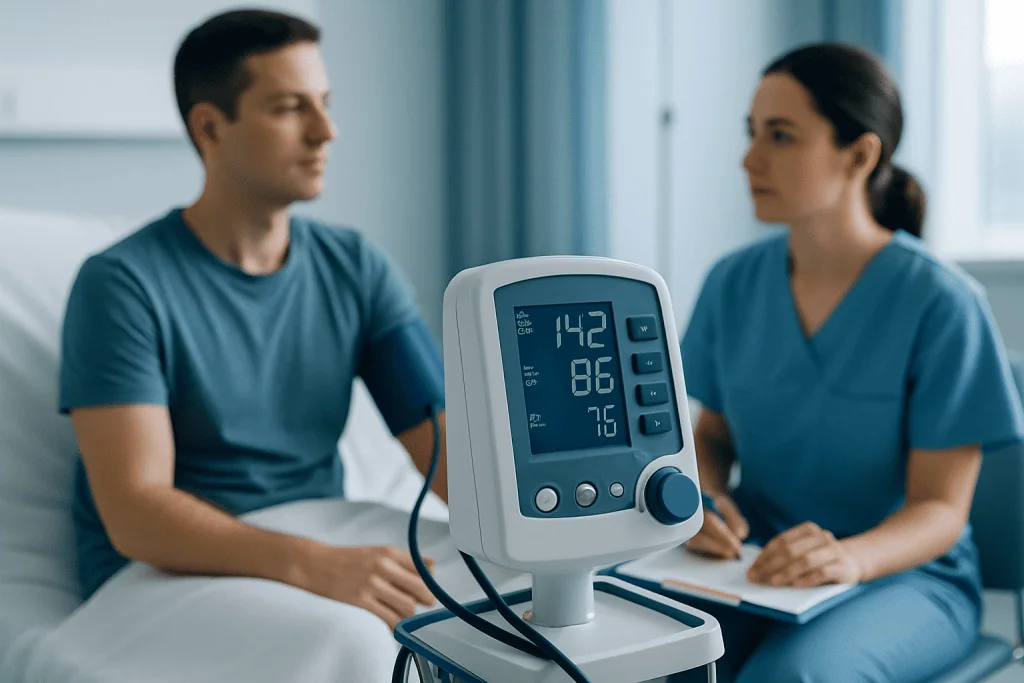
Before booking flights or making final plans, share your medical background with the international patient team. A clear summary helps the hospital advise what evaluations may be needed before your procedure or treatment. It can also prevent delays if additional tests or specialist opinions are required.
Useful documents include a recent blood pressure log, a list of all medicines and doses, recent blood tests, ECG or heart tests, previous hospital records and any reports from your cardiologist or family doctor. If your documents are not in English or Turkish, ask whether translation is needed. Acibadem International can advise on practical document sharing and interpreter support for your appointments.
If you have ever had a heart attack, stroke, heart failure, kidney disease, diabetes, blood clots or complications with anesthesia, mention this clearly. Also tell your team if your blood pressure has recently been very high, unstable or difficult to control, even if you feel well.
Checking your readings at home
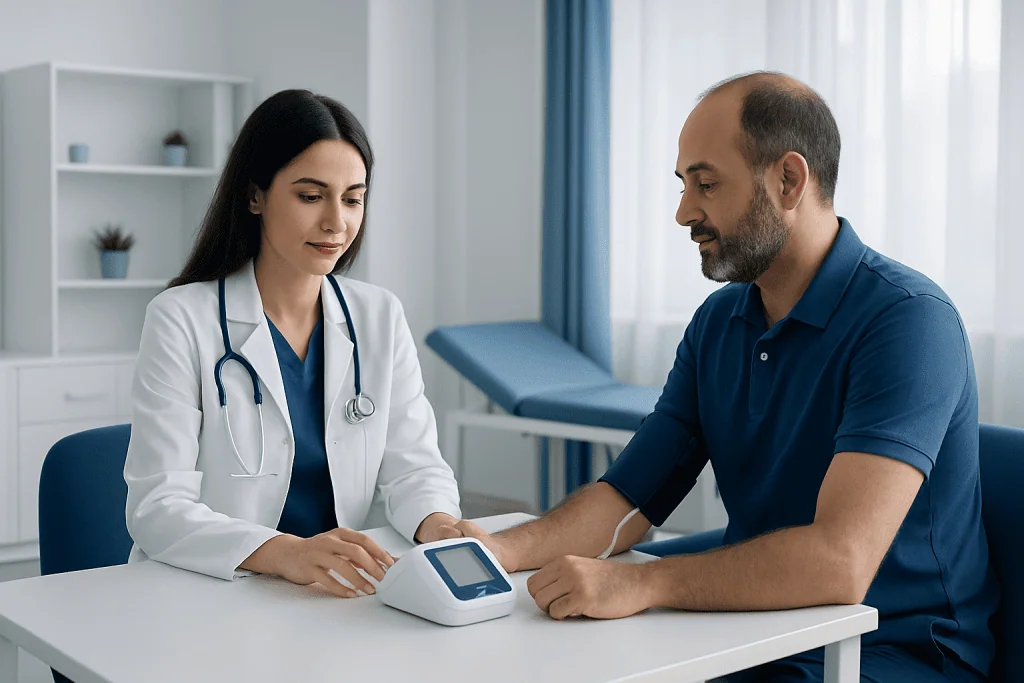
A short home blood pressure log is often more useful than one isolated reading taken when you are stressed. If you have a home monitor, use it as directed by your own doctor and record the date, time, reading and pulse. Try to measure after resting quietly, and avoid checking repeatedly in a panic, as that can make readings more confusing.
Bring your written or digital log with you. Include your usual range as well as any unusually high or low readings. If your home device is old, damaged or gives very inconsistent results, tell your doctor; they may advise a clinic check or a validated monitor.
You should seek urgent medical attention before travel if you have very high readings together with symptoms such as chest pain, severe headache, weakness on one side, confusion, fainting, severe shortness of breath or changes in vision. Do not wait for an overseas appointment if symptoms suggest an emergency.
Medication safety before and during travel
Do not stop or change blood pressure medication on your own before treatment. Some medicines need careful timing, and sudden interruption can cause your blood pressure to rise. If your procedure requires fasting or anesthesia, your hospital team will advise which medicines to take, adjust or temporarily hold on the day of treatment.
Travel with enough medicine for your entire stay plus extra days in case your return is delayed. Keep medication in your hand luggage, not checked baggage, and carry it in original packaging when possible. Bring prescriptions or a doctor letter, especially if you use multiple medications or medicines that may be restricted in some countries.
Make a simple medication list with generic names, brand names, doses and the time of day you take each one. Include blood thinners, diabetes medicines, supplements, herbal products, painkillers and over-the-counter medicines, because these can affect treatment planning. If you are unsure whether something matters, include it anyway.
What may happen at the hospital in Turkey
On arrival, your blood pressure may be checked during admission, consultation or pre-anesthesia evaluation. A single raised reading does not always mean your treatment will be cancelled; hospitals understand that travel and anxiety can affect results. However, persistently high readings may require further evaluation or stabilization before proceeding.
Your care team may request tests such as blood work, ECG, chest imaging, cardiac evaluation or kidney function checks depending on your history and planned treatment. These are not punishments or delays without reason; they are part of making sure the procedure is appropriate for your current condition.
In JCI-accredited Acibadem hospitals, safety processes are designed to identify risk before treatment begins. If a decision is made to postpone, adjust or add monitoring, your team should explain the reason, the next steps and what this means for your travel schedule.
Lifestyle choices in the days before treatment
The days before treatment are not the time for extreme dieting, intense new exercise or unapproved supplements. Focus on steady routines: taking medication as prescribed, sleeping as well as possible, staying hydrated and avoiding excess alcohol. If your own doctor has recommended a low-salt diet, try to continue it while traveling.
Restaurant meals and hotel food may be saltier than your usual diet. You can ask for simple grilled, steamed or baked options and request sauces or dressings on the side. If you are fasting for tests or procedures, follow the hospital instructions carefully and ask what to do with morning medications.
Stress management can also help. Plan arrival with enough time before appointments, keep documents organized and ask for interpreter support if language worries you. A companion can be helpful for note-taking, medication reminders and emotional support.
Planning logistics around hypertension
Good logistics reduce pressure on you, literally and emotionally. Choose flights that allow rest before hospital visits, avoid tight same-day transfers when possible and keep essential medicines, water and snacks available if permitted for your condition. If you have mobility needs or tire easily, request airport assistance in advance.
Share your arrival time, hotel details and any special needs with the international patient coordination team. Acibadem International can help with appointment coordination, interpreter arrangements and practical guidance about transfers and accommodation near the hospital. This support is especially valuable if your care requires several pre-treatment checks.
Before you leave home, agree who to contact if your blood pressure becomes unstable during travel or after arrival. Keep emergency numbers, hospital contacts and your medication list accessible on your phone and on paper. If you feel acutely unwell, seek local emergency care rather than waiting for a scheduled appointment.
Step by step
- Share your blood pressure history early. Send your diagnosis, usual readings, medication list and relevant reports before confirming treatment dates. Early sharing helps the care team decide whether you need cardiology review, additional testing or clearance before travel.
- Prepare a simple home reading log. Record readings at consistent times for several days if your doctor has advised home monitoring. Bring the log to Turkey so the team can compare your usual pattern with hospital readings.
- Confirm medication instructions. Ask your own doctor and the hospital team whether any medicine requires special timing around travel, fasting or anesthesia. Never stop blood pressure tablets suddenly unless a qualified clinician specifically instructs you.
- Pack medicines safely. Carry all medicines in hand luggage with prescriptions or a doctor letter. Pack extra supply in case your stay is extended and keep a written list of generic names, doses and schedules.
- Plan a low-stress arrival. Arrive with enough time to rest before appointments whenever possible. Avoid overly tight itineraries, and ask the international patient team about transfers, interpreters and hospital check-in details.
- Attend pre-treatment checks. Expect blood pressure measurement and possibly blood tests, ECG or specialist review depending on your treatment. These checks help your team decide the safest timing and monitoring plan.
- Know when to seek urgent help. If high blood pressure is accompanied by chest pain, severe headache, weakness, confusion, fainting, vision changes or breathlessness, seek emergency medical care immediately. Do not wait for a routine appointment or flight.
Your checklist
- Recent blood pressure log with dates, times, readings and pulse
- Full medication list including doses, timing, supplements and over-the-counter drugs
- Original prescriptions or a doctor letter for all regular medicines
- Recent ECG, blood tests, cardiology notes or kidney function results if available
- Enough medication for the full stay plus extra days
- Medicines packed in hand luggage in original packaging where possible
- Hospital contact details and emergency numbers saved on phone and paper
- Comfortable travel plan with time to rest before hospital appointments
- Questions for the doctor about fasting, anesthesia and medication timing
Key takeaways
- High blood pressure does not automatically prevent treatment in Turkey, but it must be communicated early.
- Bring a medication list, home readings, prescriptions and relevant heart or kidney reports.
- Do not stop or alter blood pressure medicines unless a qualified clinician tells you to.
- Hospital readings may be repeated and extra tests may be requested for safety.
- Acibadem International can help coordinate pre-arrival information, interpreters and practical travel support.
Frequently asked questions
Can I travel to Turkey for treatment if I have high blood pressure?
Many patients with high blood pressure travel safely for treatment, but planning is important. Share your readings, medications and medical history before travel so the hospital can advise whether extra checks are needed. If your blood pressure is unstable or you have concerning symptoms, speak to your doctor before flying.
Will my procedure be cancelled if my blood pressure is high on arrival?
Not necessarily. A single high reading may be related to stress, travel or pain, and the team may repeat the measurement after rest. If readings remain high or there are other concerns, your doctors may recommend treatment adjustment, additional tests or postponement for safety.
Should I take my blood pressure medicine on the morning of treatment?
This depends on the medicine, the type of treatment and whether anesthesia or fasting is involved. Do not guess; ask for clear instructions from the hospital team before the treatment day. Bring your medicines with you so the team can verify names and doses.
What documents should I send to Acibadem International before arrival?
Send a summary of your condition, blood pressure readings, medication list, prescriptions and any recent tests such as ECG, blood work or cardiology reports. Include information about heart disease, stroke, kidney disease, diabetes or anesthesia problems. The international patient team can guide you on how to share documents securely and whether translation is needed.
What if I forget or lose my blood pressure medication while in Turkey?
Contact your care coordinator or treating team as soon as possible and do not wait until you have missed several doses. Some medicines may have different brand names in Turkey, so a generic-name list and prescription are very helpful. Avoid buying substitutes without medical guidance.
Can anxiety make my blood pressure look worse at the hospital?
Yes, anxiety and unfamiliar surroundings can raise readings temporarily. Hospitals often take this into account by allowing rest and repeating measurements. Still, it is important to provide your usual home readings so the team can understand whether the high value is unusual for you.
What symptoms mean I should seek emergency care?
Seek urgent medical attention if high blood pressure is accompanied by chest pain, severe headache, weakness or numbness, confusion, fainting, severe shortness of breath, vision changes or difficulty speaking. These symptoms can indicate a serious problem and should not be managed by travel coordination alone. If you are already in Turkey, use local emergency services or go to the nearest emergency department.
Add us as a Preferred Source to see more of our trusted health content across Google Search, AI Overviews and Discover.
More Patient Guides

How to Prepare for a Biopsy in Turkey: Questions, Timing, and Recovery Basics
Biopsy in Turkey preparation starts with the right questions, timing, travel plans, and recovery basics before and after your test in Istanbul…
9 min read
Questions to Ask Before Booking Surgery in Turkey
Questions to ask before booking surgery in Turkey: check surgeon, hospital accreditation, costs, aftercare, travel timing, and support in Istanbul.
9 min read
How to Pack for Surgery in Turkey: A Practical Patient Checklist
How to pack for surgery in Turkey: bring documents, medicines, comfort items, and recovery basics for a smoother stay in Istanbul or…
8 min read