

CT Scan in Turkey: Appointment Day Guide for Patients

A CT scan is a fast imaging test that uses X-rays and computer processing to create detailed cross-sectional pictures of the body, helping doctors examine organs, bones, blood vessels, and injuries. In Turkey, the appointment day typically includes check-in, safety screening, possible contrast preparation, the scan itself, and review by a radiologist, with timing depending on the area being examined.
Your CT scan appointment in Turkey is usually a structured, step-by-step visit: registration, safety checks, imaging, and guidance on when and how your results will be shared. This guide helps you arrive prepared, understand the day’s logistics, and feel supported as an international patient.
At a glance
- Typical visit length: Often 1-3 hours, depending on registration, contrast preparation, and reporting workflow
- Bring with you: Passport, appointment details, previous scans, lab results, medication list, and referral notes
- Contrast may be needed: Some CT scans use IV or oral contrast; safety questions and kidney function checks may apply
- Language support: International patient teams can help with interpreters, directions, scheduling, and result coordination
- After the scan: Most patients return to normal activities unless advised otherwise by the care team
Understanding your CT scan appointment day
A CT scan, also called computed tomography, is an imaging test that helps your doctor see detailed cross-sectional images of the body. Your appointment day is not only about the scan itself; it also includes identity checks, review of your medical information, safety screening, and planning for how your results will reach your doctor.
If you are traveling for a CT Scan in Turkey, the experience can feel unfamiliar simply because you are in a different healthcare system and possibly a different language environment. At Acibadem International, international patient services can help you understand where to go, when to arrive, whether an interpreter is needed, and what documents to bring, so the day feels more predictable.
Many CT appointments are completed on an outpatient basis, meaning you come to the hospital or imaging unit and leave the same day. The exact timing depends on the type of CT requested, whether contrast is needed, how busy the department is, and whether your physician needs urgent review of the images.
Before you leave for the hospital
On the morning of your appointment, check the instructions you received from the hospital or your coordinator. Some CT scans require no special preparation, while others may ask you to fast for a certain number of hours, drink water, arrive early for contrast preparation, or bring recent blood test results.
Wear comfortable clothing and avoid excessive metal items such as large jewelry, belts, hairpins, or clothing with metal fasteners near the area being scanned. You may be asked to change into a gown, but arriving in simple clothing can make the process smoother.
Pack the essentials in one folder or small bag. Useful items include:
- Your passport or official ID
- Appointment confirmation and hospital contact details
- Referral letter or doctor’s request, if available
- Previous CT, MRI, ultrasound, X-ray images, and reports
- Medication list, including blood thinners, diabetes medicines, and supplements
- Known allergy information, especially contrast or iodine reactions
- Recent kidney function blood tests, if you were asked to bring them
Arrival, registration, and international patient support
Plan to arrive earlier than the scan time you were given, especially if this is your first visit to the hospital. Registration, insurance or payment confirmation, interpreter arrangements, and locating the imaging department can all take time. If you are coming from a hotel or airport area in Istanbul, allow extra time for traffic.
At Acibadem International hospitals, international patient teams can help with practical steps such as confirming your appointment, guiding you to the correct department, helping with translation needs, and coordinating with your companion if someone is traveling with you. If you need wheelchair assistance or have limited mobility, it is best to request support in advance.
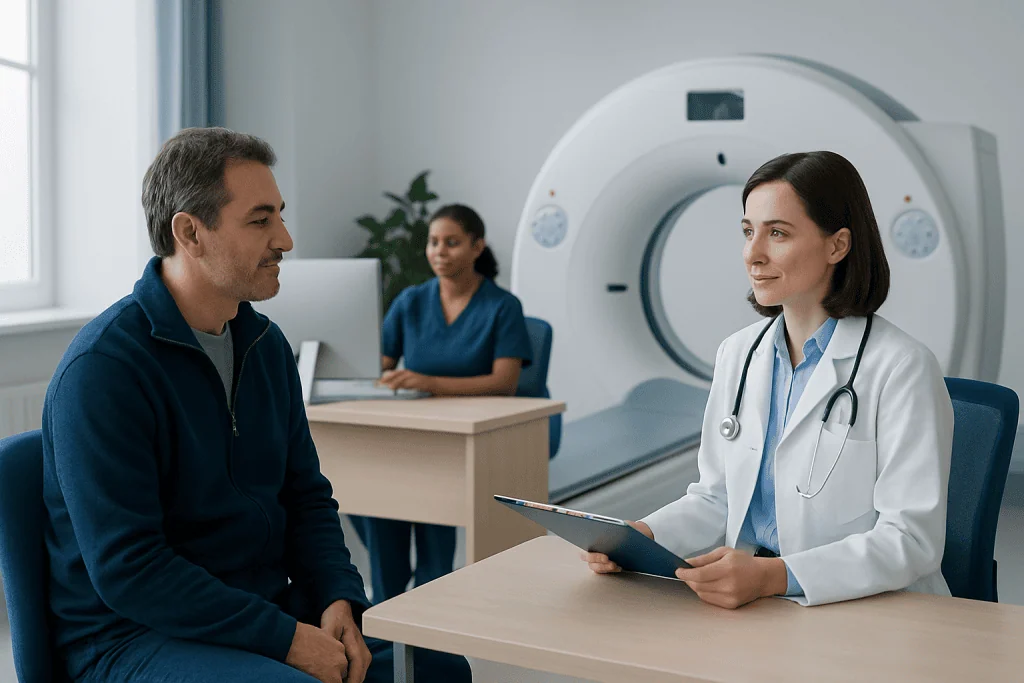
During registration, your identity and appointment details will be checked. You may be asked to sign consent forms or confirm that you understand the imaging test and any contrast-related instructions. This is a good moment to ask practical questions, such as where your companion can wait, whether you can eat afterward, and how results will be delivered.
Safety questions and contrast preparation
Before the scan, the radiology team may ask a series of safety questions. These commonly include whether you are pregnant or might be pregnant, whether you have kidney disease, diabetes, asthma, thyroid conditions, previous contrast reactions, or significant allergies. These questions help the team choose the safest approach for your situation.
Some CT scans are performed without contrast. Others use contrast material, usually through an IV line, to make blood vessels, organs, or certain tissues easier to assess. Depending on the scan, you may be asked to drink oral contrast, receive IV contrast, or both. The team will explain what applies to you.
If IV contrast is used, you may feel a brief warm sensation, a metallic taste, or the feeling that you need to urinate. These sensations usually pass quickly. Tell the team immediately if you feel itching, breathing difficulty, swelling, dizziness, or any symptom that worries you.
If you take metformin or other diabetes medications, have reduced kidney function, or have been told you need blood tests before contrast, follow the instructions given by your doctor or radiology team. Do not stop or change medications unless a qualified healthcare professional specifically advises you to do so.
What happens during the scan
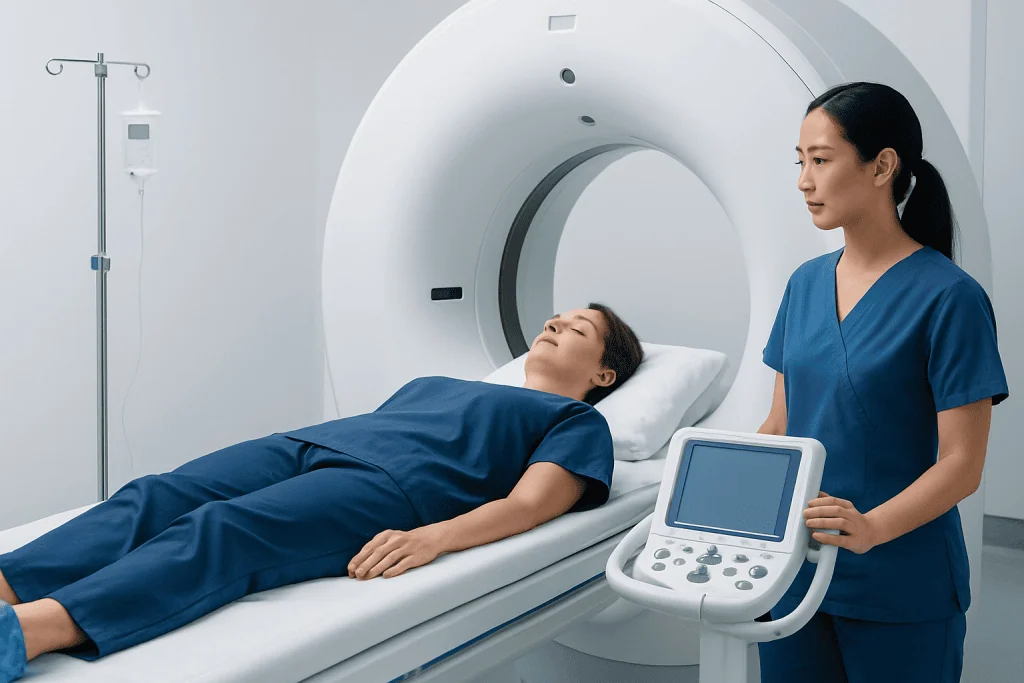
When it is time for the CT scan, a radiology technologist will take you into the scan room and help position you on the CT table. The table moves slowly through a large, ring-shaped scanner. The machine is open at both ends, and the scan itself is usually quick, though preparation can take longer than the imaging.
You may be asked to lie still, hold your breath briefly, or keep a certain position. These instructions help reduce motion blur and improve image quality. If you feel uncomfortable, tell the technologist before the scan begins so adjustments can be made when possible.
The technologist will operate the scanner from a nearby control area and can see and communicate with you. You are not expected to understand the technical details; your main role is to follow simple instructions and speak up if you feel unwell or anxious.
Radiation exposure is carefully managed in medical imaging, and CT scans are ordered when the expected diagnostic benefit is considered important. If you have concerns about radiation, pregnancy, repeated scans, or scans for a child, ask your referring doctor or the radiology team to explain the reason for the exam and any available alternatives.
After the scan and getting your results
After the scan, you may be asked to wait briefly while the team checks that the images are technically adequate. If contrast was used, you may be observed for a short time, especially if you have a history of allergies or other risk factors. Most patients can leave the imaging department once the team confirms there is no need for additional images or monitoring.
If you received IV contrast, you may be encouraged to drink fluids afterward unless you have been told to restrict fluids for medical reasons. You can usually return to normal activities and meals unless your care team gives you different instructions.
Your images are reviewed by a radiologist, who prepares a report for your referring physician. The timing of results varies depending on urgency, complexity, and hospital workflow. Ask before you leave how you will receive the report, whether images are available digitally or on disc, and who will explain the findings to you.
If you are an international patient, result coordination is especially important. Acibadem International patient services can help clarify whether your report will be shared with a treating doctor in Turkey, sent to your doctor at home, translated where available, or discussed during a follow-up appointment.
Practical comfort tips for international patients
A CT appointment is often straightforward, but travel fatigue, unfamiliar surroundings, and medical uncertainty can make the day feel stressful. Build extra time into your schedule, keep your phone charged, and bring water and a light snack for after the scan if fasting was required and your team says eating is allowed.
If you are anxious in medical settings, tell the coordinator or radiology team early. Simple steps such as explaining each stage, allowing your companion to stay nearby until the scan room, or using an interpreter for key instructions can make a meaningful difference.
Keep copies of your imaging report and images for your own records. If your CT scan is part of a wider treatment plan in Turkey, ask how the result connects to your next consultation, whether additional tests are expected, and whether your schedule needs to remain flexible for same-day or next-day appointments.
Step by step
- Confirm your appointment and preparation instructions. Check the date, time, hospital location, and whether you need to fast or arrive early. If you are unsure about contrast, medications, or blood tests, contact your coordinator or care team before traveling to the hospital.
- Prepare your documents and previous imaging. Bring your passport, referral notes, previous reports, and any earlier images that may help comparison. Previous scans can be important because radiologists and doctors may need to see whether a finding is new, stable, or changing.
- Arrive early for registration. Give yourself extra time for hospital entry, registration, payment or insurance checks, and finding the imaging department. In Istanbul, traffic can be unpredictable, so leaving earlier than planned is often wise.
- Complete safety screening. Answer all questions about pregnancy, allergies, kidney problems, diabetes, thyroid disease, and prior contrast reactions as accurately as possible. These questions are routine and help the team tailor the scan safely.
- Follow contrast instructions if needed. If your scan requires contrast, the team may place an IV line or ask you to drink a contrast solution. Tell them immediately if you feel unusual symptoms during or after contrast administration.
- Stay still and follow breathing instructions. During the scan, the technologist may ask you to hold your breath for a few seconds or remain still. These short instructions help produce clearer images and may reduce the need to repeat part of the scan.
- Ask how and when results will be shared. Before leaving, confirm whether your report will be uploaded to a patient system, printed, sent to your physician, or discussed in a follow-up consultation. If you are returning home soon, ask for a clear timeline and copies for your records.
Your checklist
- Passport or official identification
- Appointment confirmation and hospital contact details
- Referral letter or doctor’s request, if available
- Previous imaging reports and image files or discs
- Medication list and allergy information
- Recent kidney function tests, if requested
- Comfortable clothing with minimal metal
- Phone charger and local contact number
- Water and a snack for after the scan, if fasting is required and eating is later allowed
- Interpreter request or companion details, if needed
Key takeaways
- A CT scan appointment includes registration, safety screening, imaging, and result coordination, not just time inside the scanner.
- Bring previous scans and reports, as they may help your doctors compare findings and plan next steps.
- Some CT scans use contrast, so allergy history, kidney function, and certain medications may need special attention.
- International patient services can help with interpreters, directions, scheduling, and sharing results with your care team.
- Before you leave the hospital, confirm when your report will be ready and how you will receive your images.
Frequently asked questions
How long does a CT scan appointment in Turkey usually take?
The scan itself may take only a short time, but the full visit can be longer because of registration, safety checks, contrast preparation, and waiting for image review. Many outpatient appointments take around 1-3 hours, though this varies. If you have another consultation the same day, keep your schedule flexible.
Will I need contrast for my CT scan?
It depends on the body area being examined and the clinical question your doctor wants to answer. Some scans are done without contrast, while others require IV or oral contrast for clearer detail. The radiology team will review your safety information before giving contrast.
Can I eat before my CT scan?
Some CT scans allow normal eating, while others require fasting, especially if contrast is planned. Follow the instructions given with your appointment. If you did not receive instructions, ask your coordinator or the imaging department before the appointment day.
Is a CT scan painful?
The scan is not painful, but you may need to lie still on the table. If IV contrast is used, you may feel a needle pinch when the IV is placed and a brief warm sensation during injection. Tell the team if you are uncomfortable, anxious, or feel unwell.
What should I do if I have had an allergic reaction to contrast before?
Tell your doctor, coordinator, and radiology team before the scan day if possible. A previous reaction does not always mean the scan cannot be done, but the team needs to assess risk and decide whether special precautions, an alternative scan, or a different plan is needed.
When will I receive my CT results?
A radiologist needs to review the images and prepare a report, so results are not always immediate. Timing depends on urgency, complexity, and hospital workflow. Before leaving, ask exactly when the report is expected and whether images will be provided digitally, printed, or on disc.
Can Acibadem International help if I do not speak Turkish?
Yes, international patient services can help coordinate interpreter support, directions inside the hospital, appointment timing, and communication with your care team. It is best to request language support before your appointment so the team can plan for it.
Can I travel after a CT scan?
Many patients can continue normal activities after a CT scan, including local travel, unless the care team advises otherwise. If you received contrast, feel unwell, or are having the scan as part of an urgent medical evaluation, ask your doctor before taking a flight or making long travel plans.
Add us as a Preferred Source to see more of our trusted health content across Google Search, AI Overviews and Discover.
More Patient Guides

At Acibadem, How to Prepare for Blood Tests, Scans, and Pre-Op Checks
Blood tests, scans, and pre-op checks at Acibadem in Turkey help confirm you are ready for treatment and avoid delays on the…
8 min read
Medical Test Results in Turkey: How to Understand the Next Step in Your Plan
Medical test results in Turkey usually lead to a clear next-step plan: review findings, confirm urgency, ask for copies, and arrange follow-up…
8 min read
Blood Tests and Scans Before Treatment in Turkey: Why They May Be Repeated
Blood tests and scans before treatment in Turkey may be repeated to confirm safety, compare methods, and meet hospital standards before your…
9 min read