

Sleep Study in Turkey: Overnight Test Checklist

A sleep study is an overnight test that records breathing, brain activity, heart rate, oxygen levels, and body movements to help diagnose conditions such as sleep apnea and other sleep disorders. In Turkey, it is typically carried out in a sleep laboratory or, in selected cases, at home, with preparation instructions and monitoring tailored to the type of study being…
A sleep study in Turkey is a practical overnight hospital-based test that helps your care team understand breathing, oxygen levels, movement and sleep patterns. This guide helps you prepare calmly, know what to pack, and understand how Acibadem International can support your appointment, language needs and travel logistics.
At a glance
- Typical setting: Overnight sleep laboratory or monitored hospital room
- Common reason: Evaluation for sleep apnea, snoring, daytime sleepiness or disrupted sleep
- Pain level: Non-invasive; sensors are attached to your skin and body
- Travel support: International patient coordination, interpreters and accommodation guidance available
- What to bring: Comfortable sleepwear, medication list, toiletries and previous reports
What a sleep study is and why you may be asked to have one
A sleep study, also called polysomnography, is an overnight test that records what happens while you sleep. It may be recommended if you snore loudly, wake up gasping, feel unusually tired during the day, have morning headaches, or if your doctor suspects sleep apnea or another sleep-related condition.
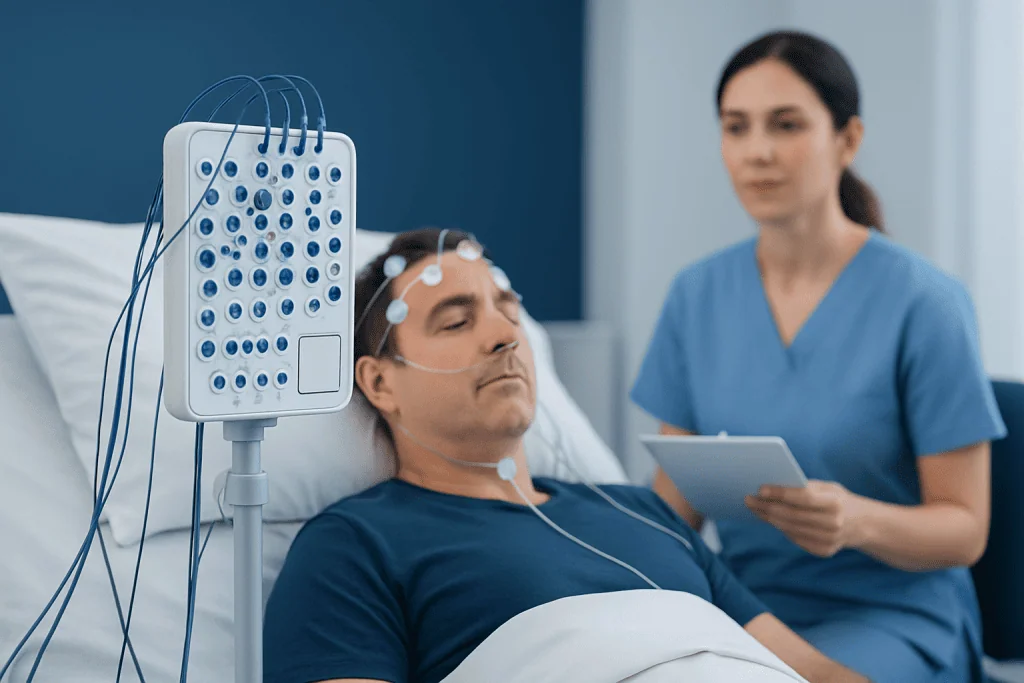
The test is non-invasive. Small sensors are placed on your scalp, face, chest, legs and finger to monitor signals such as breathing effort, oxygen level, heart rhythm, body position, movements and sleep stages. You sleep in a monitored room while trained staff check that the recording is working properly.
If you are travelling for a Sleep Study in Turkey, the goal is to make the process as simple as possible: arrive with the right documents, understand the overnight routine, and know what support is available if you do not speak Turkish. Acibadem International helps international patients coordinate appointments, interpreter support and practical arrangements around the test.
Before you travel: documents, reports and appointment planning
Good preparation begins before you arrive in Turkey. Share your medical history, current symptoms, previous sleep reports if you have any, and any diagnoses such as high blood pressure, heart rhythm concerns, lung disease, diabetes or neurological conditions. This helps the relevant specialist team decide whether an overnight sleep study is appropriate and whether any additional evaluation is needed.
You should also send a clear medication list, including sleeping tablets, antidepressants, blood pressure medicines, allergy medicines, inhalers and supplements. Do not stop or change medication on your own before the test. If a medication may affect sleep, breathing or alertness, your doctor will advise you on what to do.
For international patients, it is helpful to confirm the expected appointment time, hospital location, check-in instructions, interpreter arrangements and whether a companion may accompany you. Acibadem International’s patient services team can guide you on airport transfers, hotel options and how to plan the night of the test within your wider travel schedule.
Your overnight checklist: what to pack

Pack as if you are staying one night in a quiet hospital room, but keep your bag light. Choose comfortable two-piece sleepwear if possible, because sensors may need to be placed on your chest, abdomen or legs. Avoid tight clothing, heavy creams and complicated hairstyles that may make sensor placement harder.
Bring your passport or ID, insurance documents if relevant, appointment confirmation, previous test results and your medication list. If you use a CPAP, BiPAP or oral appliance at home, ask in advance whether you should bring it. In some cases, the team may want to review your current device settings or compare your usual routine.
- Comfortable sleepwear and slippers
- Toothbrush, facial cleanser and personal toiletries
- Medication in original packaging, if possible
- Glasses, hearing aids or mobility aids if you use them
- Phone charger and a small personal item for comfort
- Previous sleep reports, imaging, blood tests or specialist letters
Try not to bring valuables unless necessary. If you are travelling with a companion, confirm whether they will wait, return in the morning or stay nearby. Hospital policies vary by room type and medical need, so it is best to clarify this before arrival.
The day of the test: how to prepare your body and routine
On the day of your sleep study, keep your routine as normal as possible unless your doctor has given different instructions. Eat your usual meals, stay hydrated and avoid excessive naps. A long daytime nap can make it harder to fall asleep during the recording.
Avoid alcohol and recreational substances before the test, as they may affect breathing and sleep patterns. Caffeine can also interfere with sleep, so ask your care team when to stop coffee, tea, energy drinks or cola on the day of testing. If you normally use caffeine daily, mention this so your team understands your usual routine.
Wash your hair and skin before arrival, and avoid hair oil, gel, heavy conditioner, body lotion or makeup if possible. Clean skin helps sensors stay in place through the night. If you have sensitive skin, allergies to adhesives or a skin condition, tell the staff before sensors are attached.
What happens when you arrive at the sleep laboratory
When you arrive, you will usually check in, confirm your identity and meet the sleep laboratory staff. If interpreter support has been arranged, they can help you understand instructions and ask questions. You may be asked about your usual bedtime, symptoms, medication use, alcohol or caffeine intake, and whether anything about that day was unusual.
After you change into sleepwear, sensors are placed carefully on your scalp, face, chest, abdomen, legs and finger. Belts may be placed around the chest and abdomen to record breathing effort. The setup can take some time, so it is helpful to arrive relaxed and not in a rush.
Once the recording begins, you can sleep in your usual position as much as possible. Staff monitor the study from outside the room and may enter briefly if a sensor needs adjustment. Although it may feel unfamiliar to sleep with wires attached, most people sleep enough for the team to collect useful information.
Morning discharge, results and next steps
In the morning, the sensors are removed and you can usually wash up, change clothes and leave after staff confirm the recording is complete. You may feel a little tired if you slept less than usual, so plan your morning gently. If you are travelling alone, avoid scheduling demanding activities immediately after the test.
The sleep recording is reviewed and interpreted by the appropriate medical team. Your results may include information about breathing pauses, oxygen drops, sleep stages, awakenings, heart rhythm patterns and movements. The timing for results can vary depending on the complexity of the study and whether additional specialist review is needed.
Your doctor will explain what the findings mean in your situation and discuss possible next steps. These may include lifestyle measures, further evaluation, a CPAP or similar device assessment, dental or ENT review, or treatment of another sleep-related concern. Acibadem International can help coordinate follow-up appointments and share reports securely with you for your records or home doctor.
Step by step
- Share your medical background in advance. Send your symptoms, medical history, medication list and any previous sleep or heart-lung reports before your appointment. This helps the care team prepare and identify whether you need a standard overnight study or a more tailored assessment.
- Confirm logistics before arrival. Check the hospital location, arrival time, interpreter arrangements and whether a companion can accompany you. If you are travelling internationally, also confirm airport transfer, hotel plans and the safest time to schedule flights after the test.
- Prepare your body on test day. Keep meals and routine fairly normal, but avoid alcohol and ask about caffeine timing. Do not stop prescribed medications unless your doctor specifically instructs you to do so.
- Pack for one simple overnight stay. Bring comfortable sleepwear, toiletries, ID, medical documents and any sleep device you have been asked to bring. Avoid heavy lotions, hair products or makeup so sensors can stay attached.
- Arrive relaxed and allow setup time. Sensor placement is careful and can take time, especially if interpreter support is needed. Let the staff know about skin sensitivities, mobility needs, anxiety, hearing difficulties or anything that could affect your comfort.
- Follow morning and follow-up instructions. After the sensors are removed, ask when and how results will be shared. Keep a copy of your report and discuss the findings with your specialist or home doctor before making treatment decisions.
Your checklist
- Passport or ID and appointment confirmation
- Current medication list, including doses and timing
- Previous sleep study results, CPAP details or specialist reports
- Comfortable two-piece sleepwear and slippers
- Toiletries, glasses, hearing aids or mobility aids if needed
- Phone charger and essential personal items
- Clean hair and skin without oils, gels or heavy creams
- Interpreter, transport and companion arrangements confirmed in advance
Key takeaways
- A sleep study in Turkey is a non-invasive overnight test used to evaluate breathing, oxygen levels, movements and sleep patterns.
- Preparation is mostly practical: share your medical history, confirm logistics, avoid heavy hair or skin products, and pack for one night.
- Do not stop medications, CPAP use or other treatments unless your doctor gives specific instructions.
- Interpreter support and international patient coordination can make the experience easier if you are travelling from abroad.
- Results should be reviewed with a qualified specialist, who will explain what the findings mean and what next steps are appropriate.
Frequently asked questions
Is a sleep study painful?
No, a sleep study is non-invasive and should not be painful. Sensors are attached to your skin and body to record signals while you sleep. Some people find the wires unfamiliar at first, but staff will help position them as comfortably as possible.
Can I take my usual medication before the test?
You should not change or stop prescribed medication unless your doctor tells you to. Bring a full medication list and mention sleeping tablets, antidepressants, allergy medicines, inhalers and heart or blood pressure medicines. Your care team will advise if anything needs to be adjusted.
Will I be able to sleep with the sensors attached?
Many people worry about this, and it is normal to sleep a little differently in a laboratory. You do not usually need a perfect night of sleep for the study to provide useful information. The staff will monitor the sensors and make adjustments if needed.
Can my companion stay with me during the sleep study?
This depends on hospital policy, room availability and your medical or mobility needs. Ask before your appointment so you can plan whether your companion will stay nearby, return in the morning or assist with check-in. Acibadem International can help clarify these arrangements for international patients.
How soon will I get my results?
Timing can vary because the recording needs to be reviewed and interpreted by the appropriate medical team. You should ask at discharge when your report and consultation are expected. If you are travelling, request a clear follow-up plan before booking tight onward travel.
Should I bring my CPAP or sleep apnea device?
If you already use CPAP, BiPAP or an oral appliance, tell the team before your appointment. They will advise whether to bring it and whether it should be used during the study. Bringing device details or previous settings can be helpful even if the device is not used overnight.
Is interpreter support available for a sleep study in Turkey?
Interpreter support is commonly arranged for international patients, but it is best to request it before your visit. This helps you understand instructions, consent forms, setup steps and follow-up discussions. Acibadem International can coordinate language support as part of your appointment planning.
Add us as a Preferred Source to see more of our trusted health content across Google Search, AI Overviews and Discover.
More Patient Guides

At Acibadem, How to Prepare for Blood Tests, Scans, and Pre-Op Checks
Blood tests, scans, and pre-op checks at Acibadem in Turkey help confirm you are ready for treatment and avoid delays on the…
8 min read
Medical Test Results in Turkey: How to Understand the Next Step in Your Plan
Medical test results in Turkey usually lead to a clear next-step plan: review findings, confirm urgency, ask for copies, and arrange follow-up…
8 min read
Blood Tests and Scans Before Treatment in Turkey: Why They May Be Repeated
Blood tests and scans before treatment in Turkey may be repeated to confirm safety, compare methods, and meet hospital standards before your…
9 min read