Spondylolisthesis: Vertebra Slippage, Nerve Symptoms, and Treatment Choices

Spondylolisthesis means a vertebra has shifted out of its usual alignment, most commonly in the lumbar spine. Symptoms can include low back pain, hamstring tightness, leg pain, numbness, tingling, or weakness, although some people have no symptoms.
Key Takeaways
- Spondylolisthesis means a vertebra has shifted out of its usual alignment, most commonly in the lumbar spine.
- Symptoms can include low back pain, hamstring tightness, leg pain, numbness, tingling, or weakness, although some people have no symptoms.
- Diagnosis usually involves a physical examination and X-rays; MRI may be used when nerve symptoms are present.
- Most mild to moderate cases are managed without surgery using physiotherapy, core strengthening, medication, and lifestyle changes.
- Surgery may be recommended for severe nerve compression, progressive slippage, or pain that does not improve with appropriate conservative care.
Spondylolisthesis occurs when one vertebra slips forward or backward in relation to the bone below it, most often in the lower spine. Many people improve with guided exercise, activity modification, and pain control, while surgery may be considered when nerve compression or instability causes persistent symptoms.
Overview
Spondylolisthesis is a spinal condition in which one vertebra slips out of line compared with the vertebra next to it. The word combines terms meaning spine and slippage. It most often affects the lower back, especially the L4-L5 or L5-S1 levels, where the spine carries body weight and allows bending, twisting, and lifting.
The slippage may be mild and stable, or it may be more pronounced and associated with pressure on nearby nerves. Doctors often describe the degree of slippage using grades, from low-grade slips that involve a smaller portion of the vertebral body to high-grade slips where the vertebra has moved much farther. The grade helps guide treatment, but symptoms and function are just as important as the X-ray appearance.
Spondylolisthesis can occur in children, adolescents, and adults, but the underlying reason may differ by age. In younger people, it may be linked to a stress fracture in a small part of the vertebra. In older adults, it is more often related to age-related changes in discs, joints, and ligaments. Many people with spondylolisthesis lead active lives, especially when the condition is identified early and managed with a structured plan.
Symptoms and Nerve Signs
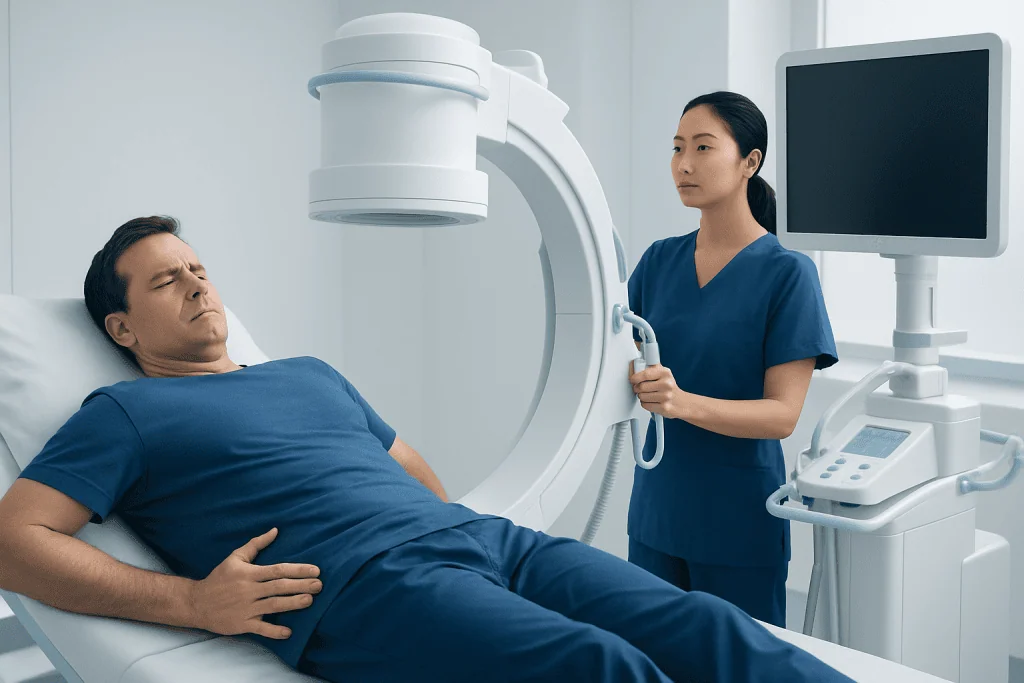
Some people discover spondylolisthesis incidentally on an imaging test done for another reason and have few or no symptoms. When symptoms occur, the most common is low back pain that may worsen with standing, walking, bending backward, or physical activity. Pain may improve when sitting or leaning forward because this position can reduce stress on the affected spinal level.
If the slipped vertebra narrows the spaces where nerves travel, symptoms may extend into the buttock, thigh, calf, or foot. This can feel like sciatica, with burning pain, tingling, numbness, or an electric-like sensation down one or both legs. Some people notice heaviness, cramping, or weakness while walking, a pattern that may reflect nerve compression in the lower spine.
Other possible symptoms include tight hamstrings, reduced flexibility, changes in posture, muscle spasms, or difficulty standing fully upright. In children and teenagers, parents may notice a stiff walking pattern, increased curve in the lower back, or avoidance of sports. Symptoms can fluctuate, and their severity does not always match the amount of slippage seen on imaging.
Types, Causes, and Risk Factors
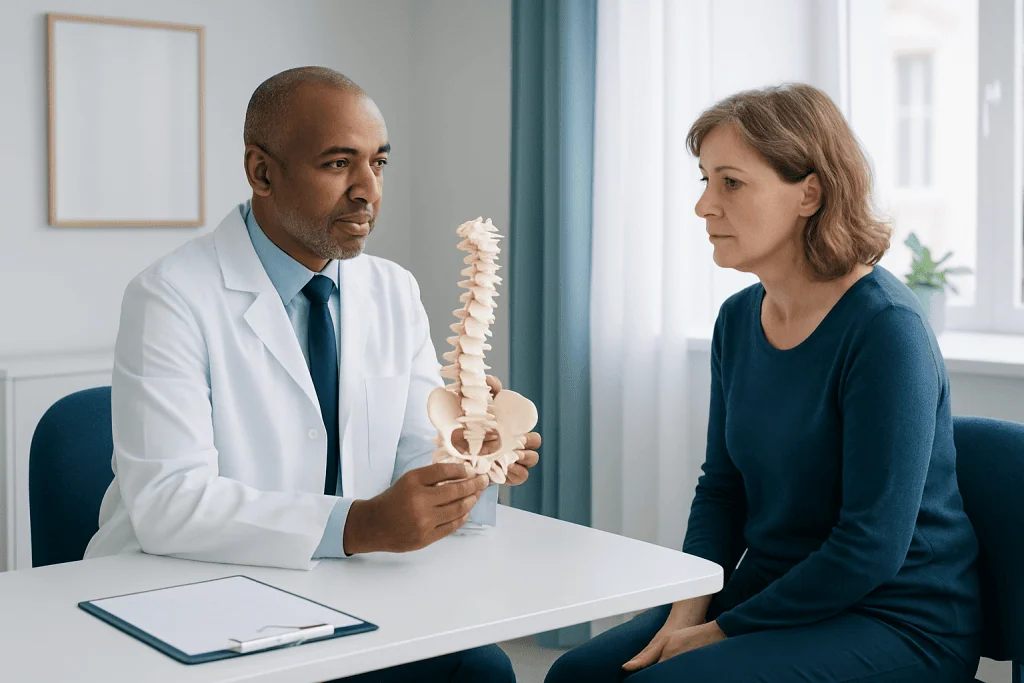
Spondylolisthesis is classified by cause. Isthmic spondylolisthesis is often related to a defect or stress fracture in the pars interarticularis, a small bridge of bone in the vertebra. This type can develop during childhood or adolescence, particularly in sports that involve repeated back extension, such as gymnastics, football, diving, wrestling, or weight training.
Degenerative spondylolisthesis is more common in adults, especially after midlife. It develops as spinal discs lose height, facet joints develop arthritis, and supporting ligaments become less stable. These changes can allow one vertebra to shift slightly forward, sometimes narrowing the spinal canal or nerve openings.
Less common types include congenital spondylolisthesis, which is related to spinal development; traumatic spondylolisthesis after an injury; pathologic spondylolisthesis due to weakened bone; and post-surgical spondylolisthesis after certain spine operations. Risk factors may include family tendency, repetitive spinal stress, previous spine injury, obesity, low bone density, and occupations or activities involving frequent lifting or hyperextension.
Having a risk factor does not mean a person will develop symptoms. Likewise, finding a slip on imaging does not automatically mean it is the cause of back pain. A careful assessment helps connect the imaging findings with the person’s symptoms, movement pattern, and neurological examination.
Diagnosis and Imaging
Diagnosis begins with a medical history and physical examination. The doctor asks about pain location, activities that worsen or relieve symptoms, leg symptoms, previous injuries, sports participation, and how the problem affects daily life. The examination may assess posture, spinal movement, hamstring flexibility, reflexes, sensation, muscle strength, and walking pattern.
X-rays are commonly used to confirm vertebra slippage and estimate its grade. Standing X-rays can be especially helpful because the slip may be more visible when the spine is bearing weight. Flexion and extension X-rays, taken while bending forward and backward, may be requested if the doctor needs to evaluate spinal instability.
MRI is often recommended when there is leg pain, numbness, weakness, or concern for nerve compression. It shows discs, nerves, ligaments, and the spinal canal more clearly than X-ray. CT may be useful for evaluating bone details, such as a pars defect or complex anatomy, while bone scans are occasionally used when a stress reaction is suspected in young athletes.
Non-Surgical Treatment Options
Most people with low-grade spondylolisthesis begin with non-surgical care. The goal is to reduce pain, improve movement, strengthen the muscles that support the spine, and help the person return safely to daily activities. A treatment plan is usually individualized according to age, type of spondylolisthesis, symptoms, activity level, and imaging findings.
Physiotherapy is a central part of treatment. A therapist may guide core stabilization, hip and gluteal strengthening, hamstring stretching, posture education, and safe movement strategies. Exercises often focus on controlling spinal position rather than repeatedly arching the lower back. For athletes, rehabilitation may include a gradual return-to-sport program once pain, strength, and movement control improve.
Other conservative measures may include temporary modification of painful activities, heat or cold therapy, and short-term use of pain-relieving or anti-inflammatory medicines when appropriate. Some patients benefit from a brace for a limited period, particularly adolescents with painful pars stress injuries, although bracing decisions should be individualized. If nerve irritation causes persistent leg pain, a doctor may consider image-guided spinal injections as part of a broader plan.
Self-care is most effective when it is consistent and supervised at the beginning. Prolonged bed rest is generally not recommended because it can reduce conditioning and delay recovery. Instead, many patients do best with balanced activity, gradual exercise progression, weight management when needed, and attention to lifting technique.
Surgical Treatment Choices
Surgery is not required for every case of spondylolisthesis. It is usually considered when significant symptoms continue despite a well-planned period of conservative treatment, when there is progressive nerve weakness, or when the slip is severe and unstable. The decision depends on the person’s symptoms, neurological findings, imaging results, general health, and goals.
The main surgical options are decompression and fusion, sometimes performed together. Decompression removes bone or soft tissue that is pressing on nerves. Fusion joins two or more vertebrae to stabilize the painful or unstable segment, often using bone graft material and screws or rods. In some cases, an interbody cage may be placed between vertebrae to help restore disc height and support fusion.
Minimally invasive techniques may be suitable for selected patients, but not every spine condition can be treated this way. The surgeon considers the degree of slippage, bone quality, nerve compression, spinal alignment, and previous operations. Benefits, limitations, recovery time, and possible risks should be discussed carefully before surgery.
Recovery after surgery is gradual. It may involve walking soon after the operation, pain control, wound care, follow-up imaging, and a rehabilitation plan. The exact timeline varies by procedure and patient factors, so instructions should come from the treating spine team.
Prevention, Activity, and Self-Care
Not all cases of spondylolisthesis can be prevented, especially those related to anatomy or age-related changes. However, people can reduce strain on the lower spine by maintaining strong core and hip muscles, using safe lifting mechanics, avoiding sudden increases in training load, and taking breaks from repeated extension movements when pain develops.
Healthy lifestyle habits support spine health. Regular low-impact activity such as walking, swimming, or cycling can improve endurance without excessive spinal stress. Adequate calcium and vitamin D intake, smoking avoidance, and attention to bone health are also important, particularly for adults at risk of osteoporosis.
People with known spondylolisthesis should not assume that all exercise is unsafe. The right program can be protective and confidence-building. Activities may need temporary adjustment during painful periods, but long-term avoidance often leads to stiffness and weakness. A physiotherapist or spine specialist can help identify safe progressions and movements to avoid or modify.
When to See a Doctor
A medical evaluation is advisable when low back pain persists, returns repeatedly, limits walking or sports, or travels into the leg. People should also seek care if they experience numbness, tingling, weakness, balance changes, or pain that interferes with sleep or daily activities. Early assessment can clarify the diagnosis and prevent unnecessary worry.
Urgent medical attention is needed for new loss of bladder or bowel control, numbness around the groin or saddle area, rapidly worsening leg weakness, fever with severe back pain, or back pain after significant trauma. These symptoms are uncommon, but they require prompt evaluation because they may indicate serious nerve compression or another condition needing immediate care.
Patients preparing for international care may benefit from coordinated assessment by spine, orthopedics, neurosurgery, radiology, and rehabilitation teams. Acibadem International’s multidisciplinary specialists and JCI-accredited hospitals diagnose and treat spondylolisthesis for international patients, with treatment planning based on individual clinical findings.
Frequently asked questions
Is spondylolisthesis the same as a slipped disc?
No. Spondylolisthesis means one vertebra has slipped out of alignment relative to another vertebra. A slipped disc usually refers to a herniated or bulging disc, although both conditions can irritate spinal nerves and cause leg symptoms.
Can spondylolisthesis heal without surgery?
Many people improve without surgery, especially when the slippage is low-grade and there is no progressive nerve problem. Physiotherapy, activity modification, core strengthening, and appropriate pain control can reduce symptoms and improve function.
What activities should be avoided with spondylolisthesis?
Activities that repeatedly arch the lower back, involve heavy lifting with poor technique, or trigger leg symptoms may need temporary modification. The best approach is individualized, because many people can remain active with safer technique and a gradual strengthening program.
Does spondylolisthesis always get worse over time?
Not always. Many low-grade slips remain stable, especially in adults. Monitoring may be recommended if symptoms change, if the person is still growing, or if imaging suggests instability.
When is surgery recommended for spondylolisthesis?
Surgery may be considered when pain or leg symptoms continue despite appropriate non-surgical treatment, when there is significant nerve compression, or when the spine is unstable. The decision should be made with a qualified spine specialist after reviewing symptoms, examination findings, and imaging.
Can children or teenagers with spondylolisthesis return to sports?
Many young people return to sports after symptoms improve and strength, flexibility, and movement control are restored. Return should be gradual and guided by a clinician, especially when the condition is related to a pars stress injury.
References
- American Academy of Orthopaedic Surgeons
- North American Spine Society
- National Institute of Arthritis and Musculoskeletal and Skin Diseases
- Mayo Clinic
- Cleveland Clinic
This article is for general information only and is not a substitute for professional medical advice. Please consult a qualified doctor about your individual situation.
Joint and spine care in Turkey — expert assessment & treatment
JCI-accredited · board-certified surgeons · reply within 24h
Add us as a Preferred Source to see more of our trusted health content across Google Search, AI Overviews and Discover.

More from the Health Library



Related Specialists

Assoc. Prof. Dr. M. Murat Sezer
Pulmonology
Prof. Dr. Nigar Baykan
Anesthesiology
Dr. Cevat Rifat Cündübey
Gynecology & Obstetrics
Öznur Tanişman
Physical Medicine & Rehabilitation