Pediatric Appendicitis: Belly Pain Signs and Emergency Surgery

Pediatric appendicitis often begins with vague belly pain that may move to the lower right side of the abdomen. Children may also have nausea, vomiting, fever, poor appetite, diarrhea, constipation, or pain with movement.
Key Takeaways
- Pediatric appendicitis often begins with vague belly pain that may move to the lower right side of the abdomen.
- Children may also have nausea, vomiting, fever, poor appetite, diarrhea, constipation, or pain with movement.
- Diagnosis usually combines a physical exam, blood and urine tests, and imaging such as ultrasound or CT when needed.
- Many children are treated with appendectomy, often using minimally invasive laparoscopic surgery.
- Parents should seek urgent medical care for worsening belly pain, pain with fever or vomiting, or a child who looks unusually unwell.
Pediatric appendicitis is inflammation of the appendix and is one of the most common reasons children need emergency abdominal surgery. Prompt medical evaluation is important because symptoms can change quickly and treatment is most effective before the appendix ruptures.
Overview
Pediatric appendicitis is an inflammation of the appendix, a small pouch attached to the first part of the large intestine. Although the appendix does not have an essential role in digestion, it can become blocked and infected. When this happens, swelling and pressure build up inside the appendix, causing pain and other symptoms.
Appendicitis can occur at any age, but it is more common in school-age children and teenagers than in infants. In younger children, symptoms may be less clear, which can make diagnosis more challenging. A child may not be able to describe where the pain is, or the symptoms may look like a stomach virus at first.
Because an inflamed appendix can rupture if treatment is delayed, appendicitis is considered a medical emergency. This does not mean parents should panic, but it does mean that persistent or worsening abdominal pain should be assessed promptly by a qualified doctor, especially when it is associated with fever, vomiting, or a child who seems increasingly uncomfortable.
Symptoms and Belly Pain Signs in Children
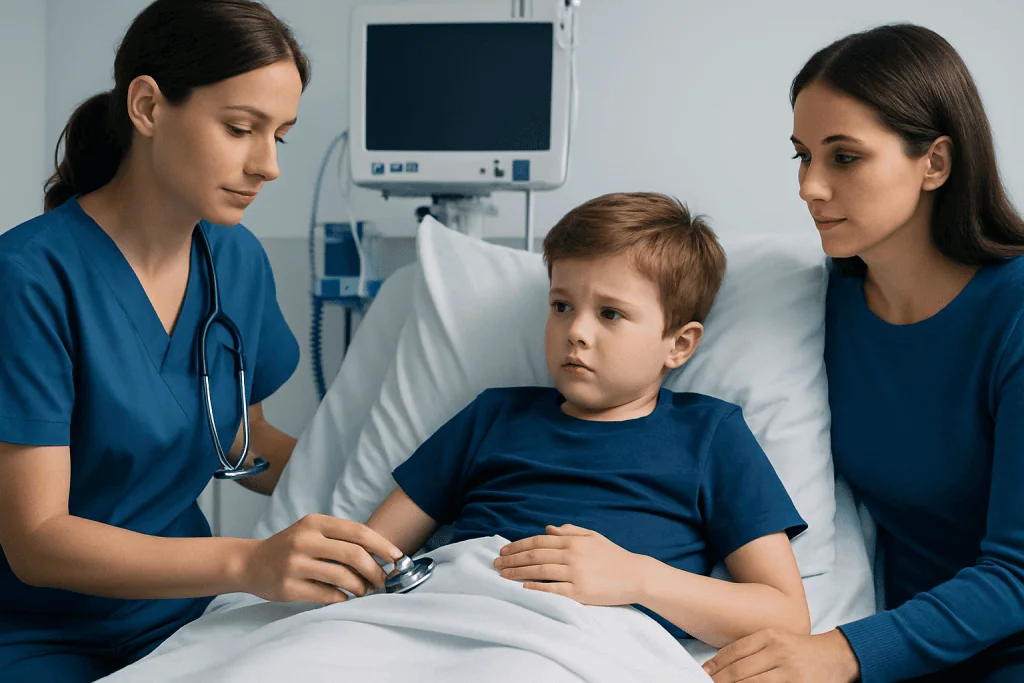
The classic symptom of appendicitis is belly pain that starts near the belly button and then moves to the lower right side of the abdomen. However, children do not always follow this pattern. Some have pain throughout the abdomen, pain low in the pelvis, or pain that becomes worse when they walk, cough, jump, or are gently moved.
Other symptoms may include loss of appetite, nausea, vomiting, low-grade fever, bloating, constipation, or diarrhea. A child may prefer to lie still with the knees bent because movement makes the pain worse. Babies and toddlers may show signs such as crying, irritability, refusing food, a swollen belly, or pulling the legs toward the abdomen.
Parents should pay attention to the pattern of symptoms rather than one sign alone. Concerning features include pain that becomes steadily worse, pain that wakes a child from sleep, tenderness in the lower right abdomen, vomiting that follows the onset of pain, or a child who appears pale, weak, or unusually quiet. These signs should prompt urgent medical evaluation.
Causes and Risk Factors
Appendicitis usually develops when the inside of the appendix becomes blocked. The blockage may be related to hardened stool, swelling of lymph tissue after an infection, or less commonly, other causes. Once blocked, bacteria can multiply, leading to inflammation, swelling, and pus formation.
There is no single lifestyle habit that causes appendicitis, and families should not blame themselves. It can happen in otherwise healthy children. A family history of appendicitis may slightly increase risk, and certain age groups, especially older children and teenagers, are affected more often than very young children.
If inflammation continues, the wall of the appendix can weaken and rupture. A ruptured appendix can spread infection within the abdomen, leading to peritonitis or a localized abscess. Early diagnosis and treatment help reduce these risks and support a smoother recovery.
Diagnosis
Diagnosing appendicitis in children begins with a careful medical history and physical examination. The doctor may ask when the pain started, whether it moved, what makes it better or worse, and whether the child has fever, vomiting, bowel changes, or urinary symptoms. During the exam, the doctor gently checks for tenderness, guarding, and pain with movement.
Blood tests may show signs of infection or inflammation, and a urine test can help rule out urinary tract infection or kidney stone symptoms. In adolescent girls, pregnancy-related conditions and gynecologic causes of pelvic pain may also need to be considered. Appendicitis can resemble many other childhood conditions, so doctors often use a combination of findings rather than relying on one test.
Imaging is commonly used when the diagnosis is not clear. Ultrasound is often preferred first in children because it does not use radiation and can identify an inflamed appendix in many cases. If ultrasound results are unclear and appendicitis remains a concern, CT or MRI may be used depending on the child’s condition, local expertise, and the urgency of the situation.
Treatment Options and Emergency Surgery
The main treatment for pediatric appendicitis is appendectomy, which is surgery to remove the appendix. This may be done laparoscopically through small incisions using a camera and specialized instruments, or through an open incision when needed. The surgical team chooses the safest approach based on the child’s age, anatomy, severity of infection, and overall condition.
Before surgery, children usually receive fluids through a vein, pain relief, and antibiotics. The child is monitored closely, and the care team explains the plan to the family. Many appendectomies are urgent rather than planned for a later date because treatment is aimed at removing the inflamed appendix before complications develop.
In selected cases of uncomplicated appendicitis, some hospitals may consider treatment with antibiotics without immediate surgery. This approach is not suitable for every child and requires careful assessment, close follow-up, and clear instructions about returning for care if symptoms worsen. If the appendix has ruptured or an abscess has formed, treatment may include antibiotics, drainage of an abscess, and sometimes delayed surgery depending on the situation.
Recovery and Aftercare
Recovery depends on whether the appendix was removed before or after rupture and whether the child had laparoscopic or open surgery. After an uncomplicated appendectomy, many children improve quickly, begin drinking and eating gradually, and go home when pain is controlled, they can tolerate fluids, and the medical team is satisfied with their progress.
At home, parents should follow the discharge instructions about wound care, bathing, activity, school return, and pain medicines. Children are usually advised to avoid strenuous activity, heavy lifting, and contact sports for a period recommended by the surgeon. The incision areas should be kept clean and checked for increasing redness, swelling, drainage, or worsening pain.
Families should contact the care team if the child develops persistent fever, repeated vomiting, increasing abdominal pain, a swollen belly, trouble passing stool or gas, poor fluid intake, or signs of wound infection. Follow-up visits are important to confirm healing and to answer questions about activity, diet, and returning to normal routines.
Prevention, Self-care, and When to See a Doctor
There is no proven way to completely prevent appendicitis. A balanced diet, adequate fluids, and healthy bowel habits support general digestive health, but they cannot guarantee that appendicitis will not occur. The most important protective step is recognizing concerning symptoms and seeking care early.
Parents should not give a child laxatives or enemas for severe abdominal pain unless a doctor advises it, because these can be unsafe if appendicitis is present. It is also best to avoid giving food or drink when emergency surgery may be needed, unless a clinician says it is safe. Pain relief should be discussed with a healthcare professional if the child is being evaluated for possible appendicitis.
Urgent medical care is recommended for belly pain that is worsening, pain in the lower right abdomen, pain with fever or vomiting, a rigid or very tender abdomen, or a child who looks increasingly ill. Acibadem International’s multidisciplinary specialists and JCI-accredited hospitals diagnose and treat pediatric appendicitis for international patients, with care coordinated across emergency medicine, pediatric surgery, anesthesia, imaging, and recovery teams.
Frequently asked questions
What does appendicitis pain feel like in a child?
Appendicitis pain often starts near the belly button and may move to the lower right side of the abdomen. It usually becomes worse over time and may hurt more when the child walks, coughs, jumps, or is touched. Younger children may not describe the pain clearly and may only appear irritable, tired, or unwilling to move.
Can appendicitis be mistaken for a stomach virus?
Yes. Early appendicitis may cause nausea, vomiting, diarrhea, fever, and general belly pain, which can look like gastroenteritis. A key difference is that appendicitis pain often becomes more localized and progressively worse. If symptoms do not improve or the child looks increasingly unwell, medical assessment is important.
Is surgery always needed for pediatric appendicitis?
Appendectomy is the standard treatment for many children with appendicitis, especially when there is concern for rupture or complications. In selected uncomplicated cases, antibiotics without immediate surgery may be considered by some specialists. The safest option depends on imaging results, the child's condition, and the judgment of the surgical team.
How urgent is appendicitis in children?
Appendicitis should be evaluated urgently because the appendix can rupture if inflammation continues. Early treatment can reduce the risk of infection spreading inside the abdomen. Parents should seek emergency care for worsening belly pain, pain with fever or vomiting, or a child who appears unusually weak or distressed.
How long does recovery take after an appendectomy?
Recovery varies depending on whether the appendix had ruptured and which surgical approach was used. Many children with uncomplicated appendicitis recover relatively quickly and return gradually to normal activities after the surgeon's approval. Complicated appendicitis may require a longer hospital stay, antibiotics, and closer follow-up.
What should parents avoid doing if appendicitis is suspected?
Parents should avoid giving laxatives or enemas unless a doctor recommends them. If emergency evaluation is needed, it is also wise to avoid food and drink until clinicians advise otherwise, because surgery may be required. The safest step is to seek prompt medical care rather than trying to manage severe or worsening abdominal pain at home.
References
- American Academy of Pediatrics
- American College of Surgeons
- National Institute of Diabetes and Digestive and Kidney Diseases
- World Society of Emergency Surgery
- Mayo Clinic
This article is for general information only and is not a substitute for professional medical advice. Please consult a qualified doctor about your individual situation.
Appendicitis in Turkey — costs, top hospitals & a free quote
JCI-accredited · board-certified surgeons · reply within 24h
Add us as a Preferred Source to see more of our trusted health content across Google Search, AI Overviews and Discover.

General Surgery
Open, laparoscopic and robotic surgery for a broad range of abdominal and soft-tissue conditions.
120 specialists in this unit