Hoarseness: Voice Changes, Laryngoscopy, and Treatment Options

Hoarseness is a symptom, not a diagnosis, and can result from infection, reflux, allergies, vocal overuse, smoking, nerve problems, or growths on the vocal cords. Laryngoscopy allows a doctor to view the vocal cords and is an important test when hoarseness lasts more than a few weeks or has warning signs.
Key Takeaways
- Hoarseness is a symptom, not a diagnosis, and can result from infection, reflux, allergies, vocal overuse, smoking, nerve problems, or growths on the vocal cords.
- Laryngoscopy allows a doctor to view the vocal cords and is an important test when hoarseness lasts more than a few weeks or has warning signs.
- Treatment depends on the cause and may include voice rest, hydration, reflux care, speech therapy, medication, or surgery for selected vocal cord lesions.
- People who smoke, use their voice professionally, or have trouble swallowing, breathing, pain, or a neck lump should seek medical advice promptly.
- Healthy voice habits, avoiding tobacco smoke, managing reflux, and using the voice safely can reduce the risk of recurrent hoarseness.
Hoarseness means a change in the voice, such as roughness, weakness, breathiness, or a lower pitch. Most cases are temporary, but persistent or unexplained hoarseness should be assessed by an ear, nose, and throat specialist to identify the cause and guide treatment.
Overview
Hoarseness, also called dysphonia, is a change in the sound or quality of the voice. A person may notice that the voice becomes raspy, strained, weak, breathy, deeper, higher, or more easily tired. Some people lose the ability to speak loudly, while others feel discomfort or effort when talking.
The voice is produced when air from the lungs passes through the larynx, commonly known as the voice box. Inside the larynx are the vocal folds, often called vocal cords. These delicate tissues vibrate to create sound. When they become swollen, irritated, injured, or unable to move normally, the voice can change.
Many cases of hoarseness are short-lived and occur with a cold, flu, allergy flare, or heavy voice use. However, hoarseness that lasts, keeps returning, or appears without an obvious reason deserves medical attention. Evaluation is especially important for people who smoke, use their voice professionally, or have additional symptoms such as pain, swallowing difficulty, breathing difficulty, coughing blood, or a lump in the neck.
Symptoms and Voice Changes
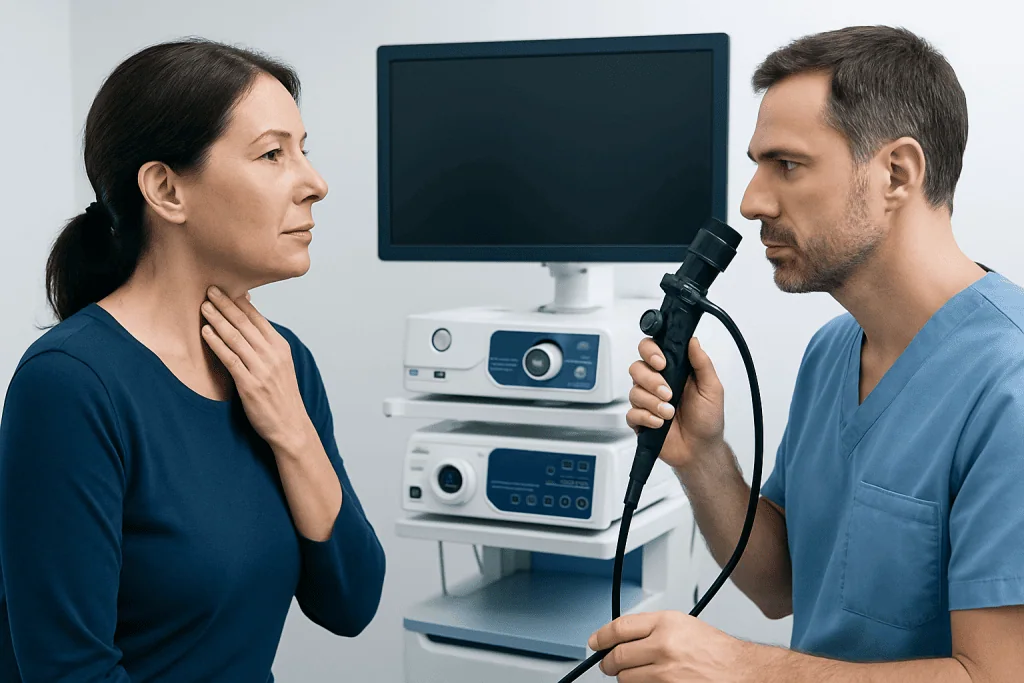
Hoarseness can feel different from person to person. Some describe a rough or gravelly voice, while others notice a weak, whispery, or breathy sound. The voice may crack, cut out, or become difficult to control. Speaking may require more effort than usual, and the throat may feel dry, tight, sore, or irritated.
Voice changes may occur suddenly, such as after shouting at an event or during an upper respiratory infection. They may also develop gradually over weeks or months, which can happen with reflux irritation, vocal nodules, smoking-related changes, or certain neurological conditions. Professional voice users, including teachers, singers, public speakers, call-center staff, and performers, may notice early symptoms because their work depends heavily on vocal quality and endurance.
Common associated symptoms may include throat clearing, cough, postnasal drip, heartburn, a sensation of mucus in the throat, or the feeling of a lump in the throat. Symptoms that should not be ignored include persistent pain, difficulty swallowing, choking episodes, shortness of breath, noisy breathing, unexplained weight loss, blood in saliva or phlegm, or a visible or felt neck mass.
Causes and Risk Factors

Hoarseness has many possible causes. The most common are temporary inflammation and irritation of the vocal folds. Acute laryngitis often follows a viral infection and may improve as the infection resolves. Vocal strain from shouting, prolonged speaking, singing without rest, or speaking over background noise can also cause swelling and fatigue of the vocal cords.
Other causes include laryngopharyngeal reflux, where stomach contents irritate the throat and voice box; allergies and postnasal drip; exposure to cigarette smoke or air pollution; dehydration; and some medications that dry the throat. Benign vocal cord lesions such as nodules, polyps, or cysts can develop after repeated vocal stress or irritation. These are not cancer, but they can significantly affect voice quality.
Less common but important causes include vocal cord paralysis or weakness, thyroid or neck surgery effects, neurological disorders, trauma, chronic inflammatory disease, and tumors of the larynx or nearby structures. Risk factors for persistent hoarseness include tobacco use, heavy alcohol use, occupational voice use, frequent reflux symptoms, chronic cough, and a history of head, neck, chest, or thyroid surgery.
- Short-term causes: viral infections, vocal overuse, allergies, and irritants.
- Longer-term causes: reflux, benign vocal cord lesions, smoking-related changes, or nerve-related vocal cord movement problems.
- Urgent considerations: breathing difficulty, swallowing problems, coughing blood, or a neck lump.
Diagnosis and Laryngoscopy
The first step in diagnosis is a careful medical history and examination. The doctor may ask when the hoarseness began, whether it followed an illness or voice strain, how the voice changes during the day, and whether there are symptoms of reflux, allergy, cough, pain, or swallowing difficulty. It is also important to mention smoking, alcohol use, occupational voice demands, medications, previous surgery, and any history of cancer or radiation treatment.
Laryngoscopy is the key examination used to look at the larynx and vocal cords. It may be performed in an outpatient clinic using a small mirror, a flexible camera passed gently through the nose, or a rigid telescope placed through the mouth. The procedure usually takes only a short time. A topical anesthetic spray may be used to reduce discomfort during flexible laryngoscopy.
During laryngoscopy, the specialist can assess whether the vocal cords are red, swollen, dry, scarred, or covered by a lesion. The doctor also checks whether both vocal cords move normally and close properly during speech. In some cases, a stroboscopy examination is used to evaluate vocal fold vibration in more detail, especially for singers, professional voice users, or subtle voice disorders.
Additional tests depend on the findings. Imaging such as ultrasound, CT, or MRI may be recommended if vocal cord paralysis, a neck mass, or deeper structural problem is suspected. If reflux, allergy, infection, or a neurological condition is suspected, further evaluation may involve other specialists. A biopsy may be needed when an abnormal area requires tissue diagnosis.
Treatment Options
Treatment for hoarseness depends on the underlying cause. For many short-term cases related to viral infection or vocal strain, improvement occurs with supportive care. This may include voice rest, good hydration, avoiding smoke and irritants, and using the voice gently rather than whispering. Whispering can sometimes strain the voice more than quiet, relaxed speech.
If reflux contributes to symptoms, treatment may include lifestyle measures such as avoiding late meals, reducing trigger foods, maintaining a healthy weight, elevating the head of the bed, and using medication when prescribed by a doctor. Allergy-related hoarseness may improve with allergen control and appropriate treatment. Bacterial infections are less common than viral causes, so antibiotics are only used when clearly indicated.
Voice therapy with a speech and language therapist is an important treatment for many voice disorders. Therapy can help patients reduce harmful voice habits, improve breath support, use efficient vocal technique, and prevent recurrence. It is commonly recommended for vocal nodules, muscle tension dysphonia, vocal fatigue, and after some laryngeal procedures.
Some conditions require procedural or surgical care. Vocal cord polyps, cysts, selected lesions, or suspicious growths may need microlaryngeal surgery. Vocal cord paralysis may be treated with voice therapy, injection procedures, or framework surgery in selected cases. Treatment planning is individualized and should be guided by an ENT specialist after the cause has been confirmed.
Prevention and Self-Care
Healthy voice habits can reduce the risk of hoarseness, especially for people who speak or sing frequently. Drinking enough water, taking voice breaks, avoiding shouting, and using amplification when speaking to large groups can protect the vocal folds. It is also helpful to avoid speaking for long periods over loud background noise.
Throat clearing can irritate the vocal cords and may become a repeated cycle. When possible, sipping water, swallowing, or using a gentle cough can be less irritating. Avoiding tobacco smoke and limiting exposure to dust, chemical fumes, and dry air are also important for voice health. People with reflux symptoms may benefit from avoiding heavy meals close to bedtime and discussing persistent symptoms with a doctor.
Self-care is appropriate when hoarseness is mild, clearly linked to a short-term cold or voice overuse, and improving. However, complete voice rest is rarely needed for long periods unless advised by a clinician. Gentle, limited voice use is often better than forcing the voice or continuing heavy speaking while symptoms worsen.
- Stay well hydrated throughout the day.
- Rest the voice after heavy use, but avoid prolonged whispering.
- Avoid smoking and secondhand smoke.
- Manage reflux, allergies, and chronic cough with medical guidance.
- Warm up the voice before demanding speaking or singing, when appropriate.
When to See a Doctor
A doctor should evaluate hoarseness that lasts longer than a few weeks, keeps returning, or develops without an obvious cause. Earlier assessment is recommended for anyone with a history of smoking, heavy alcohol use, previous head or neck cancer, recent neck or chest surgery, or professional voice demands. The goal of assessment is not only to rule out serious disease but also to identify treatable causes before voice habits worsen.
Prompt medical care is important if hoarseness is accompanied by breathing difficulty, noisy breathing, trouble swallowing, coughing blood, severe throat or ear pain, unexplained weight loss, or a lump in the neck. Children with sudden hoarseness and breathing difficulty need urgent evaluation, as airway problems can progress quickly.
At Acibadem International, multidisciplinary ENT specialists, speech therapists, radiologists, and other relevant experts can evaluate and treat hoarseness in JCI-accredited hospitals for international patients. As with any medical condition, the most suitable diagnostic and treatment plan should be determined after an individual examination by a qualified clinician.
Frequently asked questions
What is the most common cause of hoarseness?
The most common causes are viral upper respiratory infections, temporary laryngitis, and vocal strain from shouting or prolonged speaking. These often improve with hydration, gentle voice use, and time. If hoarseness persists or recurs, a medical evaluation is recommended.
How long can hoarseness last before it should be checked?
Hoarseness that lasts more than a few weeks should be assessed by a doctor, especially an ENT specialist. People who smoke, use their voice professionally, or have pain, swallowing difficulty, breathing symptoms, or a neck lump should seek care sooner.
Is laryngoscopy painful?
Laryngoscopy is usually well tolerated and performed in an outpatient clinic. A flexible camera can be passed through the nose after a numbing spray, which may reduce discomfort. Patients may feel mild pressure, watering eyes, or a brief gagging sensation, but the examination is typically quick.
Can reflux cause a hoarse voice?
Yes. Reflux can irritate the throat and larynx, sometimes without typical heartburn. It may cause hoarseness, throat clearing, cough, mucus sensation, or a lump-in-the-throat feeling. Treatment may include lifestyle changes and medication if prescribed.
Should someone whisper when their voice is hoarse?
Whispering is not always helpful and can strain the vocal cords in some people. Quiet, relaxed speech for short periods is usually better than forced talking or whispering. Voice rest and technique should be guided by a clinician if hoarseness is significant.
Can hoarseness be a sign of cancer?
Most hoarseness is not caused by cancer, but persistent or unexplained hoarseness should be evaluated. This is particularly important for people who smoke, drink heavily, have a neck lump, cough blood, or have trouble swallowing. Laryngoscopy helps doctors inspect the vocal cords directly.
What treatments are available for vocal cord nodules or polyps?
Vocal cord nodules often improve with voice therapy and changes in voice use. Polyps or cysts may sometimes require surgical removal, depending on their size, symptoms, and response to conservative care. An ENT specialist can recommend the most appropriate option after examining the vocal cords.
References
- American Academy of Otolaryngology–Head and Neck Surgery
- National Institute on Deafness and Other Communication Disorders
- Mayo Clinic
- Cleveland Clinic
- Merck Manual Professional Edition
This article is for general information only and is not a substitute for professional medical advice. Please consult a qualified doctor about your individual situation.
Explore treatments in Turkey — costs, top hospitals & a free quote
JCI-accredited · board-certified surgeons · reply within 24h
Add us as a Preferred Source to see more of our trusted health content across Google Search, AI Overviews and Discover.

Otorhinolaryngology (ENT)
Care for ear, nose, throat and head-and-neck conditions, including hearing and balance disorders.
126 specialists in this unit