Graves’ Disease: Overactive Thyroid Symptoms and Treatment Choices

Graves’ disease occurs when the immune system overstimulates the thyroid gland, leading to excess thyroid hormone. Common symptoms include fast heartbeat, weight loss despite normal or increased appetite, tremor, heat intolerance, anxiety, and sleep problems.
Key Takeaways
- Graves’ disease occurs when the immune system overstimulates the thyroid gland, leading to excess thyroid hormone.
- Common symptoms include fast heartbeat, weight loss despite normal or increased appetite, tremor, heat intolerance, anxiety, and sleep problems.
- Some people develop thyroid eye disease, which can cause eye irritation, swelling, bulging, double vision, or pressure behind the eyes.
- Diagnosis usually includes thyroid blood tests, antibody testing, and sometimes thyroid imaging or an eye examination.
- Treatment choices include symptom control, antithyroid medicines, radioactive iodine, surgery, and specific care for eye disease.
Graves’ disease is the most common autoimmune cause of an overactive thyroid, a condition in which the body makes too much thyroid hormone. With accurate diagnosis and individualized treatment, most people can control symptoms, protect the eyes and heart, and return to normal daily life.
Overview
Graves’ disease is an autoimmune thyroid disorder. In this condition, the immune system produces antibodies that act like a continuous signal to the thyroid gland. The thyroid then makes more thyroid hormone than the body needs, causing hyperthyroidism, also called an overactive thyroid.
Thyroid hormones help regulate metabolism, heart rate, body temperature, digestion, muscle function, and mood. When hormone levels are too high, many body systems speed up. This is why Graves’ disease can affect the heart, weight, sleep, skin, muscles, menstrual cycle, and emotional well-being.
Graves’ disease can occur at any age but is more common in adults and in women. It is a treatable condition. The best treatment depends on a person’s age, symptom severity, other medical conditions, pregnancy plans, thyroid size, antibody levels, and whether thyroid eye disease is present.
Symptoms of Graves’ Disease
Symptoms often develop gradually, but they may also appear over a few weeks. Because thyroid hormone influences many organs, symptoms can be wide-ranging. Some people first notice a racing heart or unexplained weight loss, while others report anxiety, shakiness, heat intolerance, or fatigue.
Common symptoms of Graves’ disease and hyperthyroidism may include:
- Fast or irregular heartbeat, palpitations, or shortness of breath with activity
- Unexplained weight loss, sometimes with increased appetite
- Trembling hands, muscle weakness, or feeling easily tired
- Heat intolerance, increased sweating, warm skin, or frequent bowel movements
- Nervousness, irritability, difficulty sleeping, or trouble concentrating
- Changes in menstrual periods or reduced fertility while the condition is uncontrolled
- Enlarged thyroid gland, known as a goiter, which may cause neck fullness
Older adults may have less obvious symptoms, such as fatigue, weight loss, atrial fibrillation, or worsening heart disease. Children and adolescents may show poor school performance, restlessness, rapid growth changes, or sleep disturbance. Because these symptoms can resemble anxiety disorders, heart conditions, menopause, or other illnesses, blood testing is important before drawing conclusions.
Thyroid Eye Disease and Other Signs

Graves’ disease is closely linked with thyroid eye disease, also called Graves’ orbitopathy. This condition occurs when immune activity affects the tissues and muscles around the eyes. It can occur before, during, or after thyroid hormone levels become abnormal, and it may not always match the severity of the thyroid problem.
Eye symptoms may include dryness, gritty sensation, redness, watering, light sensitivity, eyelid swelling, pressure behind the eyes, or a staring appearance. In some people, the eyes appear more prominent, or double vision develops because the eye muscles are inflamed. Rarely, severe swelling can affect the optic nerve, which requires urgent specialist care.
Smoking is one of the strongest modifiable risk factors for thyroid eye disease and can make the condition more difficult to treat. People with Graves’ disease are generally advised to avoid smoking and secondhand smoke. Mild symptoms may improve with lubricating eye drops, sunglasses, head elevation during sleep, and careful control of thyroid hormone levels, while moderate or severe cases need coordinated care between endocrinology and ophthalmology specialists.
Causes and Risk Factors
Graves’ disease begins with an immune system error. The body produces thyroid-stimulating immunoglobulins, often measured as TSH receptor antibodies. These antibodies attach to receptors on thyroid cells and stimulate the gland to release too much thyroid hormone, even when the brain is trying to slow hormone production.
The exact reason this autoimmune response starts is not fully understood. It likely results from a combination of genetic tendency and environmental triggers. Having a family history of Graves’ disease or another autoimmune condition increases risk, but many people with Graves’ disease have no known family history.
Risk factors may include female sex, personal or family history of autoimmune disease, smoking, recent pregnancy or the postpartum period, and exposure to high amounts of iodine in susceptible individuals. Physical or emotional stress may coincide with onset in some cases, but stress alone is not considered the sole cause. Identifying risk factors can help guide counseling, but treatment decisions are based mainly on thyroid test results, symptoms, and overall health.
Diagnosis
Diagnosis usually starts with a medical history, physical examination, and thyroid blood tests. A typical pattern is a low thyroid-stimulating hormone level, called TSH, with high free thyroxine, called free T4, and sometimes high triiodothyronine, called T3. In early or mild disease, T3 may rise before T4.
Antibody testing can help confirm Graves’ disease. TSH receptor antibodies or thyroid-stimulating immunoglobulins support the diagnosis and may be especially helpful during pregnancy, before choosing treatment, or when the cause of hyperthyroidism is unclear. Other thyroid antibodies may also be present, but they are not as specific for Graves’ disease.
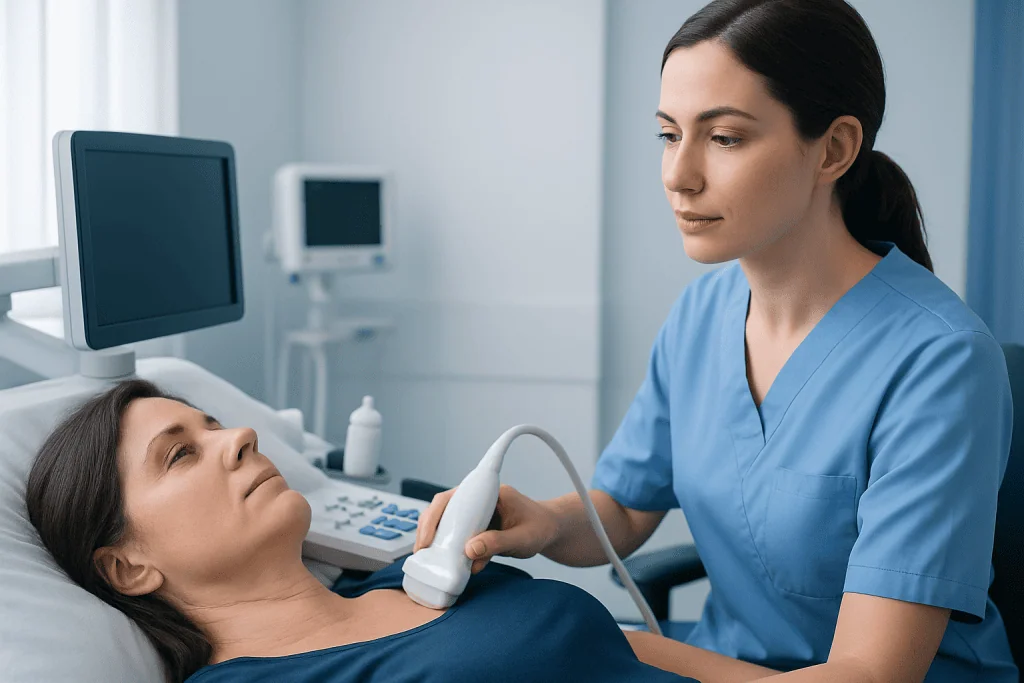
Imaging is not always required, but it can be useful in selected cases. A radioactive iodine uptake scan can show whether the whole thyroid gland is overactive, a pattern typical of Graves’ disease. Thyroid ultrasound with Doppler may be used when a scan is not suitable, such as during pregnancy or breastfeeding, or when thyroid nodules are suspected. If eye symptoms are present, an ophthalmologic examination helps assess activity, severity, eye movement, and vision safety.
Treatment Options
Treatment has two goals: to control symptoms quickly and to bring thyroid hormone levels back to a safe range. Beta-blocker medicines may be used short term to reduce palpitations, tremor, and anxiety-like physical symptoms while the thyroid treatment begins to work. These medicines do not treat the autoimmune cause, so they are usually part of the initial symptom-control plan rather than a standalone solution.
Antithyroid medicines reduce the thyroid gland’s ability to make hormones. Methimazole or carbimazole are commonly used in many adults, while propylthiouracil may be preferred in specific situations, such as the first trimester of pregnancy or thyroid storm, according to specialist guidance. These medicines require follow-up blood tests because thyroid hormone levels can shift over time, and rare side effects such as liver problems or low white blood cell count need prompt medical attention if symptoms such as fever, sore throat, jaundice, or severe illness occur.
Radioactive iodine therapy is another established treatment. It is taken by mouth and gradually reduces thyroid activity. It is not used during pregnancy or breastfeeding, and it may not be the best choice for some people with active thyroid eye disease. Many people develop hypothyroidism after radioactive iodine, meaning the thyroid becomes underactive, and then need lifelong thyroid hormone replacement.
Thyroid surgery, usually total or near-total thyroidectomy, may be recommended when the thyroid is very large, nodules need evaluation, rapid control is needed, antithyroid medicines are not tolerated, or radioactive iodine is not appropriate. Surgery should be performed by an experienced thyroid surgeon because important structures, including the voice nerves and parathyroid glands, are close to the thyroid. After surgery, lifelong thyroid hormone replacement is usually required.
Prevention, Self-Care, and Living Well
There is no proven way to fully prevent Graves’ disease, but good self-care can reduce complications and support recovery. Taking medicines as prescribed, attending follow-up appointments, and having recommended blood tests are central to safe treatment. Thyroid levels can change during therapy, so symptoms alone are not enough to judge whether the dose or plan is correct.
People with Graves’ disease should avoid taking high-dose iodine supplements or thyroid-support products unless a doctor specifically recommends them. Some over-the-counter supplements contain iodine, kelp, or thyroid-active ingredients that may worsen hyperthyroidism. A balanced diet, adequate protein intake, and attention to bone health are helpful because untreated hyperthyroidism can contribute to muscle loss and reduced bone density over time.
Heart health is also important. Persistent palpitations, irregular heartbeat, or chest discomfort should be discussed with a clinician, particularly in older adults or anyone with known heart disease. For eye health, not smoking, using lubricating drops when advised, wearing sunglasses for light sensitivity, and seeking early eye assessment can improve comfort and reduce risk of progression.
When to See a Doctor
A medical appointment is recommended when symptoms suggest an overactive thyroid, especially unexplained weight loss, persistent fast heartbeat, tremor, heat intolerance, new anxiety with physical symptoms, or neck swelling. Early testing can confirm whether thyroid hormone levels are abnormal and help prevent avoidable strain on the heart, bones, and eyes.
Urgent medical care is needed for severe symptoms such as chest pain, fainting, severe shortness of breath, confusion, high fever with marked agitation, or a very fast irregular heartbeat. People taking antithyroid medicines should contact a doctor promptly if they develop fever, sore throat, mouth ulcers, yellowing of the skin or eyes, dark urine, or severe abdominal pain, because these may signal rare but important medication reactions.
Specialist care is particularly important during pregnancy, before pregnancy planning, in children, in older adults, and when thyroid eye disease is present. Acibadem International’s multidisciplinary specialists, including endocrinology, ophthalmology, cardiology, and endocrine surgery teams in JCI-accredited hospitals, diagnose and treat Graves’ disease for international patients as part of individualized care planning.
Frequently asked questions
Is Graves’ disease the same as hyperthyroidism?
Graves’ disease is one cause of hyperthyroidism, but the terms are not identical. Hyperthyroidism means the thyroid is producing too much hormone, while Graves’ disease is the autoimmune condition that often causes it. Other causes include thyroid nodules, thyroiditis, and excess iodine exposure.
Can Graves’ disease go away on its own?
Some people may enter remission after treatment with antithyroid medicines, meaning thyroid hormone levels remain normal after medicine is stopped. However, Graves’ disease can relapse, even after a period of stability. Ongoing medical follow-up is important so changes are detected early.
Which treatment for Graves’ disease is best?
There is no single best treatment for everyone. Antithyroid medicines, radioactive iodine, and surgery can all be appropriate depending on age, pregnancy plans, thyroid size, symptom severity, eye disease, other health conditions, and personal preferences. A thyroid specialist can explain the benefits and trade-offs of each option.
Does Graves’ disease always affect the eyes?
No. Many people with Graves’ disease do not develop significant eye involvement. When thyroid eye disease occurs, it can range from mild dryness and irritation to more noticeable swelling, bulging, or double vision. Smoking avoidance and early eye assessment are important for anyone with eye symptoms.
Will treatment make the thyroid underactive?
Radioactive iodine and thyroid surgery commonly lead to hypothyroidism, which means the thyroid no longer makes enough hormone. This is usually managed with daily thyroid hormone replacement and regular blood tests. Antithyroid medicines may also lower hormone levels too much if the dose needs adjustment, which is why monitoring is necessary.
Can Graves’ disease affect pregnancy?
Yes. Uncontrolled hyperthyroidism can affect both the pregnant person and the baby, so pregnancy planning and specialist monitoring are important. Treatment choices may change during pregnancy, and antibody levels may be checked because some antibodies can cross the placenta. Anyone with current or previous Graves’ disease should discuss pregnancy plans with an endocrinologist or obstetric specialist.
References
- American Thyroid Association
- Endocrine Society
- European Thyroid Association
- National Institute of Diabetes and Digestive and Kidney Diseases
- Mayo Clinic
This article is for general information only and is not a substitute for professional medical advice. Please consult a qualified doctor about your individual situation.
Medical weight-loss options in Turkey — costs & eligibility
JCI-accredited · board-certified surgeons · reply within 24h
Add us as a Preferred Source to see more of our trusted health content across Google Search, AI Overviews and Discover.
Check your numbers in seconds
BMI, calories, due date, blood pressure and 30+ more clinical calculators — free, instant, doctor-reviewed ranges.