

Using Translation Apps Safely During Medical Visits in Turkey

Translation apps medical visits Turkey can help you communicate safely when paired with hospital interpreters, privacy checks and clear confirmations.
Translation apps can be useful during medical travel in Turkey, especially for everyday questions and quick reminders. For safe care, you should use them as a support tool alongside professional interpreters, written confirmations and your hospital care team.
At a glance
- Best use: Simple, non-urgent phrases and everyday logistics
- Do not rely on apps for: Consent, diagnosis, medication changes or emergencies
- Safer option: Ask for a qualified hospital interpreter for medical discussions
- Privacy tip: Avoid entering full names, ID numbers or sensitive reports into apps
- Helpful habit: Confirm important points in writing before you leave the appointment
Why translation apps can help, and where they have limits
When you travel to Turkey for healthcare, a translation app can make daily moments feel easier. You may use it to ask where the elevator is, confirm appointment times, understand a taxi conversation or read a simple sign. These small interactions matter because they reduce stress and help you feel more independent between formal appointments.
Medical conversations are different. Symptoms, allergies, consent forms, medication instructions and follow-up plans can include details that an app may translate too literally or miss completely. Even a small error, such as confusing before meals with after meals, can create unnecessary risk.
For this reason, it is safest to treat translation apps as a backup, not as your main medical communication channel. At Acibadem International, international patient services can help coordinate interpreter support for appointments, hospital processes and practical questions, so you are not left relying on your phone when decisions matter.
Use professional interpreters for decisions and consent

For any conversation involving diagnosis, treatment options, risks, benefits, consent, discharge instructions or medication changes, ask for a professional interpreter. This is especially important if you are tired, anxious, in pain or receiving complex information. A trained interpreter understands medical context and can help both you and the clinical team confirm meaning accurately.
Do not feel embarrassed about asking the doctor or nurse to pause while an interpreter joins. It is normal for international patients to need language support, and clear communication is part of safe care. If a family member speaks some Turkish or English, they may still not know medical vocabulary well enough to interpret important decisions.
Translation apps can still be helpful in these meetings if used carefully. For example, you can use the app to prepare a short list of topics you want to discuss, but the actual discussion should be interpreted by a qualified person. When in doubt, say clearly: I would like an interpreter before I decide.
Protect your privacy when using apps
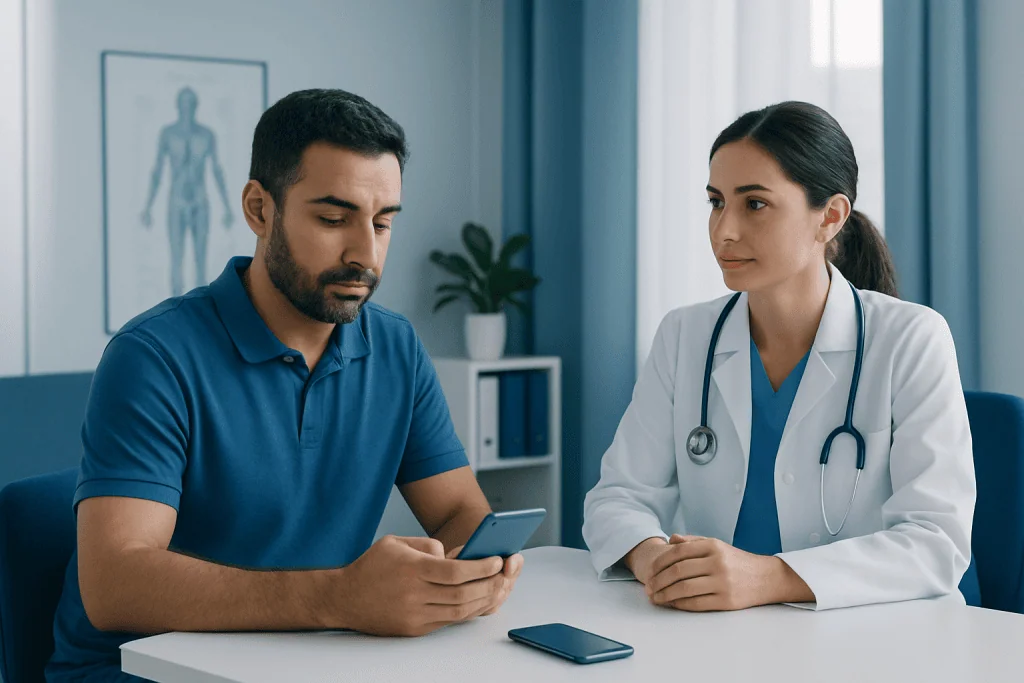
Many translation apps work by sending text, voice or images to cloud-based systems. This can be convenient, but it means you should be careful about what you type, record or photograph. Medical information is personal, and you may not always know how an app stores or processes your data.
A safe rule is to avoid entering full names, passport numbers, national ID numbers, hospital file numbers, full reports, imaging results or detailed diagnosis documents into a public translation app. If you need help understanding a document, ask your hospital coordinator, interpreter or care team for secure support instead.
You can reduce privacy risk by using short, general phrases. For example, type I need help finding the pharmacy rather than uploading a full prescription page. If you use voice translation in a public area, step aside and keep your volume low so other people do not hear personal details.
- Do not photograph confidential documents unless your care team advises it.
- Use a phone lock, and do not leave your device unattended in waiting areas.
- Delete temporary screenshots or voice recordings that contain sensitive information.
- Check whether the app offers offline translation for simple phrases.
Prepare key phrases before your appointment
Before you arrive at the hospital, prepare a small set of phrases in English and Turkish or in your preferred language and Turkish. This helps if you lose internet access, feel rushed or need to ask for help quickly. Keep the phrases simple and direct.
Useful phrases include: I need an interpreter, I have an appointment, I have an allergy, I do not understand, please write this down, and I need to call my patient coordinator. You can save these as notes on your phone, print them, or keep a screenshot in your photo gallery.
At Acibadem International, your patient coordination team can often guide you on where to go, which documents to bring and how to access language support. Having prepared phrases does not replace that support, but it gives you confidence during transitions such as registration, transport, pharmacy visits or moving between departments.
Confirm medication and discharge instructions carefully
Medication instructions are one of the most important areas to confirm with a human professional. Names, dosages, timing, food instructions and interactions can be confusing across languages. Some medication brand names may also differ between countries, so an app translation may not be enough.
Before leaving the hospital or clinic, ask for your medication plan and discharge instructions in writing whenever possible. Then ask the nurse, pharmacist, doctor or interpreter to review the key points with you. You can repeat back what you understood: I take this twice a day, after meals, for seven days. Is that correct?
If you use a translation app to help organize your notes, keep it separate from final medical instructions unless a professional has checked them. Do not change dose timing, stop medication or combine medicines based on an app translation. If something seems unclear after you return to your hotel, contact your care coordinator or hospital team before taking action.
Plan for internet, battery and stressful moments
Translation apps are only useful if your phone is charged, connected and easy to access. Before your hospital visit, charge your device, carry a power bank if possible and download any offline language packs offered by your app. Also save key phone numbers, appointment details and hospital address information in a place you can open without internet.
Stress can make technology harder to use. If you are arriving for surgery, tests or a sensitive consultation, you may not want to depend on typing into an app at the last minute. Ask your international patient coordinator in advance how interpretation will be arranged and where you should go when you arrive.
If your companion is helping you, agree on a simple communication plan. Decide who will hold documents, who will ask for an interpreter and who will take notes. This avoids confusion and helps you stay focused on the appointment rather than the technology.
When to stop using an app and ask for help immediately
There are moments when a translation app should not be used as the main communication method. If you have chest pain, breathing difficulty, severe bleeding, fainting, a sudden allergic reaction or any urgent concern, seek immediate medical help and ask staff for an interpreter as soon as possible. In urgent care, speed and clarity are more important than trying to perfect a translation yourself.
You should also stop relying on an app if the translation seems strange, if staff look unsure, if you are being asked to sign something you do not understand, or if the conversation involves risks and alternatives. It is acceptable to pause the process and say that you need language assistance before continuing.
JCI-accredited hospitals such as Acibadem place strong emphasis on patient safety, informed communication and coordinated care. Your role is not to manage medical translation alone; your role is to speak up when you need clarification. Asking for help early is a practical safety step, not an inconvenience.
Step by step
- Choose one or two apps before you travel. Install and test your preferred translation apps before arriving in Turkey. Try typing, speaking and using offline mode so you know what works best for your phone and language.
- Save essential phrases offline. Prepare phrases such as I need an interpreter, I have an allergy and please call my patient coordinator. Save them as screenshots or notes so you can access them without mobile data.
- Tell your coordinator your language needs. Before your visit, inform the international patient team which language you prefer for medical discussions. This allows interpreter support to be planned for consultations, admission, discharge or other important steps.
- Use apps mainly for simple logistics. Use translation apps for directions, appointment desk questions, transport, hotel needs and basic everyday requests. Avoid using them as the only tool for symptoms, consent, treatment decisions or medication instructions.
- Ask for written confirmation. After important conversations, request written notes, appointment times, medication instructions or follow-up steps. Written confirmation helps you review details later with your interpreter, coordinator or family.
- Protect sensitive information. Do not upload full medical reports, ID documents or prescription pages into public translation apps unless you understand the privacy implications. Use short general phrases and ask the hospital team for secure document support.
- Repeat back what you understood. For important instructions, say the plan back in your own words and ask whether it is correct. This simple habit helps catch misunderstandings before you leave the hospital.
Your checklist
- Phone charger and power bank packed for hospital visits
- Offline language pack downloaded if available
- Interpreter request shared with your patient coordinator
- Key phrases saved as notes or screenshots
- Allergy list and current medications written clearly
- Hospital address and contact numbers saved offline
- Notebook or notes app ready for appointment questions
- Medication and discharge instructions confirmed in writing
- Sensitive documents kept out of public translation apps
Key takeaways
- Translation apps are useful for simple travel and hospital logistics, but they are not a substitute for professional medical interpretation.
- Ask for an interpreter for diagnosis, consent, medication instructions, discharge planning and any conversation involving risk.
- Protect your privacy by avoiding full reports, ID numbers and detailed personal medical information in public apps.
- Prepare key phrases, offline access and battery backup before your appointment to reduce stress.
- Confirm important instructions in writing and repeat back what you understood before leaving.
Frequently asked questions
Can I use a translation app during my doctor consultation in Turkey?
You can use it as a support tool, but it should not replace a professional interpreter for medical discussions. If the conversation involves diagnosis, treatment options, risks, consent or medication instructions, ask for interpreter support. This helps protect both clarity and patient safety.
Will Acibadem International provide language support?
Acibadem International supports international patients with coordination services that may include interpreter assistance, appointment guidance and practical hospital navigation. It is best to share your preferred language before you arrive so support can be planned. Availability and arrangements can depend on timing, department and language needs.
Is it safe to translate my medical reports with an app?
Be cautious. Many apps may process text or images through external servers, so uploading full reports can create privacy concerns. For reports, prescriptions and official documents, ask your hospital coordinator or care team for secure guidance.
What should I do if an app translation does not make sense?
Stop and ask for clarification rather than guessing. Show the confusing phrase to your interpreter, nurse, doctor or patient coordinator and explain that you are not sure you understood. It is always acceptable to pause before signing, taking medicine or making a decision.
Can my family member interpret for me instead of an app?
A family member can provide comfort and help with everyday communication, but medical interpretation is a specialized task. For important clinical information, a professional interpreter is safer because medical terms, risks and instructions must be conveyed accurately. Your companion can still take notes and help you remember questions.
Which phrases should I prepare before going to the hospital?
Prepare short phrases such as I need an interpreter, I have an allergy, I do not understand, please write this down and I need to contact my patient coordinator. Also keep your name, appointment time, department and hospital address easy to show. Simple saved phrases are often more reliable than typing under stress.
Should I use voice translation in waiting areas?
Use voice translation discreetly because other people may hear private information. If you need to discuss symptoms, medicines or personal details, move to a quieter area or ask staff for assistance. Keep your phone locked and avoid saving unnecessary recordings.
What if I need urgent medical help and cannot explain myself?
Seek help immediately from hospital staff or emergency services and use simple words, gestures or a saved phrase such as I need urgent help. Do not delay urgent care while trying to produce a perfect translation. Once you are with the medical team, ask for an interpreter as soon as possible.
Add us as a Preferred Source to see more of our trusted health content across Google Search, AI Overviews and Discover.
More Patient Guides

How to Sleep Better in Turkey Before and After Treatment
Sleep better in Turkey before and after treatment with simple tips on timing, room comfort, routines and recovery planning in Istanbul.
9 min read
How to Plan Meals Around Surgery and Recovery in Turkey
Plan meals around surgery and recovery in Turkey with simple timing, hydration, shopping, and hotel tips for a smoother treatment trip.
9 min read
Medical Power Adapters and Device Charging in Turkey: Patient Guide
Medical power adapters and device charging in Turkey usually require Type C or F plugs and 220–240V power. Bring the right adapter…
8 min read