IVF With PCOS: Stimulation Planning, Egg Quality, and Safety

PCOS can lead to a high ovarian response during IVF, which requires personalized medication dosing and close monitoring. Egg quality in PCOS is influenced by age, metabolic health, hormone balance, and the stimulation approach rather than PCOS alone.
Key Takeaways
- PCOS can lead to a high ovarian response during IVF, which requires personalized medication dosing and close monitoring.
- Egg quality in PCOS is influenced by age, metabolic health, hormone balance, and the stimulation approach rather than PCOS alone.
- Ovarian hyperstimulation syndrome risk can be reduced with modern protocols, appropriate trigger choices, and sometimes a freeze-all embryo strategy.
- IVF planning may include treatment of insulin resistance, thyroid or prolactin abnormalities, weight-related factors, and male-factor infertility.
- Patients should seek urgent medical advice after egg retrieval if they develop severe pain, rapid abdominal swelling, shortness of breath, dizziness, or reduced urination.
Women with polycystic ovary syndrome often respond strongly to IVF medications, so careful stimulation planning is central to both success and safety. Individualized protocols, monitoring, trigger selection, embryo strategy, and lifestyle support can help reduce risks while protecting egg and embryo quality.
Overview: Why IVF Planning Is Different With PCOS
Polycystic ovary syndrome, commonly called PCOS, is a hormonal and metabolic condition that can affect ovulation, menstrual regularity, androgen levels, and fertility. Many women with PCOS have a higher number of small ovarian follicles, which can make the ovaries very responsive to fertility medicines. This is helpful in some ways, because IVF often aims to grow several follicles at once, but it also means treatment must be planned carefully to avoid an excessive response.
In polycystic ovary syndrome, infertility is often related to irregular or absent ovulation. Some patients conceive with ovulation induction and timed intercourse or intrauterine insemination, while others need IVF because of longer infertility duration, blocked tubes, endometriosis, advanced reproductive age, previous treatment failure, or sperm-related factors. The best approach depends on the full fertility assessment, not on the PCOS diagnosis alone.
IVF with PCOS is not a single standard protocol. A fertility specialist considers age, body mass index, anti-Mullerian hormone level, antral follicle count, previous response to medication, insulin resistance, menstrual pattern, and any coexisting conditions. The main goals are to obtain a safe number of mature eggs, support embryo development, and reduce the risk of ovarian hyperstimulation syndrome, also known as OHSS.
How PCOS Can Affect Ovarian Response and Egg Quality
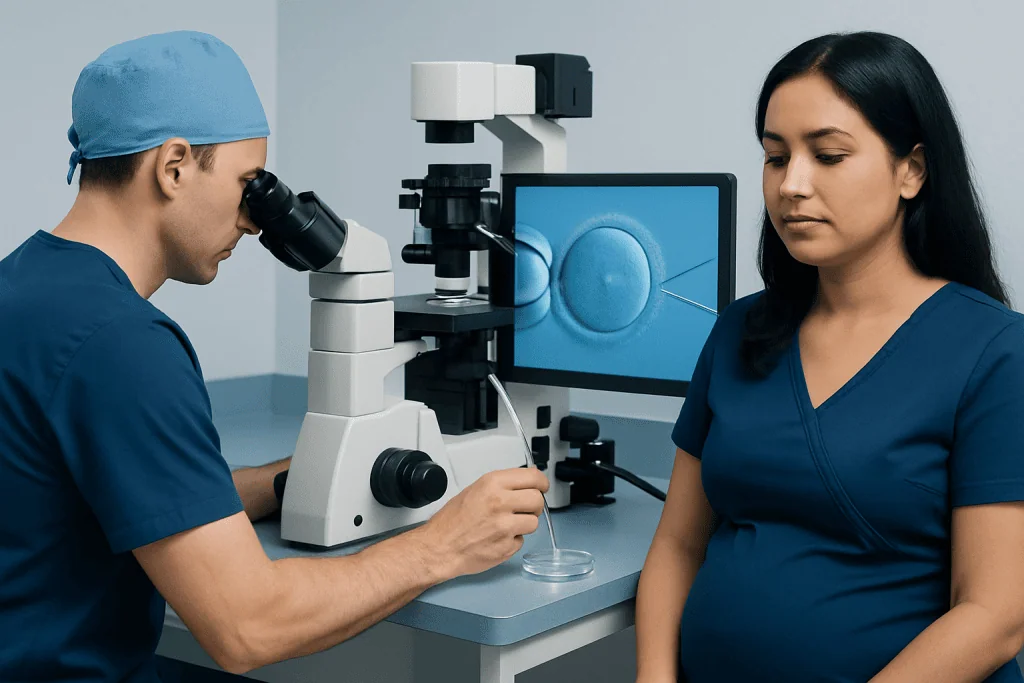
Women with PCOS often have many recruitable follicles at the start of an IVF cycle. This can lead to a high number of eggs retrieved, but more eggs do not always mean better overall quality. Egg quality is strongly linked to age, and it may also be influenced by metabolic health, insulin resistance, inflammation, androgen levels, sleep, smoking, and weight-related factors. For this reason, a thoughtful IVF plan looks beyond follicle numbers.
Some patients with PCOS produce a mixture of mature and immature eggs if stimulation is too intense or if the trigger timing is not optimal. The aim is not to push the ovaries to produce the maximum possible number of follicles, but to guide a balanced response. A lower starting dose of injectable follicle-stimulating hormone may be considered in many PCOS patients, with adjustments based on blood hormone levels and ultrasound findings.
Egg quality cannot be measured directly before retrieval, but clinicians can estimate cycle progress by follicle growth, estradiol levels, and prior treatment history. Embryo development in the laboratory then provides additional information. If sperm quality is reduced, fertilization support such as intracytoplasmic sperm injection may be discussed, depending on semen analysis and the clinic’s clinical judgment.
Stimulation Planning: Protocols, Dosing, and Monitoring

Ovarian stimulation is the stage of IVF in which injectable medications encourage multiple follicles to grow. In PCOS, many clinics use a gonadotropin-releasing hormone antagonist protocol because it allows flexible monitoring and can reduce OHSS risk when paired with an appropriate trigger. Other protocols may be suitable in selected cases, especially if a patient has a specific prior response pattern or other reproductive factors.
Medication dosing is individualized. A patient with very high anti-Mullerian hormone, a high antral follicle count, or a previous excessive response may start with a conservative dose. A patient with PCOS and lower ovarian reserve, older age, or previous poor response may need a different plan. The safest and most effective approach is usually stepwise: start carefully, monitor closely, and adjust when the ovaries show how they are responding.
Monitoring usually includes transvaginal ultrasound to measure follicle number and size, plus blood tests to assess hormone levels. These visits help the team decide whether to continue the same dose, reduce or increase medication, delay the trigger, or change the cycle strategy. Patients should report symptoms such as rapidly increasing bloating, nausea, or significant pelvic discomfort during stimulation, as these may influence management.
The trigger injection is especially important in PCOS. It matures the eggs before retrieval, but some trigger types are more likely than others to increase OHSS risk. In higher-risk patients, a GnRH agonist trigger may be considered when clinically appropriate, often followed by freezing all suitable embryos rather than transferring immediately. The exact plan should be explained before the cycle so the patient understands why safety decisions may change as monitoring results evolve.
Embryo Strategy: Fresh Transfer, Freeze-All, and Personalization
After egg retrieval and fertilization, embryos are cultured in the laboratory. Depending on embryo number and quality, patient age, uterine factors, and safety considerations, the fertility team may recommend a fresh embryo transfer or freezing embryos for a later transfer. In patients with PCOS who have a strong response, a freeze-all strategy is often considered to lower the risk of late OHSS and to allow the body to return to a calmer hormonal state before transfer.
Freezing embryos does not mean treatment has failed or that pregnancy chances are necessarily reduced. Modern vitrification methods allow many embryos to survive freezing and warming well, although outcomes depend on embryo quality, laboratory standards, and individual factors. A frozen embryo transfer cycle can be planned with either a natural, modified natural, or hormone-prepared endometrium, depending on ovulation pattern and medical history.
Single embryo transfer may be recommended for many patients, particularly when a good-quality embryo is available. This helps reduce the risks linked with twin or higher-order pregnancy, which can be more complicated for both mother and babies. The number of embryos to transfer should be decided after counseling about age, embryo stage, embryo quality, prior treatment history, and local regulations.
Safety: Reducing the Risk of Ovarian Hyperstimulation Syndrome
Ovarian hyperstimulation syndrome is a known complication of ovarian stimulation in which the ovaries become enlarged and fluid shifts into the abdomen or, rarely, other spaces. Most cases are mild, with bloating and discomfort, but moderate or severe OHSS requires medical attention. PCOS is one of the recognized risk factors because the ovaries may produce many follicles and high hormone levels during stimulation.
Modern IVF practice includes several ways to reduce this risk. These may include conservative medication dosing, frequent monitoring, avoiding unnecessary high stimulation, selecting a safer trigger when appropriate, freezing all embryos, and postponing embryo transfer if hormone levels or symptoms suggest higher risk. Some patients may also be given preventive medicines or fluid-management advice, but these decisions must be individualized by the fertility doctor.
Patients should receive clear instructions after egg retrieval. Mild bloating, cramps, and spotting can occur, but worsening symptoms should not be ignored. A patient should contact the clinic promptly if abdominal swelling increases quickly, pain becomes severe, vomiting prevents fluid intake, breathing feels difficult, urination drops, dizziness occurs, or there is leg swelling or chest discomfort.
Safety planning is part of high-quality IVF treatment, not an optional extra. A cycle may be changed, delayed, or converted to a freeze-all approach for medical reasons. Although this can be emotionally disappointing, it is often done to protect the patient’s health and improve the conditions for a later embryo transfer.
Preparing for IVF With PCOS: Medical and Lifestyle Factors
Before IVF, a full fertility workup helps identify factors that may affect treatment. This often includes confirmation of ovulation pattern, ovarian reserve testing, ultrasound assessment, semen analysis, and evaluation of the uterus and fallopian tubes when relevant. Blood tests may check thyroid function, prolactin, glucose metabolism, and other conditions that can interfere with ovulation or pregnancy preparation.
Metabolic health is particularly important in PCOS. Some patients have insulin resistance, prediabetes, lipid abnormalities, or weight-related concerns. Improving nutrition quality, physical activity, sleep, and smoking cessation can support general health and may help treatment readiness. Weight loss is not required for every patient, and care should be individualized and respectful, but even modest health-focused changes can be valuable for some people.
Medications such as metformin may be considered in selected PCOS patients, especially when insulin resistance or glucose abnormalities are present. However, not every patient needs it, and it should not be started or stopped without medical guidance. Supplements, herbal products, and high-dose vitamins should also be discussed with the fertility team because some may interact with medications or be unsafe in early pregnancy.
Emotional preparation matters as well. IVF can involve frequent appointments, uncertainty, and difficult decisions about embryos and timing. Patients may benefit from counseling, partner involvement, stress-management tools, and practical planning around travel, work, and recovery after egg retrieval.
When to See a Fertility Specialist and What to Expect
A person with PCOS should consider seeing a fertility specialist if they have irregular cycles and have not conceived after a reasonable period of trying, if they are over 35, if cycles are very infrequent, or if there are known additional factors such as male-factor infertility, endometriosis, recurrent miscarriage, or tubal disease. Earlier assessment is also appropriate when periods are absent for months, androgen symptoms are severe, or there are concerns about diabetes or thyroid disease.
The first visit usually reviews menstrual history, previous pregnancies, medications, lifestyle, family history, and prior test results. The specialist may discuss whether ovulation induction, insemination, or IVF is most suitable. For some patients, the first step is not IVF; for others, IVF is recommended because it offers the best chance within their medical circumstances. Broader evaluation for female infertility helps ensure that treatment addresses all contributing factors.
Acibadem International’s multidisciplinary specialists and JCI-accredited hospitals diagnose and treat PCOS-related infertility for international patients, including IVF planning, ovarian stimulation monitoring, and embryo transfer care. Patients should bring previous records, hormone tests, ultrasound reports, semen analysis results, and details of any fertility medicines used before, as this information helps personalize the plan.
Frequently asked questions
Is IVF successful for women with PCOS?
IVF can be an effective treatment for many women with PCOS, especially when ovulation problems are the main barrier to pregnancy. Success depends on age, egg and sperm quality, embryo quality, uterine health, metabolic factors, and previous fertility history. A personalized plan is important because PCOS patients can respond very differently to stimulation.
Does PCOS mean poor egg quality?
PCOS does not automatically mean poor egg quality. Age remains one of the strongest influences on egg quality, while insulin resistance, weight-related factors, high androgen levels, and inflammation may also play a role in some patients. Careful stimulation and attention to metabolic health can help support the best possible conditions.
Why are women with PCOS at higher risk of OHSS?
Many women with PCOS have a high number of small follicles that can respond strongly to injectable IVF medications. If many follicles grow and hormone levels become high, the risk of ovarian hyperstimulation syndrome increases. Conservative dosing, close monitoring, appropriate trigger choice, and sometimes freezing all embryos can reduce this risk.
Will all embryos need to be frozen in IVF with PCOS?
Not always. Some patients with PCOS can have a fresh embryo transfer if their response is moderate and their hormone levels and symptoms are reassuring. A freeze-all approach may be recommended when the ovarian response is high, OHSS risk is elevated, or the uterus may be better prepared in a later cycle.
Can metformin improve IVF outcomes in PCOS?
Metformin may be useful for selected patients with PCOS, particularly those with insulin resistance or glucose metabolism concerns. It may also be considered in some situations to help reduce excessive ovarian response, but it is not necessary for everyone. The decision should be made with a doctor who understands the patient's metabolic profile and IVF plan.
How can a patient prepare for egg retrieval with PCOS?
Patients should follow medication instructions closely, attend all monitoring visits, and ask the clinic what symptoms require urgent contact. Hydration, rest, and avoiding strenuous activity around retrieval may be advised, but recommendations vary by patient. After retrieval, rapid bloating, severe pain, vomiting, shortness of breath, dizziness, or reduced urination should be reported promptly.
References
- American Society for Reproductive Medicine
- European Society of Human Reproduction and Embryology
- International Evidence-Based Guideline for the Assessment and Management of Polycystic Ovary Syndrome
- National Institute for Health and Care Excellence
- World Health Organization
This article is for general information only and is not a substitute for professional medical advice. Please consult a qualified doctor about your individual situation.
Hair transplant in Turkey — costs, graft counts & a free assessment
JCI-accredited · board-certified surgeons · reply within 24h
Check your numbers in seconds
BMI, calories, due date, blood pressure and 30+ more clinical calculators — free, instant, doctor-reviewed ranges.

Related Treatments
Related Conditions
More from the Health Library



Related Specialists

Prof. Dr. Bülent Tıraş
Gynecology & Obstetrics
Prof. Dr. Mete Güngör
Gynecology & Obstetrics
Prof. Dr. Faruk Suat Dede
Gynecology & Obstetrics
Prof. Dr. Tansu Küçük
Gynecology & Obstetrics