Infertility Treatment
Infertility care identifies male, female or combined fertility factors and offers individualized options such as ovulation induction, IUI, IVF or ICSI to help couples achieve pregnancy.
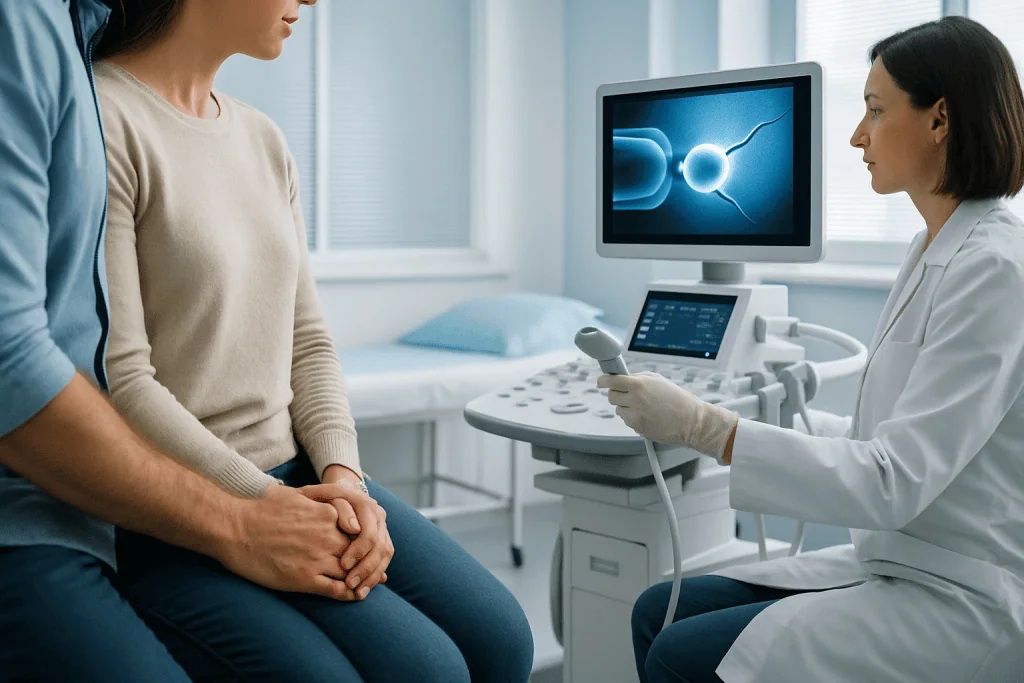
Quick answer
Infertility treatment is structured medical care for people who have not conceived after about a year of regular, unprotected intercourse. It begins with testing of both partners to identify female, male, combined or unexplained causes, then progresses through options such as ovulation medication, intrauterine insemination (IUI), in vitro fertilisation (IVF) or intracytoplasmic sperm injection (ICSI), chosen according to age, diagnosis and prior treatment history.
Infertility: What It Is and When to Seek Help
Infertility is the inability to achieve pregnancy after about one year of regular, unprotected intercourse. Infertility treatment is structured medical care that first identifies why conception has not happened, a female factor, a male factor, both, or no clearly measurable cause, and then selects the most sensible route to pregnancy, from ovulation medication and timed intercourse through to intrauterine insemination (IUI), in vitro fertilisation (IVF) or intracytoplasmic sperm injection (ICSI). It is designed for couples and for individuals, whatever the underlying diagnosis turns out to be.
For most people, infertility is felt long before it is named. Months of waiting. Repeated negative pregnancy tests. Uncertainty about timing, and the quiet pressure of not knowing whether something is actually wrong. You may be asking whether you have waited too long, whether a previous operation or a medical condition is affecting your fertility, or whether treatment will be physically and emotionally demanding. Good infertility care answers these questions with evidence rather than assumptions, and it starts with a proper understanding of infertility and its possible causes, not with a treatment menu.
The one-year definition has an important exception. If the female partner is 35 or older, evaluation is usually recommended after six months of trying, because fertility potential changes more quickly with age. Earlier assessment is also sensible when periods are irregular or absent, when endometriosis is already known, after pelvic infection, after repeated miscarriage, after ovarian or testicular surgery, after chemotherapy or radiotherapy for cancer, or when a previous semen analysis has shown abnormalities. In these situations, waiting a full year adds delay without adding information.
Modern fertility medicine is individualised. Age, ovarian reserve, sperm quality, fallopian tube function, uterine health, prior pregnancies, previous treatment attempts, genetic considerations and your own values all shape the plan. A careful fertility evaluation does not move every patient immediately towards the most complex treatment. It works out what is medically sensible, what is time-sensitive, and what gives you a reasonable chance of pregnancy while protecting your health and emotional wellbeing.
What are the signs of infertility?
The main sign of infertility is simply not conceiving despite regular, unprotected intercourse, often there are no other symptoms at all. That said, some patterns deserve attention. In women, these include irregular or absent periods, very painful menstruation, pelvic pain, known fibroids or polyps, a history of pelvic infection, recurrent pregnancy loss, thyroid or prolactin disorders, and features of polycystic ovary syndrome (PCOS) such as irregular ovulation, acne or excess hair growth. Age is a major consideration in its own right, because both egg number and egg quality decline over time, especially after the mid-30s.
In men, possible indicators include a history of undescended testicles, testicular injury, varicocele, previous infection, chemotherapy or radiation, hormonal disorders, or erectile and ejaculation difficulties. Yet many men with sperm-related problems feel completely healthy, and many women with blocked fallopian tubes or reduced ovarian reserve have perfectly regular cycles. Being infertile is not something you can reliably feel; it is something testing has to establish. This is why a thorough evaluation includes both partners whenever possible.
What Does Infertility Treatment Include?
Infertility treatment is a structured medical approach to help individuals or couples achieve pregnancy when conception has not occurred naturally, or when known medical factors make natural conception unlikely. It begins with diagnosis and counselling, then progresses through options that range from the least invasive methods to advanced assisted reproductive technologies. The right starting point is not the same for everyone, and a responsible programme will explain why a particular step is, or is not, appropriate for you.
The main treatment options are:
- Ovulation inductionoral or injectable medications that stimulate or regulate ovulation, used alone with timed intercourse or combined with insemination.
- Intrauterine insemination (IUI)prepared, concentrated sperm are placed directly into the uterus around the time of ovulation. You can read more about insemination as a standalone treatment.
- In vitro fertilisation (IVF)eggs are retrieved from the ovaries and fertilised with sperm in a laboratory, with the resulting embryo transferred to the uterus. This is described in more detail on our artificial fertilisation page.
- Intracytoplasmic sperm injection (ICSI)a single sperm is injected directly into an egg to assist fertilisation, commonly used for significant male factor infertility or when fertilisation was poor in a previous cycle.
Beyond these core treatments, infertility care may include fertility preservation before cancer therapy or planned surgery, embryo freezing, genetic testing where medically indicated, surgical correction of selected uterine or pelvic problems, and coordinated management of endocrine or gynaecological conditions that affect reproduction. The plan is built around your medical findings, your reproductive goals and the safest path forward, not around a fixed protocol.
One point worth stating plainly: no clinic can promise that any of these treatments will end in pregnancy. What a good programme can promise is an honest diagnosis, a plan that matches it, and clear reasoning at each decision point.
Who Needs Infertility Evaluation?
Evaluation is appropriate for couples who have been trying to conceive without success, but it also matters for people who already know they may face fertility challenges. Not every fertility problem produces obvious symptoms. A woman may have regular menstrual cycles and still have reduced ovarian reserve or blocked fallopian tubes. A man may feel entirely well and still have a low sperm count, reduced motility or abnormal sperm shape. Testing both partners at the outset avoids months of treating the wrong problem.
For women, evaluation usually begins with a careful medical and reproductive history, followed by blood tests to assess hormones and ovarian reserve, ultrasound imaging of the ovaries and uterus, and testing to establish whether the fallopian tubes are open. Depending on the findings, hysteroscopy or other imaging may be used to examine the uterine cavity in more detail. Our page on female infertility covers these investigations and their treatment implications more fully.
For men, semen analysis is the first-line test. The sample is assessed under standardised laboratory conditions for sperm concentration, movement, shape and other parameters. Where significant abnormalities appear, repeat testing, hormone measurement, genetic evaluation or review by a urologist specialising in reproduction may follow. A dedicated male infertility assessment can also uncover underlying health conditions that need attention beyond fertility care itself.
Patients arrive at infertility clinics from many starting points: after one or more unsuccessful pregnancies, after failed prior treatment, after recurrent miscarriage, or with an existing diagnosis such as endometriosis, PCOS or male factor infertility. Others come for a second opinion, because they have been told IVF is their only option, or because previous cycles did not result in pregnancy and they want a deeper review of stimulation protocols, embryo development, uterine factors and sperm parameters. A second opinion is not a criticism of previous care; it is a structured re-reading of the evidence, and it sometimes changes the plan.
Conditions and Causes Addressed by Infertility Care
Infertility care addresses a wide range of reproductive conditions. Some are relatively straightforward and respond well to medication or minor procedures. Others are complex and need coordinated input from reproductive medicine specialists, embryologists, andrologists, gynaecological surgeons, urologists, genetic counsellors and, when a future pregnancy would carry elevated risk, maternal-fetal medicine physicians.
Female factors include ovulation disorders, diminished ovarian reserve, fallopian tube blockage, endometriosis, uterine fibroids, endometrial polyps, intrauterine adhesions, congenital uterine differences and hormonal conditions affecting the menstrual cycle. PCOS is one of the most common causes of ovulatory infertility and requires careful medication selection to limit the risks of ovarian overstimulation and multiple pregnancy.
Male factors include low sperm count, poor motility, abnormal morphology, absence of sperm in the ejaculate, sperm DNA fragmentation concerns, varicocele and obstruction of the reproductive tract. In selected cases, sperm can be retrieved surgically and used with ICSI where appropriate.
Combined infertility means both partners contribute measurable factors. Unexplained infertility is diagnosed when standard testing finds no clear cause, yet pregnancy has not occurred. This does not mean nothing is wrong; it reflects the limits of current testing. Here, treatment is guided by age, duration of infertility, prior pregnancy history and whether less invasive options have already been tried. Infertility services can also support fertility preservation before cancer treatment, people with genetic conditions who wish to reduce the risk of passing on a serious inherited disease, and couples who require donor gametes or advanced laboratory techniques within the applicable medical, ethical and legal frameworks of the country of treatment.
Does endometriosis cause infertility?
Endometriosis can cause infertility, but it does not do so in everyone who has it. The condition can distort pelvic anatomy, block or damage the fallopian tubes, create inflammation that interferes with fertilisation and implantation, and, particularly when ovarian cysts called endometriomas form, reduce ovarian reserve. Many women with endometriosis conceive naturally; others need medical or surgical treatment, IUI or IVF. Decisions are individual, because surgery on the ovary can itself remove healthy ovarian tissue, so the potential benefit of an operation has to be weighed against its potential cost to egg supply. If you have endometriosis and are struggling to conceive, the useful question is not simply whether the disease is present, but how it is affecting your specific anatomy, ovarian reserve and treatment options.
Can an ovarian cyst cause infertility?
Most ovarian cysts do not cause infertility. Simple functional cysts, the kind that form and resolve as part of the normal cycle, rarely affect fertility at all. Certain types are different: endometriomas linked to endometriosis can reduce ovarian reserve, and the multiple small follicles seen in PCOS are associated with irregular ovulation rather than the cysts themselves being the problem. Very large cysts, or repeated ovarian surgery to remove cysts, can also affect the amount of healthy ovarian tissue that remains. What matters is the type of cyst, its size, whether it is affecting ovulation or ovarian reserve, and whether it needs treatment before or alongside fertility care, questions that ultrasound and hormone testing can usually answer.
Does birth control cause infertility?
No, hormonal birth control does not cause permanent infertility, and this applies to combined pills, progestogen-only pills, implants, hormonal coils and patches alike. Fertility generally returns after contraception is stopped, although the timing varies: with most methods ovulation resumes quickly, while the contraceptive injection can delay the return of regular ovulation for some months after the last dose. The same answer applies to the closely related question of whether any contraceptive causes infertility: what contraception can do is mask an underlying issue. If your periods were irregular before you started hormonal contraception, that irregularity, and whatever caused it, may still be there when you stop. Difficulty conceiving after long contraceptive use usually reflects age or a pre-existing condition rather than the contraception itself, which is exactly what an evaluation is designed to distinguish. Any decision about contraception itself belongs with your treating doctor.
How Infertility Treatment Is Performed Step by Step
Initial Consultation and Medical Review
The process begins with a detailed consultation. The physician reviews menstrual history, how long you have been trying to conceive, previous pregnancies, miscarriages, operations, current medications, lifestyle factors, chronic diseases and any earlier fertility tests or treatments. If you have prior records, ultrasound reports, semen analyses, operative notes, laboratory results, records of previous IVF cycles, sharing them at this stage reduces repetition and makes the first visit far more productive.
The physician then explains which tests are needed and why. Some tests must be performed at specific points in the menstrual cycle, so the sequence has to be planned rather than improvised. This is also the right moment to raise questions about timeline, medication burden, laboratory methods and what happens if a first attempt does not succeed. A clinic that answers these questions plainly at the start tends to communicate well throughout.
Diagnostic Testing and Treatment Planning
Female evaluation typically includes transvaginal ultrasound to assess the ovaries, antral follicle count, the uterine lining and any visible uterine abnormality. Blood tests measure ovarian reserve markers and reproductive hormones. Tubal patency testing establishes whether the fallopian tubes are open. If the uterine cavity needs closer inspection, hysteroscopy or specialised imaging may be recommended.
Male evaluation centres on semen analysis, sometimes repeated to confirm findings, with hormonal, genetic or urological assessment added when the first results warrant it. Because sperm production varies over time and with illness, a single abnormal result is a prompt for further testing, not a final verdict.
Once the diagnostic picture is complete, the physician discusses options. A patient with irregular ovulation but open tubes and normal sperm may begin with ovulation induction. A couple with mild male factor or unexplained infertility may consider IUI. A patient with blocked tubes, advanced maternal age, severe male factor infertility, diminished ovarian reserve or previous failed treatment may be advised to consider IVF or ICSI sooner rather than working through less effective steps first. The logic behind the recommendation should always be explained; if it is not, ask.
Ovulation Induction
Ovulation induction uses oral or injectable medications, prescribed and adjusted by the treating physician, to help the ovaries develop and release an egg. It is used for women who do not ovulate regularly, or as part of timed intercourse or IUI treatment. Monitoring with ultrasound, and sometimes hormone blood tests, tracks follicle growth and identifies the best timing for intercourse or insemination.
This approach is less invasive than IVF, but it still requires careful supervision. The aim is to improve the chance of ovulation while limiting the risk of multiple pregnancy or an excessive ovarian response. Medication choice and dosage are individualised according to diagnosis, age, ovarian reserve and any prior response to treatment.
Intrauterine Insemination (IUI)
IUI places a prepared sperm sample directly into the uterus around the time of ovulation. In the laboratory, the sperm preparation process concentrates the motile sperm and removes seminal fluid components that should not be introduced into the uterine cavity. IUI can be performed in a natural cycle or combined with ovulation induction, depending on your situation.
The procedure itself is brief and does not require anaesthesia. A thin catheter is passed through the cervix and the prepared sample is introduced into the uterus; most patients resume normal activities shortly afterwards. IUI is typically considered for mild male factor infertility, unexplained infertility, ovulation disorders once ovulation has been induced, or certain cervical factors. It is not suitable when the tubes are blocked or sperm parameters are severely abnormal, which is why the diagnostic work comes first.
You may come across the search phrase free artificial insemination. In practice, whether insemination is funded for you depends on the rules of your national health system or insurer, not on the clinical procedure itself, eligibility criteria, waiting lists and coverage differ widely between countries, so this is a question to clarify with your local health authority or insurer before planning treatment.
In Vitro Fertilisation (IVF) and ICSI
IVF is a multi-step treatment. In broad terms, a cycle proceeds as follows:
- Ovarian stimulation. Hormone injections, prescribed by your physician, are used for a number of days to encourage several follicles to mature. Ultrasound and hormone monitoring guide dose adjustments and determine the timing of the final maturation injection.
- Egg retrieval. Eggs are collected through the vagina under ultrasound guidance, usually with sedation or anaesthesia, using a thin needle to draw fluid from the ovarian follicles.
- Fertilisation. The embryology laboratory identifies the eggs and combines them with sperm. In conventional IVF, eggs and sperm are placed together under controlled conditions. In ICSI, an embryologist injects a single sperm directly into each mature egg, commonly chosen when sperm parameters are significantly abnormal, when sperm has been surgically retrieved, or when fertilisation was poor in a previous cycle.
- Embryo culture. Embryologists observe fertilisation and embryo development over several days in controlled culture systems.
- Transfer or freezing. Depending on your circumstances, one or more embryos are transferred to the uterus, or embryos are frozen for transfer in a later cycle.
A frozen embryo transfer may be recommended when the uterine lining needs further preparation, when hormone levels after stimulation are not ideal, when genetic testing of embryos is being performed, or when freezing simply offers a safer strategy for the patient. This is a clinical decision, not a downgrade, for some patients, separating stimulation from transfer improves the conditions for implantation.
Embryo transfer itself is usually a short procedure that does not require anaesthesia. A thin catheter places the embryo into the uterus under ultrasound guidance. Afterwards, you receive instructions about medications, activity and the timing of the pregnancy test. The waiting period between transfer and testing is often the hardest part of the whole process emotionally, and clear, honest communication from the care team matters most exactly here.
Technology Used in Modern Fertility Care
Fertility treatment depends on precise diagnostics and tightly controlled laboratory conditions. Ultrasound imaging evaluates ovarian response, guides egg retrieval and supports embryo transfer. Hormone testing informs medication timing and cycle safety. Advanced embryology laboratories maintain controlled temperature, air quality and culture environments to support embryo development. Micromanipulation equipment enables ICSI and selected embryo biopsy procedures when medically indicated, and cryopreservation technology allows eggs, sperm and embryos to be frozen and stored for future use.
Technology does not replace clinical judgement. It helps physicians and laboratory teams make more accurate decisions, reduce avoidable risks and personalise treatment. What ultimately matters is how the diagnostic findings, the laboratory information and your own goals are interpreted together: a strong laboratory attached to weak decision-making serves patients poorly, and vice versa.
How Long Does Treatment Take?
The duration depends on the treatment. Diagnostic evaluation may occupy one menstrual cycle, especially where tests must be timed to specific cycle days. Ovulation induction and IUI cycles are usually completed within a single cycle. IVF involves stimulation, retrieval, fertilisation, embryo development and then either a fresh transfer or embryo freezing with a later transfer, so the overall timeline varies with the chosen strategy.
Recovery after IUI is minimal. After egg retrieval, cramping, bloating, light spotting or fatigue can occur for a few days; most patients return to usual daily activities quickly, though strenuous exercise is typically restricted for a short period because the ovaries can remain enlarged. After embryo transfer, patients generally continue normal daily life with reasonable precautions rather than strict bed rest, unless the physician advises otherwise for a specific reason.
Why Acting Early Matters
Fertility is influenced by time, especially for women. Egg quantity and egg quality decline with age, affecting both the chance of conception and the risk of miscarriage. Men may also experience changes in sperm quality with age or with health conditions, although the pattern is different and generally more gradual. Delaying evaluation narrows the range of available options, particularly when ovarian reserve is already low or when a condition is progressive.
Early evaluation does not mean every patient needs immediate advanced treatment. It means you can make informed decisions before time-sensitive factors become more limiting. If the fallopian tubes are blocked, months of timed intercourse are unlikely to help. If semen analysis shows a severe sperm problem, IUI may not be appropriate at all. If endometriosis, fibroids or uterine adhesions are present, the plan may need to address anatomy before pregnancy attempts continue. Knowing this early changes what you do with the months ahead.
Delay also carries an emotional cost. Repeated unsuccessful cycles without a diagnosis breed frustration, anxiety and self-blame. A structured evaluation replaces uncertainty with a plan, and sometimes the plan is reassuringly simple. For some patients, the best recommendation is to keep trying naturally for a defined period. For others, the honest advice is to move directly to a more effective pathway. Either way, you are deciding on evidence rather than hope.
Can lifestyle changes improve fertility?
Lifestyle changes can support fertility, although they rarely replace treatment when a specific medical cause is present. Stopping smoking benefits both egg and sperm quality; tobacco exposure is associated with reduced ovarian reserve in women and poorer sperm parameters in men. Reaching and maintaining a healthy weight helps regulate ovulation, particularly in PCOS, and supports a safer pregnancy. Limiting alcohol, moderating caffeine, managing chronic conditions such as thyroid disease and diabetes, and reviewing regular medications with the prescribing doctor are all sensible steps. For men, avoiding prolonged heat exposure to the testicles and treating relevant infections may help sperm quality, and because sperm take roughly three months to develop, any improvement appears with a delay rather than immediately. These measures work alongside medical care, not instead of it, and they are most valuable when started early, while the rest of the evaluation is under way.
Benefits of Infertility Treatment
The value of infertility care extends beyond any single procedure. It includes diagnosis, risk reduction and a clearer reproductive plan, benefits that hold even when the eventual recommendation is not the treatment you expected.
| Benefit | What It Means for You |
|---|---|
| Clear identification of fertility factors | Testing can reveal female, male, combined or unexplained causes, helping you avoid months of uncertainty or unsuitable treatment. |
| Individualised treatment options | Your plan may range from ovulation support to IUI, IVF or ICSI, depending on age, diagnosis, prior history and personal goals. |
| More precise timing and monitoring | Ultrasound and hormone monitoring identify the best timing for ovulation, insemination, egg retrieval or embryo transfer. |
| Support for male factor infertility | Advanced sperm assessment, preparation and ICSI can address sperm-related barriers that timing alone cannot overcome. |
| Embryo and fertility preservation options | Freezing eggs, sperm or embryos can support future treatment plans, or preserve fertility before medical therapies that could affect reproduction. |
| Informed decisions after prior failed treatment | A second opinion can review stimulation response, embryo development, uterine factors and sperm quality to refine the next approach rather than repeat the last one. |
Recovery Timeline After Fertility Procedures
Recovery varies with the procedure performed, but most patients continue their normal routines with specific instructions from the care team rather than a formal convalescence.
| Time Period | What Patients Can Expect |
|---|---|
| Day 1 | After IUI or embryo transfer, most patients leave shortly after the procedure. After egg retrieval, mild cramping, bloating, spotting or sleepiness from sedation may occur. |
| First week | Prescribed hormone support continues, along with activity guidance. Heavy exercise may be limited after egg retrieval because the ovaries can remain enlarged for a short time. |
| First two weeks | The waiting period before pregnancy testing can feel emotionally intense. Medication side effects can mimic early pregnancy symptoms, so a blood test is used for confirmation rather than symptoms. |
| First month | If pregnancy occurs, follow-up blood tests and ultrasound are scheduled. If the cycle is unsuccessful, the physician reviews what happened and discusses whether changes are advisable. |
| Longer term | Some patients continue with frozen embryo transfer, additional cycles, surgical treatment or alternative strategies. Ongoing care is adjusted to the medical findings and your preferences. |
What Influences the Outcome of Fertility Treatment?
Fertility treatment outcomes depend on many variables, and no responsible programme can predict the result with certainty for an individual patient. The most important factor in female fertility is age, above all egg quality. Ovarian reserve testing estimates how the ovaries may respond to stimulation, but it does not fully define the chance of pregnancy: a younger patient with fewer eggs may still have good embryo potential, while an older patient with many follicles may face higher rates of chromosomal abnormality in her embryos.
Diagnosis matters. Patients with ovulation disorders often respond well once ovulation is restored. Tubal disease usually requires IVF, because egg and sperm cannot meet reliably in a damaged tube. Severe male factor infertility can be addressed with ICSI, but sperm quality and underlying genetic factors still influence fertilisation and embryo development. Endometriosis can affect ovarian reserve, pelvic anatomy, inflammation and implantation, and treatment decisions must balance the benefit of surgery against its potential impact on ovarian tissue.
Uterine health is another key factor. Polyps, submucosal fibroids, adhesions or congenital uterine differences may interfere with implantation or with the development of a pregnancy. In selected cases, treating the uterine cavity before embryo transfer improves the environment for pregnancy. Thyroid disease, poorly controlled diabetes, obesity, smoking, certain medications and autoimmune or clotting conditions can also influence both fertility and pregnancy safety, which is why the evaluation looks at general health and not only at reproductive organs.
Laboratory quality and clinical coordination carry real weight in IVF and ICSI. Egg handling, sperm preparation, fertilisation technique, embryo culture, cryopreservation and transfer timing all demand precision. At the same time, the best results come from combining laboratory data with thoughtful medical decisions: selecting the right stimulation protocol, avoiding excessive ovarian response, choosing fresh or frozen transfer appropriately, and recommending the number of embryos to transfer with attention to both the chance of pregnancy and the risk of multiple pregnancy.
Previous treatment history is a resource, not just a record. A prior cycle may reveal low response to medication, unexpected egg maturity issues, fertilisation problems, slow embryo development or difficulty preparing the uterine lining. Reviewing these details carefully allows future cycles to be refined rather than simply repeated, one of the strongest arguments for bringing complete records to any new consultation.
How Infertility Care Is Organised at Acibadem
Infertility care at Acibadem is built on individualised evaluation rather than a single pathway for every patient. Reproductive medicine physicians assess both partners where applicable and coordinate with embryology, andrology, gynaecology, urology and genetics as the case requires. In complex situations, multidisciplinary discussion helps determine whether surgery, medical treatment, IVF, ICSI, fertility preservation or further diagnostic testing is the most appropriate next step. Where genetic counselling or testing is medically indicated, patients are told plainly what a test can and cannot answer, and how results may affect embryo selection or pregnancy planning.
For patients who have already undergone treatment elsewhere, the review can cover stimulation records, medication doses, hormone levels, ultrasound findings, egg retrieval results, fertilisation method, embryo development, transfer notes, semen analyses and uterine evaluation. That level of detail can show whether a different stimulation protocol, sperm strategy, laboratory approach, uterine assessment or transfer plan is reasonable, or whether the previous plan was sound and simply unlucky, which is also valuable to know.
Because fertility treatment is delivered in timed stages, planning matters more than in most fields of medicine. Some investigations must be performed on specific days of the menstrual cycle, and treatment steps such as monitoring, egg retrieval and embryo transfer follow the biology of the cycle rather than the calendar. A well-organised programme sequences these appointments in advance and explains clearly which stages require your physical presence, so that treatment fits into your life with as little disruption and uncertainty as possible.
Choosing where to have fertility care is a personal decision. Patients weigh medical expertise, communication, laboratory standards, legal frameworks and emotional comfort. Whatever you decide, ask direct questions about your diagnosis, the expected timeline, the medication plan, the embryo strategy, the risks, the alternatives and the follow-up. Fertility care involves genuine uncertainty even when treatment is well planned, and a team that acknowledges that uncertainty openly is a team you can trust with the difficult moments as well as the good ones.
Moving Forward With Clarity
If you are facing infertility, seeking answers is not an admission of failure; it is the constructive step that turns waiting into a plan. Some patients need only a small correction in ovulation timing or treatment of a specific, identifiable condition. Others benefit from IUI, IVF, ICSI, surgery or fertility preservation. The right plan begins with a careful evaluation of both partners and an honest discussion of what is medically appropriate for your situation, including, sometimes, the advice that the simplest option deserves more time before anything more complex is attempted.
Whatever pathway you follow, complete records make every conversation better. Prior test results, semen analyses, imaging reports, operative notes and summaries of earlier cycles allow any physician, at home or abroad, to give recommendations that are specific to you rather than generic. Infertility is common, it is investigable, and in many cases it is treatable. Understanding your own diagnosis is where all of that starts.
Preparation
- Evaluation usually includes medical history, hormone tests, ultrasound, semen analysis and, when needed, genetic or tubal assessment. Patients may be advised to optimize weight, stop smoking, review medications and time treatment with the menstrual cycle.
Aftercare
- After procedures such as IUI or embryo transfer, patients can usually return to daily activities with limited restrictions. Follow-up includes medication guidance, pregnancy testing and ultrasound monitoring if pregnancy occurs.
Frequently Asked Questions
What affects the cost of infertility treatment?
The final cost depends on the diagnosis, the recommended treatment, medication needs, monitoring, embryology laboratory procedures, freezing or storage, and any additional tests. A personalised quote is only possible after a specialist reviews the couple’s medical history and test results.
How can I get a personalised quote from Acibadem?
You can request a free consultation by sharing relevant medical records, previous fertility reports, hormone tests, ultrasound findings, and semen analysis if available. The fertility team can then suggest the likely pathway and clarify what is included in the proposed package.
Are medications included in infertility treatment packages?
Medication inclusion varies by treatment plan and patient response. Ovarian stimulation medicines, hormonal support, and additional prescriptions may be quoted separately, so it is important to ask what is included before confirming treatment.
Why can IVF and ICSI costs vary between patients?
Costs can vary because patients may need different stimulation protocols, monitoring schedules, laboratory techniques, embryo freezing, genetic testing, or additional procedures. The specialist decides which steps are medically appropriate.
Is infertility treatment in Turkey suitable for international patients?
Turkey is a common destination for self-funded international fertility care because hospitals may offer coordinated appointments, international patient support, interpreter services, and package-based planning. Suitability depends on the patient’s medical situation and should be assessed by a fertility specialist.
Is this information medical or financial advice?
No. This is general educational information only. For medical guidance and an accurate cost estimate, patients should request a free consultation and receive an individual assessment from a qualified fertility specialist.
Medically reviewed by the Acıbadem International Medical Board September 8, 2026
See our medical review board →
Update history
- PublishedJune 8, 2026
- Medical review approvedSeptember 8, 2026
- Last content updateSeptember 8, 2026
References3
- Infertility medlineplus.gov
- Infertility nhs.uk
- Infertility who.int
Trusted care for international patients
From the Acibadem Blog

Your First Infertility Appointment: The History, Tests and Lifestyle Questions to Expect
An infertility evaluation first visit usually involves a medical, menstrual, sexual and lifestyle history for both partners, a physical exam, and a first round…

Do Stress and Positions Affect Conception? Infertility Myths Fertility Doctors Correct
Stress and sexual positions have not been shown to cause infertility. Sperm reach the cervix within minutes regardless of position, and large studies have…

When Does Trying Become Infertility? How Long to Wait Before an Evaluation and Who Goes Sooner
Most guidelines define infertility as not conceiving after 12 months of regular, unprotected sex, and that is the usual point to request an evaluation.…
Doctors Performing This Treatment

Vitro Fertilization and Reproductive Medicine Center
Prof. Mehmet Cıncık, MD

Vitro Fertilization and Reproductive Medicine Center
Assoc. Prof. Eser Çolak, MD

Vitro Fertilization and Reproductive Medicine Center
Assoc. Prof. Burak Elmas, MD

Vitro Fertilization and Reproductive Medicine Center