Menorrhagia
Menorrhagia is heavy or prolonged menstrual bleeding. Learn symptoms, causes, diagnosis, treatment options and when to see a doctor.

Quick answer
Menorrhagia is abnormally heavy or prolonged menstrual bleeding that can disrupt daily life and may result from hormonal imbalance, fibroids, polyps, bleeding disorders, or other gynecological conditions. At Acibadem, evaluation focuses on identifying the underlying cause with gynecologic assessment and appropriate tests, and treatment may include medication, minimally invasive procedures, or surgery depending on the diagnosis and the patient’s needs.
What is menorrhagia?
Menorrhagia is the medical term for menstrual bleeding that is unusually heavy or lasts longer than normal. Doctors also refer to it as heavy menstrual bleeding, and in the international classification of diseases it is coded as N92.0. Understanding what is menorrhagia begins with knowing what a typical period looks like: for most people, menstrual bleeding lasts between about three and seven days, and the total amount of blood lost during one cycle is relatively small. With menorrhagia, the bleeding is heavy enough, or prolonged enough, to interfere with everyday activities, cause frequent soaking of pads or tampons, or lead to health problems such as anemia (a shortage of healthy red blood cells that carry oxygen around the body).
Menorrhagia can affect anyone who has menstrual periods, from adolescence through to the years before menopause (the time when periods stop permanently, usually in midlife). It is a common reason for visits to gynecologists, the doctors who specialize in the female reproductive system. Heavy bleeding tends to be more frequent at the two ends of reproductive life: in the first years after periods begin, when hormone cycles are still settling, and in the years leading up to menopause, when hormone levels fluctuate. In hospital settings such as Acibadem, menorrhagia is typically evaluated and managed within the obstetrics and gynecology department.
It is important to know that menorrhagia is a symptom pattern rather than a single disease. Many different conditions can cause it, and in some cases no clear cause is found. Because the underlying reasons vary widely, the right evaluation and treatment differ from person to person.
Symptoms of menorrhagia
Menorrhagia symptoms center on the amount and duration of menstrual bleeding, but they also include the effects that ongoing blood loss can have on the rest of the body. Because everyone’s idea of a “heavy” period is different, doctors often use practical signs to judge whether bleeding is truly excessive.
Common menorrhagia symptoms include:
- Soaking through one or more sanitary pads or tampons every hour for several hours in a row.
- Needing to use double protection, such as a tampon and a pad together, to control the flow.
- Waking up at night to change sanitary protection because of heavy bleeding.
- Bleeding that lasts longer than seven days.
- Passing blood clots larger than about the size of a quarter (roughly 2.5 centimeters).
- Restricting daily activitieswork, school, exercise, or social plans, because of the flow.
- Symptoms of anemia, such as tiredness, weakness, pale skin, shortness of breath, or feeling lightheaded.
- Cramping or pelvic pain that accompanies heavy periods in some people.
How these symptoms appear can differ depending on the underlying pattern. Some people have regular, predictable cycles that are simply very heavy, which often points toward a structural cause in the uterus (the womb), such as fibroids (noncancerous growths of the muscle of the uterus) or polyps (small growths of the uterine lining). Others have irregular, unpredictable heavy bleeding, which more often suggests a hormonal cause, such as cycles in which ovulation (the release of an egg) does not occur. In adolescents, heavy periods from the very first cycles may occasionally signal a bleeding disorder, a condition in which the blood does not clot normally. In people approaching menopause, heavy or irregular bleeding is often related to shifting hormone levels, although other causes still need to be considered.
Over time, repeated heavy periods can lead to iron-deficiency anemia. This develops gradually, so many people do not realize how tired or run down they have become until the anemia is identified and treated.
Causes and risk factors
Menorrhagia causes fall into several broad groups, and in many cases more than one factor contributes. Sometimes, despite a careful evaluation, no specific cause is identified; doctors may then describe the condition as heavy menstrual bleeding of unknown cause.
The main groups of causes include:
- Hormonal imbalance. Each month, a balance between the hormones estrogen and progesterone regulates the buildup and shedding of the uterine lining (the endometrium). If this balance is disturbed, for example, in cycles without ovulation, the lining can become too thick and shed heavily. Hormonal imbalance is common in adolescence and in the years before menopause, and it can also occur with conditions such as polycystic ovary syndrome (a hormonal disorder affecting the ovaries), thyroid problems, and obesity.
- Uterine fibroids. These noncancerous growths of the uterine muscle are very common during the reproductive years and are a frequent cause of heavy or prolonged periods.
- Uterine polyps. Small, usually benign (noncancerous) growths on the lining of the uterus can cause heavy or irregular bleeding.
- Adenomyosis. In this condition, tissue similar to the uterine lining grows into the muscular wall of the uterus, often causing heavy, painful periods.
- Intrauterine devices (IUDs). A copper IUD, a small contraceptive device placed inside the uterus, is a recognized cause of heavier periods in some users, particularly in the first months after insertion.
- Pregnancy-related conditions. A miscarriage (early pregnancy loss) or an ectopic pregnancy (a pregnancy growing outside the uterus, often in a fallopian tube) can cause heavy bleeding and may be mistaken for a heavy period. An ectopic pregnancy is a medical emergency.
- Bleeding disorders. Inherited conditions that impair blood clotting, such as von Willebrand disease, can cause heavy periods, often starting from the first menstrual cycles.
- Medications. Blood thinners (anticoagulants), some anti-inflammatory drugs, and certain hormonal medicines can increase menstrual bleeding.
- Other medical conditions. Liver or kidney disease and thyroid disorders can affect hormone levels or blood clotting and contribute to heavy bleeding.
- Cancer or precancerous changes. Less commonly, cancer of the uterus or cervix, or precancerous thickening of the uterine lining (endometrial hyperplasia), can cause abnormal heavy bleeding. The risk of these conditions rises with age, which is one reason heavy bleeding after age 40, or any bleeding after menopause, deserves careful evaluation.
Risk factors that make menorrhagia more likely include being in the first years after periods begin, approaching menopause, having a family history of bleeding disorders or fibroids, obesity, and the use of certain medications. Having a risk factor does not mean heavy bleeding will definitely develop, and many people with menorrhagia have no obvious risk factor at all.
Diagnosis
Menorrhagia diagnosis starts with a detailed conversation. Your doctor will usually ask about your menstrual history: how long your periods last, how often you change pads or tampons, whether you pass clots, whether bleeding disturbs sleep or daily life, and whether periods have changed recently. Keeping a simple diary of bleeding days and the number of pads or tampons used can be genuinely helpful. Doctors also ask about medications, contraception, pregnancy history, family history of bleeding problems, and symptoms of anemia.
Depending on your age, history, and examination findings, your doctor may recommend some of the following tests:
- Pelvic examination. A physical examination to check the uterus, cervix (the lower opening of the uterus), and ovaries.
- Blood tests. A complete blood count can detect anemia and low iron stores. Doctors may also check thyroid function, and in some cases clotting tests to look for a bleeding disorder. A pregnancy test is often performed, because pregnancy-related bleeding must be ruled out first.
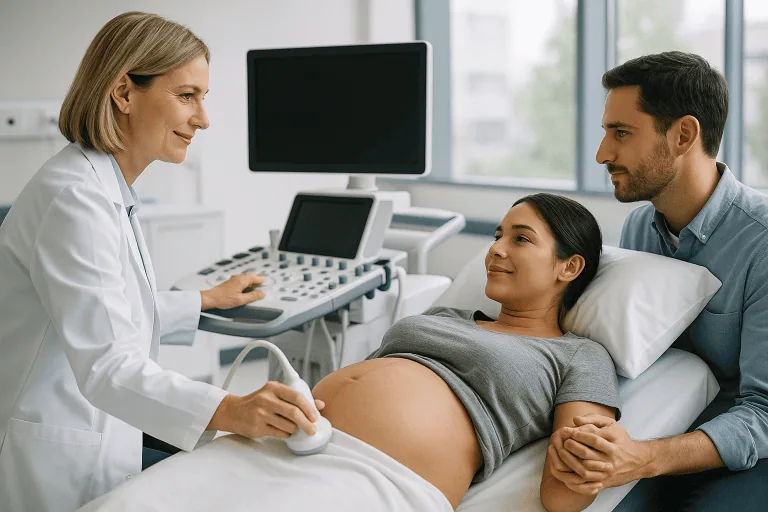
- Pelvic ultrasound. This imaging test uses sound waves to create pictures of the uterus and ovaries and can identify fibroids, polyps, or a thickened uterine lining. It is usually the first imaging test for menorrhagia.
- Pap test (cervical screening). A sample of cells from the cervix, checked for changes that could indicate infection, inflammation, or precancerous changes.
- Endometrial biopsy. A small sample of tissue from the uterine lining, taken in the clinic, that is examined under a microscope. This is often recommended for people over a certain age or with risk factors for precancerous changes.
- Hysteroscopy. A thin, lighted instrument passed through the cervix that lets the doctor look directly inside the uterus and, if needed, remove polyps or take targeted samples.
- Sonohysterography. An ultrasound performed after a small amount of sterile fluid is placed in the uterus, which can outline polyps or fibroids more clearly.
Not everyone needs every test. Doctors generally choose investigations step by step, guided by the pattern of bleeding, age, and initial findings. The overall goals of diagnosis are to confirm that the bleeding is genuinely excessive, to identify any underlying cause, and to detect complications such as anemia.
Treatment options
Menorrhagia treatment depends on the cause of the bleeding, its severity, your age, whether you wish to become pregnant in the future, and your own preferences. There is no single best option for everyone, and doctors typically discuss the benefits and drawbacks of each approach before deciding together with the patient.
Watchful waiting
If the bleeding is only mildly heavy, no worrying cause has been found, and there is no anemia, your doctor may suggest monitoring the situation for a while. This can be appropriate in adolescents whose cycles are still maturing, or when symptoms are not significantly affecting daily life. Iron supplements may be recommended to protect against anemia during this period.
Medications
Medication is often the first active treatment. Options your doctor may consider include:
- Nonsteroidal anti-inflammatory drugs (NSAIDs), such as ibuprofen, taken during the period. These can reduce blood loss for many people and also relieve cramping.
- Tranexamic acid, a non-hormonal medicine that helps the blood clot at the uterine lining. It is taken only on heavy bleeding days.
- Hormonal contraceptives, such as combined birth control pills, which regulate cycles and often lighten periods.
- Oral progesterone or progestin, hormones that help balance the uterine lining, particularly when cycles are irregular.
- Hormonal intrauterine device (hormonal IUD), a small device placed in the uterus that releases a progestin locally. In many cases it substantially reduces menstrual bleeding over time and also provides contraception.
- Iron supplements, used to treat or prevent iron-deficiency anemia caused by ongoing blood loss.
If a bleeding disorder is diagnosed, specific medicines that support clotting may be used, often in cooperation with a hematologist (a blood specialist).
Procedures
When medication is not effective or not suitable, several procedures can be considered:
- Dilation and curettage (D&C). The lining of the uterus is gently removed. It can reduce bleeding temporarily, but heavy periods often return, so it is generally not a long-term solution on its own.
- Hysteroscopic removal of polyps or fibroids. Growths inside the uterine cavity can often be removed through the cervix without any abdominal incision.
- Uterine artery embolization. For fibroids, this procedure blocks the blood vessels feeding the fibroids, causing them to shrink.
- Endometrial ablation. The lining of the uterus is destroyed using heat, cold, or other energy. Periods usually become much lighter or stop. Ablation is generally offered only to people who do not wish to become pregnant in the future, because pregnancy after ablation carries serious risks.
Surgery
- Myomectomy. Surgical removal of fibroids while preserving the uterus, an option for people who wish to keep the possibility of pregnancy.
- Hysterectomy. Surgical removal of the uterus, which permanently ends menstrual bleeding and the ability to carry a pregnancy. It is a major operation and is usually reserved for cases where other treatments have failed or are not appropriate, or where there is another strong medical reason.
Choosing among these options involves weighing effectiveness, side effects, recovery time, and family-planning goals. At centers with a gynecology department, such as Acibadem, decisions about procedures and surgery are typically made after imaging and, where relevant, tissue sampling has clarified the cause of the bleeding.
Living with menorrhagia and outlook
For most people, menorrhagia is a manageable condition rather than a dangerous one, particularly once the cause has been identified. Many of the common causes, hormonal imbalance, fibroids, polyps, can be treated effectively, and heavy bleeding often improves considerably with the right approach. That said, outcomes vary from person to person, and some people need to try more than one treatment before finding what works for them. No treatment can be guaranteed to succeed in every case.
Practical steps that can help in day-to-day life include tracking your cycles and bleeding intensity, keeping extra sanitary supplies on hand, eating iron-rich foods (such as lean meats, beans, and leafy greens) or taking iron supplements if your doctor recommends them, and pacing activities on the heaviest days. If fatigue is significant, mentioning it to your doctor is worthwhile, because it may signal anemia that can be corrected.
Heavy periods can also take an emotional toll. Anxiety about leaking, disrupted sleep, missed work or school, and the sheer unpredictability of bleeding are real burdens, and it is reasonable to raise these effects during medical appointments: they are an important part of deciding how actively to treat the condition. In the years before menopause, heavy bleeding often resolves once periods stop, but ongoing evaluation is still important during that time to rule out other causes.
Frequently asked questions
What is menorrhagia in simple terms?
Menorrhagia means menstrual periods that are heavier or longer than normal, typically bleeding that lasts more than seven days, soaks through protection every hour for several hours, or includes large clots. It is a symptom pattern with many possible causes rather than a single disease, so the evaluation focuses on finding out why the bleeding is heavy in each individual case.
How do I know if my periods count as menorrhagia?
Useful warning signs include soaking a pad or tampon every hour for several consecutive hours, needing double protection, waking at night to change protection, bleeding beyond seven days, and passing clots larger than about the size of a quarter. If your periods regularly interfere with work, school, or sleep, or leave you feeling drained, it is reasonable to discuss them with a doctor, even if you are not sure they meet a formal definition.
Can menorrhagia go away on its own?
Sometimes. In adolescents, heavy periods related to immature hormone cycles often settle as the cycle matures. In people approaching menopause, heavy bleeding usually ends when periods stop. However, if the cause is structural, such as fibroids or polyps, the bleeding is less likely to resolve without treatment. Because heavy bleeding can also signal conditions that need attention, waiting it out without an evaluation is generally not advised.
How serious is menorrhagia?
In most cases menorrhagia is not immediately dangerous, but it should not be ignored. Ongoing heavy blood loss commonly leads to iron-deficiency anemia, which causes fatigue, weakness, and shortness of breath. Less commonly, heavy or irregular bleeding can be the first sign of a condition that needs treatment, including, rarely, precancerous or cancerous changes of the uterus. A medical evaluation helps sort out which situation applies.
What is the most effective menorrhagia treatment?
There is no single best treatment, because the right option depends on the cause, your age, and whether you want future pregnancies. For many people, medication, such as tranexamic acid, anti-inflammatory drugs, hormonal contraceptives, or a hormonal IUD, reduces bleeding significantly. When medicines are not enough, procedures such as polyp or fibroid removal, endometrial ablation, or, in selected cases, hysterectomy may be discussed. Your doctor can help weigh these options against your goals.
Can I still get pregnant if I have menorrhagia?
Many people with menorrhagia can conceive, but some underlying causes, such as certain fibroids, hormonal disorders, or cycles without ovulation, can make pregnancy more difficult. Some treatments, notably endometrial ablation and hysterectomy, end the ability to carry a pregnancy, so it is important to tell your doctor about your family plans before deciding on a treatment.
What is the recovery like after treatment for menorrhagia?
Recovery varies with the treatment. Medications require no recovery time, though it may take a few cycles to judge their effect. Outpatient procedures such as hysteroscopic polyp removal or endometrial ablation usually involve a short recovery of days to a couple of weeks. Major surgery such as hysterectomy typically requires several weeks of recovery, depending on the surgical technique and individual healing. Your care team can give guidance specific to your situation.
When to see a doctor
You should arrange a medical evaluation if your periods regularly last longer than seven days, are heavy enough to soak through protection every hour, include large clots, or interfere with your daily life. You should also be evaluated if you feel increasingly tired, weak, or short of breath, which may indicate anemia.
Seek urgent medical care if you experience any of the following red-flag signs:
- Bleeding heavy enough to soak through a pad or tampon every hour for more than two hours in a row.
- Dizziness, fainting, or feeling like you might pass out.
- Rapid heartbeat, chest pain, or severe shortness of breath.
- Severe abdominal or pelvic pain, especially if there is any chance you could be pregnant, since this can signal an ectopic pregnancy or miscarriage.
- Heavy vaginal bleeding during a known pregnancy.
- Any vaginal bleeding after menopause, which always needs prompt evaluation even if it is light.
- Bleeding between periods or after sexual intercourse that is new or persistent.
Menorrhagia is common, and effective evaluation and treatment options exist. A timely visit to a doctor can identify the cause, protect you from complications such as anemia, and help you find an approach that fits your health and your life.
Medically reviewed by the Acıbadem International Medical Board September 2, 2026
See our medical review board →
Update history
- PublishedJune 8, 2026
- Medical review approvedSeptember 2, 2026
- Last content updateSeptember 2, 2026