Stress Testing Before Heart Bypass Surgery: Why It May Be Needed
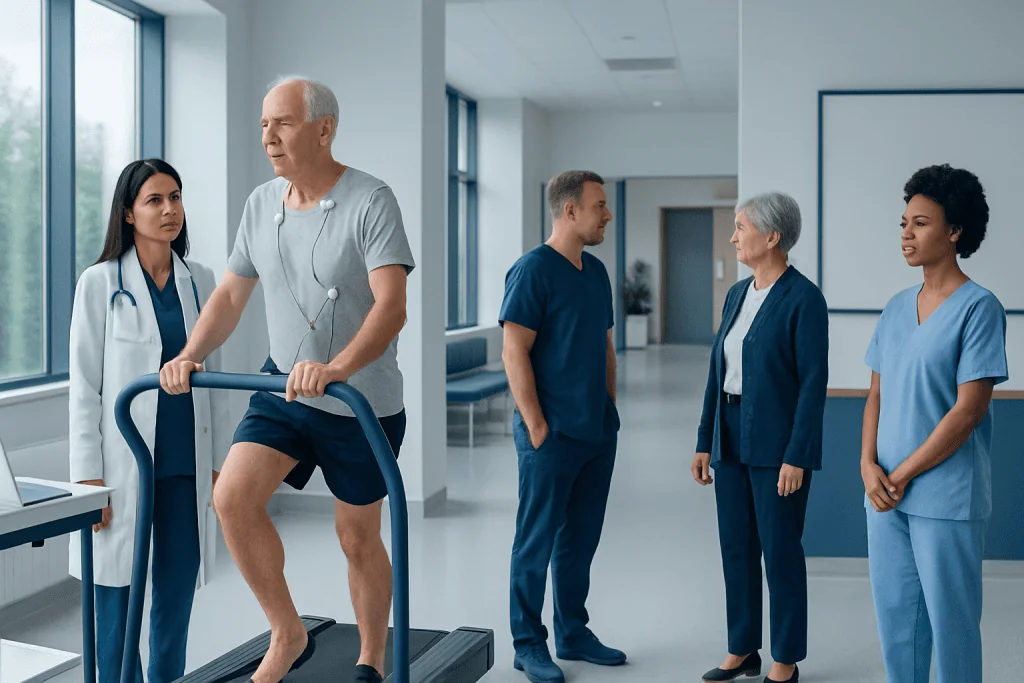
A stress test is sometimes used before bypass surgery to evaluate blood flow, exercise capacity, heart rhythm, and how well the heart muscle functions under demand. It may be recommended when symptoms, angiography findings, or other tests do not fully explain the patient’s risk or treatment needs.
Key Takeaways
- A stress test is sometimes used before bypass surgery to evaluate blood flow, exercise capacity, heart rhythm, and how well the heart muscle functions under demand.
- It may be recommended when symptoms, angiography findings, or other tests do not fully explain the patient’s risk or treatment needs.
- Different stress tests exist, including exercise ECG, stress echocardiography, nuclear perfusion imaging, cardiac MRI, and cardiopulmonary exercise testing.
- Stress testing is usually avoided in unstable or urgent situations, where surgery or other treatment should not be delayed.
- Results can help guide surgical planning, anesthesia assessment, medication decisions, and recovery expectations.
Stress testing before heart bypass surgery may help the care team understand how the heart responds to activity or medication-induced stress before coronary artery bypass grafting. It is not needed for every patient, but it can be useful when doctors need more information about symptoms, heart muscle function, ischemia, or overall surgical risk.
Overview
Heart bypass surgery, also called coronary artery bypass grafting or CABG, is performed to improve blood flow around blocked or severely narrowed coronary arteries. Before surgery, the medical team needs a clear picture of the patient’s coronary anatomy, heart muscle function, symptoms, other medical conditions, and overall surgical risk. Coronary angiography is often the key test that shows where the artery blockages are, but it does not always answer every question about how the heart performs during physical or metabolic stress.
Stress testing before heart bypass surgery may be requested when doctors need additional functional information. A stress test evaluates how the heart responds when it is asked to work harder, either through exercise or medication. Depending on the method used, the test may show changes in heart rhythm, blood pressure, oxygen use, blood flow to the heart muscle, pumping function, or areas of heart muscle that are at risk.
Not every patient scheduled for heart bypass surgery needs a stress test. In some cases, the diagnosis is already clear and the need for surgery is urgent or well established. In other cases, a carefully chosen stress test can help confirm the safest and most appropriate treatment plan.
Why a Stress Test May Be Needed Before Bypass Surgery
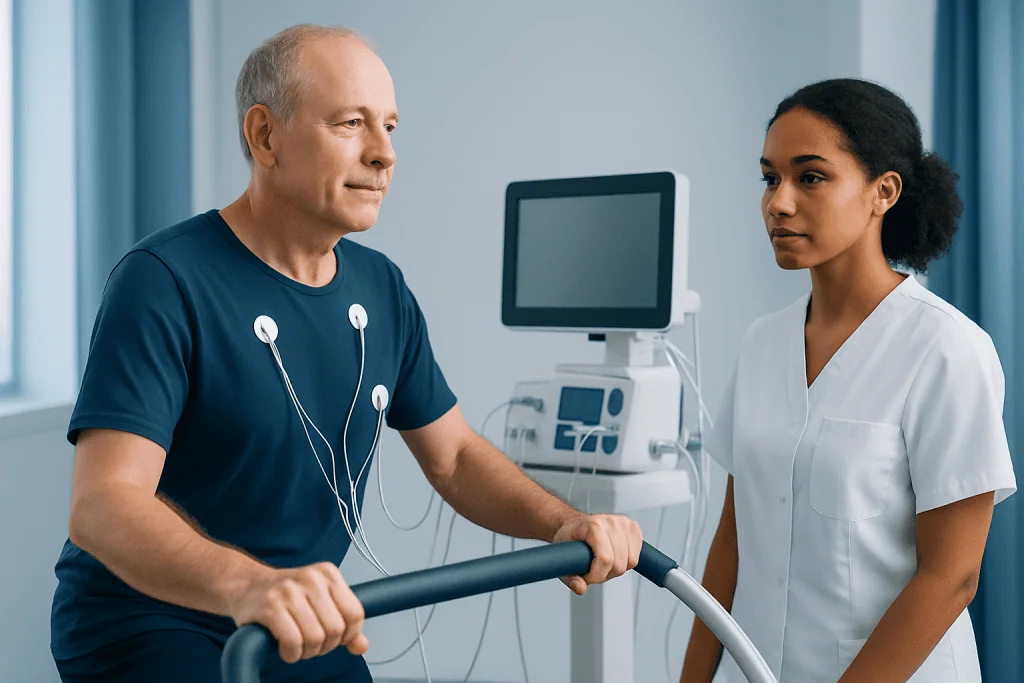
A stress test can help doctors understand whether symptoms such as chest pressure, shortness of breath, fatigue, or reduced exercise tolerance are related to reduced blood flow in the heart. This may be especially useful when symptoms are vague, when a patient has several possible causes of breathlessness, or when the severity of coronary artery disease seen on imaging does not fully match how the patient feels.
Stress testing can also help assess the amount of heart muscle that becomes ischemic, meaning it receives too little blood flow during increased demand. If a large area of the heart is affected, this may support the decision to proceed with bypass surgery rather than medication alone or catheter-based treatment. In selected patients, stress imaging can also help identify viable heart muscle that may recover function after blood flow is restored.
Doctors may use the information to plan the timing and type of coronary artery bypass surgery, to estimate operative risk, and to coordinate anesthesia and postoperative care. The aim is not simply to “pass” or “fail” a test, but to understand the patient’s heart in a more complete way before a major operation.
Types of Stress Tests Used in Cardiac Evaluation

The simplest form is an exercise electrocardiogram, often performed on a treadmill or stationary bicycle. During the test, the patient’s ECG, heart rate, blood pressure, and symptoms are monitored as exercise intensity gradually increases. This test is most useful when the patient can exercise safely and the resting ECG can be interpreted clearly.
Stress echocardiography combines stress with ultrasound imaging of the heart. It can show how the heart muscle contracts at rest and during stress. If a region of the heart moves less well during stress, it may suggest reduced blood flow. The stress may be created by exercise or by medication when a patient cannot exercise enough for a reliable result.
Nuclear perfusion imaging, such as SPECT or PET, uses a small amount of radioactive tracer to show blood flow to the heart muscle. Cardiac MRI stress testing can also evaluate perfusion, scar, and function in selected patients. Cardiopulmonary exercise testing may be used when doctors need detailed information about exercise capacity, oxygen use, lung function, and heart-lung interaction, especially in patients with complex medical conditions.
Who May or May Not Need Stress Testing
Stress testing is most helpful when it answers a specific clinical question. For example, it may be considered if a patient has stable symptoms, uncertain symptom cause, borderline findings on other tests, reduced heart function, or a need to evaluate exercise capacity before surgery. It may also be used when the care team wants to better understand whether a coronary blockage is causing ischemia before choosing between medical treatment, stenting, and surgery.
Stress testing may not be appropriate if the patient has unstable angina, ongoing chest pain at rest, certain serious rhythm problems, severe uncontrolled heart failure, very high-risk coronary anatomy requiring prompt action, or another urgent condition. In these situations, delaying treatment for a stress test may not be safe or useful. The cardiology and cardiac surgery teams decide this based on the patient’s current condition.
Some patients cannot perform an exercise stress test because of arthritis, neurological conditions, poor mobility, lung disease, or significant deconditioning. This does not automatically prevent testing. Medication-based stress tests may be an option, but the choice depends on blood pressure, heart rhythm, breathing conditions, kidney function, and other individual factors.
What to Expect and How to Prepare
Preparation depends on the type of stress test. Patients are usually advised to bring a list of medications and to ask in advance whether any medicines should be paused before the test. Some heart medications can affect the result, but they should only be stopped if the doctor specifically recommends it. Patients may also be asked to avoid caffeine before certain medication-based stress tests.
During the test, trained staff monitor the patient closely. For exercise testing, the intensity increases gradually while the patient reports symptoms such as chest discomfort, breathlessness, dizziness, or leg fatigue. For pharmacologic stress testing, medication is given through an IV to make the heart work harder or to change blood flow patterns in a controlled way. Imaging may be performed before, during, or after stress depending on the method.
Patients should tell the team if they have asthma or chronic obstructive pulmonary disease, kidney disease, pregnancy or possible pregnancy, previous reactions to contrast or medications, implanted devices, or difficulty lying flat. Comfortable clothing and shoes are useful for exercise tests. After many stress tests, patients can return to normal activities, although individual advice may vary.
How Results Can Guide Treatment Planning
Stress test results are interpreted together with coronary angiography, echocardiography, blood tests, medical history, and physical examination. A test may show how much of the heart is affected by reduced blood flow, whether the heart’s pumping function worsens under stress, or whether abnormal rhythms appear. These findings can help the team estimate risk and decide whether additional evaluation is needed before surgery.
In some patients, stress testing helps identify which artery blockages are most likely to be responsible for symptoms. This can support decisions about graft targets during coronary bypass surgery. It may also help determine whether other problems, such as valve disease, rhythm disturbances, lung disease, anemia, or poor physical conditioning, are contributing to symptoms.
Results may influence medication planning before and after surgery. For example, doctors may adjust anti-anginal treatment, blood pressure control, cholesterol management, diabetes care, or rhythm monitoring. After surgery, the findings may also help guide rehabilitation goals, including safe activity progression and long-term risk factor control.
Safety, Limitations, and Self-Care Before Surgery
Cardiac stress testing is widely used and is generally safe when performed for the right patient in an appropriate medical setting. The team screens for conditions that would make the test unsuitable, monitors the patient during the procedure, and stops the test if concerning symptoms or changes occur. Mild fatigue, temporary shortness of breath, flushing, headache, or palpitations can occur depending on the test type.
Stress tests also have limitations. A normal result does not always rule out coronary artery disease, and an abnormal result does not automatically mean surgery is the only option. Image quality, baseline ECG changes, body habitus, prior heart attack, medications, and the patient’s ability to exercise can all affect interpretation. This is why results should be reviewed by clinicians who understand the full clinical picture.
Before planned bypass surgery, patients can support their care by taking medications as instructed, not smoking, following guidance for diabetes and blood pressure control, reporting new symptoms promptly, and attending all preoperative appointments. If cardiac rehabilitation is recommended after surgery, a structured cardiac rehabilitation program can help patients rebuild strength and confidence safely.
When to See a Doctor
Patients being evaluated for bypass surgery should contact their cardiology team if symptoms change, become more frequent, or occur with less activity than before. Medical advice is also important for new swelling, fainting, rapid or irregular heartbeat, worsening shortness of breath, or difficulty taking prescribed medications. These changes may affect the timing of surgery or the need for additional testing.
Urgent medical care is needed for chest pain or pressure that is severe, persistent, occurs at rest, or is associated with sweating, nausea, faintness, or breathlessness. Patients should not attempt to manage these symptoms at home or wait for a scheduled appointment. Emergency evaluation can determine whether the heart is under immediate stress.
For international patients, Acibadem International’s multidisciplinary cardiology and cardiovascular surgery teams in JCI-accredited hospitals can evaluate coronary artery disease, perform preoperative testing when appropriate, and plan treatment in coordination with the patient’s medical history and travel needs.
Frequently asked questions
Is stress testing always required before heart bypass surgery?
No. Many patients do not need a stress test before bypass surgery, especially when coronary angiography and symptoms already clearly show the need for surgery. It is used selectively when the result may change planning, clarify risk, or explain symptoms.
Can a stress test be dangerous if coronary arteries are blocked?
Stress testing is performed with careful screening and monitoring, and the test is stopped if concerning changes occur. It may not be appropriate for unstable or urgent heart conditions. The cardiology team weighs the potential benefit of the information against the patient’s safety.
What if a patient cannot walk on a treadmill?
A medication-based stress test may be used when a patient cannot exercise adequately. The medication creates a controlled form of cardiac stress or changes blood flow patterns so imaging can show how the heart responds. The choice depends on the patient’s medical conditions and medications.
Does an abnormal stress test mean bypass surgery is definitely needed?
Not by itself. An abnormal stress test shows that the heart may not be getting enough blood flow under stress, but treatment decisions also depend on angiography, symptoms, heart function, overall health, and patient preferences. Options may include medication, stenting, bypass surgery, or a combination of approaches.
How long does a cardiac stress test take?
The active exercise or medication portion may be relatively short, but the full appointment can take longer because of preparation, monitoring, imaging, and recovery time. Nuclear and MRI-based stress tests often require more time than a simple exercise ECG. The testing center provides specific instructions before the appointment.
Can stress testing show whether heart muscle will recover after bypass surgery?
Some stress imaging tests can provide information about viable heart muscle, meaning muscle that is weakened but may improve after blood flow is restored. This can be helpful in patients with reduced pumping function or previous heart damage. The result is interpreted alongside other imaging and clinical findings.
References
- American Heart Association
- American College of Cardiology
- European Society of Cardiology
- Society of Thoracic Surgeons
- National Heart, Lung, and Blood Institute
This article is for general information only and is not a substitute for professional medical advice. Please consult a qualified doctor about your individual situation.
Heart Bypass Surgery in Turkey — costs, top hospitals & a free quote
JCI-accredited · board-certified surgeons · reply within 24h
Check your numbers in seconds
BMI, calories, due date, blood pressure and 30+ more clinical calculators — free, instant, doctor-reviewed ranges.