Cardiac Myxoma
Cardiac Myxoma is a benign heart tumor that can affect blood flow. Learn symptoms, causes, diagnosis, treatment, and when to seek care.
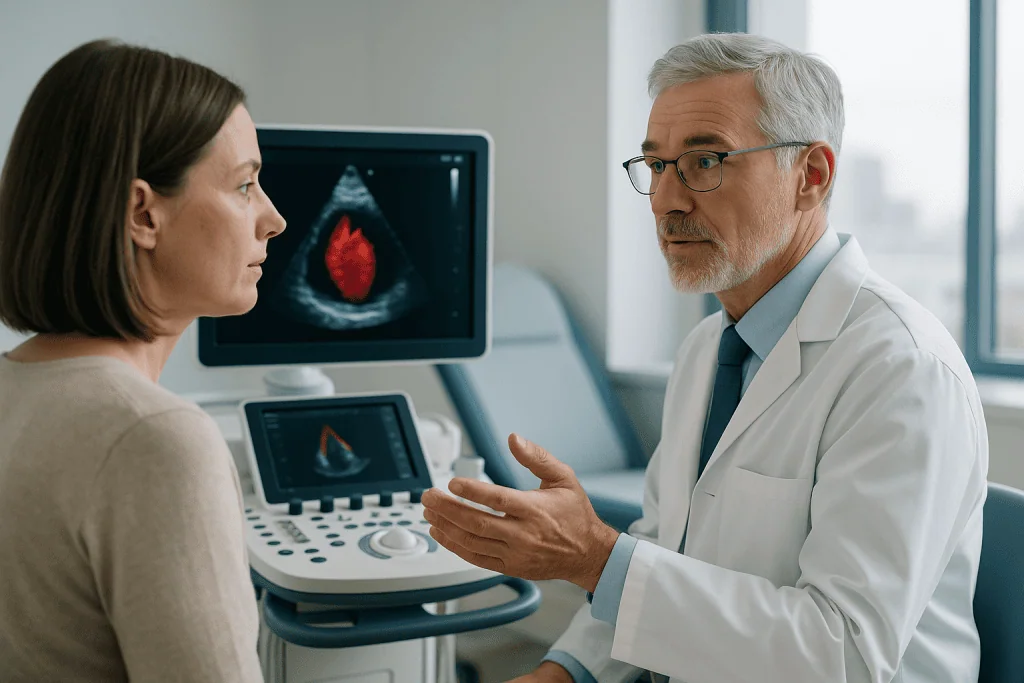
Quick answer
Cardiac myxoma is a noncancerous tumor that develops inside the heart, most often in an upper chamber, and can interfere with blood flow or cause symptoms by shedding small fragments. Treatment typically involves evaluation with heart imaging and surgical removal, with care focused on confirming the diagnosis, preventing complications, and monitoring recovery.
What is cardiac myxoma?
A cardiac myxoma is a noncancerous (benign) tumor that grows inside the heart. It is the most common type of primary heart tumor, which means a tumor that starts in the heart itself rather than spreading there from another part of the body. Although the word “tumor” can sound alarming, a cardiac myxoma is not cancer. It does not invade nearby tissue the way cancer does, and it does not spread to distant organs in the way cancerous tumors can. Even so, it is not harmless, because a growth inside a heart chamber can interfere with the way blood flows through the heart.
Most cardiac myxomas grow in the left atrium, one of the two upper chambers of the heart that receive blood. A smaller number develop in the right atrium, and myxomas in the lower chambers (the ventricles) are uncommon. The tumor is often attached to the wall that separates the two atria, called the atrial septum, by a stalk. Because it hangs from a stalk, the tumor can move with each heartbeat, which explains why some symptoms come and go or change when a person shifts position.
For readers searching “what is cardiac myxoma,” a simple summary is this: it is a soft, jelly-like, benign growth inside a heart chamber that can block blood flow, damage a heart valve, or release small fragments into the bloodstream. Cardiac myxoma can occur at any age but is diagnosed most often in adults, and it appears more frequently in women than in men. In a small number of families, myxomas occur as part of an inherited condition, in which case they may appear at a younger age and can come back after removal.
Symptoms of cardiac myxoma
Cardiac myxoma symptoms vary widely. Some people have no symptoms at all, and the tumor is found by chance during a heart scan performed for another reason. Others develop noticeable problems that depend on the tumor’s size, its location, and whether pieces of it break off into the bloodstream.
Common cardiac myxoma symptoms include:
- Shortness of breath, especially during activity or when lying flat
- Dizziness or fainting spells, sometimes triggered by changing body position
- Palpitationsan awareness of a fast, fluttering, or irregular heartbeat
- Chest discomfort or a feeling of pressure
- Fatigue and reduced ability to exercise
- Fever, night sweats, unintended weight loss, and joint achesgeneral (systemic) symptoms that can mimic an infection or an inflammatory illness
- Swelling of the legs or ankles, particularly with right-sided tumors
- Stroke-like symptoms, such as sudden weakness on one side of the body, slurred speech, or vision loss, if a fragment of the tumor travels to the brain
Doctors often group cardiac myxoma symptoms into three patterns. First are obstructive symptoms, which occur when the tumor blocks blood flow through a heart chamber or valve. A left atrial myxoma can act like a ball valve over the mitral valve (the valve between the left atrium and left ventricle), causing breathlessness, dizziness, or fainting. These symptoms can be positional, meaning they worsen or improve when the person sits up, lies down, or bends forward, because the mobile tumor shifts with gravity.
Second are embolic symptoms. Myxomas are soft and fragile, and small pieces can break away and travel through the bloodstream. This process is called embolization, and the traveling fragment is an embolus. A fragment from a left-sided myxoma can lodge in an artery supplying the brain, causing a stroke or a transient ischemic attack (a brief, stroke-like episode), or it can block arteries in the limbs or internal organs. Fragments from right-sided myxomas can travel to the lungs.
Third are constitutional symptoms, meaning whole-body effects such as fever, fatigue, weight loss, and muscle or joint pain. These are thought to result from substances the tumor releases into the blood. Because these symptoms are vague, cardiac myxoma is sometimes mistaken at first for an infection, an autoimmune disease, or another chronic illness.
The pattern of symptoms also differs by tumor location. Left atrial myxomas more often cause breathlessness and stroke-like events, while right atrial myxomas may cause leg swelling, abdominal fullness, or symptoms related to blood clots reaching the lungs. Small tumors may cause no obstruction at all yet still produce constitutional symptoms or embolic events, which is why size alone does not predict how serious a myxoma is.
Causes and risk factors
In most people, the exact cardiac myxoma cause is unknown. The great majority of cases are sporadic, meaning they arise on their own without any identifiable trigger, family pattern, or lifestyle factor. A sporadic myxoma is not caused by diet, exercise habits, smoking, stress, or anything the person did or failed to do.
A minority of cases are familial, meaning they run in families. The best-known example is Carney complex, a rare inherited condition caused by genetic changes that are passed from parent to child. People with Carney complex may develop cardiac myxomas at a younger age, may have tumors in more than one heart chamber or in unusual locations, and have a higher chance of the tumor returning after surgery. Carney complex can also cause spotty skin pigmentation and tumors of hormone-producing glands, so doctors who suspect it may recommend genetic counseling and screening of close relatives.
Known patterns and risk factors include:
- Sex: myxomas are diagnosed more often in women than in men.
- Age: most sporadic myxomas are found in middle adulthood, though they can occur at any age.
- Family history: a relative with cardiac myxoma or with Carney complex raises the possibility of an inherited form.
- Genetic syndromes: Carney complex and related inherited conditions account for a small share of cases.
Because sporadic myxomas have no known preventable cause, there is currently no reliable way to prevent them. What matters most is recognizing the condition when it causes symptoms and treating it before complications occur.
Diagnosis
Cardiac myxoma diagnosis usually begins when a doctor investigates symptoms such as unexplained breathlessness, fainting, a stroke in a younger person, or persistent fever and fatigue without an obvious cause. Sometimes the first clue is an unusual heart sound. In some cases of left atrial myxoma, a doctor listening with a stethoscope may hear a characteristic early diastolic sound called a “tumor plop,” produced by the tumor moving as the heart fills, although this sound is not present in everyone.
The key steps in confirming a cardiac myxoma diagnosis typically include:
- Echocardiography (heart ultrasound): this is the main test. A transthoracic echocardiogram, performed by moving an ultrasound probe over the chest, can show the tumor’s size, location, mobility, and its point of attachment. If more detail is needed, a transesophageal echocardiogram, in which a thin ultrasound probe is passed down the food pipe (esophagus) to view the heart from behind, provides clearer images of the atria and the atrial septum.
- Cardiac MRI or CT scanning: magnetic resonance imaging (MRI) and computed tomography (CT) give detailed pictures of the tumor’s tissue characteristics and its relationship to surrounding structures. These scans help doctors distinguish a myxoma from other possibilities, such as a blood clot (thrombus) inside the heart or a different type of tumor.
- Electrocardiogram (ECG): a recording of the heart’s electrical activity. It cannot show the tumor itself, but it may reveal rhythm disturbances associated with the condition.
- Blood tests: these may show signs of inflammation or mild anemia (a low red blood cell count), which are common with myxomas but are not specific to them.
- Tissue examination after removal: the definitive diagnosis is made when a pathologist (a doctor who examines tissue under a microscope) studies the tumor after it has been surgically removed. This confirms that the growth is a myxoma and not another type of tumor.
An important part of the diagnostic process is ruling out look-alike conditions. Blood clots in the atrium, infected growths on heart valves (vegetations), and other benign or malignant heart tumors can appear similar on imaging. The combination of the tumor’s typical location, its stalk-like attachment to the atrial septum, and its mobility on echocardiography usually points strongly toward myxoma, but only microscopic examination provides certainty.
Treatment options
The standard cardiac myxoma treatment is surgical removal. Unlike many benign tumors elsewhere in the body, a cardiac myxoma is generally not left in place once it has been identified, because of the ongoing risk of stroke, sudden obstruction of blood flow, and other serious complications. For this reason, doctors usually recommend surgery relatively soon after diagnosis, even in people whose symptoms are mild or absent.
Open-heart surgery. The traditional operation is performed through the breastbone with the support of a heart-lung machine, a device that temporarily takes over the work of the heart and lungs so the surgeon can operate on a still, opened heart. The surgeon removes the tumor along with its stalk and a margin of the tissue where it was attached, which helps reduce the chance of the tumor growing back. If the removal leaves a gap in the atrial septum, the surgeon repairs it, sometimes with a small patch. If the tumor has damaged a nearby heart valve, the valve may be repaired or, less commonly, replaced during the same operation.
Minimally invasive approaches. In selected patients, surgeons may remove the tumor through smaller incisions between the ribs, sometimes with video or robotic assistance. Whether this approach is suitable depends on the tumor’s size and location, the patient’s anatomy and overall health, and the experience of the surgical team. Your doctors will explain which approach they consider appropriate in your situation.
Medication. There is no medication that shrinks or cures a cardiac myxoma. Medicines play a supporting role: for example, drugs may be used to manage heart rhythm disturbances, treat heart failure symptoms while awaiting surgery, or, in certain circumstances, reduce clotting risk. Any medication plan is individualized, and blood-thinning drugs do not remove the risk posed by tumor fragments, which are tumor tissue rather than ordinary blood clots.
Watchful waiting. Simply monitoring a confirmed myxoma without surgery is generally not the preferred strategy, because complications can occur unpredictably. However, in people who are too frail for an operation or who have other serious illnesses, doctors may weigh the risks and benefits of surgery against careful observation. This is a decision made case by case between the patient, the family, and the medical team.
Follow-up after surgery. After removal, most people have periodic echocardiograms to check that the tumor has not returned. Recurrence is uncommon in sporadic myxomas but is more likely in familial forms such as Carney complex, which is one reason long-term follow-up matters. Evaluation and long-term monitoring of heart tumors are typically coordinated by heart specialists; at Acibadem, for example, this condition is managed within the Cardiology Department in cooperation with cardiac surgeons.
Living with cardiac myxoma and outlook
For most people, the outlook after successful removal of a cardiac myxoma is favorable. Because the tumor is benign and does not spread the way cancer does, complete surgical removal often resolves the problem, and many patients return to their usual activities after they recover from the operation. Symptoms caused by obstruction, such as breathlessness and fainting, typically improve once the tumor is gone.
Recovery from heart surgery takes time. In the weeks after an open-heart operation, patients usually need to limit heavy lifting and strenuous activity while the breastbone heals, and many benefit from a structured cardiac rehabilitation program: a supervised plan of exercise, education, and support after heart surgery. Recovery after minimally invasive surgery may be somewhat quicker, though this varies from person to person.
Long-term, the most important element of living with a history of cardiac myxoma is regular follow-up. Periodic echocardiograms allow doctors to detect any recurrence early, when it is easiest to treat. People with familial myxoma or Carney complex need closer, lifelong surveillance, and their first-degree relatives may be offered screening as well. If a myxoma caused a stroke or another embolic event before surgery, additional rehabilitation and follow-up related to that event may also be needed.
It is honest to say that no doctor can guarantee a myxoma will never return, and outcomes depend on individual factors such as age, overall health, tumor characteristics, and whether complications occurred before treatment. Still, for the majority of patients with a sporadic myxoma that is fully removed, the long-term outlook is generally good.
Frequently asked questions
What is cardiac myxoma in simple terms?
A cardiac myxoma is a benign, soft, jelly-like tumor that grows inside a chamber of the heart, most often the left atrium. It is not cancer, but it can block blood flow through the heart or shed fragments into the bloodstream, so doctors usually recommend removing it once it is found.
Is cardiac myxoma cancer?
No. A cardiac myxoma is a benign tumor, meaning it does not invade surrounding tissue or spread to other organs the way cancer does. However, “benign” does not mean risk-free: the tumor’s position inside the heart means it can still cause serious problems, including stroke and obstruction of blood flow, which is why treatment is recommended rather than simple observation in most cases.
How serious is a cardiac myxoma?
The seriousness varies. Some myxomas are found by chance and have caused no symptoms, while others lead to fainting, heart failure symptoms, or stroke. Because complications can occur unpredictably even with small tumors, doctors generally treat a confirmed myxoma as a condition that needs timely surgical attention rather than something to watch indefinitely.
Can a cardiac myxoma heal or go away on its own?
No. A cardiac myxoma does not shrink or disappear on its own, and no medication is known to cure it. Surgical removal is the accepted treatment. Medicines may help manage symptoms or rhythm problems in the meantime, but they do not remove the tumor or eliminate its risks.
What causes cardiac myxoma?
In most cases the cause is unknown, and the tumor arises sporadically without any link to lifestyle, diet, or previous illness. A small proportion of cases are inherited, most notably as part of Carney complex, a rare genetic condition. If myxomas run in your family or you were diagnosed at a young age, your doctor may suggest genetic counseling and screening for relatives.
How long is recovery after cardiac myxoma surgery?
Recovery time varies with the type of operation and the person’s overall health. After open-heart surgery, many people spend several days in the hospital and then need a number of weeks at home before returning to normal activities, with heavy lifting restricted while the breastbone heals. Minimally invasive procedures may allow a somewhat faster recovery. Your surgical team will give you a personalized timeline and activity plan.
Can a cardiac myxoma come back after it is removed?
Recurrence is uncommon when a sporadic myxoma is completely removed along with its attachment site, but it is not impossible. The risk of recurrence is higher in familial forms such as Carney complex. For this reason, doctors recommend periodic echocardiograms after surgery so that any regrowth can be detected early.
When to see a doctor
If you have already been diagnosed with a cardiac myxoma, or you are recovering from surgery, contact your medical team promptly about any new or worsening symptoms. Seek emergency medical care immediately if you or someone near you experiences any of the following red-flag warning signs:
- Sudden weakness or numbness on one side of the face, arm, or leg, slurred speech, confusion, or sudden vision losspossible signs of a stroke
- Fainting or near-fainting, especially if it happens with changes in body position or during activity
- Severe or rapidly worsening shortness of breath, or inability to lie flat because of breathlessness
- Chest pain or pressure that is new, severe, or does not go away
- A sudden, painful, cold, or pale arm or lega possible sign that an artery has been blocked by a tumor fragment
- A racing or very irregular heartbeat accompanied by dizziness or breathlessness
- Persistent fever, night sweats, or unexplained weight loss, particularly together with fatigue or joint aches
Even without these emergencies, make an appointment with a doctor if you have ongoing unexplained breathlessness, fatigue, palpitations, or episodes of dizziness. These symptoms have many possible causes, most of which are not cardiac myxoma, but they deserve proper evaluation. Early diagnosis allows heart tumors to be treated before complications develop, and specialist teams, such as the cardiology and cardiac surgery units at centers including Acibadem, can carry out the imaging tests needed to find the cause.
Medically reviewed by the Acıbadem International Medical Board September 3, 2026
See our medical review board →
Update history
- PublishedJune 8, 2026
- Medical review approvedSeptember 3, 2026
- Last content updateSeptember 3, 2026