How the Brain Is Made Up: Structure, Function, and Common Myths
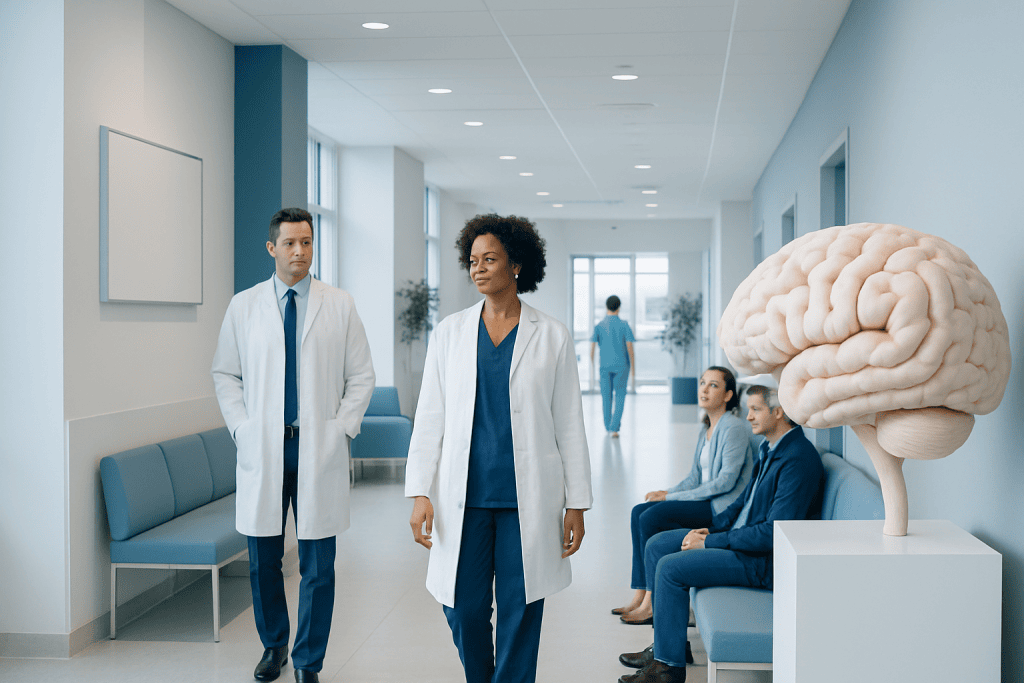
The brain is made up of the cerebrum, cerebellum, brainstem, and supporting structures. Different brain regions work together rather than in isolation.
Key Takeaways
- The brain is made up of the cerebrum, cerebellum, brainstem, and supporting structures.
- Different brain regions work together rather than in isolation.
- The brain controls both conscious activities, such as speech and movement, and automatic functions, such as breathing and heart rate.
- The brain can adapt and reorganize through a process called neuroplasticity.
- Common myths, including the idea that people use only 10% of their brain, are not supported by science.
The brain is a highly organized organ made of interconnected regions that control thought, movement, memory, emotions, and essential body functions. Understanding its structure can make brain health easier to follow and can help clear up many common myths.
Overview: What the Brain Is Made Of
The brain is the body’s control center. It receives information from the senses, interprets that information, and sends signals that guide movement, speech, emotions, memory, and many automatic processes that keep a person alive. Although it weighs only a small portion of total body mass, it uses a large amount of the body’s energy because its cells are constantly active.
From a structural point of view, the brain is made up of billions of nerve cells called neurons, along with support cells called glial cells. Neurons communicate through electrical and chemical signals, forming complex networks. These networks allow a person to think, learn, remember, feel, and respond to the environment.
The brain is not one single uniform organ. It has several major parts, each with specialized tasks. The main divisions are the cerebrum, cerebellum, and brainstem. Other important structures, such as the thalamus, hypothalamus, and limbic system, help regulate sensation, hormones, temperature, sleep, appetite, and emotion.
The brain is also protected in several ways. The skull provides a hard outer shell, while membranes called meninges surround the brain tissue. Cerebrospinal fluid cushions the brain and spinal cord. Together, these protective systems help reduce injury, though the brain can still be affected by trauma, stroke, infection, tumors, and degenerative disease.
The Main Parts of the Brain and What They Do
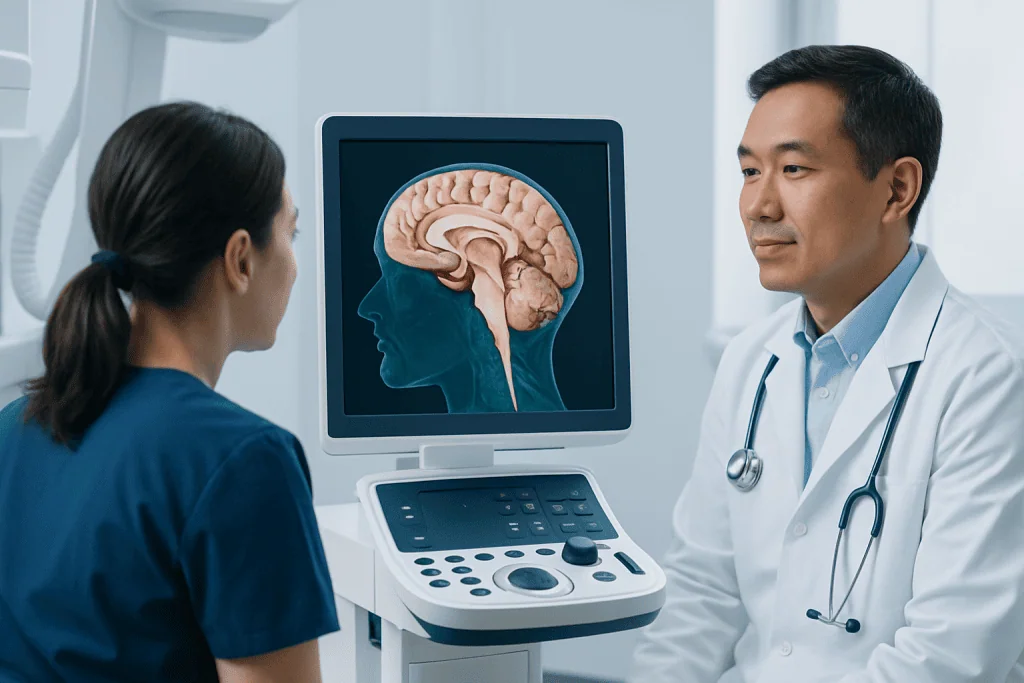
The cerebrum is the largest part of the brain. It is divided into right and left hemispheres and has a folded outer layer called the cerebral cortex. This region supports higher functions such as language, reasoning, voluntary movement, sensory perception, and conscious thought. Different areas of the cortex specialize in different tasks, but they constantly communicate with one another.
Each hemisphere of the cerebrum is also divided into lobes. The frontal lobe helps with planning, decision-making, behavior, and movement. The parietal lobe processes touch and helps with spatial awareness. The temporal lobe is involved in hearing, language, and memory. The occipital lobe mainly processes vision. These lobes do not work alone; even simple activities often depend on several areas working together at the same time.
The cerebellum sits at the back of the brain, below the cerebrum. It plays a major role in balance, posture, coordination, and the fine-tuning of movement. It also contributes to motor learning, which helps a person improve skills such as writing, speaking clearly, or riding a bicycle through practice.
The brainstem connects the brain to the spinal cord. It includes the midbrain, pons, and medulla. This area controls many automatic functions, including breathing, heart rate, blood pressure, swallowing, and wakefulness. Because these functions are essential for life, problems affecting the brainstem can be especially serious and require urgent medical care.
How Brain Cells Communicate
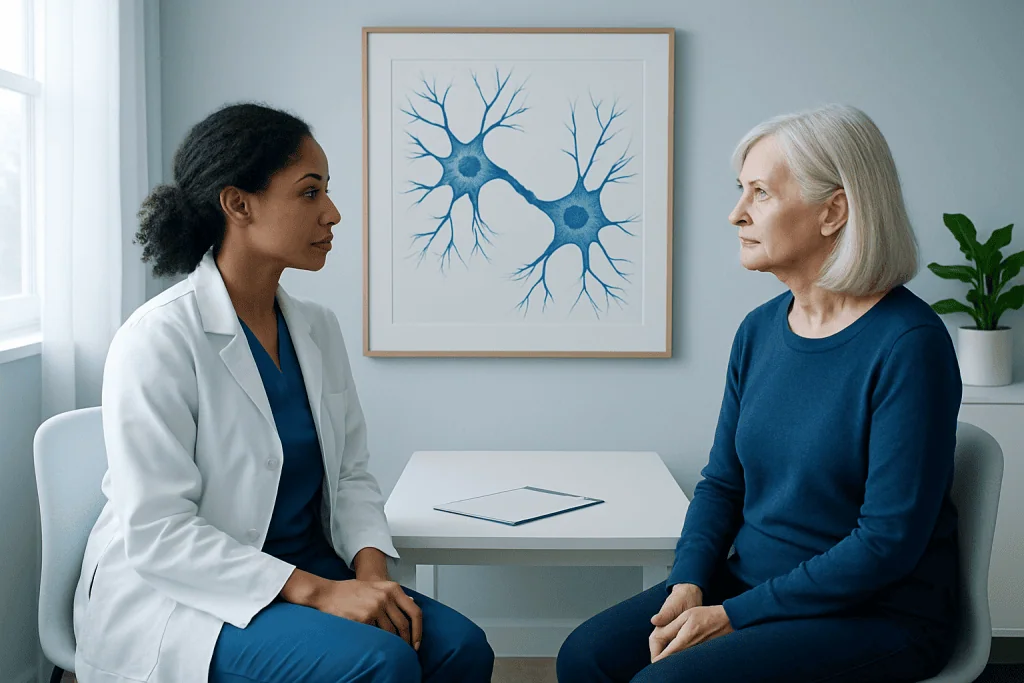
Neurons are the main signaling cells of the brain. They send messages along long extensions and pass information to other cells at junctions called synapses. At these synapses, chemicals known as neurotransmitters carry signals from one neuron to the next. This communication system allows the brain to react quickly and coordinate highly complex tasks.
Different neurotransmitters have different roles. Some help regulate mood, while others support attention, sleep, memory, or movement. Healthy brain function depends on a balanced and well-coordinated signaling system. Changes in these systems can contribute to neurological or mental health conditions, although many such conditions are influenced by several factors rather than a single chemical imbalance.
Glial cells, once thought to be only support cells, are now known to be very important. They help nourish neurons, maintain the environment around them, remove waste, and support immune defense in the nervous system. Some also help form myelin, a protective covering around nerve fibers that allows signals to travel more efficiently.
The brain’s communication pathways are not fixed for life. Connections can strengthen, weaken, or reorganize in response to learning, experience, injury, or disease. This ability, called neuroplasticity, is one reason rehabilitation can help after certain brain injuries and why lifelong learning and healthy habits can support brain function over time.
Important Supporting Structures
Several deeper brain structures help coordinate everyday life. The thalamus acts as a relay center for much of the sensory information traveling to the cerebral cortex. The hypothalamus helps regulate temperature, hunger, thirst, sleep, and hormone-related functions. Nearby, the pituitary gland works closely with the hypothalamus to influence many hormones throughout the body.
The limbic system is a group of structures involved in emotion, motivation, and memory. It includes the hippocampus, which is especially important for forming new memories, and the amygdala, which helps process emotional responses such as fear and threat detection. These areas help explain why emotions and memories are closely connected.
The brain’s white matter contains bundles of nerve fibers that link different brain regions, allowing fast communication across networks. Gray matter, by contrast, contains many neuron cell bodies and is heavily involved in processing information. Both gray and white matter are important for healthy cognition and movement.
The brain is separated from much of the body’s circulation by the blood-brain barrier, a protective filtering system. This barrier helps keep harmful substances out while allowing essential nutrients in. Although protective, it can also make treatment more complex for some conditions affecting the brain.
How the Brain Supports Everyday Function
Many people think of the brain mainly as the organ of thought, but its responsibilities are much broader. It helps control movement, sensation, speech, learning, memory, mood, sleep, appetite, temperature regulation, and automatic functions such as breathing. Even activities that seem simple, such as walking across a room or answering a question, rely on multiple brain systems working in coordination.
For example, reading a sentence involves vision, attention, language processing, and memory. Reaching for a cup requires visual guidance, motor planning, muscle coordination, balance, and sensory feedback. Emotional experiences can also influence the brain’s response to pain, memory formation, and decision-making, showing how deeply connected these systems are.
The brain also changes across the lifespan. In childhood and adolescence, the brain develops rapidly, especially in areas linked to learning, self-control, and social understanding. In adulthood, the brain continues to adapt through experience. With aging, some changes in processing speed and memory can occur, but many people maintain strong brain function through healthy lifestyle habits and regular mental and social engagement.
When disease or injury affects the brain, symptoms can vary widely depending on the region involved. Problems may include weakness, numbness, speech changes, seizures, balance difficulty, memory problems, headaches, or changes in personality. In some cases, doctors may investigate conditions such as brain tumors or stroke when symptoms suggest a structural or vascular problem.
Common Myths About the Brain
One of the most common myths is that people use only 10% of their brain. In reality, brain imaging and neurological research show that many areas of the brain are active throughout the day, even during rest and sleep. Different tasks activate different networks, but the brain as a whole is very much in use.
Another myth is that the left side of the brain is purely logical while the right side is purely creative. It is true that some functions show stronger involvement from one hemisphere than the other, such as language often being more dominant on the left in many people. However, most real-world thinking, creativity, emotion, and problem-solving rely on both hemispheres working together.
Some people believe that brain damage always means permanent loss of function. While some injuries can have lasting effects, the brain often has some ability to adapt. Through rehabilitation, practice, and neuroplasticity, other networks may partly take over certain functions. Support may include physical therapy and rehabilitation or speech and language therapy when speech, swallowing, or movement are affected.
A further myth is that memory works like a video recording. Human memory is more dynamic. The brain stores, reconstructs, and sometimes reshapes memories over time. That is why memory can be influenced by attention, emotion, sleep, stress, and aging, and why accurate diagnosis is important when memory problems become noticeable.
How Doctors Evaluate Brain Health
Doctors assess brain health by combining medical history, symptom review, physical examination, and neurological examination. They may check strength, reflexes, coordination, sensation, speech, eye movements, balance, and mental status. This helps identify whether a problem may involve a specific part of the nervous system.
Imaging tests are often used when structural problems are suspected. A computed tomography scan can be useful in urgent situations, especially after injury or when bleeding is a concern. Magnetic resonance imaging provides more detailed views of brain tissue and may be used to evaluate tumors, inflammation, stroke, demyelinating disease, or other abnormalities. In appropriate cases, clinicians may request MRI or CT scan imaging to clarify the diagnosis.
Additional tests may include blood tests, electroencephalography for seizure-related symptoms, lumbar puncture in selected cases, or neuropsychological assessment for memory and thinking concerns. The choice of tests depends on a person’s symptoms, age, medical history, and examination findings.
Evaluation is especially important when symptoms appear suddenly or worsen over time. Early assessment can help distinguish between temporary issues, treatable medical causes, and more serious neurological conditions. A careful diagnosis also helps guide treatment and follow-up.
Protecting Brain Health and When to Seek Medical Advice
While not all brain conditions can be prevented, many habits support long-term brain health. These include regular physical activity, good sleep, a balanced diet, social connection, stress management, and avoiding smoking or excessive alcohol use. Managing blood pressure, diabetes, and cholesterol is also important because blood vessel health strongly affects the brain.
Head injury prevention matters as well. Wearing seat belts, using helmets during appropriate sports or activities, and reducing fall risk in older adults can help protect the brain. Mental stimulation through reading, learning, conversation, music, or hobbies may also support healthy cognitive function over time.
A person should seek medical advice if they have persistent headaches, unexplained memory problems, frequent dizziness, seizures, balance changes, weakness, numbness, new speech difficulties, or major changes in behavior or personality. Emergency care is needed for sudden symptoms such as facial drooping, arm weakness, severe confusion, sudden trouble speaking, or a sudden severe headache, as these may suggest a stroke or another urgent condition.
For patients who need specialist evaluation, Acibadem International’s multidisciplinary teams and JCI-accredited hospitals diagnose and treat brain-related conditions for international patients. A neurologist or neurosurgeon can help explain symptoms, recommend testing, and create a care plan that fits the individual patient’s needs.
Frequently asked questions
What are the three main parts of the brain?
The three main parts are the cerebrum, cerebellum, and brainstem. The cerebrum handles higher thinking and voluntary movement, the cerebellum supports coordination and balance, and the brainstem controls vital automatic functions such as breathing and heart rate.
Does each part of the brain have only one job?
No. Although certain regions are strongly linked to certain functions, the brain works through networks. Most activities, including speech, movement, and memory, involve several areas working together.
Do people really use only 10% of their brain?
No, this is a myth. Brain research shows that many parts of the brain are active throughout the day, and even rest and sleep involve important brain activity.
Can the brain heal itself after injury?
In some cases, the brain can adapt through neuroplasticity, which means it can reorganize some connections. Recovery depends on the type and location of the injury, the person’s overall health, and how quickly treatment and rehabilitation begin.
What protects the brain?
The brain is protected by the skull, the meninges, and cerebrospinal fluid. It is also partly protected by the blood-brain barrier, which helps limit the entry of harmful substances from the bloodstream.
When should someone worry about brain symptoms?
Sudden symptoms such as weakness, trouble speaking, confusion, severe headache, or seizures need prompt medical attention. Ongoing issues like memory decline, balance problems, or persistent headaches should also be evaluated by a qualified doctor.
References
- World Health Organization
- National Institute of Neurological Disorders and Stroke
- National Institute on Aging
- MedlinePlus
- Mayo Clinic
This article is for general information only and is not a substitute for professional medical advice. Please consult a qualified doctor about your individual situation.
Explore treatments in Turkey — costs, top hospitals & a free quote
JCI-accredited · board-certified surgeons · reply within 24h
Add us as a Preferred Source to see more of our trusted health content across Google Search, AI Overviews and Discover.
Check your numbers in seconds
BMI, calories, due date, blood pressure and 30+ more clinical calculators — free, instant, doctor-reviewed ranges.