

Children’s Hospital vs Pediatric Center: How Families Can Choose the Right Care

A pediatric center often provides outpatient care, routine checkups, and access to child-focused specialists. A children’s hospital is usually better equipped for complex illnesses, surgery, intensive care, and emergencies.
Key Takeaways
- A pediatric center often provides outpatient care, routine checkups, and access to child-focused specialists.
- A children’s hospital is usually better equipped for complex illnesses, surgery, intensive care, and emergencies.
- Families can compare services, specialist availability, emergency support, and care coordination before deciding.
- The right setting depends on the child’s medical needs, not simply the size or name of the facility.
- Parents should seek urgent medical attention right away for breathing trouble, severe injury, dehydration, or changes in consciousness.
Choosing between a children’s hospital and a pediatric center can feel confusing, especially when a child needs prompt or specialized care. The best choice usually depends on the child’s age, symptoms, diagnosis, and whether they need routine, urgent, or highly specialized treatment.
Overview: What Is the Difference?
When families compare a children’s hospital vs pediatric center, they are usually trying to understand what type of care each setting provides and which one best matches their child’s needs. Both are designed to care for infants, children, and adolescents, but they may differ in size, services, and the complexity of the conditions they treat.
A pediatric center often focuses on outpatient care. This may include regular checkups, vaccinations, developmental assessments, diagnostic visits, and appointments with pediatric specialists. Some pediatric centers are part of larger hospitals, while others are standalone clinics or specialty centers. They can be an excellent choice for ongoing care and for non-emergency problems that still need expert attention.
A children’s hospital typically offers a broader range of services, including inpatient care, surgery, emergency medicine, pediatric intensive care, and multiple pediatric subspecialties under one roof. These hospitals are usually structured around the medical, emotional, and developmental needs of children. They may be especially important for serious infections, complex chronic diseases, major injuries, congenital conditions, or cases that require a team of specialists.
In practical terms, the difference is less about which option is “better” and more about which one is more appropriate at a given time. A child with a mild rash, follow-up asthma visit, or feeding concern may do very well in a pediatric center, while a child with severe breathing difficulty, suspected appendicitis, or a condition needing surgery may be better served in a children’s hospital.
What Services Families Can Expect
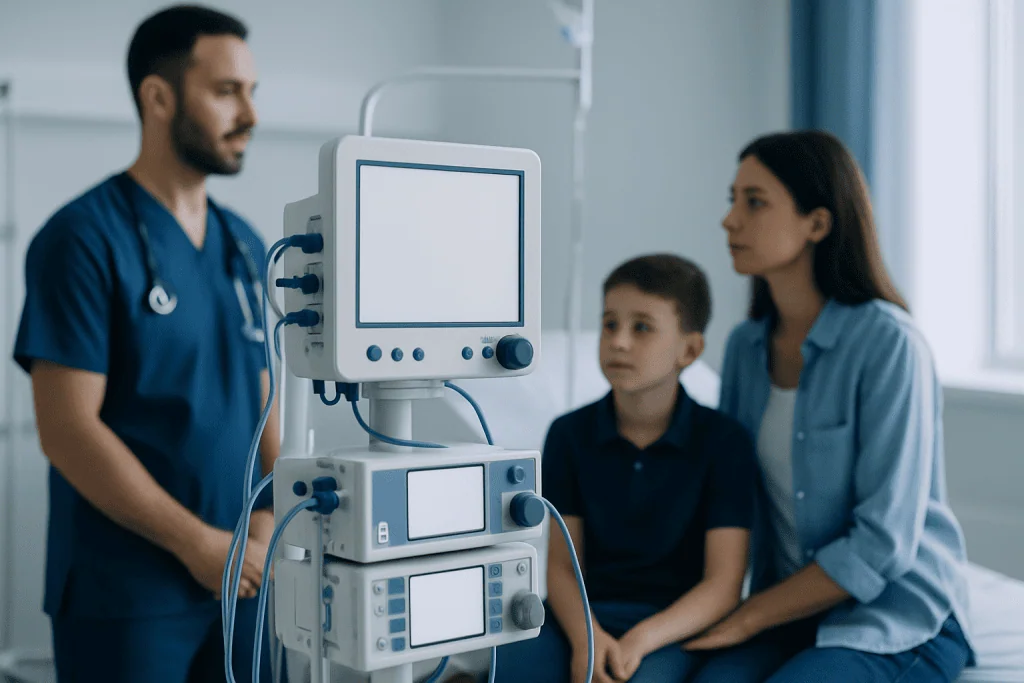
Understanding the scope of services can make the decision easier. Pediatric centers often provide preventive care and planned specialist evaluations. Many families use them for routine health needs, developmental monitoring, laboratory testing, imaging, and outpatient procedures that do not require overnight admission.
Children’s hospitals generally provide everything a pediatric center offers, along with more advanced and hospital-based services. These can include emergency departments dedicated to children, neonatal and pediatric intensive care units, inpatient wards, pediatric anesthesia, surgical services, rehabilitation, and access to rare disease expertise.
Services may vary by facility, but families often compare the following:
- Routine pediatric visits and vaccinations
- Specialist clinics such as cardiology, neurology, gastroenterology, and endocrinology
- Diagnostic imaging and laboratory services
- Emergency and urgent care access
- Surgical and anesthesia support for children
- Inpatient admission and intensive care availability
- Rehabilitation, nutrition, psychology, and child life support
For a child with a known ongoing condition, it can be helpful to ask whether care is coordinated across specialties. For example, children with complex neurological or developmental concerns may benefit from a center that can connect appointments, testing, and treatment planning. In some situations, families may also need access to procedures such as pediatric bone marrow transplantation or specialized pediatric cardiology and cardiac surgery, which are more likely to be available in a children’s hospital setting.
When a Pediatric Center May Be the Right Choice

A pediatric center may be a strong option when a child is stable and needs outpatient evaluation, follow-up, or planned specialty care. Many families prefer this setting for routine visits because it can feel more streamlined, less overwhelming, and easier to navigate than a large hospital.
Common reasons to choose a pediatric center include regular well-child care, vaccination visits, school or sports health assessments, feeding and growth concerns, allergy evaluation, mild asthma follow-up, developmental checks, and second opinions for non-urgent symptoms. Pediatric centers may also support children who need repeated visits with the same specialist over time.
Another advantage is continuity. Families often appreciate seeing the same pediatric team regularly, which can help with long-term monitoring and communication. This can be particularly helpful for children with chronic but stable conditions such as eczema, constipation, headaches, or attention and learning concerns.
If a child needs more advanced testing or inpatient treatment later, many pediatric centers can refer directly to a larger children’s hospital. In this way, pediatric centers often serve as an important first step in identifying whether a child’s condition can be managed locally or whether more specialized care is needed.
When a Children’s Hospital May Be Best
A children’s hospital may be the better choice when a child has severe symptoms, a complex diagnosis, or a condition that could worsen quickly. These hospitals are typically designed to manage urgent and high-risk situations with teams trained specifically in pediatric emergency care, pediatric surgery, and intensive care medicine.
Families may be directed to a children’s hospital if a child has trouble breathing, seizures, high-risk infections, severe dehydration, serious injury, uncontrolled pain, unexplained weakness, or signs of a condition that may need surgery. A children’s hospital is also often the best place for rare diseases, congenital disorders, cancer care, advanced imaging under sedation, and multispecialty evaluations.
Examples of needs that may point toward a children’s hospital include suspected leukemia, significant heart defects, severe complications of prematurity, or complex brain and nerve conditions. Some children may also need coordinated services such as pediatric neurosurgery or advanced respiratory and intensive care support.
Because children’s hospitals usually bring many specialties together, they can also improve coordination for children who need several experts involved at once. That team might include pediatricians, surgeons, radiologists, rehabilitation specialists, nutrition professionals, psychologists, and social workers. This coordinated approach can reduce delays and help families understand the overall care plan more clearly.
How Families Can Compare Their Options
When deciding where to go, families can start by asking what the child needs right now. Is this a preventive visit, a non-urgent specialist problem, a worsening illness, or a true emergency? Matching the urgency and complexity of the problem to the facility’s resources is often the most important step.
It can help to ask practical questions before scheduling care. For example, does the center have pediatric-trained specialists for the child’s condition? Are same-day appointments available? Can the facility perform testing on-site? If a child needs admission or surgery, can that happen there, or would a transfer be needed?
Other useful factors to compare include:
- Availability of pediatric emergency care
- Access to child-friendly imaging, anesthesia, and sedation
- Experience with the child’s age group and diagnosis
- Coordination between specialists and primary care
- Language support, family accommodations, and travel logistics
- Insurance coverage and referral requirements
Parents may also want to consider how comfortable the environment feels for their child. Child-focused spaces, nursing staff experienced with children, and clear communication can make a meaningful difference. Near the end of the decision process, families may benefit from facilities that provide comprehensive pediatric pathways, including advanced services such as pediatric oncology when needed. Acibadem International’s multidisciplinary specialists and JCI-accredited hospitals diagnose and treat children across a wide range of routine and complex conditions for international patients.
Questions to Ask Before Making a Decision
Parents and caregivers do not need to make this decision alone. A child’s primary care doctor, family physician, or current specialist can often recommend the most appropriate setting. Bringing a short list of questions to an appointment or phone call can help families feel more confident and informed.
Useful questions may include: Does my child need urgent assessment today? Is this best managed as an outpatient problem? Are pediatric subspecialists available if needed? What signs would mean we should go directly to a hospital instead of waiting for a clinic visit?
Families can also ask about experience with particular conditions. For example, if a child has recurrent wheezing, delayed development, feeding difficulties, or a complex blood disorder, it is reasonable to ask how often the team evaluates these issues and what other services are available if results suggest a more serious cause. If symptoms overlap with broader conditions such as epilepsy, developmental syndromes, or blood cancers, specialist input may be especially important.
Keeping records organized can also help. Parents may want to bring medication lists, growth records, vaccination history, previous imaging or lab results, and notes about symptoms. This information can reduce repeated testing and make transitions between a pediatric center and a children’s hospital smoother if referral becomes necessary.
When to Seek Urgent Medical Care
Some situations should not wait for a routine clinic decision. Families should seek urgent or emergency care right away if a child has difficulty breathing, bluish lips, severe dehydration, confusion, a seizure, loss of consciousness, severe allergic reaction, major injury, heavy bleeding, or sudden severe pain.
Urgent evaluation is also important for very young infants with fever, children who are unusually hard to wake, signs of meningitis such as neck stiffness with fever, or symptoms of appendicitis such as worsening abdominal pain with vomiting. A child who looks significantly unwell, is not drinking, or has rapid worsening symptoms should be assessed promptly.
In these circumstances, a children’s hospital or the nearest emergency department with pediatric capability may be the safest option. Families should not delay emergency care while trying to compare facilities online or wait for a regular clinic appointment.
For less urgent concerns, parents can contact their pediatrician and ask whether a pediatric center is appropriate or whether hospital-based care is recommended. Timely guidance can help children receive the right level of care without unnecessary delay.
Frequently asked questions
Is a children’s hospital always better than a pediatric center?
Not always. A children’s hospital is usually best for emergencies, surgery, inpatient care, or complex illnesses, while a pediatric center may be ideal for routine, preventive, and non-urgent specialist care. The right choice depends on the child’s current medical needs.
What types of problems can a pediatric center manage?
A pediatric center can often manage checkups, vaccinations, developmental concerns, stable chronic conditions, and many outpatient specialist evaluations. It may also provide testing and follow-up care. If a child needs hospital admission or advanced procedures, referral to a children’s hospital may be recommended.
When should parents go straight to a children’s hospital?
Parents should consider immediate hospital care for severe breathing problems, seizures, major injuries, dehydration, severe pain, or rapid worsening symptoms. Children with suspected complex or high-risk conditions may also benefit from direct hospital assessment. If in doubt, urgent medical advice should be sought promptly.
Can a pediatric center refer a child to a children’s hospital?
Yes. Many pediatric centers work closely with larger hospitals and can arrange referral when a child needs more specialized testing, surgery, or inpatient care. This is a common and important part of coordinated pediatric care.
How can families know whether a facility has the right specialists?
Families can ask directly about pediatric subspecialties, age-specific services, emergency support, and whether the team regularly treats the child’s condition. A primary care doctor can also help guide this decision. It is reasonable to ask whether transfer would be needed if the problem becomes more complex.
Does the child’s age affect the choice?
Yes, especially for newborns, infants, and children with complex developmental or congenital conditions. Very young children may need facilities with pediatric-trained staff, child-friendly imaging, and age-specific emergency care. Age can also affect how symptoms are assessed and treated.
References
- American Academy of Pediatrics
- Centers for Disease Control and Prevention
- National Institute for Health and Care Excellence
- World Health Organization
This article is for general information only and is not a substitute for professional medical advice. Please consult a qualified doctor about your individual situation.
Explore treatments in Turkey — costs, top hospitals & a free quote
JCI-accredited · board-certified surgeons · reply within 24h
Add us as a Preferred Source to see more of our trusted health content across Google Search, AI Overviews and Discover.

More from the Health Library



Related Specialists

Assoc. Prof. Dr. Işil Yıldız
Gastrointestinal Oncology Unit Clinical Service
Dr. Müzeyyen İyigün
Anesthesiology
Prof. Dr. Fatih Ata Genç
General Surgery
Assoc. Prof. Dr. Baran Bozkurt
Neurosurgery