

Digestive System Diagram: What Each Organ Does

The digestive system breaks food down into nutrients the body can absorb and use. Digestion involves both hollow organs, such as the stomach and intestines, and helper organs, such as the liver and pancreas.
Key Takeaways
- The digestive system breaks food down into nutrients the body can absorb and use.
- Digestion involves both hollow organs, such as the stomach and intestines, and helper organs, such as the liver and pancreas.
- Each digestive organ has a specific role, from swallowing and mixing food to absorbing nutrients and removing waste.
- Common digestive symptoms can arise when one part of the system is not working as it should.
- Healthy eating, hydration, movement, and regular medical care can support digestive function.
A digestive system diagram helps show how food moves through the body and what each organ does along the way. Understanding these organs can make it easier to recognize symptoms, support gut health, and know when medical advice may help.
Overview of the digestive system
A digestive system diagram usually shows a long pathway that starts at the mouth and ends at the anus. Along this route, food is chewed, swallowed, mixed with digestive juices, broken into smaller parts, and finally absorbed as nutrients. What remains is passed out of the body as waste.
The digestive system includes the gastrointestinal tract, also called the GI tract, and several supporting organs. The GI tract includes the mouth, esophagus, stomach, small intestine, large intestine, rectum, and anus. Supporting organs include the salivary glands, liver, gallbladder, and pancreas, which help digestion by producing or storing important fluids and enzymes.
Each organ in a digestive system diagram has a distinct role, but all of them work together. If one part is affected by illness, inflammation, blockage, or poor function, digestion may become uncomfortable or less efficient. Learning what each organ does can help patients better understand symptoms such as bloating, pain, constipation, diarrhea, heartburn, or nausea.
The path of food: from mouth to stomach
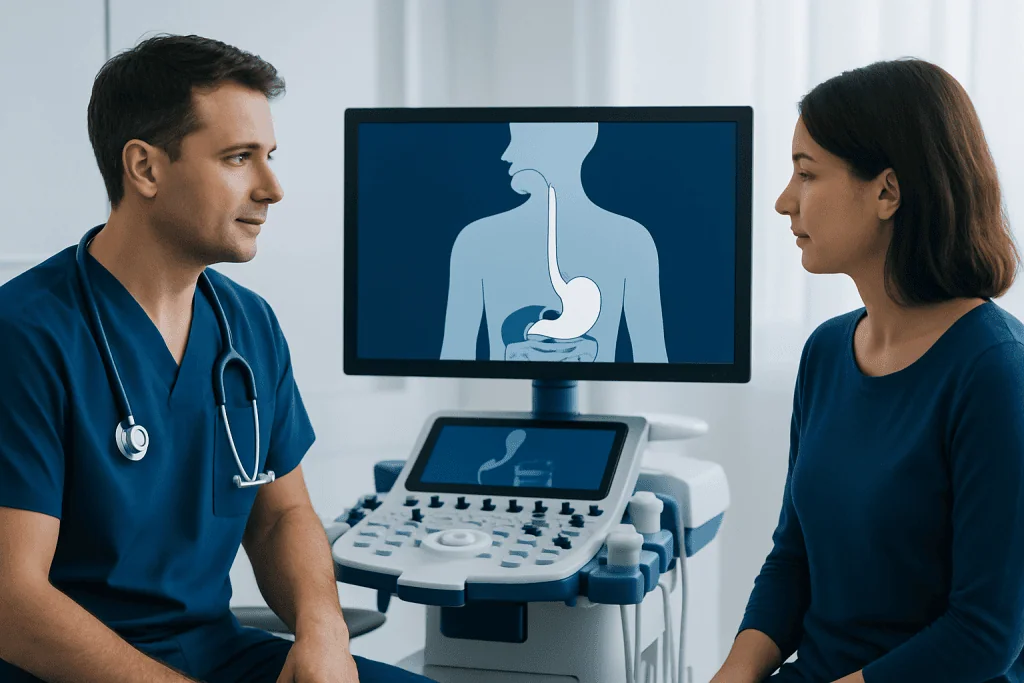
Digestion begins in the mouth. Teeth break food into smaller pieces, while saliva moistens it and starts chemical digestion. Saliva contains enzymes that begin breaking down certain carbohydrates, making food easier to swallow and process further.
After swallowing, food travels down the esophagus, a muscular tube connecting the throat to the stomach. Gentle wave-like contractions, called peristalsis, push food downward. At the lower end of the esophagus, a ring of muscle opens to let food into the stomach and then closes again. If this valve does not close properly, stomach acid can flow backward and cause heartburn or gastroesophageal reflux disease.
The stomach acts like a temporary storage and mixing chamber. It churns food and combines it with acid and digestive enzymes to form a semi-liquid substance. This process helps break down proteins and prepares food for the small intestine, where most digestion and absorption take place.
- Mouth: chews food and mixes it with saliva
- Salivary glands: produce saliva to start digestion
- Esophagus: moves food to the stomach
- Stomach: mixes food with acid and enzymes
What the small intestine does

The small intestine is the main site of digestion and nutrient absorption. Although it is called “small” because it is narrower than the large intestine, it is much longer. It has three sections: the duodenum, jejunum, and ileum. Together, these parts continue breaking food down and absorb nutrients into the bloodstream.
In the duodenum, food from the stomach mixes with bile from the liver and gallbladder and enzymes from the pancreas. These substances help digest fats, proteins, and carbohydrates more completely. The lining of the small intestine has tiny finger-like projections called villi, which increase surface area and allow efficient absorption of vitamins, minerals, fats, sugars, and amino acids.
When the small intestine is inflamed or not working properly, the body may struggle to absorb enough nutrients. This can happen in conditions such as celiac disease, infections, or inflammatory bowel conditions. Symptoms may include diarrhea, weight loss, weakness, bloating, or nutritional deficiencies.
The liver, gallbladder, and pancreas
A digestive system diagram often highlights three major helper organs: the liver, gallbladder, and pancreas. These organs do not directly carry food, but they are essential for normal digestion.
The liver has many important jobs, including producing bile. Bile helps the body digest and absorb fats. The liver also processes nutrients absorbed from the intestines, stores energy, and helps remove certain waste products and toxins from the blood. The gallbladder stores bile and releases it into the small intestine when fatty foods are eaten.
The pancreas produces digestive enzymes that break down fats, proteins, and carbohydrates. It also makes hormones such as insulin, which help regulate blood sugar. Problems affecting these organs can interfere with digestion and overall health. Depending on the cause, evaluation may involve blood tests, ultrasound, or advanced imaging such as MRI scan or CT scan.
The large intestine, rectum, and anus
After most nutrients are absorbed in the small intestine, the remaining material moves into the large intestine, also called the colon. The main job of the large intestine is to absorb water and electrolytes and turn liquid waste into stool. Helpful bacteria in the colon also play a role in digestion and support the gut environment.
As stool moves through the colon, it becomes more solid. It then enters the rectum, where it is stored until the body is ready for a bowel movement. The anus contains muscles that help control the release of stool.
When this part of the digestive system is not functioning well, symptoms may include constipation, diarrhea, cramping, bloating, or bleeding. Ongoing symptoms may point to a range of conditions, from infection and food intolerance to hemorrhoids, inflammatory bowel disease, or colon cancer. Persistent or unexplained changes should be assessed by a doctor.
Common digestive symptoms and how doctors assess them
A digestive system diagram can be useful when trying to understand where symptoms may be coming from. For example, difficulty swallowing may relate to the mouth, throat, or esophagus. Upper abdominal pain, nausea, or burning may suggest a stomach or gallbladder issue. Bloating, diarrhea, or poor absorption may point more toward the small intestine, while constipation or rectal bleeding may involve the colon or rectum.
Doctors usually begin with a medical history and physical examination. They may ask about pain, appetite, bowel habits, weight changes, medications, alcohol use, and family history. Blood tests, stool tests, and breath tests may help identify inflammation, infection, bleeding, poor digestion, or intolerance.
If needed, doctors may recommend procedures or imaging to look more closely at the digestive tract. These may include ultrasound, endoscopy, colonoscopy, or endoscopy to examine the upper digestive tract. The right test depends on the person’s age, symptoms, and overall health.
How to support digestive health
Many everyday habits can support healthy digestion. Eating balanced meals, chewing slowly, drinking enough water, and staying physically active all help food move through the digestive tract more smoothly. A diet rich in fiber from vegetables, fruits, legumes, and whole grains can support bowel regularity for many people, although some digestive conditions require more individualized advice.
It may also help to limit smoking, reduce excessive alcohol, and pay attention to foods that seem to trigger symptoms. Some people notice discomfort after very fatty meals, heavily processed foods, or large late-night meals. Managing stress and getting enough sleep can also be helpful, since the digestive system is closely connected to the nervous system.
People with persistent symptoms should avoid self-diagnosing based only on a digestive system diagram. While anatomy is helpful to understand, symptoms can overlap. A qualified clinician can identify whether symptoms are due to reflux, infection, ulcers, gallstones, food intolerance, bowel disease, or another cause.
When to seek medical advice
Occasional indigestion, mild constipation, or temporary stomach upset is common. However, medical advice is important if symptoms are severe, frequent, or persistent. A doctor should assess trouble swallowing, ongoing vomiting, black stools, blood in the stool, unexplained weight loss, persistent abdominal pain, prolonged diarrhea, or a lasting change in bowel habits.
It is also wise to seek care if symptoms interfere with eating, hydration, sleep, or daily life. Early assessment can help find treatable causes and prevent complications such as dehydration, anemia, malnutrition, or worsening inflammation.
For people who need specialist evaluation, multidisciplinary teams may include gastroenterologists, radiologists, surgeons, and dietitians. Acibadem International’s multidisciplinary specialists and JCI-accredited hospitals diagnose and treat digestive conditions for international patients when further assessment is needed.
Frequently asked questions
What does a digestive system diagram show?
A digestive system diagram shows the organs involved in digestion and the route food takes through the body. It usually includes the mouth, esophagus, stomach, small intestine, large intestine, rectum, anus, and supporting organs such as the liver, gallbladder, and pancreas.
Which organ does most digestion happen in?
Digestion begins in the mouth and continues in the stomach, but most digestion and nutrient absorption happen in the small intestine. This is where food mixes with bile and pancreatic enzymes, and where nutrients pass into the bloodstream.
What is the difference between the small intestine and large intestine?
The small intestine mainly breaks food down further and absorbs nutrients. The large intestine mainly absorbs water and electrolytes, helps form stool, and stores waste before it leaves the body.
What are the helper organs of digestion?
The main helper organs are the salivary glands, liver, gallbladder, and pancreas. They support digestion by making saliva, bile, and digestive enzymes, even though food does not pass through them directly.
Can digestive symptoms come from more than one organ?
Yes. Symptoms such as bloating, pain, nausea, diarrhea, or constipation can overlap and may come from different parts of the digestive system. That is why symptoms should be interpreted in context rather than linked to one organ alone.
When should someone worry about digestive symptoms?
Medical advice is recommended for persistent, severe, or unexplained symptoms. Warning signs include blood in the stool, black stools, trouble swallowing, ongoing vomiting, unexplained weight loss, and lasting changes in bowel habits.
References
- National Institute of Diabetes and Digestive and Kidney Diseases
- NHS
- MedlinePlus
- Mayo Clinic
- American College of Gastroenterology
This article is for general information only and is not a substitute for professional medical advice. Please consult a qualified doctor about your individual situation.
Persistent digestive symptoms? Get evaluated in Turkey
JCI-accredited · board-certified surgeons · reply within 24h
Add us as a Preferred Source to see more of our trusted health content across Google Search, AI Overviews and Discover.

More from the Health Library



Related Specialists

Prof. Dr. Yüksel Ersoy
Physical Medicine & Rehabilitation
Prof. Dr. Selami Çakmak
Orthopedic Surgery & Traumatology
Dr. Mehmet Behram Çam
Otorhinolaryngology
Prof. Dr. Mehmet E. Erdil
Orthopedic Surgery & Traumatology