Prostate Cancer Screening: PSA Testing, MRI, and When Biopsy Is Needed

Prostate cancer screening does not diagnose cancer on its own; it helps identify who may need further evaluation. A PSA test can be influenced by age, prostate size, inflammation, infection, and recent activities, not only cancer.
Key Takeaways
- Prostate cancer screening does not diagnose cancer on its own; it helps identify who may need further evaluation.
- A PSA test can be influenced by age, prostate size, inflammation, infection, and recent activities, not only cancer.
- Prostate MRI can help clarify risk and may reduce unnecessary biopsies in selected patients.
- A biopsy is usually recommended when PSA findings, exam results, MRI, or overall risk suggest a meaningful chance of cancer.
- Screening decisions are best made through shared discussion with a qualified doctor, based on age, family history, symptoms, and personal preferences.
Prostate cancer screening helps estimate a man’s risk of prostate cancer and guides whether more testing is needed. It usually starts with a PSA blood test and may include a digital rectal exam, MRI, and sometimes a biopsy.
Overview of prostate cancer screening
Prostate cancer screening is the process of checking for signs that prostate cancer may be present before it causes clear symptoms. The goal is not simply to find any cancer, but to identify cancers that are more likely to affect health while avoiding unnecessary testing for slow-growing disease that may never cause problems. Because prostate cancer can behave very differently from one person to another, screening is best approached in a thoughtful, individualized way.
The screening process often begins with a prostate-specific antigen, or PSA, blood test. Some men may also have a digital rectal exam, often called a DRE, in which a doctor gently feels the prostate through the rectum to assess its size, texture, and whether any firm areas are present. These first steps do not confirm cancer, but they help estimate risk and decide whether further tests are appropriate.
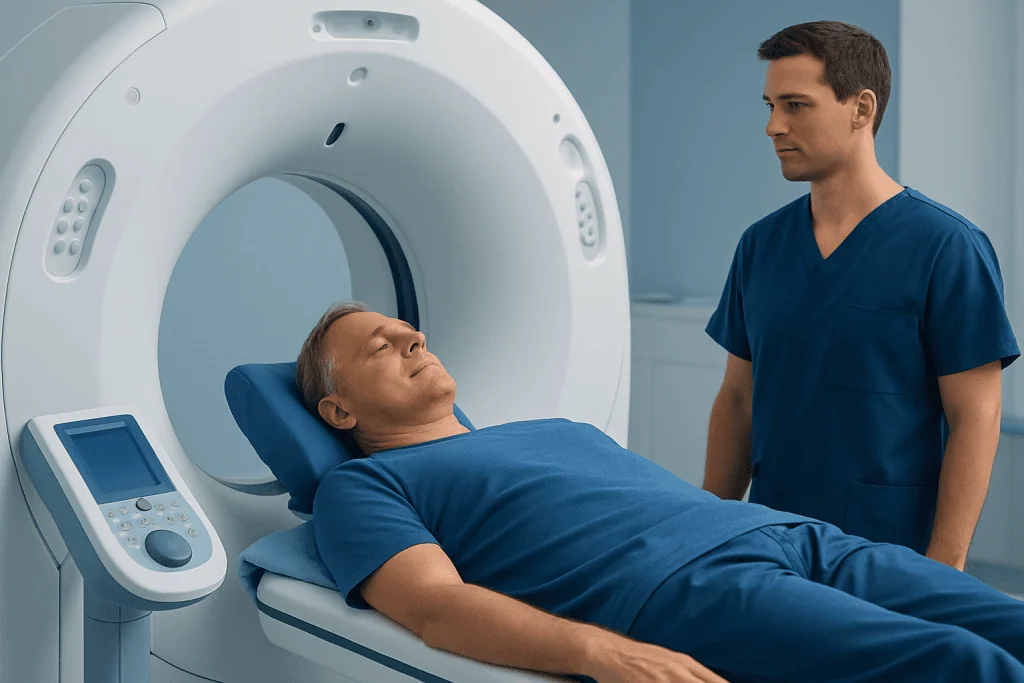
In recent years, prostate MRI has become an important tool in many screening pathways. MRI can provide detailed images of the prostate and help doctors decide whether a biopsy is needed and where tissue samples should be taken. This more targeted approach can improve decision-making and may reduce unnecessary procedures in some patients.
Who should consider screening and when to start
There is no single screening plan that suits every man. Decisions about when to start screening depend on age, general health, family history, ethnicity, and personal values. Many doctors begin discussing prostate cancer screening with average-risk men in midlife, while men at higher risk may benefit from earlier conversations.
Higher-risk groups include men with a strong family history of prostate cancer, especially if a father, brother, or multiple close relatives were diagnosed at a younger age. Men with certain inherited gene changes may also have a higher risk. In these situations, doctors may suggest earlier or closer follow-up, even if the first PSA result is normal.
Screening may be less helpful for men with significant other health conditions or limited life expectancy, because some prostate cancers grow slowly and may never become a threat during a person’s lifetime. For this reason, many experts recommend shared decision-making. This means the patient and doctor discuss possible benefits, limitations, and next steps before choosing whether to screen.
A screening discussion is also different from an evaluation for symptoms. Men who have urinary difficulties, blood in the urine, bone pain, or unexplained weight loss should not rely on routine screening alone. They should seek direct medical assessment, since these symptoms may require a broader evaluation for prostate disease or other conditions.
Understanding PSA testing and what the results mean

The PSA test measures the level of prostate-specific antigen in the blood. PSA is a protein made by the prostate, and higher levels can be associated with prostate cancer. However, PSA is not cancer-specific. A raised PSA does not automatically mean cancer is present, and a normal PSA does not completely rule it out.
Several common factors can affect PSA levels. These include benign enlargement of the prostate, inflammation, infection, recent ejaculation, some medical procedures, and sometimes vigorous cycling or pressure on the area. Because of this, doctors do not usually interpret a PSA result in isolation. They look at the actual number, the patient’s age, prostate size, previous PSA results, symptoms, and overall risk profile.
In some cases, a PSA result may be repeated to confirm that it is truly elevated, especially if there is a possible temporary reason for the change. Doctors may also consider how PSA changes over time rather than relying on a single value. A steadily rising PSA can be more informative than one borderline result.
Additional blood or urine tests may sometimes be used to refine risk assessment before biopsy, depending on the clinical setting and local practice. These tools do not replace a doctor’s judgment, but they may help decide whether a man is more likely to benefit from MRI or biopsy. If screening leads to concern, men may be referred to specialists experienced in prostate cancer evaluation.
The role of prostate MRI in screening and assessment
Multiparametric MRI, often referred to simply as prostate MRI, has become an important step when PSA or exam findings raise concern. MRI does not replace PSA screening, but it can add valuable information by showing whether there are suspicious areas within the prostate that deserve closer attention. It is especially useful before a first biopsy in many men.
A prostate MRI is a noninvasive imaging test that produces detailed pictures of the gland. Radiologists assess whether any areas look likely to represent clinically significant cancer. If the MRI is normal, and other risk factors are low, some men may be able to delay or avoid biopsy with careful follow-up. If the MRI shows a suspicious area, biopsy can often be targeted more precisely to that region.
MRI is helpful, but it is not perfect. Some significant cancers may not be seen clearly on imaging, and some MRI findings that look suspicious may turn out not to be cancer. That is why MRI results are combined with PSA, physical examination, family history, and other clinical information rather than used alone.
When high-quality imaging is available, doctors may use MRI to support more personalized decision-making. This approach can reduce uncertainty and may help focus biopsy on lesions most likely to matter clinically.
When a prostate biopsy is needed
A prostate biopsy is the test that can confirm whether cancer cells are present. It is usually recommended when the overall picture suggests a meaningful risk of cancer, such as persistently elevated PSA, an abnormal rectal exam, a suspicious MRI finding, or a combination of these factors. The decision is individualized, and not every elevated PSA leads directly to biopsy.
During a biopsy, small tissue samples are taken from the prostate and examined by a pathologist under a microscope. Biopsies may be guided by ultrasound alone or by combining MRI information with real-time imaging to target suspicious areas more accurately. The procedure is commonly done through the rectum or the skin between the scrotum and anus, depending on the technique chosen by the medical team.
Doctors usually explain the possible benefits and risks before the procedure. Benefits include obtaining a clear diagnosis and helping determine whether treatment is needed. Risks can include discomfort, bleeding, temporary urinary symptoms, and infection. Patients may be given instructions about medications, antibiotics, and aftercare based on the planned biopsy approach.
Targeted sampling may be especially helpful when MRI has identified a concerning lesion, and some centers use prostate biopsy pathways that combine imaging with pathology expertise. Even when a biopsy is negative, follow-up may still be advised if PSA remains concerning or MRI findings remain suspicious.
What happens after screening results
After screening, the next step depends on the level of concern. If PSA is low and there are no other concerning findings, the doctor may recommend routine follow-up at an interval based on the patient’s age and risk. If PSA is slightly raised, repeating the test after a suitable interval may be appropriate, especially if there was a possible temporary cause.
If MRI or biopsy suggests cancer, the medical team then looks at how aggressive it appears to be and whether it seems confined to the prostate. Not all prostate cancers require immediate treatment. Some low-risk cancers can be monitored with active surveillance, which usually involves periodic PSA testing, repeat imaging, and sometimes repeat biopsy.
When treatment is needed, options may include surgery, radiation therapy, hormone-based treatment, or a combination depending on the stage and grade of the cancer as well as the patient’s priorities. The aim is to balance cancer control with quality of life, including urinary, sexual, and bowel health. Men who need treatment may discuss options such as prostate cancer treatment with a multidisciplinary team.
Specialist care can help patients understand each result in context rather than focusing on one number alone. Near the end of the diagnostic pathway, some international patients choose centers such as Acibadem International, where multidisciplinary specialists in JCI-accredited hospitals evaluate prostate findings and plan care according to current standards.
Benefits, limitations, and possible harms of screening
The potential benefit of prostate cancer screening is earlier detection of cancers that may be more treatable when found before they spread. For some men, screening offers reassurance and an opportunity for closer monitoring if risk begins to rise. It can also help identify patients who may benefit from early intervention.
At the same time, screening has limitations. PSA can be elevated for reasons unrelated to cancer, which can lead to anxiety and additional testing. Some cancers found through screening grow so slowly that they would never have caused symptoms or shortened life. Detecting these cancers may lead to overdiagnosis and, in some cases, treatment that was not truly necessary.
Biopsy and treatment also carry potential side effects. Biopsy can cause bleeding, discomfort, or infection, while treatment can affect urinary control, sexual function, and bowel habits. This is why many experts emphasize informed choice rather than routine screening for every man regardless of age or risk.
A careful, stepwise approach can reduce harm. Using PSA thoughtfully, considering repeat testing when appropriate, adding MRI before biopsy, and tailoring decisions to individual risk all help make screening more precise and patient-centered.
How to prepare for a screening discussion and when to seek medical advice
Before a screening appointment, it is helpful for a man to know his family history, including whether close relatives had prostate, breast, ovarian, pancreatic, or colorectal cancers. He should also tell the doctor about urinary symptoms, prior prostate infections, recent medical procedures, and any medicines he takes. This information can influence how PSA results are interpreted and whether MRI or biopsy is needed.
Questions for the doctor may include what the PSA result means for his age, whether the test should be repeated, whether MRI is appropriate before biopsy, and what the possible outcomes of a biopsy might be. Men may also wish to discuss how screening fits with their personal priorities, such as avoiding unnecessary procedures or identifying a potentially serious cancer as early as possible.
Medical advice should be sought promptly if there are symptoms such as difficulty passing urine, blood in the urine, persistent bone pain, or unexplained weight loss. These symptoms do not always mean cancer, but they deserve assessment. Men who already have a raised PSA or an abnormal MRI should keep follow-up appointments even if they feel well.
Screening decisions are rarely urgent in a day-to-day sense, but they should be informed and timely. A qualified urologist or oncology specialist can explain the benefits and limitations clearly and help choose the most sensible next step.
Frequently asked questions
Does a high PSA mean a man has prostate cancer?
No. PSA can rise for several reasons, including benign prostate enlargement, inflammation, infection, and recent activities that affect the prostate. A high PSA means further assessment may be needed, not that cancer is certain.
Can prostate cancer be present with a normal PSA?
Yes, although PSA is a useful tool, it is not perfect. Some men with prostate cancer have PSA levels that are not clearly elevated, which is why doctors also consider symptoms, examination findings, family history, and imaging when needed.
Is MRI always done before a prostate biopsy?
Not always, but it is commonly used when available and appropriate. MRI can help identify suspicious areas and may reduce unnecessary biopsies in some men, but the choice depends on the individual clinical situation and local practice.
Is a prostate biopsy painful?
Most men describe the procedure as uncomfortable rather than severely painful. Local anesthesia and modern biopsy techniques help improve comfort, and the medical team explains what to expect before and after the procedure.
If screening finds prostate cancer, is treatment always needed right away?
No. Some prostate cancers are low risk and can be monitored safely with active surveillance. The decision depends on how aggressive the cancer appears, whether it is confined to the prostate, the patient’s age, overall health, and personal preferences.
At what age should men start talking to a doctor about prostate cancer screening?
This varies by personal risk. Many men begin the discussion in midlife, while those with a strong family history or other risk factors may need to start earlier. A doctor can advise on the best timing for the individual.
References
- World Health Organization
- American Cancer Society
- National Cancer Institute
- European Association of Urology
- National Health Service
This article is for general information only and is not a substitute for professional medical advice. Please consult a qualified doctor about your individual situation.
Prostate Cancer in Turkey — costs, top hospitals & a free quote
JCI-accredited · board-certified surgeons · reply within 24h
Add us as a Preferred Source to see more of our trusted health content across Google Search, AI Overviews and Discover.

Check-up & Preventive Medicine
Comprehensive health screenings designed for early detection and prevention.
3 specialists in this unit