Where Is the Heart Located? Anatomy, Function, and Common Misconceptions

The heart lies in the middle of the chest, slightly to the left, between the lungs. Most of the heart is behind the breastbone and protected by the rib cage.
Key Takeaways
- The heart lies in the middle of the chest, slightly to the left, between the lungs.
- Most of the heart is behind the breastbone and protected by the rib cage.
- The heart pumps blood through the lungs and the rest of the body using four chambers and four valves.
- Left-sided chest pain does not always come from the heart, and heart symptoms can vary from person to person.
- Persistent chest discomfort, shortness of breath, fainting, or palpitations should be assessed by a doctor.
The heart is located in the chest, between the lungs, slightly left of the body's midline and behind the breastbone. Understanding its position, structure, and function can help explain common symptoms and correct widespread myths about where the heart sits.
Overview: Where Is the Heart Located?
The heart is located in the chest cavity, in an area called the mediastinum. It sits between the right and left lungs, behind the breastbone (sternum), and above the diaphragm, the large muscle that helps with breathing. Although many people think of the heart as being fully on the left side of the chest, its position is actually more central, with a slight tilt toward the left.
About two-thirds of the heart’s mass lies to the left of the body’s midline, while the remaining portion extends to the right. The pointed lower tip of the heart, called the apex, angles down and to the left. This is one reason people often associate the heart only with the left side of the chest.
The heart is also protected by the rib cage and surrounded by a thin, double-layered sac called the pericardium. This covering helps reduce friction as the heart beats. Because the heart is nestled among important structures such as the lungs, major blood vessels, esophagus, and chest wall muscles, discomfort in this area may not always come from the heart itself.
Heart Anatomy in Simple Terms
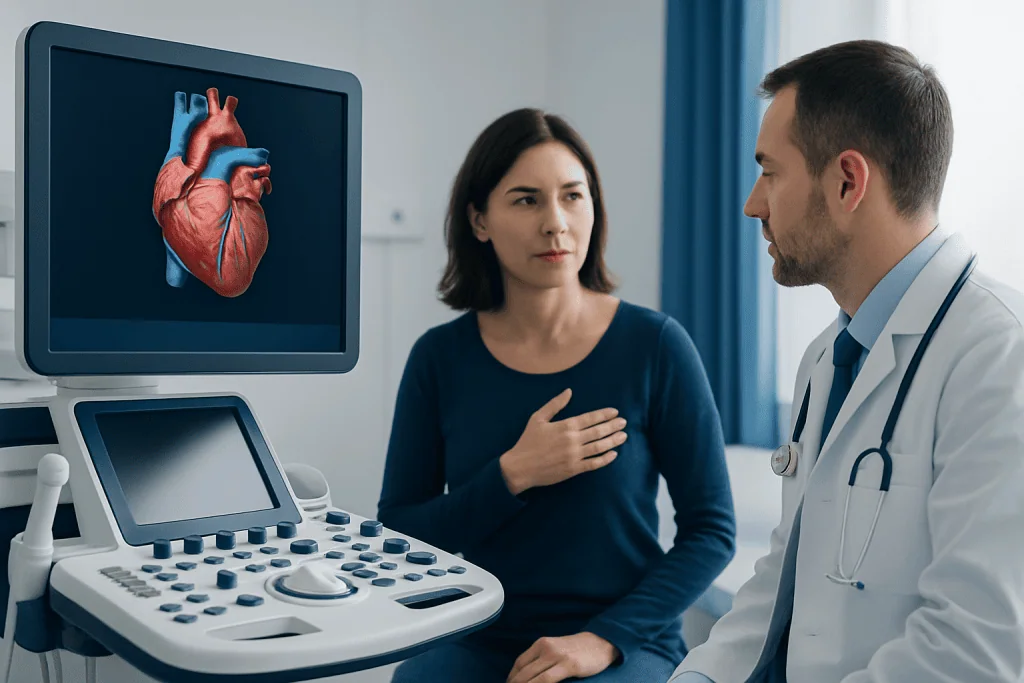
The heart is a muscular organ about the size of a closed fist in most adults. It has four chambers: two upper chambers called the atria and two lower chambers called the ventricles. The right side of the heart receives blood from the body and sends it to the lungs, while the left side receives oxygen-rich blood from the lungs and pumps it out to the rest of the body.
Four valves help keep blood moving in the correct direction: the tricuspid, pulmonary, mitral, and aortic valves. These valves open and close with each heartbeat. This coordinated movement allows the heart to work as an efficient pump throughout a person’s life.
Large blood vessels connect directly to the heart. These include the aorta, which carries blood to the body, the pulmonary arteries and veins, and the superior and inferior vena cava, which return blood to the heart. The heart also has its own blood supply through the coronary arteries. Problems in these arteries can lead to conditions such as coronary artery disease.
The heart’s electrical system controls rhythm and rate. Signals begin in a natural pacemaker area called the sinoatrial node and travel through the heart muscle in an organized pattern. If this system is disrupted, a person may notice a fast, slow, or irregular heartbeat.
What the Heart Does
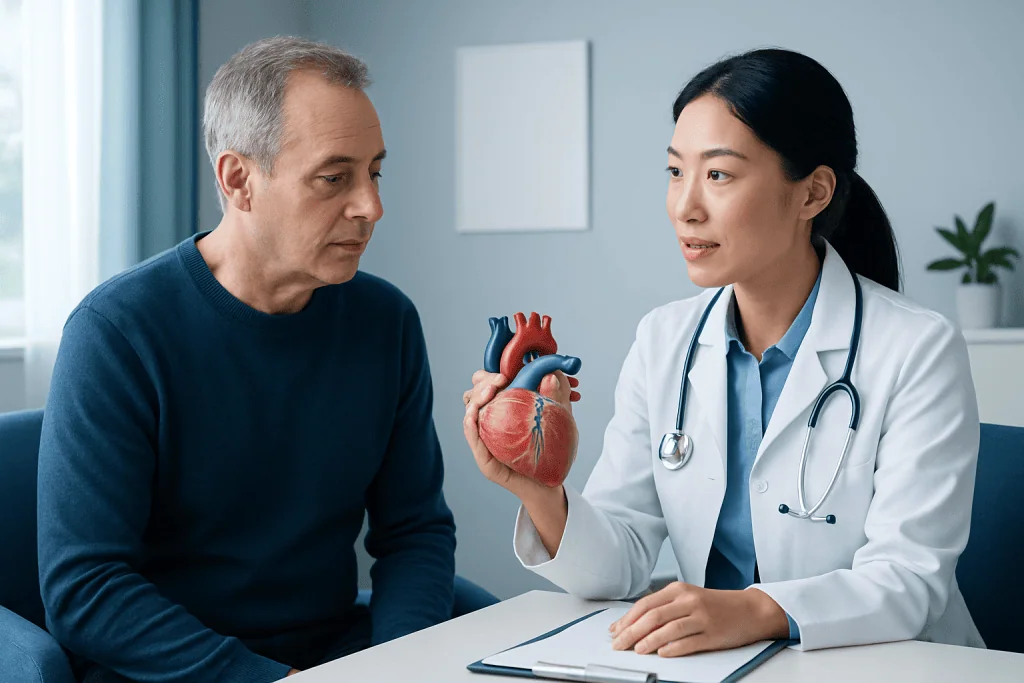
The heart’s main job is to pump blood so oxygen and nutrients can reach tissues throughout the body. At the same time, blood carries away carbon dioxide and waste products. This continuous circulation is essential for the function of the brain, kidneys, muscles, and every other organ.
The right side of the heart sends blood to the lungs, where it picks up oxygen. The left side then pumps that oxygen-rich blood back out through the aorta to the body. This process happens automatically, usually without a person being aware of it, except during exercise, stress, or illness when the heartbeat may feel stronger or faster.
Beyond pumping blood, the heart also responds to the body’s changing needs. During physical activity, it beats faster and more forcefully to meet increased oxygen demand. During rest or sleep, the heart rate usually slows. This flexible response helps maintain blood pressure and supports daily activities.
Common Misconceptions About Heart Location and Symptoms
One common misconception is that the heart is entirely on the left side of the chest. In reality, it is centered behind the breastbone and only angled slightly leftward. Another myth is that every heart-related problem causes sudden, severe pain over the left chest. While that can happen, symptoms may also be felt in the center of the chest, the jaw, neck, back, shoulders, or arms.
It is also important to know that not all chest pain is caused by the heart. Heartburn, muscle strain, anxiety, lung conditions, and digestive problems can all cause discomfort in the chest. On the other hand, some heart conditions may cause only mild pressure, fatigue, nausea, dizziness, or shortness of breath rather than dramatic pain.
Another misunderstanding is that healthy or young people cannot have heart problems. While age and long-term risk factors matter, heart-related symptoms should not be ignored simply because a person is younger or active. Family history, smoking, high blood pressure, diabetes, and high cholesterol can all affect heart health.
People may also confuse the location of the heartbeat they feel with the exact position of the entire heart. A strong beat felt on the left side often reflects the apex of the heart touching the chest wall, not the whole organ being placed there.
Symptoms That May Be Related to the Heart
Heart symptoms can vary depending on the underlying issue. Some people experience chest pressure, tightness, heaviness, or discomfort rather than sharp pain. Others may notice shortness of breath, especially with activity or when lying flat, unusual fatigue, dizziness, fainting, or a fluttering sensation in the chest known as palpitations.
Symptoms that deserve prompt medical attention include chest discomfort that lasts more than a few minutes, pain spreading to the arm, shoulder, jaw, or back, sudden shortness of breath, fainting, or a racing or irregular heartbeat accompanied by weakness or lightheadedness. These symptoms do not always mean a heart attack, but they should be taken seriously.
Some heart conditions develop gradually. For example, valve disease, rhythm disorders, or heart failure may cause swelling in the legs, reduced exercise tolerance, or ongoing breathlessness. Conditions such as arrhythmia can sometimes produce intermittent symptoms that come and go.
- Chest pressure or tightness
- Shortness of breath
- Palpitations or irregular heartbeat
- Dizziness or fainting
- Fatigue with usual activities
- Swelling in the legs or ankles
How Doctors Assess Heart Location and Heart Health
Doctors usually begin with a medical history and physical examination. They ask about the type of symptoms, when they occur, how long they last, and whether there are risk factors such as smoking, high blood pressure, diabetes, high cholesterol, or a family history of heart disease. During the examination, they listen to the heart and lungs, check pulse and blood pressure, and look for signs such as swelling or abnormal heart sounds.
Imaging and heart tests help confirm anatomy and function. A chest X-ray can show the size and general position of the heart. An electrocardiogram (ECG) records the heart’s electrical activity. An echocardiogram uses ultrasound to show the chambers, valves, and pumping action in real time.
Additional tests may be recommended depending on symptoms. These can include exercise stress testing, Holter monitoring for intermittent rhythm problems, blood tests, CT scans, or cardiac MRI. In some cases, doctors may suggest cardiac MRI or echocardiography to better understand heart structure and performance.
If blood flow to the heart muscle is a concern, further evaluation may focus on the coronary arteries. This may involve noninvasive imaging or procedures tailored to the person’s risk profile and symptoms.
Protecting Heart Health: Prevention and Self-care
While a person cannot change the natural location of the heart, they can support its health through daily habits. Regular physical activity, a balanced eating pattern, good sleep, stress management, and avoiding tobacco all help protect the heart and blood vessels. Managing medical conditions such as high blood pressure, diabetes, and high cholesterol is equally important.
Routine checkups can identify problems early, even before symptoms appear. Blood pressure measurement, cholesterol testing, and diabetes screening help assess cardiovascular risk. People with a strong family history of heart disease may benefit from earlier or more frequent evaluation.
Self-care also includes paying attention to new symptoms. Recurrent chest discomfort, increasing breathlessness, unusual fatigue, or an irregular heartbeat should not be dismissed. If recommended by a doctor, further evaluation may include ECG testing or specialist cardiology assessment.
For international patients who need evaluation or treatment, Acibadem International’s multidisciplinary specialists and JCI-accredited hospitals diagnose and manage a wide range of heart conditions with individualized care plans.
When to See a Doctor
A doctor should be consulted if chest symptoms are new, persistent, worsening, or triggered by activity. Medical advice is also important for repeated palpitations, unexplained dizziness, fainting, swelling in the legs, or shortness of breath that interferes with daily life. These symptoms can have many causes, but a professional assessment helps identify whether the heart is involved.
Urgent medical attention is needed for severe chest pressure, trouble breathing, fainting, or symptoms that spread to the arm, back, neck, or jaw. Immediate evaluation is especially important if symptoms occur suddenly or are accompanied by sweating, nausea, or marked weakness.
Even when symptoms turn out not to be caused by the heart, getting checked can provide reassurance and guide appropriate care. Early assessment often makes diagnosis easier and may help prevent complications if a heart condition is present.
Frequently asked questions
Is the heart on the left side of the chest?
Not entirely. The heart sits near the center of the chest, between the lungs, with most of it slightly to the left of the midline. Its lower tip points leftward, which is why many people think it is fully on the left side.
What organ is directly under the left chest if it is not always the heart?
Several structures can cause sensations in the left chest, including the chest wall muscles, ribs, lungs, and upper digestive organs. The heart is nearby, but not every feeling in that area comes from the heart. A doctor can help determine the cause if symptoms are persistent or concerning.
Can heart pain be felt on the right side or in the middle of the chest?
Yes. Heart-related discomfort is often felt in the center of the chest and may sometimes spread to either side, the shoulders, back, neck, or jaw. Symptoms vary from person to person, so location alone does not confirm or rule out a heart problem.
How can someone tell whether chest pain is from the heart?
It is not always possible to tell based on symptoms alone. Heart-related discomfort may feel like pressure, squeezing, heaviness, or tightness and may occur with shortness of breath, sweating, nausea, or dizziness. Because non-heart causes can feel similar, medical assessment is the safest approach.
Does the heart move in the body?
The heart does not move around freely, but it does shift slightly with breathing and changes in body position. It is held in place by surrounding structures and the pericardium. In some rare conditions, the position of the heart may differ from usual anatomy.
Why can a heartbeat sometimes be felt more on the left side?
The leftward-pointing apex of the heart lies closer to the chest wall, so its movement may be easier to feel there. Exercise, stress, fever, caffeine, or anxiety can also make the heartbeat more noticeable. If a pounding or irregular heartbeat is frequent, it is worth discussing with a doctor.
References
- American Heart Association
- National Heart, Lung, and Blood Institute
- Mayo Clinic
- Merck Manual Consumer Version
This article is for general information only and is not a substitute for professional medical advice. Please consult a qualified doctor about your individual situation.
Explore treatments in Turkey — costs, top hospitals & a free quote
JCI-accredited · board-certified surgeons · reply within 24h
Add us as a Preferred Source to see more of our trusted health content across Google Search, AI Overviews and Discover.
Check your numbers in seconds
BMI, calories, due date, blood pressure and 30+ more clinical calculators — free, instant, doctor-reviewed ranges.

More from the Health Library



Related Specialists

Assoc. Prof. Dr. Erkin İsmail
General Surgery
Dr. Erkan Adnan Kelebek
Coronary Intensive Care Unit
Assoc. Prof. Dr. Murat İçen
Check Up & Wellness Center
Prof. Dr. Faruk Suat Dede
Gynecology & Obstetrics