Insulin as a Hormone: What It Does and Why It Matters

Insulin helps regulate blood sugar by moving glucose into cells. It also affects fat storage, protein metabolism, and energy use.
Key Takeaways
- Insulin helps regulate blood sugar by moving glucose into cells.
- It also affects fat storage, protein metabolism, and energy use.
- Too little insulin or reduced insulin sensitivity can lead to diabetes.
- Healthy eating, physical activity, sleep, and weight management support insulin function.
- Persistent symptoms such as unusual thirst, frequent urination, or unexplained fatigue should be evaluated by a doctor.
Insulin is a hormone made by the pancreas that helps glucose move from the bloodstream into cells for energy. It plays a central role in blood sugar balance, metabolism, and long-term health.
Overview: what insulin is and why it matters
Insulin is a hormone produced by beta cells in the pancreas. Its main job is to help the body manage glucose, a simple sugar that comes from food and serves as an important source of energy. After a person eats, glucose enters the bloodstream. In response, the pancreas releases insulin so that glucose can move into cells, where it can be used right away or stored for later.
Although insulin is best known for its role in blood sugar control, its effects are much broader. It helps the liver, muscles, and fat tissue respond to available energy. It also influences how the body stores nutrients and how it shifts between using carbohydrates, fats, and proteins. In this way, insulin is a key part of everyday metabolism.
When insulin is not made in the right amount or the body does not respond to it properly, blood sugar can rise above a healthy range. Over time, this may lead to prediabetes, diabetes, and complications affecting the eyes, kidneys, nerves, heart, and blood vessels. Understanding insulin helps explain why blood sugar balance is so important for overall health.
How insulin works in the body
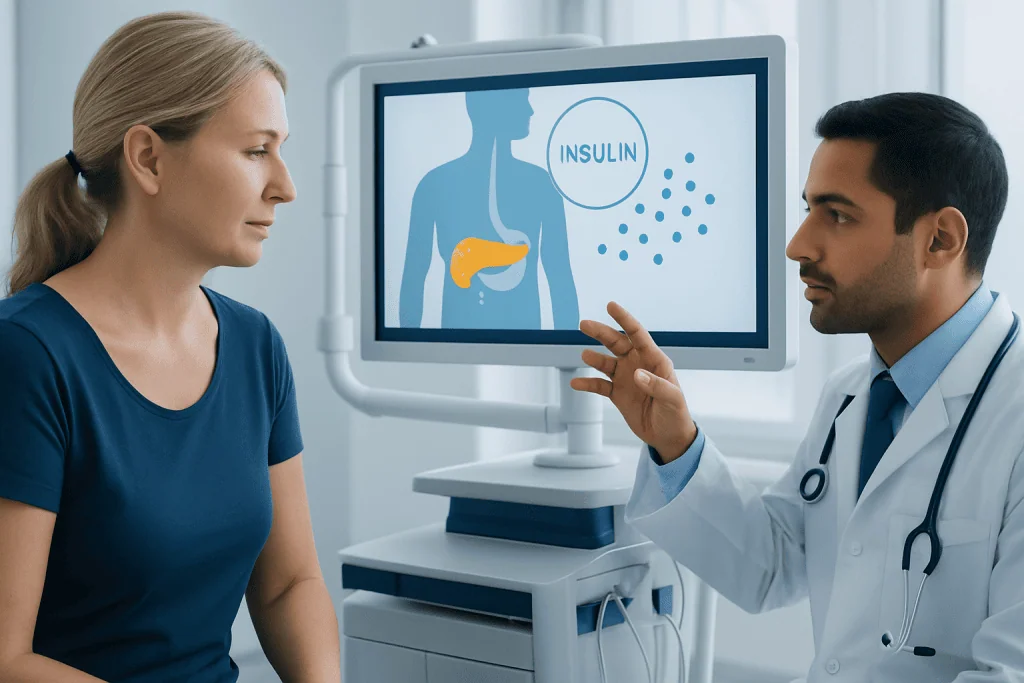
After carbohydrates are digested, they are broken down into glucose and absorbed into the blood. The pancreas senses the rise in blood sugar and releases insulin. Insulin acts like a signal that tells cells, especially in muscle and fat tissue, to take in glucose from the bloodstream. This lowers blood sugar and supplies cells with energy.
Insulin also tells the liver to store some glucose in the form of glycogen. Between meals, when blood sugar falls, the liver can release stored glucose back into the bloodstream to help keep levels steady. This balance between food intake, insulin release, and liver storage is one reason the body can maintain energy throughout the day.
Its effects go beyond glucose. Insulin supports the building of proteins and reduces the breakdown of fat. In practical terms, it is an anabolic hormone, meaning it helps the body store and use nutrients efficiently. This is why insulin is considered one of the body’s central metabolic hormones.
- Helps glucose enter cells for energy
- Encourages the liver and muscles to store glucose as glycogen
- Supports fat storage when energy intake exceeds need
- Promotes protein building and tissue growth
- Works together with other hormones to keep metabolism balanced
What happens when insulin is too low or does not work well

Problems with insulin usually fall into two broad categories: not enough insulin production, or reduced response to insulin, called insulin resistance. In type 1 diabetes, the body produces little or no insulin because the immune system damages the insulin-producing cells in the pancreas. In type 2 diabetes, the body often still makes insulin, especially at first, but cells do not respond to it effectively.
When insulin cannot do its job, glucose remains in the bloodstream instead of entering cells normally. This leads to high blood sugar. Over time, the pancreas may try to compensate by producing more insulin, but this may become less effective. If the imbalance continues, blood sugar can stay chronically elevated.
Insulin resistance is often linked with excess body weight, especially around the abdomen, family history, limited physical activity, poor sleep, and some hormonal conditions. It may also be seen during pregnancy as gestational diabetes. These conditions are related but not identical, and a doctor may recommend testing if symptoms or risk factors are present.
Because insulin is so central to metabolism, long-term problems with insulin can affect many organs. Blood vessel damage, nerve changes, and stress on the kidneys and heart can develop gradually. Early recognition and treatment can make a meaningful difference in protecting health.
Symptoms and signs of insulin-related problems
Insulin itself does not usually cause symptoms that a person can feel, but abnormal blood sugar levels often do. High blood sugar may cause increased thirst, frequent urination, blurred vision, fatigue, or unexplained weight changes. Some people may also notice slower wound healing or recurring infections.
Insulin resistance can be present for years without obvious symptoms. In some cases, a person may develop skin changes such as darker, velvety patches in body folds, a sign known as acanthosis nigricans. Many people only discover insulin resistance when routine blood tests show prediabetes or diabetes.
Low blood sugar can also occur, especially in people using insulin or certain diabetes medicines. Symptoms may include shakiness, sweating, hunger, dizziness, irritability, confusion, or a rapid heartbeat. Severe low blood sugar needs urgent medical attention.
Anyone with ongoing symptoms suggestive of blood sugar imbalance should speak with a qualified healthcare professional. A proper assessment can help distinguish among diabetes, prediabetes, medication effects, and other hormonal or medical causes.
Causes and risk factors
Insulin production and insulin sensitivity are influenced by genetics, lifestyle, age, and overall health. A family history of type 2 diabetes can increase the likelihood of insulin resistance. So can carrying excess body fat, particularly around the waist, because this can alter how the body responds to insulin.
Physical inactivity is another important risk factor. Muscles use glucose efficiently during and after activity, so regular movement tends to improve insulin sensitivity. Diet patterns also matter. Frequent intake of highly processed foods, sugary drinks, and excess calories may contribute to weight gain and make blood sugar control more difficult over time.
Other factors can affect insulin function as well. These include chronic stress, poor sleep, smoking, some medications, and conditions such as polycystic ovary syndrome. Pregnancy can temporarily change insulin needs, and hormonal disorders involving the adrenal glands, thyroid, or pancreas may also play a role.
Not every person with risk factors develops diabetes, and not every person with diabetes has the same underlying pattern. That is why individualized medical evaluation is important. Doctors may also look for related conditions such as obesity or metabolic syndrome when assessing a person’s insulin health.
How doctors assess insulin function
Doctors do not usually diagnose an insulin problem based on symptoms alone. They use medical history, physical examination, and blood tests. Common tests include fasting blood glucose, hemoglobin A1c, and sometimes an oral glucose tolerance test. These help show how the body is handling sugar over time and at a specific moment.
In some situations, insulin levels or C-peptide levels may also be measured to understand how much insulin the pancreas is making. Additional tests can help identify related issues such as cholesterol abnormalities, liver changes, kidney function, or hormonal conditions that may affect metabolism.
If diabetes is suspected, the goal is not only to confirm the diagnosis but also to determine the type and severity. This matters because treatment differs between type 1 diabetes, type 2 diabetes, gestational diabetes, and other less common forms. A doctor may recommend more specialized endocrine evaluation when the picture is unclear.
Diagnosis is also a chance to discuss long-term prevention. Even when blood sugar levels are only mildly elevated, early changes in lifestyle can be helpful. Timely follow-up allows healthcare teams to monitor progress and adjust care before complications develop.
Treatment options and supporting insulin health
Treatment depends on the underlying issue. For people who do not produce enough insulin, replacement with insulin therapy is essential. Others may benefit from lifestyle changes and, when needed, medicines that improve insulin sensitivity, support insulin release, or help control blood sugar in other ways. The right plan depends on the person’s diagnosis, age, other medical conditions, and daily routine.
Nutrition is a cornerstone of care. A balanced eating pattern that includes fiber-rich vegetables, whole grains, legumes, lean proteins, and healthy fats can help reduce sharp blood sugar rises after meals. Portion awareness and regular meal timing may also support steadier glucose control. For some people, a doctor may refer them for diet and nutrition counseling to create a realistic plan.
Physical activity improves how the body responds to insulin. Both aerobic exercise and strength training can be helpful, and even regular walking after meals may support blood sugar balance. Weight management, when appropriate, can further improve insulin sensitivity and reduce future health risks.
Some people need coordinated care from endocrinologists, diabetes educators, dietitians, and other specialists. If blood sugar is difficult to control or there are related hormonal concerns, a broader endocrinology evaluation may be advised. Near the end of a care journey, some international patients choose centers such as Acibadem International, where multidisciplinary specialists in JCI-accredited hospitals diagnose and treat insulin-related conditions.
Prevention, self-care, and when to see a doctor
Many insulin-related problems can be delayed or improved through everyday habits. Regular exercise, balanced meals, adequate sleep, stress management, and avoiding smoking all support metabolic health. Routine health checks are especially important for people with a family history of diabetes, previous gestational diabetes, or weight gain around the waist.
Self-care also includes understanding personal risk and recognizing early warning signs. A person should not ignore persistent thirst, frequent urination, unusual fatigue, blurred vision, tingling in the feet, or unexplained weight loss. These symptoms do not always mean diabetes, but they do deserve medical attention.
People already diagnosed with diabetes should follow their treatment plan, monitor glucose as instructed, and attend regular follow-up visits. They should also know the signs of low blood sugar if they use insulin or certain medications. Prompt treatment of high or low blood sugar can help prevent complications.
A doctor should be consulted urgently if there are signs of severe dehydration, vomiting, deep or rapid breathing, confusion, fainting, or severe low blood sugar symptoms. For less urgent concerns, an appointment with a primary care doctor or endocrinology specialist is the best next step.
Frequently asked questions
Is insulin the same as blood sugar?
No. Insulin is a hormone, while blood sugar usually refers to glucose circulating in the bloodstream. Insulin helps move glucose into cells so the body can use or store it.
Why does the body need insulin after eating?
After a meal, blood glucose rises as carbohydrates are digested and absorbed. Insulin is released to help bring glucose into cells and keep blood sugar within a healthy range.
Can a person have insulin resistance without diabetes?
Yes. Insulin resistance can develop before diabetes and may be present for years without obvious symptoms. Over time, it can raise the risk of prediabetes and type 2 diabetes if not addressed.
What is the difference between type 1 and type 2 diabetes?
In type 1 diabetes, the body makes little or no insulin because the immune system damages insulin-producing cells. In type 2 diabetes, the body usually still makes insulin, but the cells do not respond to it well, especially early in the condition.
Can lifestyle changes improve insulin function?
Often, yes. Regular physical activity, balanced nutrition, weight management, good sleep, and stress reduction can improve insulin sensitivity and support healthier blood sugar levels. The best approach depends on the individual and should be discussed with a doctor.
Does everyone with high blood sugar need insulin injections?
No. Some people need insulin because their bodies do not make enough of it, while others can manage blood sugar with lifestyle changes and other medicines. Treatment depends on the type of diabetes and the person’s overall health.
References
- World Health Organization
- American Diabetes Association
- National Institute of Diabetes and Digestive and Kidney Diseases
- International Diabetes Federation
- Endocrine Society
This article is for general information only and is not a substitute for professional medical advice. Please consult a qualified doctor about your individual situation.
Medical weight-loss options in Turkey — costs & eligibility
JCI-accredited · board-certified surgeons · reply within 24h
Add us as a Preferred Source to see more of our trusted health content across Google Search, AI Overviews and Discover.