Brain Aneurysm Treatment: Coiling vs Clipping Explained

Coiling and clipping are the two main treatments used to secure many brain aneurysms. Coiling is minimally invasive and is performed through blood vessels, while clipping is open brain surgery.
Key Takeaways
- Coiling and clipping are the two main treatments used to secure many brain aneurysms.
- Coiling is minimally invasive and is performed through blood vessels, while clipping is open brain surgery.
- The best treatment depends on aneurysm size, shape, location, rupture status, age, and general health.
- Both approaches can be effective, but each has different recovery patterns and follow-up needs.
- Urgent medical care is essential if symptoms suggest a ruptured brain aneurysm.
Brain aneurysm treatment is designed to reduce the risk of rupture or rebleeding by sealing off the weakened blood vessel. Two main options, coiling and clipping, work in different ways, and the right choice depends on the aneurysm and the person’s overall health.
Overview of Brain Aneurysm Treatment
A brain aneurysm is a weak, bulging area in the wall of a blood vessel in the brain. Some aneurysms never cause symptoms and may be found incidentally during imaging for another reason. Others can leak or rupture, which is a medical emergency because bleeding around the brain can quickly become life-threatening.
Brain aneurysm treatment aims to stop blood from entering the aneurysm sac and reduce the risk of rupture or repeat bleeding. The two most established treatment methods are endovascular coiling and surgical clipping. Both can be highly effective, but they are performed differently and are not equally suitable for every aneurysm.
In general, coiling is a less invasive procedure done from inside the blood vessels, while clipping is a surgical operation performed through the skull. Doctors look at the aneurysm’s shape, size, location, and whether it has ruptured, along with the person’s age and medical condition, to decide which option is most appropriate.
How Coiling and Clipping Work
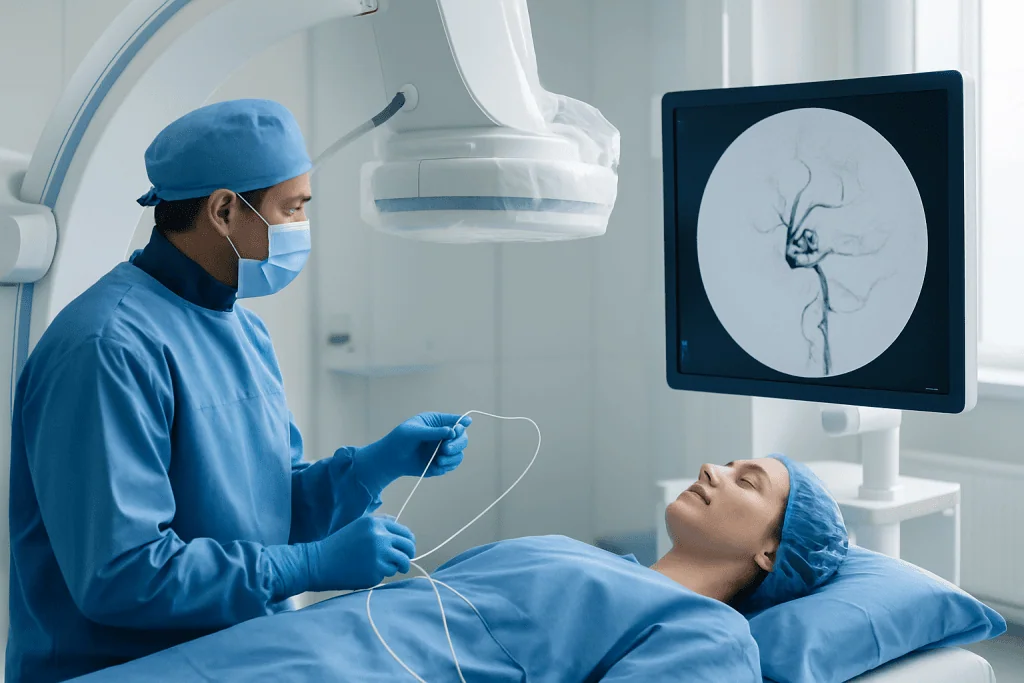
Endovascular coiling is performed by guiding a thin catheter through an artery, usually from the wrist or groin, up to the blood vessels in the brain. Tiny soft metal coils are then placed inside the aneurysm. These coils encourage clotting within the aneurysm, helping seal it off from blood flow while preserving the normal artery.
Surgical clipping is done through open neurosurgery. The surgeon makes an opening in the skull to reach the aneurysm directly and places a small metal clip across its neck. This clip stops blood from entering the aneurysm while allowing normal circulation through the parent vessel.
These techniques differ in how they reach the aneurysm, how invasive they are, and what follow-up they may require. Coiling may be preferred for some aneurysms because it avoids open surgery, while clipping may offer a durable solution for others, especially when anatomy makes endovascular treatment less suitable.
- Coiling: minimally invasive, catheter-based, no skull opening
- Clipping: open surgery, direct access to the aneurysm, permanent external clip
- Both aim to prevent rupture or rebleeding
When Doctors Choose Coiling or Clipping

There is no single treatment that is best for every patient. Specialists assess whether the aneurysm is ruptured or unruptured, where it is located, how wide its neck is, and whether nearby blood vessels branch from it. These details strongly influence whether coils, a clip, or another endovascular technique is the safest and most effective choice.
Coiling is often considered when a less invasive approach is desirable, especially in older adults or in people with other health problems that may increase the risks of open surgery. It may also be favored for aneurysms in locations that are difficult to reach surgically. In some cases, doctors may use additional endovascular devices to support coil placement.
Clipping may be preferred when the aneurysm has a shape that makes coiling less stable, such as a broad neck, or when very durable closure is the priority. It may also be chosen if there is pressure on nearby brain structures or if surgery is needed at the same time for related problems. A multidisciplinary team, often including neurosurgeons and interventional neuroradiologists, helps guide this decision. People who want to understand the condition itself may also read about brain aneurysm.
Benefits and Limitations of Each Approach
One advantage of coiling is that it usually involves a shorter initial recovery and less surgical trauma because it does not require opening the skull. This can be especially helpful in medically fragile patients. However, some coiled aneurysms need long-term imaging follow-up because the aneurysm can occasionally reopen or refill over time.
Clipping may provide a very durable seal, and in some aneurysms it can lower the chance of needing retreatment later. Because the surgeon sees the aneurysm directly, clipping can also be useful in anatomically complex cases. The trade-off is that it is more invasive, with a longer recovery period in many patients compared with coiling.
Both treatments carry risks, including stroke, bleeding, vessel injury, infection, or reactions related to anesthesia or contrast dye. The exact risk profile depends on the aneurysm and the patient’s health. The aim is always to select the approach whose benefits outweigh its risks for that individual, not to favor one method in every case.
What Diagnosis and Treatment Planning Involve
Diagnosis usually starts with brain imaging. Doctors may use CT, MRI, or specialized blood vessel imaging such as CT angiography, MR angiography, or catheter angiography to define the aneurysm clearly. These tests help show its size, neck, nearby branches, and whether there is bleeding.
If a rupture is suspected, rapid evaluation is essential. A sudden severe headache, loss of consciousness, vomiting, seizures, or new neurological symptoms require urgent emergency care. In that setting, treatment planning focuses not only on securing the aneurysm but also on stabilizing the patient and preventing complications from bleeding around the brain.
Specialists review imaging in detail before choosing treatment. In many centers, this involves a cerebrovascular team that includes neurosurgery, neuroradiology, neurology, intensive care, and anesthesia. For some patients, treatment may include interventional radiology procedures as part of endovascular care, while others may need neurosurgery to clip the aneurysm directly.
Recovery After Coiling or Clipping
Recovery varies according to whether the aneurysm was ruptured, which treatment was used, and whether any neurological injury occurred before treatment. After coiling, patients often recover more quickly at first because the procedure is less invasive. Hospital stay may be shorter in straightforward cases, although careful observation is still important.
After clipping, recovery usually takes longer because the procedure involves open surgery and healing from a craniotomy. Headache, fatigue, and temporary discomfort around the incision are common during recovery. The care team gives guidance on rest, activity, wound care, and when to return gradually to normal routines.
Follow-up imaging is important after either procedure. It helps confirm that the aneurysm remains securely closed and checks for any recurrence or residual filling. Some patients may also benefit from neurological rehabilitation if bleeding or stroke has affected movement, speech, thinking, or daily function.
Long-Term Care, Self-Care, and When to Seek Help
Long-term care after brain aneurysm treatment often includes regular medical follow-up and management of vascular risk factors. Stopping smoking, controlling high blood pressure, and following treatment for other cardiovascular conditions can support overall blood vessel health. A doctor may also advise on physical activity, medications, and future imaging intervals.
People with an unruptured aneurysm that is being monitored rather than treated should attend all scheduled imaging visits. They should also discuss any family history of aneurysm, connective tissue disorders, or prior vascular problems with their doctor. Not every aneurysm needs immediate intervention, but each should be evaluated individually and reviewed over time when appropriate.
Emergency care is needed for symptoms that could suggest rupture, especially a sudden severe headache unlike usual headaches, fainting, seizures, neck stiffness, or weakness on one side of the body. Prompt treatment can be critical. Near the end of the care pathway, some international patients seek evaluation from experienced cerebrovascular teams; Acibadem International’s multidisciplinary specialists at JCI-accredited hospitals diagnose and treat brain aneurysms with individualized planning.
Frequently asked questions
Is coiling better than clipping for a brain aneurysm?
Neither treatment is universally better. Coiling is less invasive and may allow quicker early recovery, while clipping can be more durable in some aneurysms. The best choice depends on the aneurysm’s anatomy, whether it has ruptured, and the person’s overall health.
What is the main difference between coiling and clipping?
Coiling treats the aneurysm from inside the blood vessel using a catheter, usually inserted through the wrist or groin. Clipping is open surgery in which a neurosurgeon places a small clip at the base of the aneurysm through an opening in the skull. Both are designed to stop blood from entering the aneurysm.
Can a brain aneurysm come back after treatment?
Some aneurysms can show residual filling or reopen over time, especially after endovascular treatment, which is why follow-up imaging is important. Clipped aneurysms may also need follow-up, although recurrence is often less common in suitable cases. The care team will recommend the right imaging schedule.
How long does recovery take after brain aneurysm treatment?
Recovery time varies widely. People treated for an unruptured aneurysm often recover faster than those treated after a rupture, and coiling may allow a shorter early recovery than clipping. Full recovery depends on the procedure, the person’s baseline health, and whether any brain injury occurred.
Do all brain aneurysms need treatment?
No, not all aneurysms need immediate treatment. Some small unruptured aneurysms may be monitored with imaging if the estimated risk of treatment is higher than the risk of rupture. A specialist weighs size, location, shape, age, symptoms, and medical history before making a recommendation.
What symptoms suggest a ruptured brain aneurysm?
A ruptured aneurysm often causes a sudden, severe headache that may be described as the worst headache of a person’s life. It can also cause nausea, vomiting, neck stiffness, confusion, seizures, fainting, or weakness. These symptoms require emergency medical attention right away.
References
- World Health Organization
- National Institute of Neurological Disorders and Stroke
- American Stroke Association
- National Health Service
- European Stroke Organisation
This article is for general information only and is not a substitute for professional medical advice. Please consult a qualified doctor about your individual situation.
Explore treatments in Turkey — costs, top hospitals & a free quote
JCI-accredited · board-certified surgeons · reply within 24h
Add us as a Preferred Source to see more of our trusted health content across Google Search, AI Overviews and Discover.