What Bones Make Up the Wrist and Hand Joints?
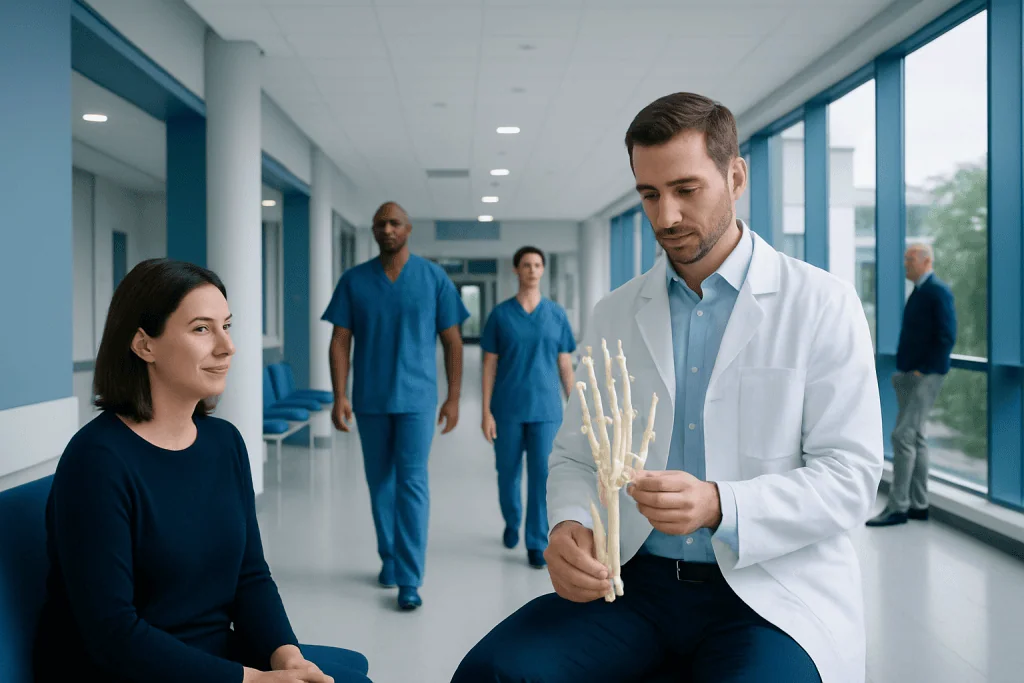
The wrist and hand contain 27 bones in total. The wrist includes eight carpal bones arranged in two rows.
Key Takeaways
- The wrist and hand contain 27 bones in total.
- The wrist includes eight carpal bones arranged in two rows.
- The hand includes five metacarpal bones and 14 finger bones called phalanges.
- Joints, ligaments, tendons, muscles, and cartilage all work together to support movement.
- Pain, swelling, stiffness, numbness, or deformity in the wrist or hand should be assessed if symptoms persist or follow an injury.
The wrist and hand joints are built from 27 bones that allow strength, flexibility, and precise movement. Understanding how these bones fit together can make it easier to recognize injuries, joint problems, and when medical advice may help.
Overview of the Wrist and Hand Bones
The wrist and hand form a complex structure that helps a person grip, lift, point, write, and perform many fine movements. Although they look small from the outside, they contain many bones and joints working closely together. In total, each hand and wrist has 27 bones, along with cartilage, ligaments, tendons, muscles, nerves, and blood vessels.
The wrist acts as the bridge between the forearm and the hand. It allows bending, straightening, side-to-side motion, and rotation-related positioning of the hand. The hand itself provides both strength and precision, from holding a heavy bag to buttoning a shirt.
The bones are usually grouped into three main sections: the carpal bones of the wrist, the metacarpal bones of the palm, and the phalanges of the fingers and thumb. These bones connect through multiple joints, giving the hand its unusual combination of mobility and stability.
Because the wrist and hand are used constantly in daily life, they are also vulnerable to overuse, injury, and age-related wear. A basic understanding of the anatomy can help patients better follow medical advice and understand conditions such as carpal tunnel syndrome or arthritis affecting the hand.
Which Bones Make Up the Wrist?
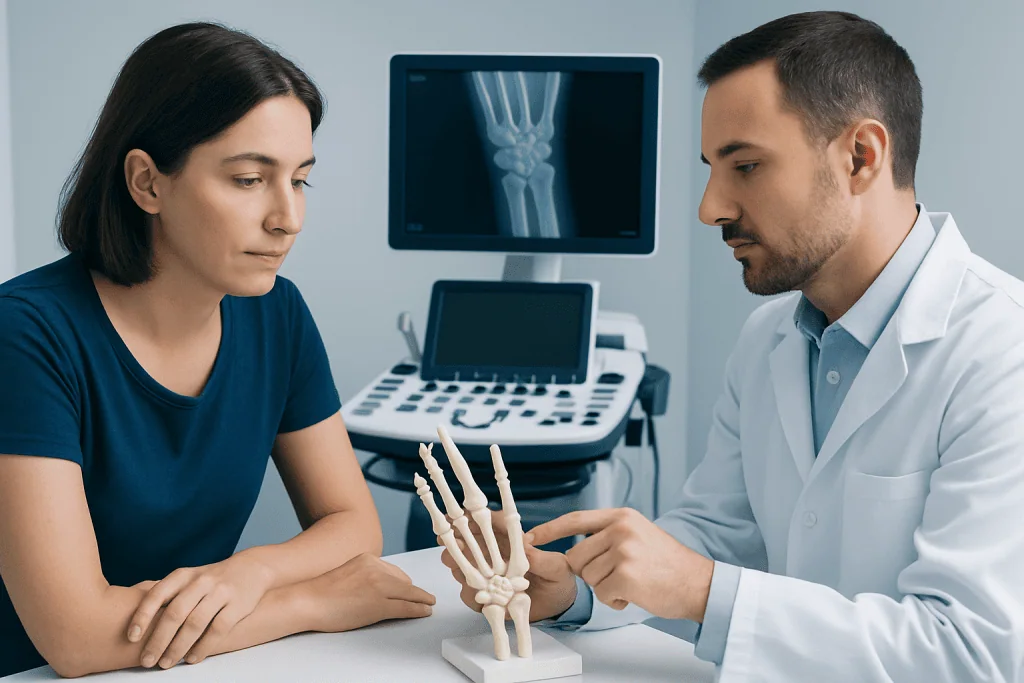
The wrist is made up of eight small bones called carpal bones. These bones are arranged in two rows of four and connect the forearm to the hand. Together, they help the wrist move smoothly while also absorbing force during daily activities.
The eight carpal bones are:
- Scaphoid
- Lunate
- Triquetrum
- Pisiform
- Trapezium
- Trapezoid
- Capitate
- Hamate
The first row, closer to the forearm, includes the scaphoid, lunate, triquetrum, and pisiform. The second row, closer to the palm, includes the trapezium, trapezoid, capitate, and hamate. The scaphoid is especially important because it helps connect the two rows and is one of the more commonly injured wrist bones.
These carpal bones form several small joints with one another. They also connect with the radius, one of the forearm bones, to create the main wrist joint. The ulna does not directly join the carpal bones in the same way; instead, supportive structures between the ulna and wrist help with smooth movement and stability.
Which Bones Make Up the Hand and Fingers?
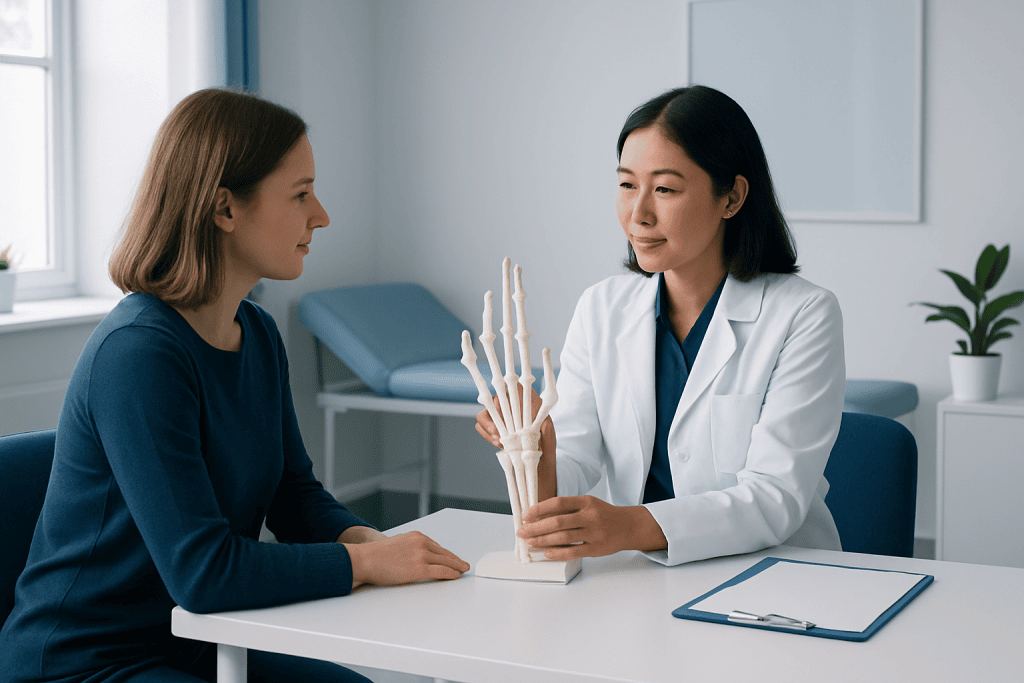
Beyond the wrist, the hand contains 19 more bones: five metacarpal bones and 14 phalanges. The metacarpals form the framework of the palm. Each metacarpal connects to a finger or the thumb and helps position the hand for gripping and coordinated movement.
The fingers contain small bones called phalanges. The thumb has two phalanges, called proximal and distal. Each of the other four fingers has three phalanges: proximal, middle, and distal. This arrangement allows the fingers to bend at several points, which is important for grasping and fine motor control.
The metacarpals connect to the carpal bones at the carpometacarpal joints. They connect to the finger bones at the metacarpophalangeal joints, often known as the knuckles. The phalanges connect to one another through interphalangeal joints, which allow the fingers and thumb to flex and extend.
The thumb has a particularly specialized joint at its base, allowing opposition. This means the thumb can move across the palm to meet the fingertips, a motion that is essential for pinching, holding, and many precise hand functions.
How the Wrist and Hand Joints Work Together
Bones alone do not create movement. The wrist and hand joints rely on cartilage, ligaments, tendons, and muscles to work properly. Cartilage covers the ends of bones and helps joints move with less friction. Ligaments connect bone to bone and provide stability, while tendons connect muscle to bone and help create motion.
Many of the muscles that move the fingers begin in the forearm, with long tendons traveling through the wrist into the hand. Smaller muscles within the hand provide refined control, especially for the thumb and fingers. This teamwork makes it possible to perform both powerful and delicate actions.
The wrist itself supports several important motions, including flexion, extension, radial deviation, and ulnar deviation. The fingers bend and straighten at multiple joints, while the thumb moves in several directions. These combined movements allow the hand to adapt to many shapes and tasks.
When any part of this system is irritated or injured, symptoms may include pain, swelling, weakness, stiffness, reduced grip, clicking, or numbness. Problems may involve bones, joints, tendons, ligaments, or nearby nerves, and some patients may need assessment by specialists in orthopedics and traumatology to clarify the cause.
Common Injuries and Conditions Affecting Wrist and Hand Bones
Because the wrist and hand are used so often, injuries are common. Falls onto an outstretched hand can lead to fractures, especially of the scaphoid, distal radius, or metacarpals. Finger injuries may include sprains, dislocations, or fractures. Repetitive strain can also affect the joints and surrounding soft tissues.
Arthritis is another frequent source of symptoms. Osteoarthritis may develop gradually as joint cartilage wears down over time, while inflammatory forms of arthritis can cause swelling, warmth, pain, and stiffness. The base of the thumb is a common site of painful wear-related change in many adults.
Other conditions may involve the surrounding tendons and nerves rather than the bones themselves, but they can still affect joint function. For example, trigger finger can make finger movement painful or catching, and nerve compression can cause numbness or weakness in the hand.
Children and athletes may also develop overuse injuries, especially with activities involving repeated gripping, impact, or twisting. A proper diagnosis matters because different problems can produce similar symptoms, and early treatment may improve comfort and recovery.
How Doctors Diagnose Wrist and Hand Joint Problems
Diagnosis usually begins with a medical history and physical examination. A doctor may ask when symptoms started, whether there was an injury, which movements are painful, and whether there is numbness, weakness, or swelling. The hand and wrist are then examined for alignment, tenderness, motion, strength, and stability.
Imaging is often helpful. Plain X-rays are commonly used to look for fractures, arthritis, joint alignment problems, and some bone changes. If a small fracture is suspected but not clearly visible, or if soft tissue damage is also a concern, further imaging may be recommended.
Depending on the symptoms, a doctor may request ultrasound, CT, or MRI. MRI can be especially useful for ligaments, cartilage, tendons, and occult fractures that are not obvious on initial X-rays. In some cases, nerve testing may be advised when numbness or tingling suggests compression or nerve irritation.
Blood tests may also be used if inflammatory arthritis or infection is suspected. The goal is to identify not only which bone or joint is involved, but also whether nearby structures are contributing to the symptoms.
Treatment Options for Wrist and Hand Joint Problems
Treatment depends on the exact cause. Minor sprains, overuse symptoms, and some stable fractures may improve with rest, activity modification, splinting, and guided exercises. Cold packs, elevation, and doctor-recommended pain relief measures may help reduce discomfort and swelling in the early stages.
Physical or hand therapy can play an important role in restoring strength, motion, and coordination. Exercises are often introduced gradually to avoid stiffness while protecting healing tissues. For arthritis or chronic conditions, treatment may also include supportive braces, lifestyle adjustments, and methods to reduce strain on affected joints.
Some injuries or advanced joint problems require more specialized care. Fractures with poor alignment, unstable ligament injuries, severe arthritis, or persistent nerve compression may need procedures such as injections or surgery. Depending on the diagnosis, patients may be evaluated for hand surgery or physical therapy and rehabilitation as part of a treatment plan.
Care is individualized, especially because hand function is closely tied to work, hobbies, and daily independence. Near the end of the care pathway, some international patients may choose centers such as Acibadem International, where multidisciplinary specialists in JCI-accredited hospitals diagnose and treat wrist and hand conditions.
Self-care, Prevention, and When to See a Doctor
Not all wrist and hand problems can be prevented, but healthy habits may lower risk. Using proper technique during sports, taking breaks from repetitive activities, improving workstation ergonomics, and wearing protective gear when appropriate can reduce strain. Maintaining bone health through good nutrition, regular activity, and avoiding smoking may also support overall joint function.
After minor strain, early self-care often includes resting the area, limiting painful motion, and using a splint if advised by a healthcare professional. Gentle return to activity is usually better than pushing through significant pain. Persistent symptoms should not be ignored, especially if hand strength or movement is affected.
A doctor should assess wrist or hand pain that follows a fall, causes visible deformity, or is linked to marked swelling, numbness, weakness, or inability to move the fingers. Medical advice is also important if pain wakes a person from sleep, returns repeatedly, or does not improve with simple measures.
Prompt evaluation can help protect long-term hand function. This is particularly important because some fractures, ligament injuries, and nerve problems are easier to treat when identified early.
Frequently asked questions
How many bones are in the wrist and hand?
Each wrist and hand together contain 27 bones. These include 8 carpal bones in the wrist, 5 metacarpal bones in the palm, and 14 phalanges in the fingers and thumb.
What are the names of the wrist bones?
The eight wrist bones are the scaphoid, lunate, triquetrum, pisiform, trapezium, trapezoid, capitate, and hamate. They are arranged in two rows and work together to support wrist motion and stability.
Is the thumb different from the fingers?
Yes. The thumb has two phalanges, while each of the other four fingers has three. The thumb also has a unique base joint that allows opposition, which helps with pinching and grip.
What is the most commonly injured wrist bone?
The scaphoid is one of the most commonly injured wrist bones, especially after a fall onto an outstretched hand. Because some scaphoid fractures are hard to see at first, medical review is important if wrist pain continues after an injury.
Can hand joint pain happen without a fracture?
Yes. Hand and wrist pain can come from sprains, tendon problems, arthritis, nerve compression, or overuse, even when no bone is broken. A medical evaluation can help identify the exact cause and guide treatment.
When should someone seek medical help for wrist or hand pain?
Medical advice is recommended if there is significant swelling, deformity, weakness, numbness, or pain after an injury. It is also wise to seek care if symptoms last more than a few days, keep returning, or interfere with normal hand use.
References
- American Academy of Orthopaedic Surgeons
- National Institute of Arthritis and Musculoskeletal and Skin Diseases
- MedlinePlus
- Mayo Clinic
- NHS
This article is for general information only and is not a substitute for professional medical advice. Please consult a qualified doctor about your individual situation.
Joint and spine care in Turkey — expert assessment & treatment
JCI-accredited · board-certified surgeons · reply within 24h
Add us as a Preferred Source to see more of our trusted health content across Google Search, AI Overviews and Discover.