Spinal Stenosis: Early Symptoms, Progression, and Treatment Choices
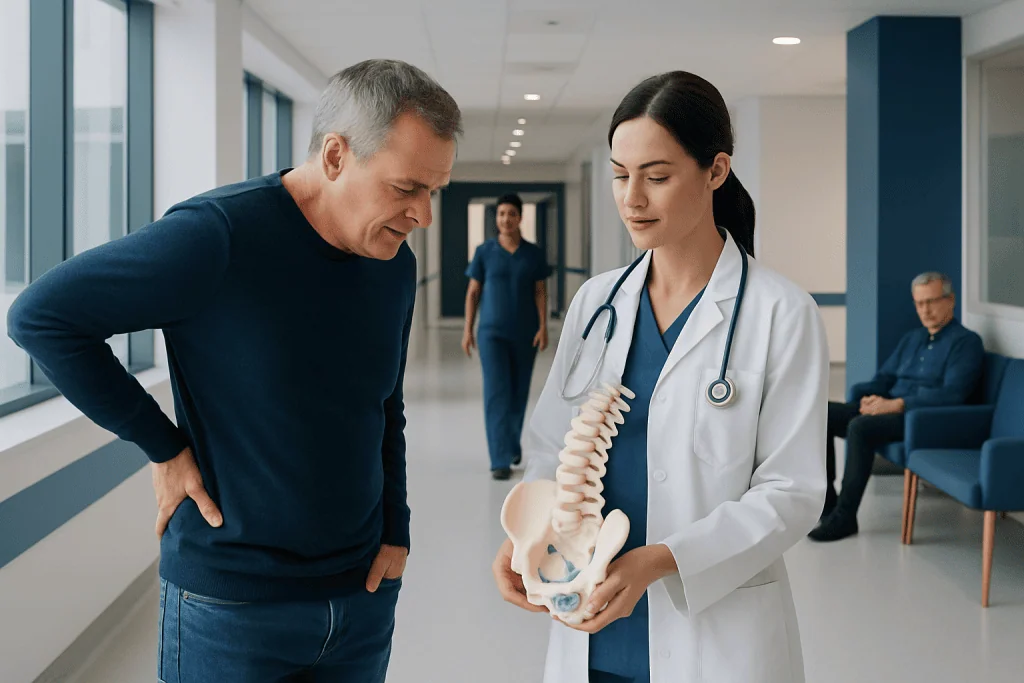
Spinal stenosis happens when the spinal canal narrows and irritates or compresses nearby nerves. Common early symptoms include back or neck pain, tingling, numbness, leg discomfort, and trouble walking or standing for long periods.
Key Takeaways
- Spinal stenosis happens when the spinal canal narrows and irritates or compresses nearby nerves.
- Common early symptoms include back or neck pain, tingling, numbness, leg discomfort, and trouble walking or standing for long periods.
- Symptoms often progress slowly and may improve when sitting, bending forward, or resting.
- Treatment may include physical therapy, medicines, injections, activity changes, and sometimes surgery.
- Urgent medical evaluation is important for new bowel or bladder problems, severe weakness, or rapidly worsening symptoms.
Spinal stenosis is a condition in which spaces within the spine become narrower and place pressure on nerves. It often develops gradually, and many people can manage symptoms well with the right combination of medical care, exercise, and lifestyle adjustments.
Overview of spinal stenosis
Spinal stenosis is the narrowing of one or more spaces in the spine. This narrowing can reduce the room available for the spinal cord or the nerves that branch out from it. As pressure on these structures increases, symptoms such as pain, numbness, tingling, or weakness may appear.
The condition most often affects the lower back, called lumbar spinal stenosis, and the neck, called cervical spinal stenosis. Thoracic stenosis, which occurs in the mid-back, is less common. The effects vary depending on which part of the spine is involved and how much the nerves are compressed.
Spinal stenosis usually develops gradually over time. Age-related wear and tear is a common reason, but disc problems, arthritis, thickened ligaments, prior injury, or congenital differences in spinal anatomy may also contribute. Some people have narrowing visible on imaging but very mild symptoms, while others have more noticeable limitations in daily life.
Early symptoms and how spinal stenosis can progress
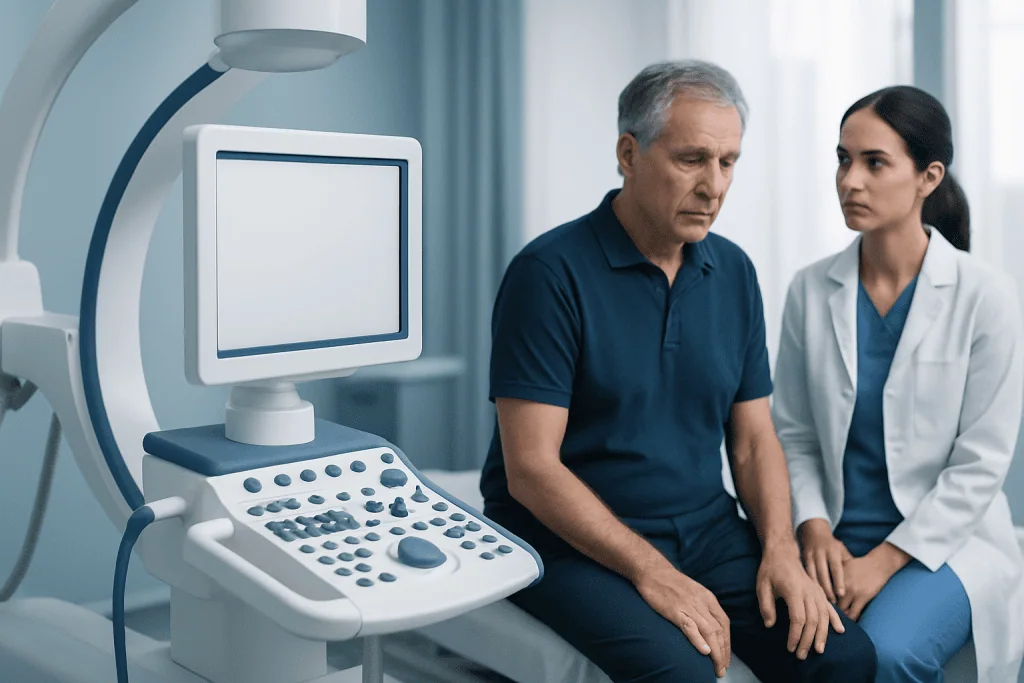
Early symptoms of spinal stenosis are often subtle. A person may first notice aching in the lower back or neck, stiffness, or discomfort after standing upright or walking for a while. Tingling, burning, or numbness in the buttocks, legs, feet, arms, or hands may also occur, depending on the location of the narrowing.
In lumbar spinal stenosis, a common pattern is leg pain, heaviness, cramping, or weakness that becomes worse during walking and improves with sitting or bending forward. Some people find that leaning on a shopping cart relieves discomfort. This happens because flexing the spine can create a bit more room for the nerves.
In cervical spinal stenosis, symptoms may include neck pain, shoulder discomfort, clumsiness of the hands, balance problems, or weakness in the arms. If the spinal cord is affected, symptoms can become more significant and may interfere with fine motor tasks, walking, or coordination.
Progression is often slow, but symptoms can gradually become more frequent or more limiting. A person who once walked comfortably may need to stop and rest sooner. Worsening numbness, increasing weakness, repeated falls, or reduced bladder or bowel control are more serious signs and should be assessed promptly by a doctor.
Causes and risk factors

The most common cause of spinal stenosis is age-related degeneration. Over time, the discs between the vertebrae can lose height, joints in the spine may develop osteoarthritis, and ligaments may thicken. Together, these changes can narrow the spinal canal or the openings where nerves exit the spine.
Bone spurs, also called osteophytes, may form as the body responds to joint wear. Bulging or herniated discs can also take up space in the spinal canal. In some cases, spinal instability or slippage of one vertebra over another contributes to nerve compression. People with conditions such as a herniated disc may develop overlapping symptoms.
Some people are born with a naturally narrower spinal canal, which may make symptoms appear earlier in life. Previous spinal injury, fractures, surgery, or inflammatory conditions can also increase risk. Excess body weight, low physical activity, and jobs or habits that strain the spine may add to symptom burden, although they are not the sole cause.
Spinal stenosis becomes more common with age, especially after midlife. Still, it is not simply an inevitable part of aging. Careful evaluation helps distinguish it from other causes of back, leg, neck, or arm symptoms, including peripheral nerve disorders, vascular problems, or other spine conditions.
How spinal stenosis is diagnosed
Diagnosis begins with a medical history and physical examination. The doctor asks about where symptoms occur, what makes them better or worse, how walking is affected, and whether there is numbness, weakness, or balance difficulty. The pattern of symptoms often provides important clues about whether the narrowing is in the neck or lower back.
During the examination, the doctor may assess posture, walking, strength, reflexes, sensation, and spinal movement. In cervical stenosis, hand coordination and balance may be checked. In lumbar stenosis, the doctor may look for changes in leg strength or symptoms triggered by standing and relieved by sitting.
Imaging tests help confirm the diagnosis and identify the cause of narrowing. Magnetic resonance imaging, or MRI, is commonly used because it shows nerves, discs, ligaments, and soft tissues clearly. In some cases, computed tomography, X-rays, or specialized studies may be recommended to evaluate bone structures, alignment, or instability.
Not everyone with imaging findings needs immediate treatment. Doctors consider both the scan results and the person’s symptoms, physical findings, and daily limitations. If symptoms could be related to another condition, nerve studies or vascular testing may sometimes be needed to make the diagnosis more precise.
Treatment choices for spinal stenosis
Treatment depends on symptom severity, the location of stenosis, overall health, and how much daily life is affected. Many people start with conservative care. This may include activity modification, supervised exercise, pain-relieving medicines, and physical therapy focused on posture, flexibility, core strength, and walking tolerance.
Physical therapy can help improve movement patterns and reduce strain on the spine. Some people benefit from learning positions that open the spinal canal slightly, such as gentle forward-flexed postures. A doctor may also recommend supportive measures such as weight management, short-term use of assistive devices, and a tailored home exercise program.
When symptoms are more persistent, injection-based pain management may be considered in selected cases. These treatments do not correct the narrowing itself, but they may reduce inflammation around irritated nerves and help some patients participate more fully in rehabilitation. If there is a coexisting disc problem, evaluation may include care related to microdiscectomy when appropriate.
Surgery may be considered when non-surgical treatment does not provide enough relief, walking ability is significantly reduced, or there is progressive neurologic loss. Procedures aim to create more space for nerves by removing the structures causing compression. Depending on the case, options may include laminectomy, decompression with stabilization, or, in carefully selected patients, minimally invasive spine surgery. The most suitable approach should be discussed with a spine specialist.
Prevention and self-care
Spinal stenosis cannot always be prevented, especially when it is mainly related to aging or inherited spinal anatomy. However, certain habits may support spinal health and help reduce symptom flare-ups. Regular physical activity, maintaining a healthy weight, and strengthening the core and back muscles can improve support for the spine.
Good posture and body mechanics matter in daily life. Using proper lifting technique, avoiding long periods in one position, and taking walking or stretching breaks may help reduce strain. For people whose symptoms worsen with prolonged standing, planning rest periods and using a slight forward-leaning posture during walks can sometimes make activity easier.
Home exercise should be guided by a clinician or physiotherapist when possible, especially if there is leg weakness, balance difficulty, or significant pain. Exercises that are too intense or done incorrectly may worsen symptoms. A personalized plan is usually safer and more effective than trying random routines.
Self-care should not replace professional evaluation when symptoms persist. Ongoing numbness, sleep-disrupting pain, reduced mobility, or repeated near-falls are good reasons to seek medical advice. Early assessment can help prevent unnecessary limitations and clarify whether the symptoms are truly due to stenosis or another condition such as sciatica.
When to see a doctor
A doctor should evaluate persistent back or neck pain that is accompanied by numbness, tingling, weakness, or trouble walking. Medical review is also important if symptoms are gradually limiting work, exercise, sleep, or normal daily activities. Early care can help identify manageable causes and support safer treatment choices.
Prompt evaluation is recommended when there is worsening weakness, increasing balance problems, repeated falls, or reduced hand coordination. These symptoms may suggest more significant nerve or spinal cord involvement, particularly in cervical stenosis. New symptoms after an injury also deserve medical attention.
Emergency care is needed for sudden loss of bowel or bladder control, numbness in the groin or saddle area, or rapidly progressing weakness. These symptoms can signal a serious nerve compression problem that should not be ignored.
People seeking expert assessment may benefit from a multidisciplinary spine team. Near the end of the care pathway, it may be helpful to know that Acibadem International’s multidisciplinary specialists and JCI-accredited hospitals diagnose and treat spinal conditions for international patients, with treatment plans tailored to the individual.
Frequently asked questions
What are the first signs of spinal stenosis?
Early signs often include back or neck pain, stiffness, tingling, numbness, or a heavy, cramping feeling in the legs during walking. Symptoms may be mild at first and can come and go. Many people notice that standing upright for long periods is harder than before.
Does spinal stenosis always get worse over time?
Not always. Spinal stenosis often progresses slowly, and some people remain stable for long periods with mild symptoms. Others may notice a gradual decline in walking distance, strength, or balance, which is why regular follow-up is important.
Can spinal stenosis be treated without surgery?
Yes. Many patients improve with non-surgical treatment such as physical therapy, activity changes, pain management, and exercises tailored to the spine. Surgery is usually considered when symptoms remain disabling or when there is progressive nerve-related weakness or spinal cord compression.
Where is spinal stenosis usually felt?
The location depends on where the spine is narrowed. Lumbar stenosis usually causes symptoms in the lower back, buttocks, and legs, while cervical stenosis can affect the neck, shoulders, arms, hands, balance, and coordination. Some people experience both pain and numbness together.
Is walking good for spinal stenosis?
Walking can be helpful, but tolerance varies from person to person. Some people with lumbar stenosis can walk better when leaning slightly forward or taking breaks as needed. A doctor or physiotherapist can suggest a safe walking plan based on symptom severity.
When is spinal stenosis considered an emergency?
It becomes urgent if there is sudden bowel or bladder dysfunction, numbness in the saddle area, or rapidly worsening weakness. These symptoms may point to serious nerve compression. Immediate medical evaluation is important.
References
- National Institute of Arthritis and Musculoskeletal and Skin Diseases
- American Academy of Orthopaedic Surgeons
- National Institute of Neurological Disorders and Stroke
- North American Spine Society
- Mayo Clinic
This article is for general information only and is not a substitute for professional medical advice. Please consult a qualified doctor about your individual situation.
Joint and spine care in Turkey — expert assessment & treatment
JCI-accredited · board-certified surgeons · reply within 24h
Add us as a Preferred Source to see more of our trusted health content across Google Search, AI Overviews and Discover.