Interventional Neurology for Stroke Prevention: When Minimally Invasive Treatment Is Considered

Interventional neurology uses catheter-based techniques to help prevent stroke in selected patients. It is most often considered for conditions such as carotid artery narrowing, intracranial vessel disease, or other treatable vascular abnormalities.
Key Takeaways
- Interventional neurology uses catheter-based techniques to help prevent stroke in selected patients.
- It is most often considered for conditions such as carotid artery narrowing, intracranial vessel disease, or other treatable vascular abnormalities.
- Not everyone at risk of stroke needs a procedure; many people do well with medication and lifestyle treatment alone.
- Decision-making is individualized and usually involves neurologists, interventional specialists, and vascular imaging.
- Prompt assessment is important if a person has a transient ischemic attack, stroke symptoms, or repeated neurologic warning signs.
Interventional neurology for stroke prevention focuses on minimally invasive procedures that can reduce the risk of future stroke in carefully selected patients. These treatments are usually considered when blood vessel narrowing, certain structural problems, or recurrent symptoms make medication alone less effective or less suitable.
Overview: what interventional neurology means in stroke prevention
Interventional neurology is a subspecialty that uses image-guided, minimally invasive techniques to diagnose and treat disorders of the brain’s blood vessels and circulation. For stroke prevention, its role is to identify people whose future stroke risk may be lowered by treating a narrowed artery, removing or reducing a source of blocked blood flow, or repairing a blood vessel problem through a catheter-based procedure rather than open surgery.
These procedures are not the first step for everyone. Many people prevent stroke effectively with blood pressure control, cholesterol management, diabetes care, smoking cessation, physical activity, and medicines such as antiplatelet or anticoagulant therapy when appropriate. Interventional treatment is usually considered when imaging shows a specific vascular problem and the expected benefit is thought to outweigh the risks of the procedure.
A catheter-based approach typically involves guiding a thin tube through an artery, often from the wrist or groin, toward the blood vessels supplying the brain. Using X-ray and contrast imaging, the specialist can examine blood flow and, in selected cases, place a stent, widen a narrowed vessel, or treat an abnormal connection. Because stroke prevention decisions are highly individualized, patients are usually assessed by a multidisciplinary team that may include a neurologist, interventional neuroradiologist or endovascular neurospecialist, vascular surgeon, and cardiologist.
Who may be considered for minimally invasive stroke-prevention treatment
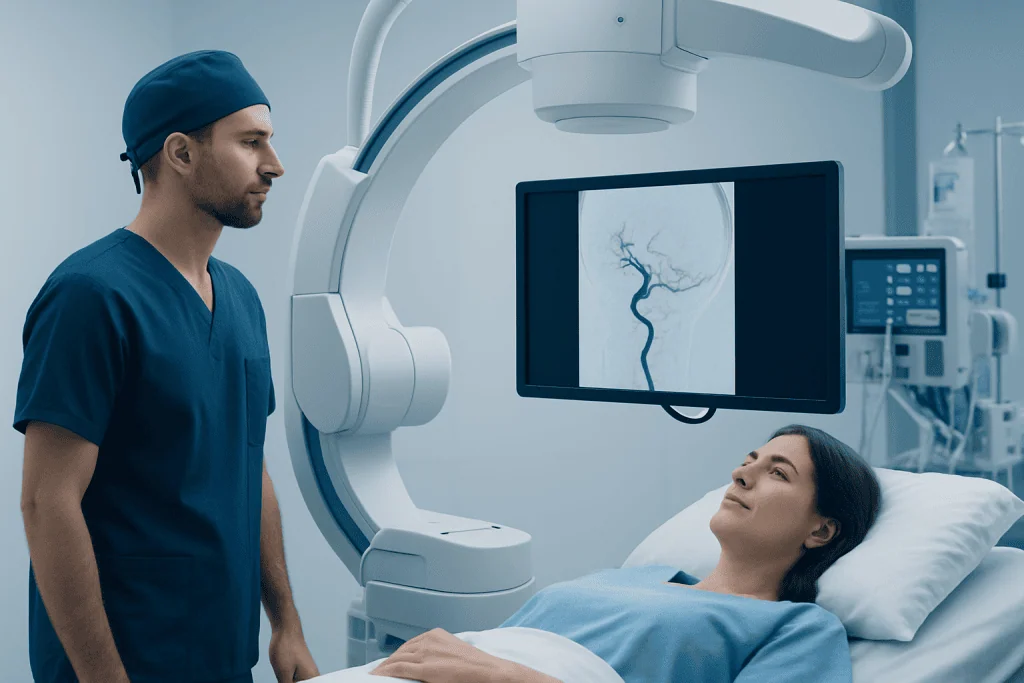
Interventional neurology is most often considered when a person has a clearly identified cause of stroke or transient ischemic attack that may be amenable to a procedure. One of the most common examples is significant narrowing of the carotid artery, the main vessel in the neck that supplies blood to the brain. In some patients, especially those with symptoms such as a recent transient ischemic attack or minor stroke, treating that narrowing may reduce the chance of another event.
Other situations may include selected cases of intracranial atherosclerotic disease, where an artery inside the skull has become severely narrowed, or structural vascular conditions such as certain aneurysms or arteriovenous malformations that may contribute to bleeding or impaired circulation. Some patients may also be evaluated after repeated neurologic episodes despite appropriate medical therapy, when doctors suspect an ongoing vascular source that needs more targeted treatment.
Whether a procedure is appropriate depends on more than the scan result alone. Specialists consider age, general health, the location and degree of narrowing, prior stroke history, symptom pattern, anatomy of the blood vessels, bleeding risk, and how well the patient can tolerate blood-thinning medicine afterward. A minimally invasive option can be very helpful for the right person, but careful selection is essential.
- Recent transient ischemic attack or minor stroke linked to a treatable vessel problem
- Significant carotid artery narrowing in selected patients
- Recurrent symptoms despite guideline-based medical therapy
- Structural vascular abnormalities needing endovascular treatment
- Cases where open surgery may carry higher risk
Conditions and risk factors that lead to evaluation

Stroke is not a single disease but an event caused by interrupted blood flow to the brain or bleeding within the brain. Interventional neurology mainly applies to ischemic stroke prevention, where a clot or narrowed artery reduces blood supply. Common underlying causes include atherosclerosis, a process in which fatty plaque builds up in arteries, and blood clots that travel from the heart or major vessels.
Patients may come to specialist attention after symptoms of a transient ischemic attack, sometimes called a “mini-stroke,” or after recovery from a prior stroke. Warning signs can include temporary weakness on one side, facial drooping, trouble speaking, sudden vision loss, dizziness, or numbness. Even if symptoms fully resolve, they should be treated as urgent because they can signal a high short-term risk of a more serious stroke.
Risk factors that increase the chance of stroke and vascular disease include high blood pressure, diabetes, high cholesterol, smoking, atrial fibrillation, obesity, sleep apnea, older age, and a family history of cardiovascular disease. These factors are important even when a procedure is being considered, because endovascular treatment works best as part of a broader prevention plan rather than as a stand-alone solution.
In some cases, evaluation may also reveal problems outside the brain itself, such as carotid artery disease in the neck or a cardiac condition that promotes clot formation. This is why stroke prevention often involves coordinated neurologic, vascular, and cardiac assessment.
How doctors evaluate stroke risk and decide on a procedure
The diagnostic process begins with a detailed clinical history and neurologic examination. Doctors ask about the timing and pattern of symptoms, prior strokes or transient ischemic attacks, medications, bleeding history, and vascular risk factors. They also review whether symptoms suggest disease in a particular artery or whether another cause, such as a heart rhythm problem, may be involved.
Imaging is central to decision-making. Tests may include carotid ultrasound, CT angiography, MR angiography, brain MRI, and, in selected cases, diagnostic cerebral angiography. These studies help show the severity and location of vessel narrowing, the shape of the blood vessels, the presence of plaque or clot, and whether there is evidence of old or recent brain injury. Heart tests such as echocardiography and rhythm monitoring may also be needed if a cardiac source of embolism is suspected.
When imaging shows severe carotid narrowing or another potentially treatable lesion, the team compares the expected benefit of intervention with the procedural risks. Important questions include whether the patient has had symptoms, whether the anatomy is suitable for catheter-based treatment, and whether medical therapy alone may be equally effective. Current stroke prevention practice emphasizes careful case selection rather than routine intervention for every narrowed vessel.
Patients are often reassured to learn that this process is deliberate by design. Taking time to confirm the diagnosis, understand anatomy, and optimize medications before a procedure can improve safety and outcomes.
Treatment options in interventional neurology for stroke prevention
The exact treatment depends on the underlying problem. For selected patients with carotid artery stenosis, doctors may consider carotid artery stenting, in which a small mesh tube is placed to help keep the vessel open and improve blood flow to the brain. This approach may be considered in patients who are not ideal candidates for open surgery or whose anatomy makes an endovascular option preferable.
Another broad category is endovascular treatment for vascular abnormalities inside the head and neck. Depending on the diagnosis, this may involve balloon angioplasty, stent placement, embolization of an abnormal connection between vessels, or treatment of selected aneurysms that carry bleeding risk. These procedures are performed under imaging guidance by highly trained specialists in a hospital setting.
It is important to understand that minimally invasive treatment does not replace standard stroke-prevention medicine. Most patients still need careful control of blood pressure, cholesterol, and diabetes, along with antiplatelet therapy or other blood-thinning medication when indicated. In some circumstances, doctors may recommend ongoing monitoring rather than immediate intervention if the lesion is stable and the procedural benefit is uncertain.
Recovery after a catheter-based procedure is often shorter than after open surgery, but there are still meaningful risks, including stroke during the procedure, bleeding, vessel injury, reaction to contrast dye, and re-narrowing over time. For that reason, patients benefit from a clear discussion of expected advantages, alternatives, and follow-up needs before proceeding.
Benefits, limits, and what recovery usually involves
The main potential benefit of interventional neurology for stroke prevention is targeted treatment of a known vascular problem. When the right lesion is treated in the right patient, a minimally invasive procedure may improve blood flow, reduce embolic risk, or secure an abnormal vessel structure before it causes harm. Procedures can also be especially useful when symptoms continue despite well-managed medical therapy.
At the same time, these treatments have limits. Some narrowed arteries are better managed with medication alone, and not every blockage is accessible or suitable for stenting or angioplasty. A procedure may lower risk, but it does not remove the need for long-term prevention. A person can still have a stroke later if blood pressure, cholesterol, diabetes, smoking, or heart rhythm disorders remain uncontrolled.
After treatment, patients are usually observed in the hospital for a short period so the care team can monitor blood pressure, neurologic status, and the access site in the wrist or groin. Follow-up may include repeat imaging, medication review, and risk-factor management. Adhering to medical advice after the procedure is just as important as the procedure itself.
Near the end of the care pathway, some patients seek treatment at specialized centers with integrated stroke services. Acibadem International’s multidisciplinary specialists and JCI-accredited hospitals diagnose and treat cerebrovascular conditions for international patients, including selected minimally invasive approaches when clinically appropriate.
Prevention, self-care, and when to seek medical attention
Even when a minimally invasive treatment is planned or already completed, stroke prevention remains a daily process. Patients are usually advised to take medications exactly as prescribed, attend follow-up appointments, and work with their doctors to control blood pressure, cholesterol, and blood sugar. A heart-healthy diet, regular physical activity, maintaining a healthy weight, and stopping smoking all support better long-term vessel health.
People with atrial fibrillation or other heart conditions should follow their cardiology treatment plan carefully, because some strokes begin with clots formed in the heart rather than the neck or brain arteries. It is also helpful to manage sleep apnea if present, limit excess alcohol, and discuss any over-the-counter supplements with a doctor, especially if blood-thinning medicine is being used.
Emergency care is needed right away if there are signs of stroke: sudden face drooping, arm weakness, speech difficulty, vision loss, severe imbalance, or sudden numbness, especially on one side of the body. Symptoms that go away quickly still require urgent evaluation, because a transient ischemic attack may be an early warning. Timely treatment can make a major difference in both prevention and recovery.
Anyone wondering whether interventional treatment is appropriate should speak with a qualified neurologist or stroke specialist rather than assume that a narrowed vessel automatically needs a procedure. The safest plan is one based on a full evaluation, up-to-date imaging, and individualized risk assessment.
Frequently asked questions
What is interventional neurology for stroke prevention?
It is the use of minimally invasive, image-guided procedures to reduce stroke risk in selected patients with treatable blood vessel problems. These procedures are usually considered alongside, not instead of, standard preventive care such as medication and risk-factor control.
Who is a good candidate for a minimally invasive stroke-prevention procedure?
Good candidates are usually people with a clearly identified vascular cause of stroke or transient ischemic attack, such as significant carotid artery narrowing or another structural abnormality. The decision depends on symptoms, anatomy, overall health, and whether the expected benefit is greater than the procedural risk.
Is carotid artery stenting the same as stroke treatment in an emergency?
No. Carotid artery stenting for prevention is usually planned after evaluation of a narrowed artery that may cause future stroke. Emergency stroke treatment is a separate situation and may involve urgent clot-removal procedures or other time-sensitive therapies.
Can medication alone prevent stroke without a procedure?
Yes, many people can reduce their stroke risk effectively with medication and lifestyle measures alone. Blood pressure control, cholesterol treatment, diabetes management, smoking cessation, and appropriate blood-thinning medicine are often the foundation of prevention.
What are the risks of interventional neurology procedures?
Possible risks include stroke during the procedure, bleeding, damage to the blood vessel, reaction to contrast dye, and re-narrowing later on. Although these procedures are minimally invasive, they still require careful planning and follow-up.
How long is recovery after an endovascular stroke-prevention procedure?
Recovery is often shorter than with open surgery, and many patients spend only a brief time in the hospital. Exact recovery depends on the procedure performed, the patient’s health, and whether there were any complications.
References
- World Stroke Organization
- American Heart Association
- National Institute of Neurological Disorders and Stroke
- Society of NeuroInterventional Surgery
This article is for general information only and is not a substitute for professional medical advice. Please consult a qualified doctor about your individual situation.
Interventional Neurology in Turkey — costs, top hospitals & a free quote
JCI-accredited · board-certified surgeons · reply within 24h
Add us as a Preferred Source to see more of our trusted health content across Google Search, AI Overviews and Discover.
Check your numbers in seconds
BMI, calories, due date, blood pressure and 30+ more clinical calculators — free, instant, doctor-reviewed ranges.

Robotic Surgery
Robot-assisted procedures across urology, gynecology and general surgery for greater precision and faster recovery.