Proton Therapy vs Standard Radiation: How the Treatments Compare

Both proton therapy and standard radiation aim to destroy cancer cells while protecting healthy tissue as much as possible. Proton therapy can reduce radiation exposure beyond the tumor, which may be especially helpful for some tumors near sensitive organs.
Key Takeaways
- Both proton therapy and standard radiation aim to destroy cancer cells while protecting healthy tissue as much as possible.
- Proton therapy can reduce radiation exposure beyond the tumor, which may be especially helpful for some tumors near sensitive organs.
- Standard radiation remains highly effective, widely available, and appropriate for many cancer types.
- The best choice depends on the cancer type, tumor location, age, overall health, prior treatments, and expert treatment planning.
- A radiation oncologist can explain whether proton therapy offers a meaningful advantage in an individual case.
Proton therapy and standard radiation are both established cancer treatments that use high-energy beams to damage cancer cells. The main difference is how the radiation dose travels through the body, which can affect nearby healthy tissues, side effects, and treatment planning.
Overview
When patients hear about proton therapy vs standard radiation, they are usually comparing two forms of external beam radiation used to treat cancer. Both approaches work by damaging the DNA of cancer cells so they can no longer grow and divide. Over time, the body removes these damaged cells.
Standard radiation therapy most often uses high-energy X-rays, also called photons. Proton therapy uses positively charged particles called protons. Although both are designed to deliver a carefully calculated radiation dose to a tumor, they behave differently once they enter the body.
The main reason this comparison matters is precision. Standard radiation passes through the body and continues beyond the tumor, while proton therapy can be planned to stop more precisely at a chosen depth. In some situations, this may reduce unnecessary radiation to nearby healthy tissues and organs.
Even so, proton therapy is not automatically better for every patient or every cancer. Standard radiation is a highly advanced, effective treatment that continues to be the right option for many people. The decision is based on tumor type, location, stage, treatment goals, and the expertise of the cancer care team.
How the Two Treatments Work
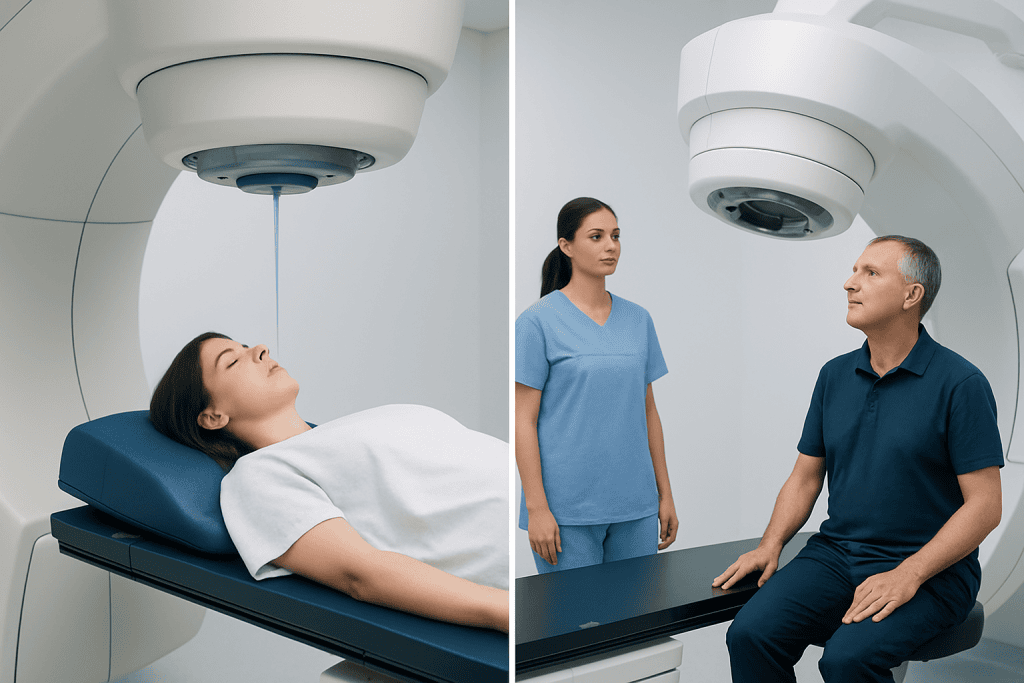
Both proton therapy and standard radiation are delivered using complex imaging, computer planning, and specialized machines. Before treatment begins, the radiation oncology team creates a personalized plan to target the tumor while limiting dose to surrounding organs. This planning process is one of the most important parts of treatment.
In standard radiation therapy, photon beams enter the body, deposit radiation along their path, pass through the tumor, and then continue beyond it. Modern techniques such as image-guided radiation therapy and intensity-modulated radiation therapy have greatly improved accuracy. These advances allow standard radiation to shape the dose closely around many tumors.
In proton therapy, the particles release most of their energy at a specific depth, often referred to as the Bragg peak. This means the beam can be designed to deliver a strong dose to the tumor with little or no exit dose beyond the target. For tumors close to structures such as the brain, spinal cord, eyes, or heart, this property may be especially useful.
Patients usually do not feel the radiation during either treatment. Sessions are typically painless, and each visit often lasts longer for positioning and verification than for the beam delivery itself. Some people may receive radiation alone, while others have it combined with surgery, chemotherapy, immunotherapy, or other oncology treatments depending on their care plan.
Potential Advantages and Limitations

The possible advantage of proton therapy is its ability to reduce radiation exposure to normal tissues beyond the tumor. This may matter most when a tumor is located near highly sensitive structures, when a patient is a child, or when treatment fields are large or complex. In selected cases, lowering dose to healthy organs may help reduce certain short-term and long-term side effects.
For example, proton therapy may be considered for some brain tumors, head and neck cancers, tumors near the spinal cord, and certain cancers in children. It can also be useful when a person has already had radiation in the same area and another course is being considered. In those situations, careful tissue sparing can be especially important.
However, proton therapy also has limitations. It is less widely available, may not offer a clear benefit for every cancer type, and requires very precise planning because normal body changes, breathing, and movement can affect where the dose lands. The evidence is stronger for some cancers than for others, so specialists weigh the expected benefit carefully.
Standard radiation remains an excellent treatment choice for many patients. It is widely accessible, supported by extensive long-term clinical experience, and often highly effective with modern planning methods. In many cases, the expected cancer control and side-effect profile with standard radiation are very good, making it a practical and medically appropriate option.
Which Cancers May Be Considered for Proton Therapy?
Proton therapy is most often discussed when reducing radiation to nearby normal organs could make a meaningful difference. This may include tumors in the brain and central nervous system, certain eye tumors, selected head and neck cancers, some chest tumors, prostate cancer in selected circumstances, and pediatric cancers. Doctors also consider it for uncommon or anatomically challenging tumors.
Children are a particularly important group in this discussion because their tissues are still developing, and they may live many years after treatment. Lowering radiation exposure to healthy tissues may help reduce the risk of growth problems, hormonal effects, or later complications in some cases. Even so, the choice must still be individualized.
For adults, proton therapy may be considered when the tumor lies close to vital structures or when prior treatment has already exposed nearby tissues to radiation. Examples can include certain brain tumors or cancers in areas where the eyes, salivary glands, swallowing structures, heart, or lungs need special protection. Not every patient with these cancers will need proton therapy, but it may be part of the discussion.
Standard radiation is also used successfully for these same diseases in many situations. The question is not simply which technology is newer, but whether one method offers a meaningful clinical advantage for the individual. That is why multidisciplinary review and detailed imaging are essential before treatment begins.
Diagnosis, Planning, and Treatment Experience
The comparison between proton therapy vs standard radiation begins after the cancer has already been diagnosed and staged. Imaging such as CT, MRI, or PET scans may be used to understand the tumor’s exact size, shape, and relationship to nearby organs. These scans help the team design the safest and most effective treatment plan.
Before either treatment, patients usually undergo a simulation session. During this appointment, they are positioned carefully, and custom supports or masks may be made to help them stay still. The planning team then maps the target and nearby organs at risk, calculates dose, and decides how many treatment sessions are needed.
Many people are surprised that daily treatment itself is usually quick and noninvasive. The machine does not touch the body, and patients do not become radioactive after external beam treatment. The care team monitors positioning closely each day to ensure the radiation is delivered as accurately as possible.
Supportive care is also part of the process. Depending on the cancer site, a patient may meet with specialists in nutrition, rehabilitation, pain management, surgery, or medical oncology. If needed, treatment planning may work alongside radiation oncology and medical oncology services to coordinate the broader cancer treatment plan.
Side Effects and Recovery
Side effects can occur with both proton therapy and standard radiation, but the type and intensity depend more on the area being treated, total dose, and whether chemotherapy is also used than on the machine alone. Common effects may include fatigue, skin irritation in the treated area, and temporary inflammation of nearby tissues. Side effects often build gradually over the course of treatment.
For example, radiation to the head and neck may cause mouth soreness, taste changes, dry mouth, or difficulty swallowing. Radiation to the chest may irritate the esophagus, while treatment to the pelvis may affect the bladder or bowel. Proton therapy may reduce some of these effects in selected situations by sparing more normal tissue, but this is not guaranteed in every case.
Recovery varies from person to person. Some side effects improve within weeks after treatment ends, while others can take longer. Certain late effects can appear months or years later, which is why follow-up care is important regardless of which radiation technique is used.
Patients should tell their care team about new symptoms promptly. Skin care advice, nutrition support, swallowing therapy, pain relief, and fatigue management can make treatment more manageable. Good supportive care often improves comfort and helps patients complete therapy as planned.
How Doctors Choose Between Them
Choosing between proton therapy and standard radiation is a medical decision rather than a technology preference. Radiation oncologists consider the type of cancer, tumor location, stage, age, previous treatments, expected benefits, possible side effects, and practical access to treatment. They may compare different plans side by side to see which one better protects nearby organs without compromising tumor coverage.
In some cases, proton therapy clearly offers an advantage because of anatomy or the need to reduce dose to critical tissues. In others, modern photon radiation can provide excellent results with similar expected outcomes. Clinical guidelines and the best available evidence help shape these decisions, but individualized planning remains essential.
Patients may find it helpful to ask what the treatment goal is, whether there are differences in likely side effects, and whether either option changes the chance of controlling the cancer. It is also reasonable to ask whether the center has experience treating that specific cancer with the proposed technique. A second opinion can be useful when the choice is complex.
For international patients seeking advanced cancer care, Acibadem International’s multidisciplinary specialists in JCI-accredited hospitals evaluate suitable candidates for modern radiation approaches, including care pathways related to proton therapy, as part of a personalized treatment plan.
When to Speak With a Specialist
Anyone diagnosed with cancer who has been advised to consider radiation therapy should discuss the available options with a radiation oncologist. This is especially important if the tumor is close to sensitive organs, if the patient is a child or young adult, or if radiation has been given in the same area before. Early specialist input can clarify whether proton therapy should be considered.
Patients should also seek guidance if they are unsure why one form of treatment has been recommended over another. Understanding the expected benefits, possible side effects, and treatment schedule can make decision-making less stressful. Clear explanations are an important part of good cancer care.
Urgent medical attention may be needed during or after treatment for severe pain, high fever, difficulty breathing, dehydration, confusion, or sudden worsening of symptoms. These problems are not specific to one radiation type, but they should always be reported promptly. The care team can advise whether they are treatment-related or due to the cancer itself.
Ongoing follow-up remains important after treatment ends. Imaging, physical exams, and symptom review help doctors assess response, detect recurrence if it happens, and manage late effects. Long-term monitoring supports recovery and helps patients return to daily life with confidence.
Frequently asked questions
Is proton therapy better than standard radiation?
Not always. Proton therapy may be better for some tumors because it can reduce radiation exposure to nearby healthy tissues, but standard radiation is also highly effective and often the best choice for many cancers. The right option depends on the individual treatment plan.
What is the main difference between proton therapy and standard radiation?
The main difference is how the radiation dose travels through the body. Standard radiation uses photon beams that pass through the tumor and continue beyond it, while proton therapy can be designed to stop at a specific depth. This may help protect nearby organs in selected cases.
Are side effects lower with proton therapy?
They can be lower in some situations, especially when the tumor is close to sensitive organs. However, side effects depend on many factors, including the treatment area, total dose, and other therapies such as chemotherapy. Proton therapy does not eliminate side effects completely.
Do patients feel anything during proton therapy or standard radiation?
No, the treatment itself is usually painless. Patients may hear the machine and need to remain still, but they do not feel the beam entering the body. Side effects, if they occur, usually develop gradually over time rather than during the session.
Is proton therapy used for all cancers?
No. Proton therapy is generally reserved for situations where its dose distribution may offer a meaningful benefit, such as certain pediatric cancers or tumors near critical organs. Many cancers are treated very effectively with standard radiation.
Can someone get proton therapy after having radiation before?
Sometimes, yes. Prior radiation can make re-treatment more complex, but proton therapy may be considered in selected cases because of its ability to limit additional dose to nearby tissues. This requires detailed review by an experienced radiation oncology team.
References
- National Cancer Institute
- American Society for Radiation Oncology
- National Comprehensive Cancer Network
- American Cancer Society
- European Society for Medical Oncology
This article is for general information only and is not a substitute for professional medical advice. Please consult a qualified doctor about your individual situation.
Oncology care in Turkey — second opinion and treatment plan
JCI-accredited · board-certified surgeons · reply within 24h
Add us as a Preferred Source to see more of our trusted health content across Google Search, AI Overviews and Discover.