Interventional Neurology in Turkey: Hospital Choice, Safety, and Travel Planning

Interventional neurology uses catheters and imaging to treat certain brain and vascular conditions without open surgery. Hospital choice should focus on experience, 24/7 emergency capability, imaging access, ICU support, and multidisciplinary care.
Key Takeaways
- Interventional neurology uses catheters and imaging to treat certain brain and vascular conditions without open surgery.
- Hospital choice should focus on experience, 24/7 emergency capability, imaging access, ICU support, and multidisciplinary care.
- Safety depends on the patient’s condition, treatment timing, and the center’s protocols before, during, and after the procedure.
- Travel planning should include medical records, flight timing, medication review, and post-treatment follow-up arrangements.
- Not every patient is a candidate, so treatment decisions should be based on specialist assessment and imaging findings.
Interventional neurology in Turkey involves minimally invasive, image-guided procedures used to diagnose and treat conditions affecting the brain, spine, and blood vessels. For international patients, choosing the right hospital and planning travel carefully can support both safety and peace of mind.
Overview: What Interventional Neurology Means
Interventional neurology is a field that uses minimally invasive, image-guided techniques to diagnose and treat disorders of the brain, spinal cord, head, neck, and blood vessels. Instead of a large surgical incision, the doctor usually reaches the target area through a thin catheter inserted into a blood vessel, often at the wrist or groin. Real-time imaging helps guide the catheter safely to the area that needs treatment.
These procedures are commonly used in emergency and planned care. Examples include removing a blood clot in an acute ischemic stroke, treating certain aneurysms, opening narrowed vessels in selected cases, or closing abnormal blood vessel connections. In many situations, interventional neurology works closely with neurology, neurosurgery, neuroradiology, intensive care, and rehabilitation.
For people considering interventional neurology in Turkey, the most important questions are usually about hospital quality, safety standards, and how to organize treatment from abroad. The answer depends less on location alone and more on whether the hospital has the right team, technology, and systems to provide timely, coordinated care. A well-prepared patient can often make the process smoother by sharing medical records early and understanding what to expect before travel.
Which Conditions May Be Treated This Way
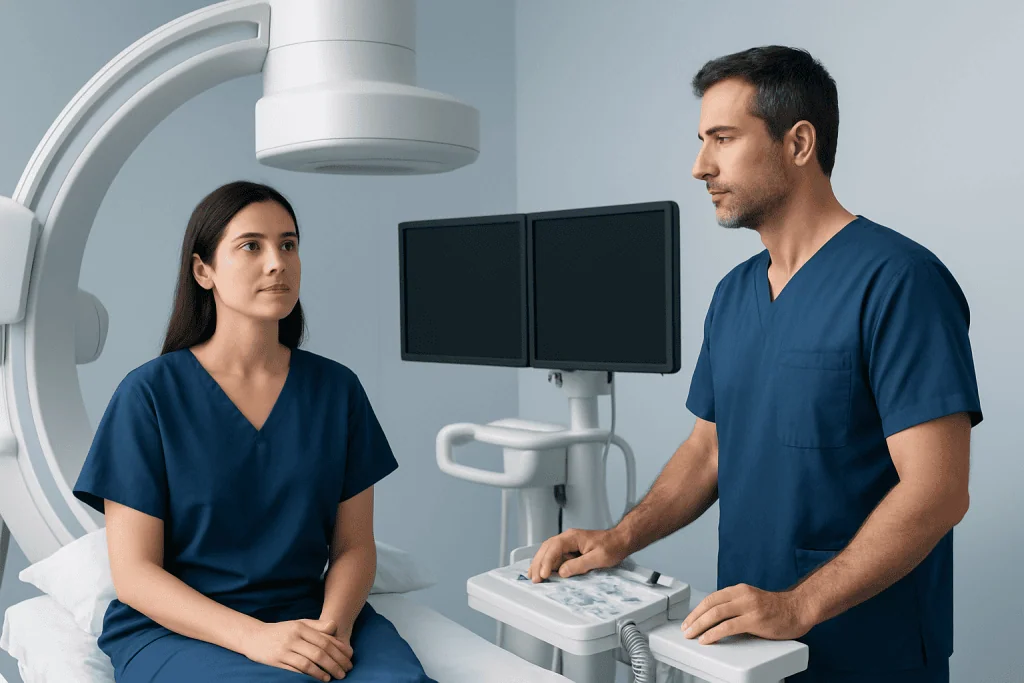
Interventional neurology is often associated with stroke care, especially when a clot blocks blood flow to part of the brain. In carefully selected patients, a specialist may perform mechanical thrombectomy, a procedure that removes the clot and can help restore circulation. This is different from medicines alone and is typically considered when imaging shows a large-vessel blockage and the timing is appropriate.
Other conditions may also be managed with catheter-based techniques. These include some brain aneurysms, arteriovenous malformations, dural arteriovenous fistulas, carotid or intracranial vessel narrowing in specific circumstances, and certain causes of bleeding or vascular compression. Depending on the diagnosis, patients may be evaluated for brain aneurysm care or treatment related to stroke.
Not every neurological condition is suitable for an interventional approach. Some patients need medication, open neurosurgery, or careful observation instead. The best option depends on the exact diagnosis, imaging findings, symptom severity, overall health, and how urgently treatment is needed.
Because these are highly specialized procedures, decisions are typically made after review by a multidisciplinary team. This team looks at the expected benefit, possible risks, and whether the hospital can provide the monitoring and aftercare a patient may need immediately after treatment.
How to Choose a Hospital in Turkey

Hospital choice is one of the most important parts of planning care. Patients and families often benefit from asking whether the hospital has a dedicated neurointerventional team, advanced imaging available around the clock, and a structured stroke or neurovascular program. In emergency conditions such as major stroke, treatment speed matters, so 24/7 readiness is especially important.
Experience should be considered broadly rather than by a single number. A strong center usually has interventional neurologists or neurointerventional specialists, vascular neurologists, neurosurgeons, neuroanesthesiologists, intensive care specialists, and rehabilitation professionals working together. Access to angiography suites, CT, MRI, and critical care support helps the team respond if the patient’s needs change quickly.
International patients may also want to ask practical questions. These include whether imaging can be reviewed before travel, whether medical documents can be translated, how quickly the hospital can arrange consultations, and whether the patient will need a companion during recovery. Clear communication about expected length of stay, follow-up imaging, and rehabilitation planning is often as important as the procedure itself.
Quality systems matter too. Patients can ask about infection prevention, anesthesia assessment, ICU availability, and how complications are handled. Near the end of the care journey, some international patients choose centers such as Acibadem International, where multidisciplinary specialists in JCI-accredited hospitals diagnose and treat complex neurovascular conditions for people traveling from abroad.
Safety: What Patients Should Understand
Interventional neurology procedures are generally designed to reduce tissue disruption compared with open surgery, but they still carry important risks. Safety depends on the patient’s diagnosis, the urgency of treatment, vessel anatomy, bleeding risk, age, other medical conditions, and the experience of the treating team. A procedure that is clearly beneficial for one patient may not be appropriate for another.
Possible risks vary by procedure but may include bleeding, blood vessel injury, contrast-related problems, allergic reactions, infection, kidney strain, stroke progression, or the need for additional treatment. In emergency stroke care, the risks of delaying treatment may be greater than the risks of the procedure itself, which is why fast assessment is so important.
Good hospitals reduce risk through careful protocols. These typically include rapid imaging review, neurological examination, blood testing, anesthesia planning, sterile technique, continuous monitoring, and post-procedure observation in a specialized unit. Follow-up scans may be needed to confirm the result and check for complications.
Patients can support safety by sharing a complete medical history, including blood thinners, allergies, kidney disease, implanted devices, prior strokes, and previous imaging. It is also important to mention pregnancy, recent infections, or any symptoms that have changed suddenly while travel is being arranged.
Evaluation Before Treatment
Before an interventional neurology procedure, the team usually needs to confirm the diagnosis and understand the urgency. This often starts with a review of the patient’s symptoms, examination findings, and prior scans. Depending on the problem, the hospital may request CT, CT angiography, MRI, MR angiography, ultrasound, or digital subtraction angiography.
Laboratory tests may be used to evaluate blood counts, kidney function, clotting status, and other factors that affect procedural planning. The team will also review current medicines, especially anticoagulants, antiplatelet drugs, diabetes medicines, and treatments for blood pressure or seizures. In some cases, the plan may need to be adjusted before the procedure can be performed safely.
Patients traveling from another country often help the process by sending records in advance. Useful documents include symptom timelines, discharge summaries, medication lists, and copies of imaging on disc or through secure digital transfer. This can allow the specialists to decide whether an in-person evaluation, urgent transfer, or a different type of care would be most appropriate.
When treatment is suitable, patients may undergo procedures such as mechanical thrombectomy for selected acute strokes or cerebral angiography to define complex blood vessel problems in more detail. The goal of this evaluation is not only to confirm eligibility but also to plan the safest and most effective approach.
Travel Planning for International Patients
Medical travel planning should begin with timing. Some interventional neurology conditions, especially acute stroke, are emergencies and should be treated at the nearest capable hospital without delay. Others, such as planned evaluation of an aneurysm or vascular malformation, may allow time for record review, second opinions, and coordination of flights and accommodation.
Before traveling, patients should confirm whether they are fit to fly, whether a companion is recommended, and how long they may need to stay after the procedure. Airlines may have their own medical clearance rules, particularly for people with recent neurological events, mobility limits, oxygen needs, or high risk of medical deterioration. It is helpful to discuss these points with the treating team in advance.
Patients should pack an up-to-date medication list, copies of passports and insurance documents if relevant, previous imaging reports, and contact details for their local doctor. Medicines should be carried in original packaging whenever possible. If the patient takes blood thinners or has allergies to contrast agents or medications, those details should be easy to find.
Travel plans should also include recovery needs. Some people will need observation for a few days, repeat imaging, or rehabilitation assessment before returning home. Depending on the diagnosis, treatment such as endovascular aneurysm treatment may require follow-up imaging months later, so patients should ask how those reviews will be arranged after they leave Turkey.
Recovery, Aftercare, and Follow-Up
Recovery after interventional neurology depends on the condition treated, the urgency of the procedure, and the patient’s neurological status beforehand. Some people recover quickly after a planned procedure and leave the hospital within a short period. Others, especially those treated for stroke or bleeding, may need intensive monitoring, rehabilitation, and a longer hospital stay.
After the procedure, the team usually watches for changes in speech, strength, sensation, consciousness, headache, blood pressure, and the catheter access site. Follow-up imaging may be used to check blood flow, confirm closure of an aneurysm, or monitor for swelling or bleeding. Pain is often limited, but fatigue is common, particularly after a neurological emergency.
Rehabilitation can be a key part of recovery for patients with movement, speech, swallowing, or cognitive changes. This may involve physiotherapy, occupational therapy, speech-language therapy, or support for daily activities. Families often benefit from early guidance on what level of recovery is expected and what warning signs should prompt urgent medical attention.
Discharge planning should be clear and practical. Patients should understand which medicines to continue, when to restart normal activity, whether future scans are needed, and how follow-up will be shared with doctors in their home country. Good aftercare helps reduce confusion and supports continuity once the patient travels back home.
When to Seek Urgent Help
Some symptoms suggest a neurological emergency and should be treated immediately rather than planned through routine medical travel. Sudden weakness on one side, facial drooping, trouble speaking, confusion, severe dizziness, sudden vision loss, loss of balance, seizure, or a sudden unusually severe headache can all require urgent evaluation. In these situations, the safest step is to call emergency services or go to the nearest emergency department without delay.
Patients who recently had an interventional procedure should also seek urgent care if they develop new neurological symptoms, worsening headache, persistent vomiting, chest pain, shortness of breath, fever, heavy bleeding, or marked swelling at the catheter site. These symptoms do not always mean a serious complication, but they should be assessed promptly.
For non-emergency questions, patients may contact their treating team if they are unsure about flying, medications, expected fatigue, wound care, or follow-up appointments. It is reasonable to ask for written discharge instructions and a medical summary before returning home. This can make communication with local doctors easier and help avoid unnecessary delays if further care is needed.
Frequently asked questions
Is interventional neurology the same as brain surgery?
No. Interventional neurology usually uses thin catheters and imaging guidance rather than a large surgical opening. It is less invasive than many traditional operations, but it is still a specialized medical procedure that requires expert assessment and monitoring.
Is Turkey a good option for interventional neurology treatment?
Turkey can be a good option when the hospital has experienced neurovascular specialists, advanced imaging, intensive care support, and clear pathways for international patients. The most important factor is the capability of the specific center, not the destination alone.
Can international patients travel for stroke treatment?
Acute stroke is a medical emergency and should be treated at the nearest capable hospital as quickly as possible. Travel may be considered later for follow-up, rehabilitation, or additional specialist evaluation once the patient is medically stable.
What questions should patients ask before choosing a hospital?
Patients may ask about the team’s experience, 24/7 emergency coverage, ICU availability, imaging access, expected length of stay, and follow-up planning after discharge. It is also helpful to ask whether records can be reviewed before travel and whether translation support is available.
How long is recovery after an interventional neurology procedure?
Recovery varies widely depending on the underlying condition and whether the procedure was planned or performed in an emergency. Some patients recover within days, while others need weeks or months of rehabilitation and follow-up care.
Are these procedures safe for older adults?
They can be appropriate for older adults, but safety depends on overall health, the exact diagnosis, blood vessel anatomy, and the urgency of treatment. The treating team weighs expected benefits and risks carefully before recommending a procedure.
References
- World Stroke Organization
- American Stroke Association
- European Stroke Organisation
- Society of NeuroInterventional Surgery
- World Health Organization
This article is for general information only and is not a substitute for professional medical advice. Please consult a qualified doctor about your individual situation.
Interventional Neurology in Turkey — costs, top hospitals & a free quote
JCI-accredited · board-certified surgeons · reply within 24h
Add us as a Preferred Source to see more of our trusted health content across Google Search, AI Overviews and Discover.