What Is Neurophysiology? Meaning, Scope, and How It Differs From Neurology

Neurophysiology focuses on how the nervous system works rather than only its structure. It supports diagnosis through tests such as EEG, EMG, nerve conduction studies, evoked potentials, and sleep studies.
Key Takeaways
- Neurophysiology focuses on how the nervous system works rather than only its structure.
- It supports diagnosis through tests such as EEG, EMG, nerve conduction studies, evoked potentials, and sleep studies.
- Neurology and neurophysiology are closely related, but they are not the same; neurology is a broader medical specialty.
- Neurophysiology can help assess conditions affecting the brain, spinal cord, peripheral nerves, muscles, and sleep-wake regulation.
- Most neurophysiology tests are noninvasive or minimally invasive and are chosen based on symptoms.
Neurophysiology is the branch of medicine and science that examines how the brain, spinal cord, nerves, and muscles function. In clinical care, it often involves specialized tests that help doctors understand symptoms such as weakness, numbness, seizures, sleep problems, or changes in brain activity.
Overview: What neurophysiology means
Neurophysiology is the study of the function of the nervous system. This includes how the brain sends signals, how the spinal cord relays messages, how nerves carry information through the body, and how muscles respond to those signals. In simple terms, it looks at how the nervous system works in real time.
In healthcare, clinical neurophysiology uses this knowledge to help evaluate symptoms and support diagnosis. Rather than only showing what a body part looks like, neurophysiological testing can show how well nerves, muscles, and brain networks are performing. This can be especially useful when a person has symptoms such as tingling, weakness, seizures, fainting episodes, unusual movements, or sleep-related concerns.
Neurophysiology sits at the meeting point of medicine, biology, and technology. Specialists use carefully designed tests to measure electrical activity and signal transmission in the nervous system. These findings are then interpreted together with the person’s medical history, physical examination, and imaging when needed.
What does neurophysiology include?
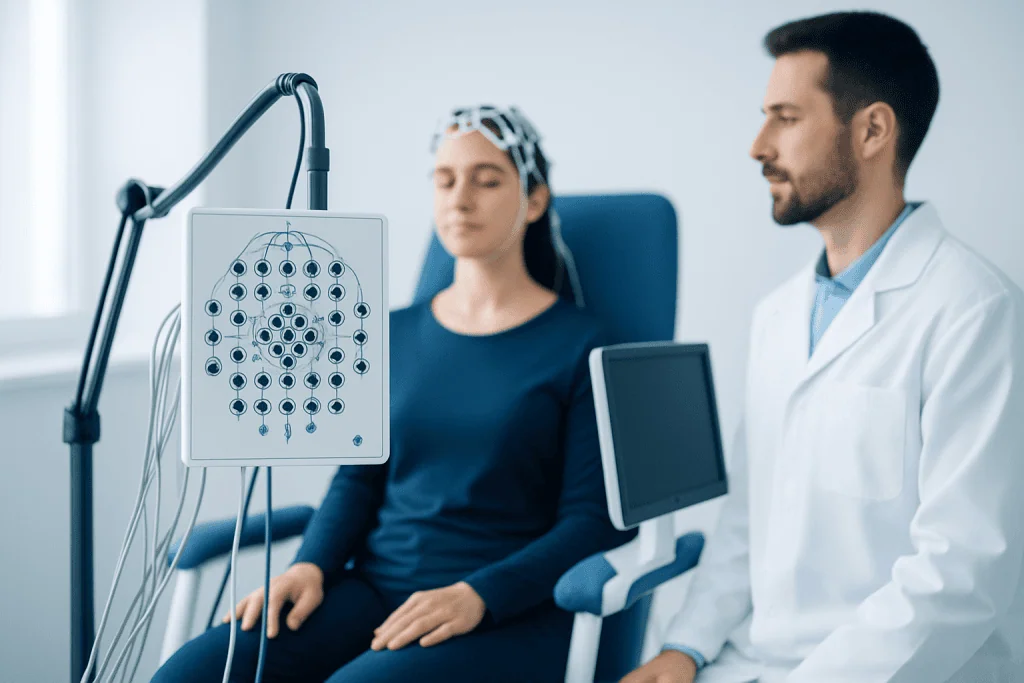
The scope of neurophysiology is broad. It covers the central nervous system, which includes the brain and spinal cord, and the peripheral nervous system, which includes nerves outside the brain and spinal cord. It also overlaps with muscle function, because muscles depend on healthy nerve signals to move normally.
Clinical neurophysiology commonly includes several types of tests and services. These may be used in outpatient clinics, hospitals, intensive care units, operating rooms, or sleep centers. The exact choice depends on the person’s age, symptoms, and the condition being investigated.
- Electroencephalography (EEG): records electrical activity in the brain and is often used in seizure assessment.
- Electromyography (EMG): evaluates muscle activity and can help identify nerve or muscle disorders.
- Nerve conduction studies: measure how quickly and effectively electrical signals travel through peripheral nerves.
- Evoked potentials: assess how the brain responds to visual, auditory, or sensory stimulation.
- Sleep studies: monitor brain waves, breathing, oxygen levels, heart rhythm, and movement during sleep.
- Intraoperative monitoring: helps watch nervous system function during certain surgeries.
Because neurophysiology examines function, it often complements imaging tests such as MRI or CT. For example, an MRI may show anatomy, while neurophysiology can help reveal whether nerve pathways are working normally.
Neurophysiology vs neurology: how are they different?
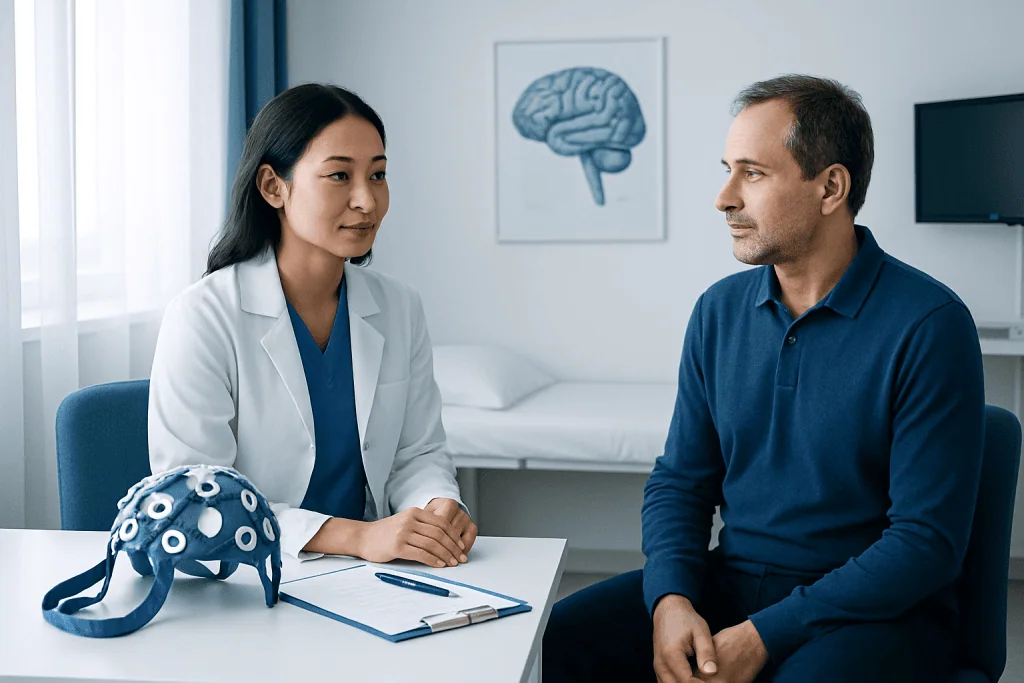
Neurology is a medical specialty focused on diagnosing and treating disorders of the nervous system. A neurologist is a physician who evaluates symptoms, performs a neurological examination, interprets tests, makes diagnoses, and develops treatment plans. Neurology covers a wide range of conditions, from headaches and stroke to neuropathy, movement disorders, and dementia.
Neurophysiology is more specifically focused on nervous system function and the techniques used to measure it. A clinical neurophysiologist may be a neurologist or another specially trained physician who performs and interprets tests such as EEG, EMG, nerve conduction studies, and related procedures. In many hospitals, neurophysiology works as a subspecialty within neurology.
The difference can be understood this way: neurology is the broader field of medical care for nervous system disorders, while neurophysiology is a focused area that studies and tests how the system is working. The two fields are closely connected and often overlap in day-to-day patient care.
For example, a person with possible epilepsy may first see a neurologist because of episodes of loss of awareness or unusual movements. Neurophysiology may then help through an EEG or prolonged monitoring to better understand whether those episodes are related to abnormal brain electrical activity.
When is neurophysiology used?
Doctors may recommend neurophysiology when symptoms suggest a problem with brain signaling, nerve conduction, or muscle response. It is commonly used to investigate numbness, tingling, muscle weakness, tremor, involuntary movements, blackouts, seizures, chronic pain patterns, or unexplained sensory symptoms. It can also support assessment of sleep disturbances and some problems affecting balance or consciousness.
In many cases, neurophysiology helps narrow down where a problem may be located. Symptoms can arise from the brain, spinal cord, nerve roots, peripheral nerves, the junction between nerve and muscle, or the muscle itself. Functional testing can provide clues that a physical examination alone may not fully show.
Neurophysiology may also be useful for monitoring known conditions over time. In some people, repeat testing helps evaluate progression, stability, or response to treatment. This can be relevant in selected nerve, muscle, and seizure-related disorders.
Common examples include testing for suspected carpal tunnel syndrome, evaluation of possible peripheral neuropathy, and support in the diagnosis of sleep disorders when symptoms include snoring, pauses in breathing, excessive daytime sleepiness, or unusual nighttime behaviors.
Common neurophysiology tests and what they show
EEG is one of the best-known neurophysiology tests. Small sensors are placed on the scalp to record brain electrical activity. EEG can help evaluate seizures, episodes of altered awareness, some sleep problems, and certain forms of encephalopathy. Depending on the clinical question, recording may be brief or extended over many hours.
EMG and nerve conduction studies are often performed together. Nerve conduction studies involve brief electrical stimulation of a nerve to measure how well signals travel. EMG uses a fine needle electrode in selected muscles to assess muscle activity at rest and during movement. These tests may help distinguish between nerve injury, nerve compression, muscle disease, or disorders affecting the connection between nerve and muscle.
Evoked potentials examine how the nervous system responds to specific stimuli. Visual evoked potentials may be used when doctors need information about the visual pathways. Somatosensory or auditory evoked potentials can help assess other sensory pathways, depending on the clinical situation.
Sleep studies, also called polysomnography, are another important part of clinical neurophysiology. They are used when a doctor suspects conditions such as obstructive sleep apnea or other sleep-related disturbances. In some centers, more advanced testing may be part of neurology care, sleep laboratory evaluation, or EMG testing depending on the person’s symptoms and referral pathway.
How neurophysiology supports diagnosis and treatment
Neurophysiology tests do not replace a doctor’s assessment. Instead, they add objective information that can make a diagnosis clearer or help rule out certain possibilities. Results are interpreted in context, because an abnormal test does not always mean a serious disorder, and a normal test does not always exclude every condition.
For example, if a person has hand numbness and nighttime pain, nerve conduction studies may show whether the median nerve is being compressed at the wrist. If someone has episodes concerning for seizures, EEG may help detect patterns of abnormal electrical activity. In another person with weakness, EMG may help determine whether the problem is primarily in the nerve, muscle, or neuromuscular junction.
The findings from neurophysiology can also guide treatment planning. They may help doctors decide whether medication, rehabilitation, splinting, further imaging, surgery, or observation is the most appropriate next step. This is one reason neurophysiology is valuable in multidisciplinary care.
In some surgical settings, neurophysiological monitoring is used during the procedure itself. This allows the team to observe certain nerve or spinal cord pathways in real time, helping protect neurological function during selected operations such as some spine or brain procedures.
What to expect during neurophysiology testing
Many people feel unsure before a neurophysiology test, but most tests are straightforward and well tolerated. The exact experience depends on the test being performed. EEG usually involves placing sensors on the scalp with adhesive or paste while the person rests, breathes deeply at certain times, or may be exposed to flashing lights. The test is painless, though the paste can be inconvenient to wash out afterward.
Nerve conduction studies involve small electrical pulses delivered to the skin over a nerve. These pulses can feel brief and uncomfortable, but they are usually manageable and short-lived. EMG uses a fine needle inserted into selected muscles. This may cause temporary discomfort, similar to a quick injection or muscle ache, but the sensation generally passes quickly.
Sleep studies are usually performed overnight in a sleep laboratory or sometimes with home-based equipment, depending on the clinical question. Sensors are used to monitor sleep stages, breathing, heart rate, oxygen level, and movement. Patients are usually encouraged to ask in advance about preparation, medications, skin creams, hair products, and whether someone should accompany them.
Preparation instructions vary. A doctor may advise avoiding caffeine before certain tests, coming with clean hair for EEG, or wearing loose clothing for EMG and nerve conduction studies. Following instructions carefully can help improve the quality of the recording and reduce the need to repeat part of the test.
When to seek medical advice
Symptoms involving the nervous system should be discussed with a qualified doctor, especially if they are new, recurrent, or getting worse. Examples include repeated numbness, ongoing weakness, episodes of loss of consciousness, unexplained shaking, persistent balance problems, severe daytime sleepiness, or sudden changes in speech, vision, or coordination.
Some symptoms need urgent medical attention. These include sudden weakness on one side, a first seizure, severe confusion, a sudden severe headache, loss of vision, or breathing pauses during sleep with significant daytime impairment. Prompt medical evaluation helps doctors identify whether urgent treatment is needed.
For ongoing concerns, a primary care doctor, neurologist, or clinical neurophysiology service can advise whether testing is appropriate. The right test depends on the symptoms and the suspected cause, so it is important not to assume that one type of test fits every situation.
At centers such as Acibadem International, multidisciplinary specialists in neurology, neurophysiology, imaging, rehabilitation, and sleep medicine work together to diagnose and treat nervous system conditions for international patients, including through services such as EEG evaluation when clinically indicated.
Frequently asked questions
Is neurophysiology a type of neurology?
Neurophysiology is closely related to neurology, but it is not exactly the same thing. Neurology is the broader medical specialty, while neurophysiology focuses more specifically on testing and understanding how the nervous system functions.
What conditions can neurophysiology help assess?
Neurophysiology can help assess a wide range of conditions affecting the brain, spinal cord, peripheral nerves, muscles, and sleep. Examples include seizure disorders, neuropathies, nerve compression syndromes, some muscle disorders, and selected sleep-related conditions.
Are neurophysiology tests painful?
Many neurophysiology tests are painless or only mildly uncomfortable. EEG is painless, while nerve conduction studies and EMG can cause brief discomfort, but most people tolerate them well.
Do neurophysiology tests give a diagnosis on their own?
Usually, no single test gives the full answer by itself. Doctors interpret neurophysiology results together with symptoms, examination findings, medical history, and sometimes imaging or blood tests.
How should a person prepare for an EEG or EMG?
Preparation depends on the test and the center performing it. In general, patients may be asked to arrive with clean skin or hair, avoid certain products, and follow specific instructions about caffeine, sleep, or medications.
Why would a sleep study be part of neurophysiology?
Sleep depends on coordinated brain activity, breathing patterns, and body responses, so sleep testing often belongs within clinical neurophysiology services. A sleep study can help doctors understand problems such as excessive daytime sleepiness, snoring, breathing pauses, or unusual movements during sleep.
References
- World Health Organization
- National Institute of Neurological Disorders and Stroke
- American Clinical Neurophysiology Society
- International Federation of Clinical Neurophysiology
- American Academy of Neurology
This article is for general information only and is not a substitute for professional medical advice. Please consult a qualified doctor about your individual situation.
Neurophysiology in Turkey — costs, top hospitals & a free quote
JCI-accredited · board-certified surgeons · reply within 24h
Add us as a Preferred Source to see more of our trusted health content across Google Search, AI Overviews and Discover.