Carotid Artery Stenting: Who May Benefit and What Are the Risks?

Carotid artery stenting can improve blood flow through a narrowed carotid artery and may help lower stroke risk. It is usually considered for selected patients, especially when surgery may be high risk or less suitable.
Key Takeaways
- Carotid artery stenting can improve blood flow through a narrowed carotid artery and may help lower stroke risk.
- It is usually considered for selected patients, especially when surgery may be high risk or less suitable.
- Possible risks include stroke, bleeding, artery injury, heart complications, and re-narrowing over time.
- Careful imaging, medical history review, and specialist evaluation are essential before treatment.
- Long-term success also depends on medicines and risk-factor control such as stopping smoking and managing blood pressure and cholesterol.
Carotid artery stenting is a minimally invasive procedure used to treat narrowing in the carotid arteries, which supply blood to the brain. It may help reduce stroke risk in carefully selected patients, but the benefits and risks need to be weighed individually.
Overview
Carotid artery stenting is a procedure used to treat narrowing of the carotid arteries, the major blood vessels in the neck that carry blood to the brain. This narrowing, called carotid stenosis, is most often caused by a buildup of fatty deposits known as plaque. When the artery becomes significantly narrowed, blood flow may be reduced and plaque fragments or blood clots can travel to the brain, increasing the risk of stroke.
During carotid artery stenting, a specialist guides a thin tube called a catheter through a blood vessel, usually from the groin or wrist, to the carotid artery. A small balloon may be used to widen the narrowed area, and a metal mesh tube called a stent is placed to help keep the artery open. In many cases, a filter-like protection device is used to catch debris during the procedure and lower the chance of stroke.
This treatment is one option for managing significant carotid narrowing. It is not the right choice for everyone. Some people do best with medication and lifestyle changes alone, while others may be better candidates for surgery, called carotid endarterectomy. The decision depends on symptoms, the degree of narrowing, overall health, anatomy of the artery, and the experience of the treating team.
Who May Benefit From Carotid Artery Stenting

Carotid artery stenting may benefit certain people with significant carotid stenosis who are at increased risk of stroke. It is often considered for patients who have had symptoms related to reduced blood flow or emboli from the carotid artery, such as a transient ischemic attack (TIA), temporary weakness, speech difficulty, vision loss in one eye, or a mild stroke. In symptomatic patients, treatment may be recommended when the narrowing is substantial and thought to be the likely cause of symptoms.
It may also be an option for some people with severe narrowing who have not had symptoms, although the benefit must be weighed carefully against the risks of the procedure and the effectiveness of modern medical therapy. In general, the more severe the narrowing and the higher the estimated future stroke risk, the more likely an intervention may be helpful.
Stenting is often considered when surgery is higher risk or technically more difficult. Examples include prior neck surgery or radiation, certain heart or lung conditions, narrowing located in a hard-to-reach area, or recurrent stenosis after earlier treatment. A specialist may compare carotid artery stenting with carotid endarterectomy and best medical therapy to decide which approach is most appropriate.
Symptoms, Causes, and Risk Factors
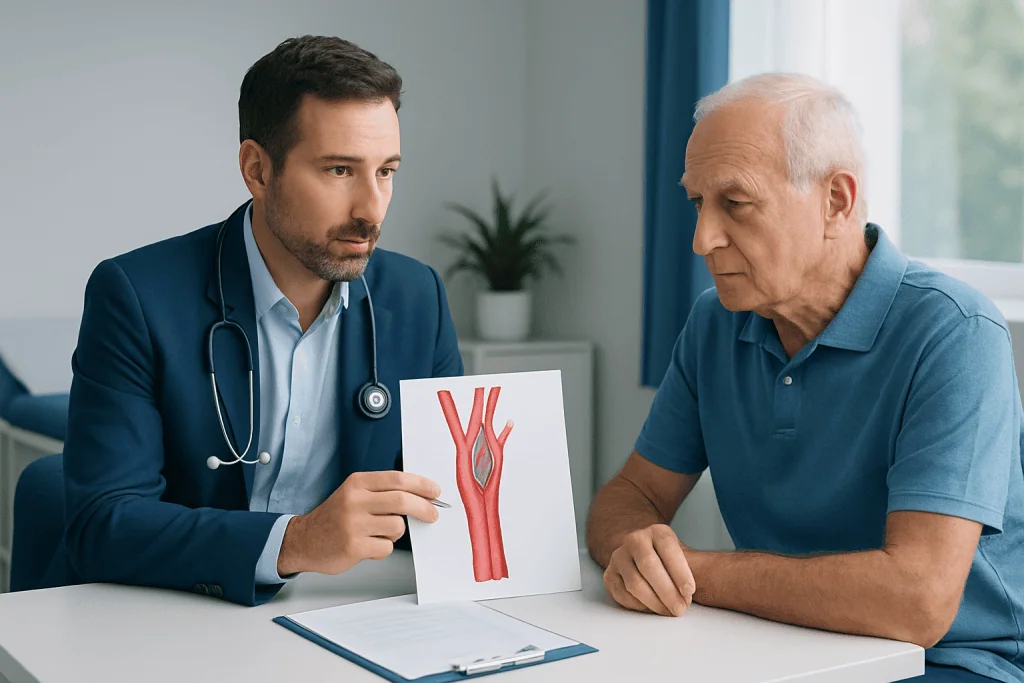
Many people with carotid stenosis have no symptoms at all. The condition is sometimes discovered after a doctor hears a bruit, an abnormal sound over the neck artery, or during imaging done for another reason. When symptoms do occur, they are often warning signs of reduced brain blood flow or small clots traveling to the brain.
Symptoms that may be linked to carotid artery disease include sudden weakness or numbness on one side of the body, trouble speaking or understanding speech, sudden vision loss or dimming in one eye, facial drooping, dizziness, or loss of coordination. These symptoms can be brief, as in a TIA, or longer lasting, as in a stroke. A TIA should never be ignored, because it can be an early warning of a future stroke.
The main cause of carotid narrowing is atherosclerosis, the gradual buildup of plaque in artery walls. Risk factors include older age, smoking, high blood pressure, high cholesterol, diabetes, obesity, physical inactivity, and a family history of vascular disease. People with coronary artery disease or peripheral artery disease are also more likely to have carotid disease, because atherosclerosis often affects more than one part of the body. Related conditions such as carotid artery disease and stroke are closely connected to this procedure.
How Doctors Diagnose Carotid Narrowing
Diagnosis starts with a medical history and physical examination. The doctor asks about stroke-like symptoms, prior TIAs, heart disease, smoking, blood pressure, cholesterol, and other risk factors. The examination may include listening to the neck arteries and checking for signs of neurological problems.
Imaging tests are essential to confirm the diagnosis and plan treatment. Carotid ultrasound is commonly used first because it is noninvasive and can estimate how severe the narrowing is. Other tests may include CT angiography or MR angiography, which provide more detailed pictures of the arteries and surrounding anatomy. In selected cases, catheter angiography is performed for closer evaluation, sometimes as part of the treatment procedure itself.
Doctors do not base the decision for carotid artery stenting on the degree of narrowing alone. They also consider whether the person has symptoms, the appearance of the plaque, the anatomy of the aortic arch and carotid arteries, kidney function, bleeding risk, and whether there are safer alternatives. A multidisciplinary review can help determine the most suitable treatment plan.
What Happens During the Procedure
Carotid artery stenting is usually performed in a specialized angiography or endovascular suite. The patient is monitored closely throughout the procedure. After the skin is cleaned and numbed, the doctor inserts a catheter into a blood vessel, commonly in the groin or sometimes the wrist, and carefully guides it to the carotid artery under imaging guidance.
To reduce the chance of debris reaching the brain, a cerebral protection device is often placed beyond the narrowed segment before treatment begins. A balloon may then be inflated to widen the artery, and a stent is deployed to support the vessel wall and keep it open. The protection device is removed at the end after any trapped particles are collected. This minimally invasive approach may be discussed alongside other endovascular interventional neuroradiology procedures when care is being planned.
Most patients stay in the hospital for observation after the procedure so the team can monitor blood pressure, heart rhythm, and neurological status. Medicines that reduce clotting are commonly used before and after stenting to help prevent the stent from becoming blocked. Follow-up imaging is usually recommended to check that the artery remains open over time.
Risks and Possible Complications
Like any procedure on blood vessels supplying the brain, carotid artery stenting has important potential risks. The main concern is stroke during or soon after the procedure, usually caused by a clot or plaque debris traveling to the brain. Protection devices and careful technique are used to reduce this risk, but they cannot eliminate it completely.
Other possible complications include bleeding or bruising where the catheter is inserted, damage to the artery, allergic reaction to contrast dye, kidney strain from contrast in susceptible patients, low blood pressure or slow heart rate during the procedure, heart attack, and, rarely, death. Over the longer term, the treated artery can narrow again, a problem called restenosis, which may require further monitoring or treatment.
The level of risk varies from person to person. It depends on age, symptoms, other medical conditions, the anatomy of the arteries, and the expertise of the treatment center. This is why doctors compare carotid artery stenting not only with surgery but also with optimized medical treatment, including antiplatelet medicines, cholesterol-lowering therapy, blood pressure control, and lifestyle changes. In some patients, managing risk factors may be the safest initial strategy.
Treatment Choices, Recovery, and Long-Term Care
Treatment for carotid stenosis may include medication alone, carotid artery stenting, or surgery. Best medical therapy usually involves antiplatelet medication, statin therapy, control of blood pressure and diabetes, and smoking cessation. For some patients, this approach may be enough, especially if the narrowing is moderate or the risks of an intervention outweigh the likely benefit.
When a procedure is recommended, doctors compare stenting with surgery based on the individual’s condition. Carotid endarterectomy has long been a standard treatment for many patients, while stenting can be especially useful in selected people with anatomical or medical reasons to avoid surgery. If a patient has had a TIA or minor stroke, evaluation for stroke treatment and prevention is also part of the care plan.
Recovery after carotid artery stenting is often quicker than after open surgery, but careful aftercare remains essential. Patients are usually advised to take prescribed medicines exactly as directed, attend follow-up appointments, and have repeat ultrasound scans to monitor the artery. Long-term prevention focuses on stopping smoking, staying physically active, eating a heart-healthy diet, maintaining a healthy weight, and controlling blood pressure, cholesterol, and blood sugar.
For international patients seeking coordinated evaluation, Acibadem International’s multidisciplinary specialists and JCI-accredited hospitals diagnose and treat carotid artery conditions using individualized treatment planning.
When to See a Doctor
Anyone with symptoms that could suggest a TIA or stroke should seek urgent medical attention immediately. Sudden weakness, numbness, trouble speaking, confusion, facial drooping, severe imbalance, or sudden vision loss should never be watched at home. Fast assessment can help protect the brain and lower the chance of lasting disability.
People without symptoms should still speak with a doctor if they have been told they have carotid narrowing on imaging, have a neck bruit, or have strong vascular risk factors such as smoking, diabetes, high blood pressure, or high cholesterol. Early evaluation can help determine whether monitoring, medication, or a procedure is the most appropriate next step.
It is also important to contact the care team after carotid artery stenting if there is increasing swelling or bleeding at the catheter site, new neurological symptoms, chest pain, shortness of breath, or fainting. Clear follow-up and prompt attention to warning signs are an important part of safe recovery.
Frequently asked questions
Is carotid artery stenting the same as surgery?
No. Carotid artery stenting is a minimally invasive catheter-based procedure, while carotid endarterectomy is an open surgical operation that removes plaque from the artery. Both aim to reduce stroke risk, but the best option depends on the individual patient.
Who is usually considered for carotid artery stenting?
It is often considered for selected patients with significant carotid narrowing, especially those who have had TIA or stroke symptoms or who may be at higher risk from surgery. Doctors also look at overall health, artery anatomy, and how severe the narrowing is before recommending it.
What are the main risks of carotid artery stenting?
The main risk is stroke during or shortly after the procedure. Other risks include bleeding at the catheter site, artery injury, heart complications, contrast-related problems, and re-narrowing of the artery over time.
How long does recovery usually take?
Many people recover more quickly from stenting than from open surgery and may go home within a short hospital stay, depending on their condition. Even so, follow-up care, medication adherence, and monitoring are important for a safe recovery.
Will a stent cure carotid artery disease permanently?
A stent can improve blood flow in the treated area, but it does not remove the underlying tendency to develop atherosclerosis. Long-term management still requires controlling blood pressure, cholesterol, diabetes, smoking, diet, and physical activity.
Can carotid narrowing be treated without a procedure?
Yes. Many patients are treated with medication and lifestyle changes, especially if the narrowing is less severe or the risks of intervention are high. A doctor can explain whether medical therapy alone or a procedure is likely to offer the best balance of benefit and safety.
References
- American Heart Association
- American Stroke Association
- Society for Vascular Surgery
- National Institute of Neurological Disorders and Stroke
- European Stroke Organisation
This article is for general information only and is not a substitute for professional medical advice. Please consult a qualified doctor about your individual situation.
Explore treatments in Turkey — costs, top hospitals & a free quote
JCI-accredited · board-certified surgeons · reply within 24h
Add us as a Preferred Source to see more of our trusted health content across Google Search, AI Overviews and Discover.
Check your numbers in seconds
BMI, calories, due date, blood pressure and 30+ more clinical calculators — free, instant, doctor-reviewed ranges.

More from the Health Library



Related Specialists
Dr. Mehmet Meriç
Gastroenterology
Asst. Prof. Dr. Mahmut Ozan Findik
Otorhinolaryngology
Dr. Ferdane Ataş
Ophthalmology
Fzt. Ömür Akgül
Physical Medicine & Rehabilitation